Crazy for Cartoons: 2nd Percussion Sheet Music Preview

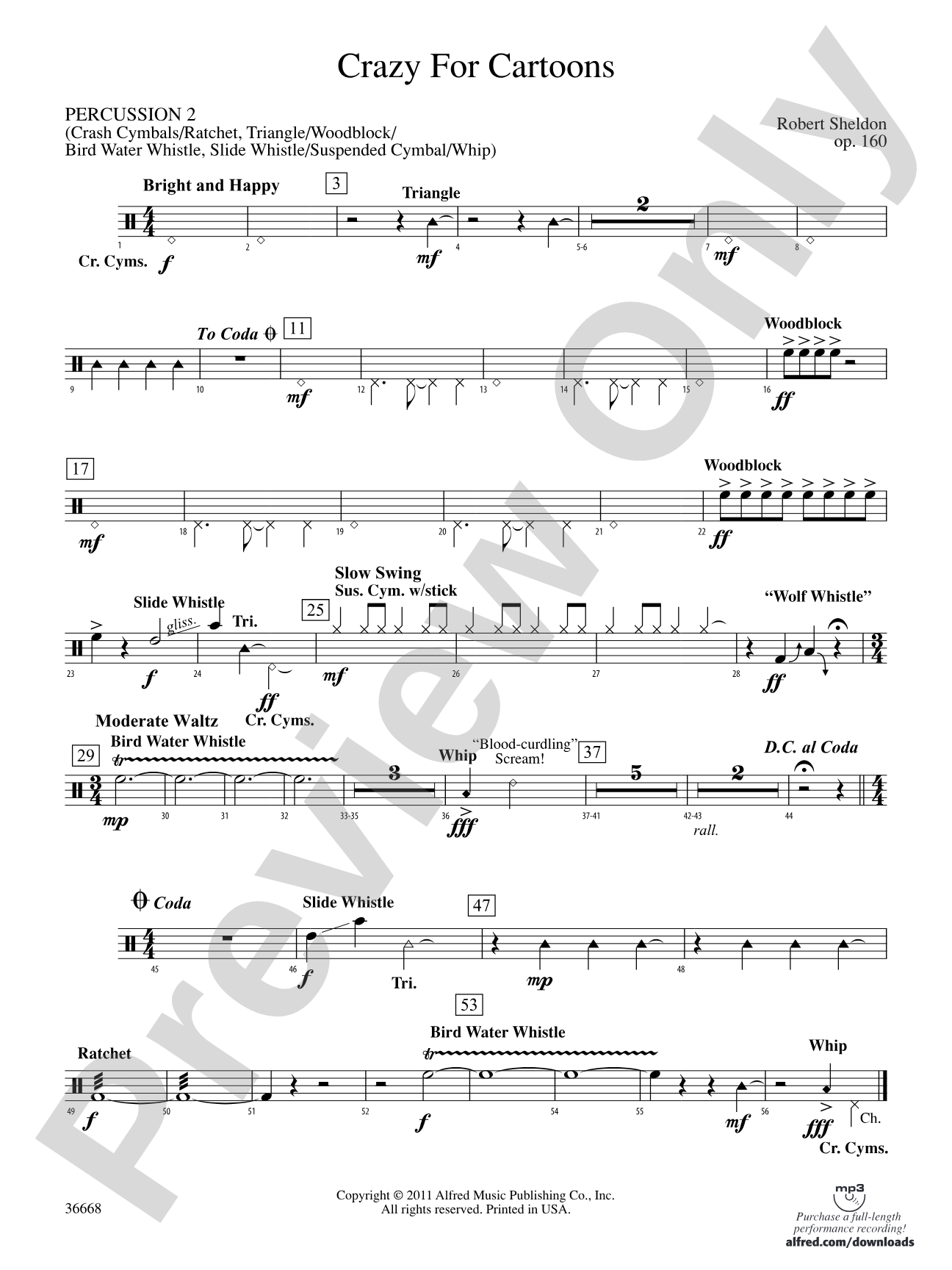
Crazy for Cartoons: 2nd Percussion

By Robert Sheldon

Grade: 1.5 (Easy)

Item: 00-PC-0015096_PC2

Digital Download
$3.00
Description
Not so long ago, a visit to any motion picture show always started with a classic cartoon that preceded the main event. These wonderful, wacky animated short features were accompanied by some of the most creative music of its time. "Crazy for Cartoons" reminds us of those simpler days, and the humor, drama, and action that were musically represented in those incredible soundtracks.

Correlates to Book 2, Level 3 of Sound Innovations for Concert Band. (2:09) This title is available in MakeMusic Cloud.

Don't just read it, hear it, play along with it, and watch your students grow with it. In MakeMusic Cloud, Crazy for Cartoons: 2nd Percussion comes alive with professional accompaniment, adjustable tempo, and built-in practice tools that turn solo practice into real progress.

Sample Audio
0:00
0:00
Sample Video
Additional Details
Series: Sound Innovations for Concert Band
Publisher: Alfred Music
Page Count: 150
SKU: 00-PC-0015096_PC2

More about this title

About the Composer: Robert Sheldon

Robert Sheldon

Robert Sheldon's wind band compositions appear on contest lists and concert stages worldwide, performed by ensembles at every level. His works have earned him recognition from the American School Band Director's Association, Phi Beta Mu, and ASCAP, and his gift for expression consistently connects with both players and audiences.

Beyond the page, Sheldon maintains an active presence as a guest conductor for All-State and Regional Honor Bands, clinician at universities and state conferences, and commissioning composer. His conducting and teaching have taken him across the United States and internationally to Japan, Canada, Italy, Germany, Australia, and China. His works have sounded in Carnegie Hall, Boston's Symphony Hall, the Sydney Opera House, and the Kennedy Center. VanderCook College of Music awarded him an honorary doctorate in 2020.

Why we love this

Sheldon captures the kinetic energy and melodic ingenuity of golden-age cartoon scoring without requiring virtuosic technique from your ensemble. The piece works as a genuine concert opener because it entertains the audience while giving Grade 1.5 bands a structured opportunity to navigate rhythmic variety and stylistic shifts with real musicality.

What to expect

The piece bounces along with the chaos and charm of classic cartoon action, built on memorable melodic snippets and quick instrumental answers that feel slapstick in the best way. You'll find moments of mock drama, playful rhythmic disruptions, and the kind of scoring that makes people smile the moment the first notes sound.

Who it's for

This arrangement serves Grade 1.5 concert bands seeking accessible programming with genuine entertainment value. It works equally well for groups working through Sound Innovations Book 2 and for ensembles looking for a confidence-building opener that audiences will genuinely enjoy.

How to get the most out of it

  • Treat each cartoon reference as its own character study. The tempo and articulation choices should reflect the personality of each musical moment, creating clear distinctions between sections.
  • Balance the ensemble so comic moments land clearly. Sheldon writes with intentional clarity; let the inner voices speak when they carry the musical joke.
  • Use the recorded accompaniment (available separately) to lock the ensemble's rhythmic feel, especially if your group is still building confidence with the style's rhythmic language.

How to use it

Open a concert with this piece and set a tone of musical joy and humor that carries the rest of your program. It pairs naturally with other accessible concert selections and works especially well as a season opener or for spring concerts where lighter repertoire balances more serious works.

Skills your students will build

  • Stylistic interpretation of rhythmically active, character-driven music
  • Articulation control across contrasting melodic and comic sections
  • Ensemble balance when passing musical ideas between sections
  • Musical storytelling through tempo and dynamic shaping

You May Also Like