Cramer: Fifty Selected Studies (Arr. Hans von Bülow) Sheet Music Preview

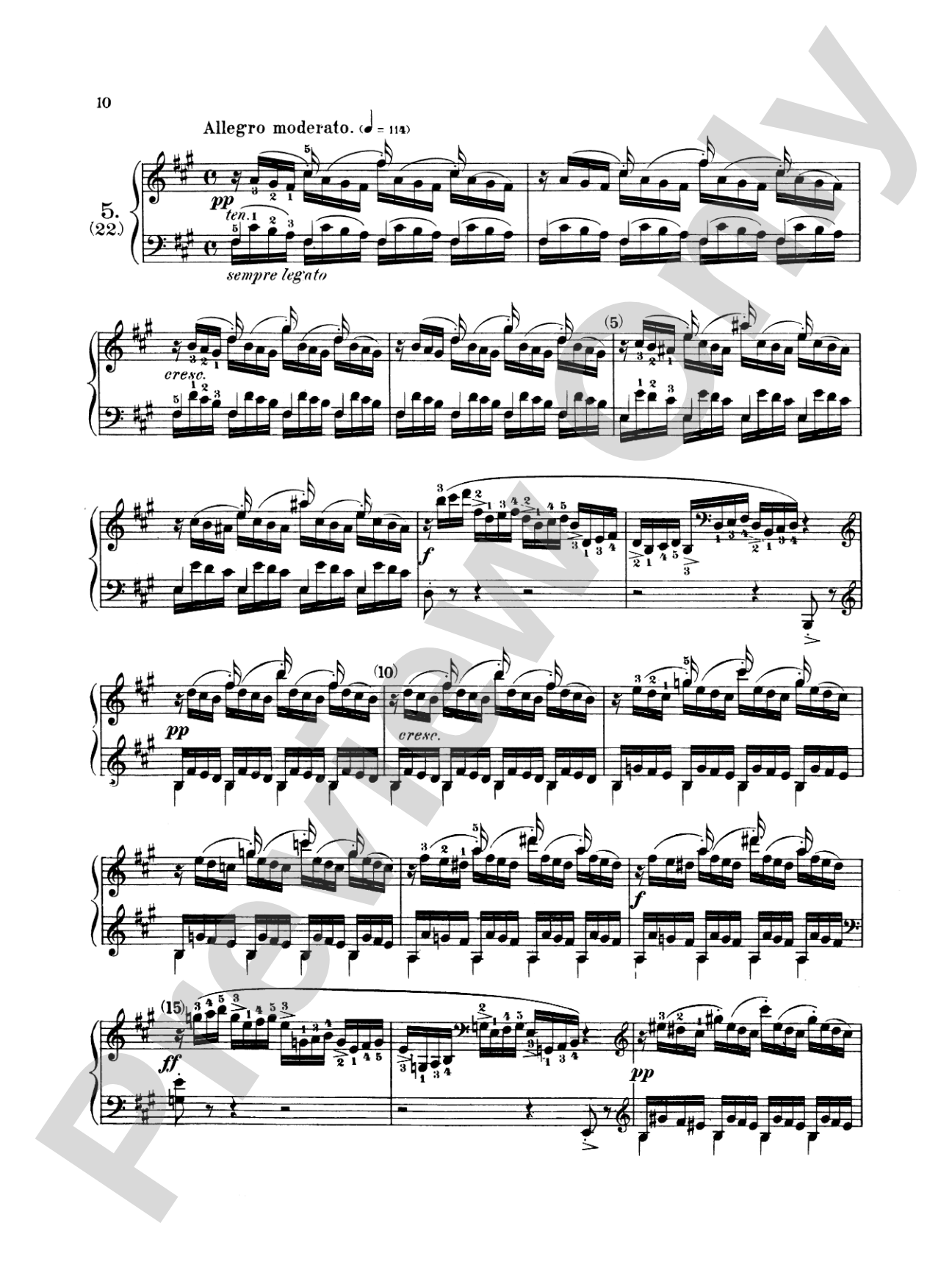
Cramer: Fifty Selected Studies (Arr. Hans von Bülow)

By Johann Baptist Cramer / arr. Hans von Bülow

Item: 00-PC-0006357

Digital Download
$0.99
Description
Johann Baptist Cramer (1771--1858) was the son of Wilhelm Cramer, a famous London violinist. He studied piano under Muzio Clementi and enjoyed a worldwide reputation, particularly appreciated by Beethoven. Both were considered the greatest pianists of their time, Beethoven excelling in interpretive expressiveness, Cramer in pure technical perfection. This volume includes technical studies selected from his 84 Studies for piano.

Don't just read it, hear it, play along with it, and watch your students grow with it. In MakeMusic Cloud, Cramer: Fifty Selected Studies (Arr. Hans von Bülow) comes alive with professional accompaniment, adjustable tempo, and built-in practice tools that turn solo practice into real progress.

Sample Audio
No sample audio found.
Sample Video
Additional Details
Series: Kalmus Edition
Publisher: Alfred Music
Page Count: 32
SKU: 00-PC-0006357

More about this title

About the Composer: Johann Baptist Cramer

Johann Baptist Cramer (1771-1858) was born into a musical family; his father Wilhelm was a celebrated violinist in London. He studied under Muzio Clementi, one of the era's most influential keyboard pedagogues, and became renowned across Europe for his technical mastery at the piano. Beethoven held him in high regard, and the two were frequently compared as the greatest pianists of their age, though their strengths differed: Cramer excelled in mechanical precision and clarity, while Beethoven commanded interpretive depth and emotional power.

Cramer's 84 Studies for piano remain foundational training material because they bridge classical technique with emerging Romantic idioms. He understood the instrument's mechanical demands intimately and wrote passages that demand both finger facility and musical intelligence. This collection, selected and edited by Hans von Bülow, distills the most essential studies into a focused curriculum.

Why we love this

Cramer's studies avoid the dry mechanicism that can plague technical work. Each piece has genuine musical character and harmonic interest, so students aren't grinding through empty finger drills. Von Bülow's curation and editing ensures you get the pedagogical essentials without bloat, making this a lean, purposeful addition to any intermediate pianist's practice routine.

What to expect

These studies occupy a musical middle ground: rooted in classical clarity and order, but infused with Romantic-era expressiveness and harmonic color. Each piece feels compact and purposeful, unfolding over a handful of systems with sufficient musical interest to reward careful listening and thoughtful interpretation.

Who it's for

This book serves intermediate pianists (roughly grades 3-5 level) who have solid foundational technique and are ready to build independence, finger dexterity, and hand position flexibility. Teachers seeking studies with genuine musical substance will find these more engaging than purely mechanical alternatives. Pianists preparing for classical repertoire benefit from the Clementi-influenced harmonic language and classical piano technique embedded throughout.

How to get the most out of it

  • Approach the phrasing as you would a short character piece rather than an etude. Even at brisk tempos, shape the melodic line with attention to where the musical phrases breathe and resolve.
  • Pay close attention to the hand independence these studies demand. Many shift the accompaniment pattern between hands or require crossing; treat these structural moments as the real learning opportunity, not a byproduct.
  • Use the harmonic progression as your guide for pedal changes. Cramer's voice-leading is logical; let the harmony dictate when you refresh the sound rather than relying on a set pedal rhythm.
  • Work at a slower tempo than you might assume necessary. The technical gains come from precision and control, not from racing through the passage. Speed emerges naturally once the motion is secure.

How to use it

Assign these selectively as weekly technical work rather than as recital material. A student working through this collection might perform an individual study as a prelude to a larger work or pair one with a short classical sonata movement to reinforce stylistic continuity. The Kalmus Edition's compact size makes it practical for studio lesson books and summer curriculum planning.

Skills your students will build

  • Hand crossing and position shifts
  • Finger independence and evenness across scale passages
  • Pedal coordination with harmonic changes
  • Legato and non-legato touch control
  • Rhythmic precision in accompaniment patterns
  • Reading and interpreting classical performance markings

You May Also Like