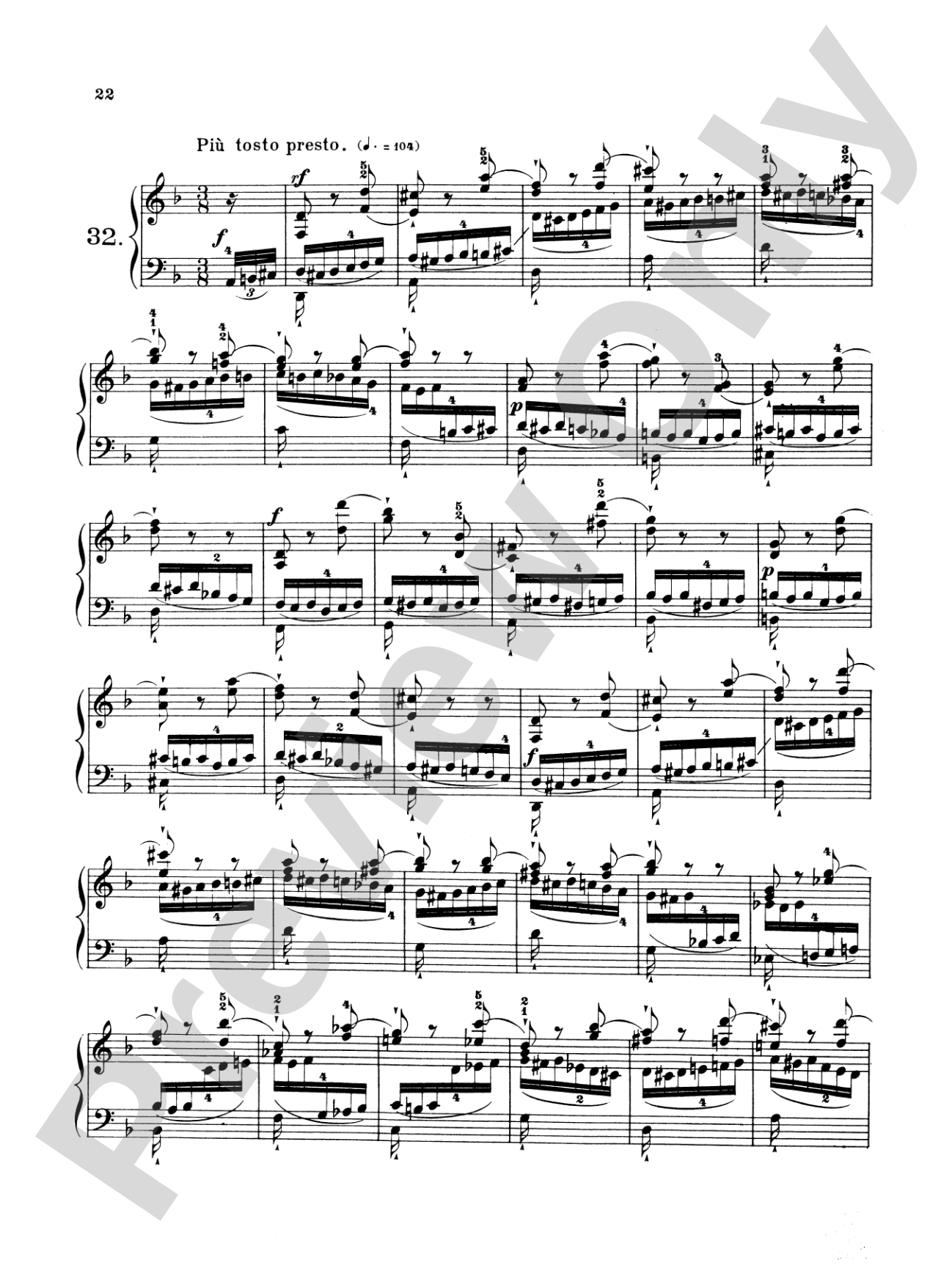
Cramer: Eighty-Four Studies (Volume II)
By Johann Baptist Cramer
Item: 00-PC-0006396
Pickup currently not available
Description
Don't just read it, hear it, play along with it, and watch your students grow with it. In MakeMusic Cloud, Cramer: Eighty-Four Studies (Volume II) comes alive with professional accompaniment, adjustable tempo, and built-in practice tools that turn solo practice into real progress.
Jump straight in and assign it today.
Open this title and explore the full library in minutes.
Sample Audio
Sample Video
Additional Details
More about this title
About the Composer: Johann Baptist Cramer
Johann Baptist Cramer (1771-1858) shaped early 19th-century piano technique through his 84 Studies, which remain foundational in conservatory curricula worldwide. A student of Muzio Clementi and a virtuoso in his own right, Cramer earned the respect of Beethoven himself; the two were regarded as the greatest pianists of their era, though their gifts ran in different directions. While Beethoven commanded interpretive depth and emotional range, Cramer's legacy rests on his systematic cultivation of mechanical fluency and finger independence at the keyboard.
Cramer's teaching influence extended far beyond his own performances. His studies codified solutions to the technical problems pianists encounter, progressing logically from moderate difficulty to considerable challenge. Teachers and performers have relied on his work for over two centuries as a bridge between foundational technique and the demands of the Romantic repertoire.
Why we love this
Cramer's second volume (studies 22-42) strikes an ideal balance between systematic technical work and genuine musical interest. These studies do not feel like mere finger exercises; they embed technical objectives within graceful melodic phrases and harmonic progressions that reward careful playing with real musical satisfaction.
What to expect
Cramer's writing balances discipline with musicality. Each study presents a focused technical challenge embedded in flowing, graceful melody; you are not grinding through abstract patterns but rather inhabiting small musical moments that demand precision. There is a quiet satisfaction in the clarity and inevitability of his keyboard writing, a sense of logical progression from one phrase to the next.
Who it's for
Intermediate to advanced pianists (typically ages 12 and older) preparing for conservatory study, competitions, or serious recital work. These studies suit students who have completed elementary fundamentals and are ready for sustained technical development guided by 19th-century pedagogical principles.
How to get the most out of it
- Identify the primary technical objective in each study before playing it. Most center on a specific pattern (hand independence, scalar figuration, arpeggiation, or double-note technique). Isolating that focus prevents mindless repetition and accelerates progress.
- Maintain steady tempo throughout. Cramer's studies depend on rhythmic consistency to develop security; rushing through successful passages or slowing for difficult ones undermines the conditioning they provide.
- Shape the melodic line with the same care you would bring to a sonata movement. These studies reward legato phrasing and dynamic inflection, transforming mechanical practice into expressive musicianship.
- Practice hands separately when a new study presents difficulty, then combine them only when each hand is secure. This approach prevents bad habits from forming and clarifies the technical architecture Cramer designed.
How to use it
Assign studies from this volume as core technical work throughout a season of private lessons. They pair naturally with sonata repertoire or Baroque counterpoint, reinforcing the hand independence and finger agility those styles require. A student might perform one or two polished studies in a studio recital as evidence of disciplined technical growth.
Skills your students will build
- Hand independence and coordination across complex figurations
- Scalar and arpeggiated passage work at moderate to brisk tempos
- Double-note technique (thirds, sixths, octaves) with clarity and evenness
- Sustained legato and voicing control in lyrical passages
- Rhythmic precision and stability across extended practice
- Finger strength and endurance in repetitive technical patterns
- Reading and interpreting Romantic-era notation and phrasing marks