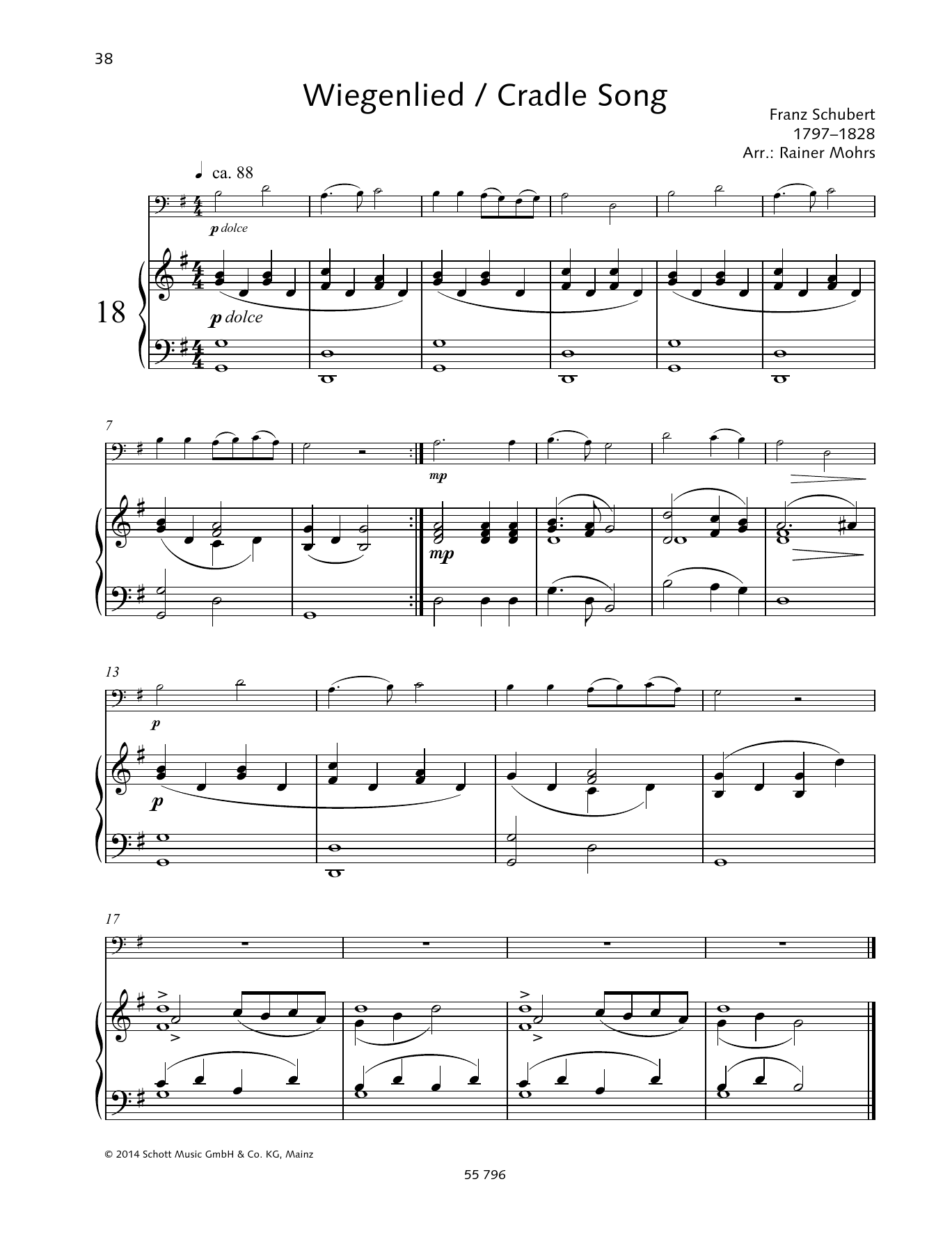
Franz Schubert (1797–1828) composed over a thousand works across every major genre despite his short life, leaving an indelible mark on the development of Romantic music. His gift for melody was unmatched; he could spin out a simple phrase into something deeply moving without losing its essential character. In the classroom and rehearsal room, his works teach students how to phrase with clarity and sensitivity, and how intimate lyricism can carry as much weight as virtuosic display.
Why we love this
This arrangement gives cellists access to one of music's most recognizable and touchingly simple melodies. The piano part provides genuine musical support rather than mere accompaniment, creating a genuine duet that feels collaborative and rewarding for both players. It sits at a sweet spot where young cellists can sound immediately beautiful without needing advanced technique.
What to expect
Intimate and gently introspective, like a lullaby whispered rather than sung. The melody wraps around itself with unforced elegance, inviting both the cellist and listener into a moment of quiet reflection.
Who it's for
Student cellists in the intermediate range who are ready for repertoire that demands musical maturity rather than technical fireworks. This also works beautifully for established players who value accessible, touchstone works for recital or chamber performance.
How to get the most out of it
Allow the opening phrase to breathe naturally; resist the urge to rush through the first presentation of the melody. Schubert's genius lies in simplicity, and that simplicity demands unhurried execution.
Balance the cello tone so it can sing over the piano without forcing. The melody should float effortlessly above the accompaniment.
Work with your pianist on how the accompaniment figures sit rhythmically. Small adjustments in the piano's touch will either support or undermine the cello's phrasing.
How to use it
Schedule this in a spring recital or chamber concert as a palate cleanser between more demanding works. It pairs naturally with other Romantic era songs or lighter classical pieces, and works equally well as an encore.
Skills your students will build
Singing tone production without forcing volume
Phrase shaping across moderate phrase lengths
Balance and blend in a duet context
Interpretive choices within a simple harmonic framework
You May Also Like
Scan to Complete Your Purchase
Use your phone's camera to scan the code below
You'll log in on your phone and the order will be added to your account