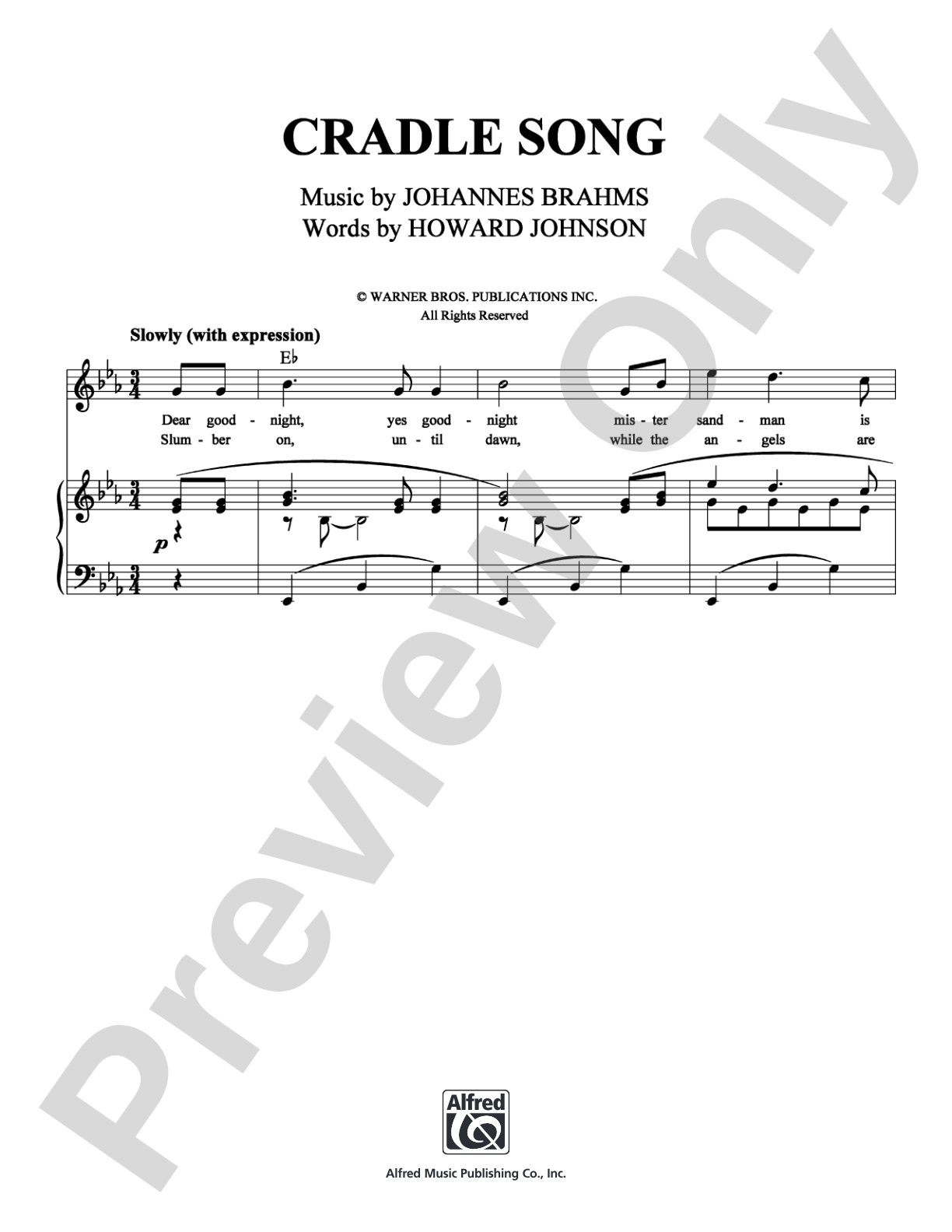
Cradle Song: Piano/Vocal/Chords Digital Sheet Music

Cradle Song: Piano/Vocal/Chords Digital Sheet Music

Johannes Brahms

Item: 00-PS-0006682

Digital Download
$3.99
Description

Cradle Song: Piano/Vocal/Chords Digital Sheet Music isn't in MakeMusic Cloud just yet...but it could be. Let us know you'd like to see it, and you'll help shape what comes next. In the meantime, start a free trial and dive into thousands of interactive titles your students can play along with today.

Sample Audio
No sample audio found.
Sample Video
Additional Details
SKU: 00-PS-0006682

More about this title

Why we love this

Cradle Song works beautifully as a bridge between classical tradition and contemporary vocal literature. The piano/vocal/chords format gives you flexibility to accompany a singer, teach chord harmony at the keyboard, or arrange it for small ensemble. This piece sits comfortably in recital programs and classroom settings alike.

What to expect

Cradle Song carries the warmth and simplicity of a lullaby, with gentle harmonic motion that feels both intimate and timeless. The piano accompaniment cradles the vocal melody in a way that feels supportive rather than elaborate, inviting focus on the beauty of the sung line.

Who it's for

This resource suits vocalists preparing recital repertoire, piano teachers exploring accompaniment skills, and choral directors teaching singers how to read chord symbols and lead sheets. It also works for accompanists building their sight-reading fluency with lead sheet notation.

How to get the most out of it

  • Shape the vocal line with long, connected phrases rather than emphasizing individual measures. Let the melody breathe naturally over the harmonic foundation.
  • Use the chord symbols to explore reharmonization or improvisation at the piano if working with advanced students. The straightforward harmonic language invites creative interpretation.
  • Balance the vocal part so it carries the song without overshadowing the piano accompaniment, which provides essential harmonic and textural support.
  • Pay attention to dynamic shifts between verses or sections. Even intimate pieces benefit from subtle variations in volume and tone color.

How to use it

Position this in a recital or concert as a moment of tender contrast, perhaps between more dramatic material. It also serves well as a teaching piece for vocalists developing interpretive control and for piano students learning the interplay between soloist and accompanist.

Skills your students will build

  • Reading and interpreting lead sheet notation (melody line with chord symbols)
  • Sustaining a lyrical vocal line with appropriate phrase shaping
  • Accompanist skills: balancing texture and dynamics to support a soloist
  • Understanding harmonic progression through chord symbol reading

You May Also Like