
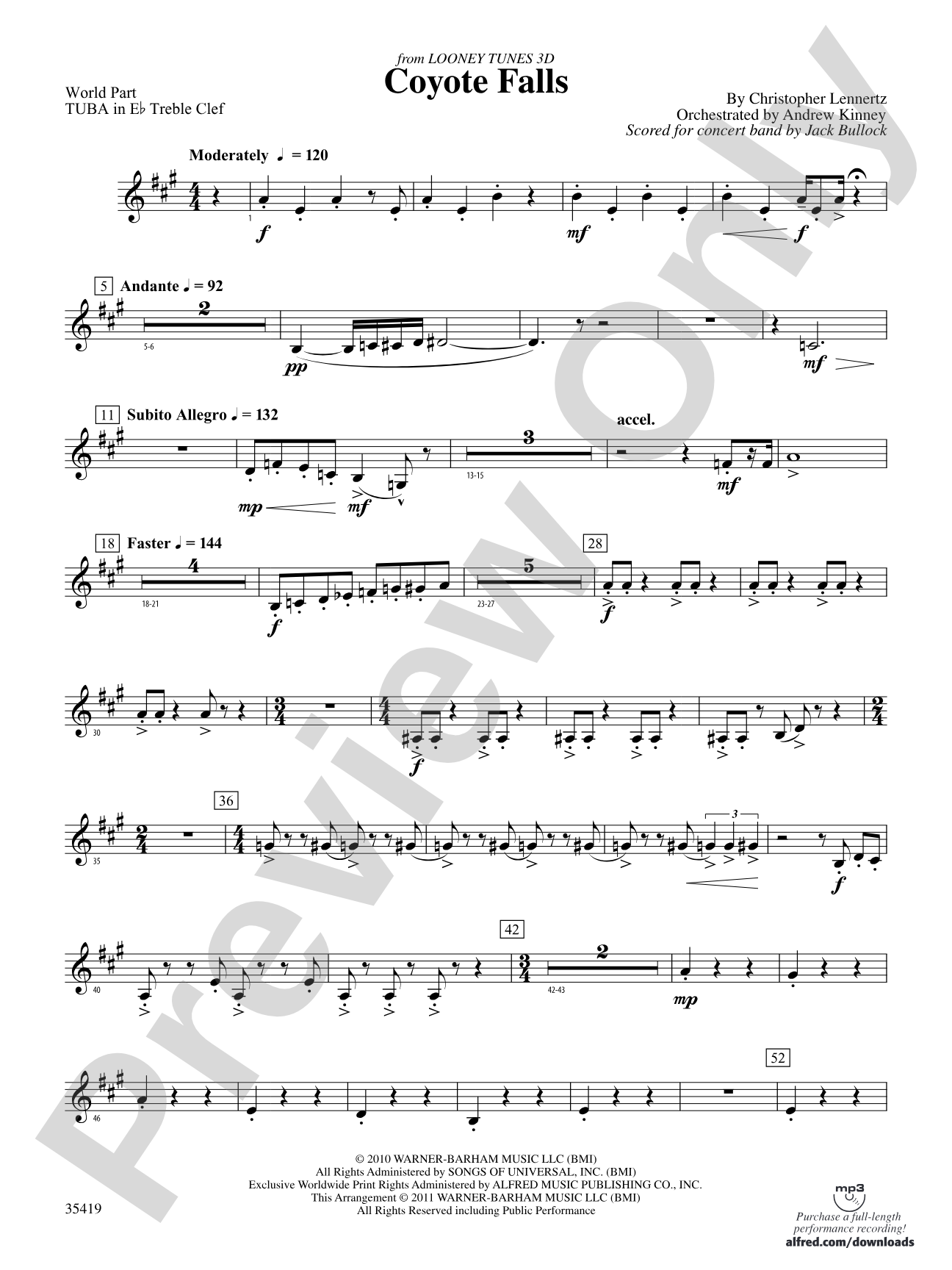
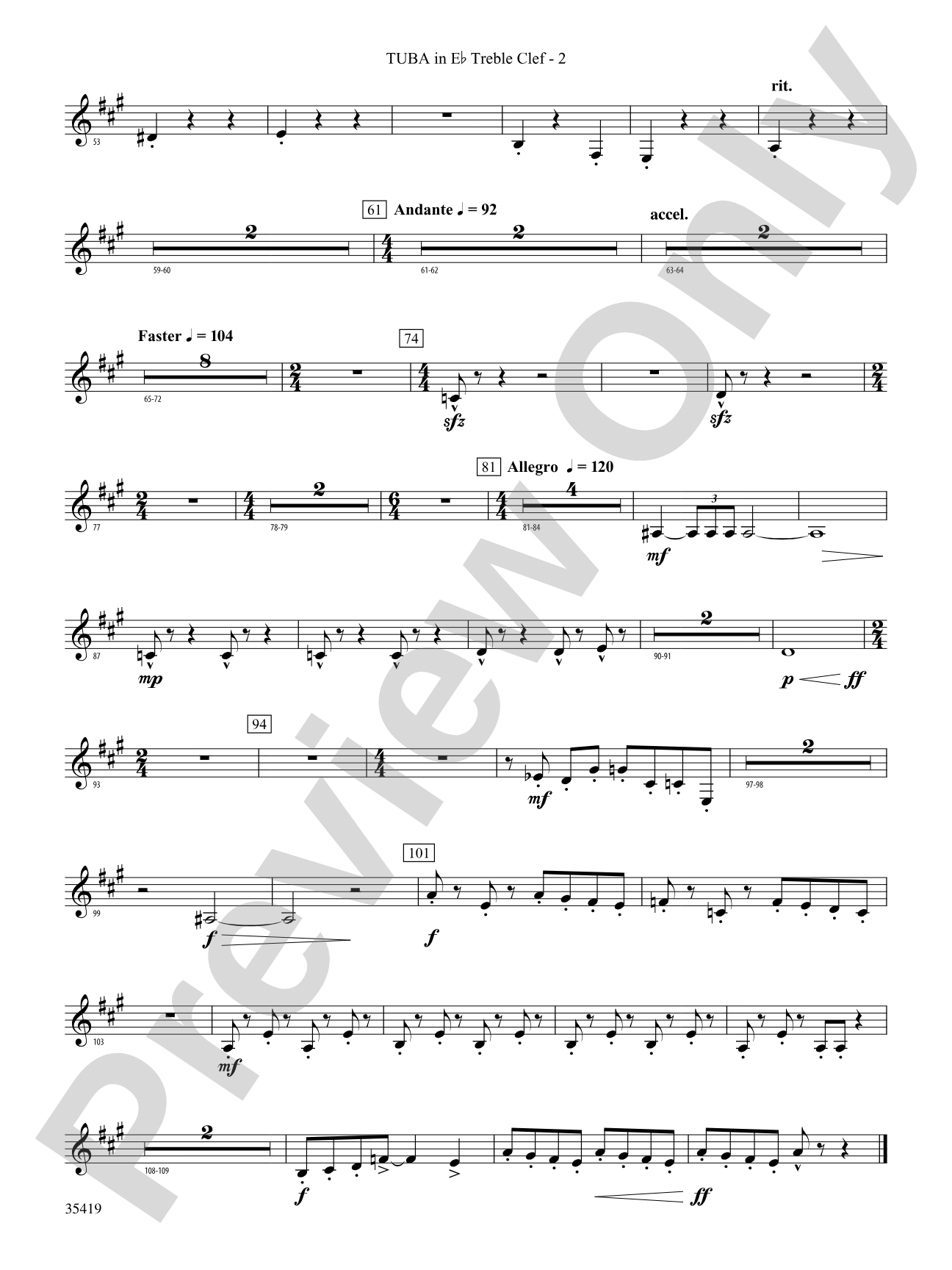

Coyote Falls (from Looney Tunes 3D): (wp) E-flat Tuba T.C.
By Christopher Lennertz / orch. Andrew Kinney, scored for concert band by Jack Bullock
Grade: 3 (Medium Easy)
Item: 00-PC-0014950_wpTBETC
$3.00
Pickup currently not available
Description
Our favorite cartoon characters have been updated to a very contemporary 3D setting. Enable your audience to mentally produce and direct a personal motion picture while your concert band performs this musical score to Coyote Falls from Looney Tunes 3D. Everyone has seen and heard a cartoon motion picture and this "personal adventure" will give your audience a first-hand experience in making and listening to their own "flick."


Don't just read it, hear it, play along with it, and watch your students grow with it. In MakeMusic Cloud, Coyote Falls (from Looney Tunes 3D): (wp) E-flat Tuba T.C. comes alive with professional accompaniment, adjustable tempo, and built-in practice tools that turn solo practice into real progress.
Open in the Player
Jump straight in and assign it today.
Start Your Free Trial
Open this title and explore the full library in minutes.
Sample Audio
1
Audio File
--:--
0:00
0:00
Sample Video
No sample videos found.
Additional Details
Series:
Pop Symphonic Band
Publisher:
Alfred Music
Page Count:
216
SKU:
00-PC-0014950_wpTBETC
More about this title
About the Composer: Christopher Lennertz
Christopher Lennertz is a film and television composer whose work spans animated features, live-action films, and episodic television. His gift for writing music that captures character and comedy while remaining musically sophisticated has made him a sought-after composer for major studios. Lennertz understands the craft of orchestration for ensemble performance and writes with both theatrical impact and practical playability in mind.
Why we love this
This arrangement brings the kinetic energy and humor of theatrical scoring to your concert band, letting your students experience firsthand how composers shape narrative and emotion through music. The Grade 3 difficulty makes the sophisticated orchestration accessible without sacrificing the punch that makes cartoon action sequences work; your band gets to sound polished and confident while having genuine fun. Programming a Looney Tunes piece signals to your audience that concert band can be contemporary, entertaining, and musically rich all at once.
What to expect
Zany and propulsive, with the rapid-fire comedic timing of classic cartoon action. The orchestration crackles with activity; there's never a dull moment, and the frequent shifts in texture and color keep everyone engaged. It's the musical equivalent of watching a character sprint off a cliff and somehow keep running in midair.
Who it's for
Concert bands at the Grade 3 level looking for contemporary, high-engagement repertoire that connects to popular culture while maintaining musical substance. Directors seeking a piece that appeals equally to student musicians and audiences; this works especially well for spring concerts or community performances where you want to showcase both musicianship and personality.
How to get the most out of it
- Balance the dialogue between melody and counter-melody sections so the storytelling comes through; lean into the lighter articulations in the woodwinds to maintain the cartoon character of the piece.
- Watch for tempo consistency during the busier passages. The Grade 3 scoring can feel deceptively fast because of rhythmic density rather than technical difficulty; a solid pulse from your section leaders keeps everyone together.
- Use dynamic contrast generously. The difference between the comedic understatement moments and the big hits is what sells the cartoon narrative to your audience.
- Let the brass section play with character during their staccato passages; this isn't concert hall seriousness, and your intonation and tone will improve when the musicians understand they're painting a scene.
How to use it
Open a concert with this piece to immediately set a lighter, more approachable tone, especially if you're pairing it with heavier classical or contemporary works later in the program. It works beautifully as a bridge between a traditional first half and a pops or family concert second half, signaling the shift in energy without losing musical credibility. Consider programming it before or after other film music to highlight the range of orchestral scoring.
Skills your students will build
- Managing rapid articulation changes and stylistic shifts within a single work
- Ensemble balance when multiple lines carry equal melodic weight
- Dynamic control and the use of contrast to shape musical narrative
- Reading and executing contemporary film music orchestration without standard concert traditions as a guide