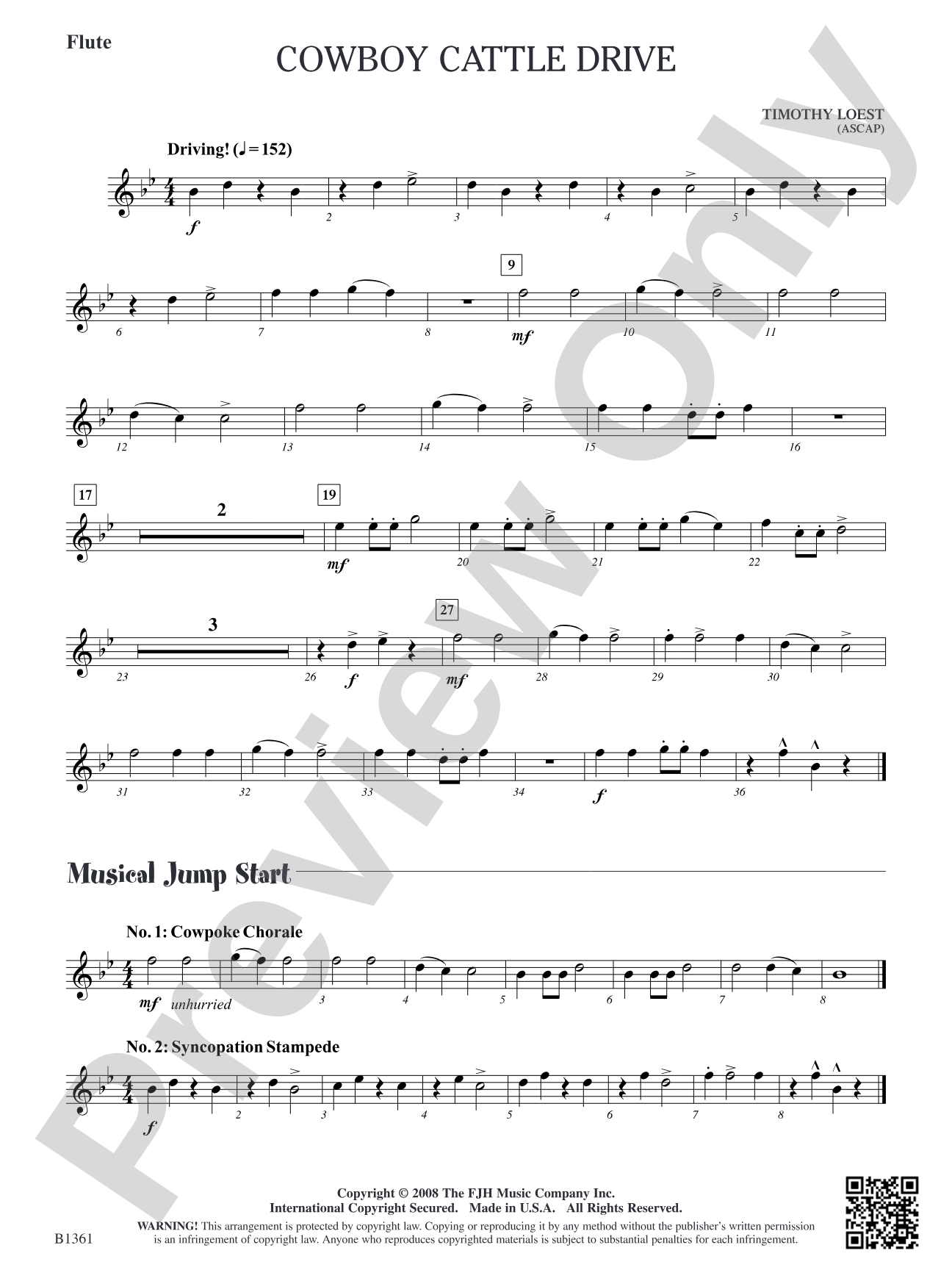
Cowboy Cattle Drive: Flute Sheet Music Preview

Cowboy Cattle Drive: Flute

By Timothy Loest

Level:.5

Item: 98-PC-DB1361_F1

Digital Download
$7.00
Description
This spirited work captures the romping sounds of an Old West cattle drive. Catchy melodies combine with driving rhythms to evoke images of stomping livestock. Temple blocks, slapstick, and other percussion instruments add to the excitement while historical program notes provide a glimpse into the life of the American cowboy. Highly entertaining!

Cowboy Cattle Drive: Flute isn't in MakeMusic Cloud just yet...but it could be. Let us know you'd like to see it, and you'll help shape what comes next. In the meantime, start a free trial and dive into thousands of interactive titles your students can play along with today.

Sample Audio
0:00
0:00
Sample Video
Additional Details
Series: FJH Starter Series
Publisher: The FJH Music Company, Inc.
SKU: 98-PC-DB1361_F1

More about this title

About the Composer: Timothy Loest

Timothy Loest

Timothy Loest has spent over thirty years in the middle school classroom while building an impressive catalog of accessible band works performed worldwide. His compositions combine musical substance with genuine pedagogical insight; he understands what young musicians can achieve because he's been teaching them firsthand. His work Cloud Gate drew over 5,000 listeners at Chicago's Millennium Park in 2017, and that same year he received the Illinois Grade School Music Association's highest honor, the Cloyd Myers Memorial Award for Excellence in Music Education.

Beyond the concert hall, Loest's music has appeared on major network television including The Tonight Show Starring Jimmy Fallon and Good Morning America. He holds degrees from Illinois State University and Northwestern University, maintains ASCAP membership, and founded Fanfare Music Press in 2022 to publish high-quality band compositions and arrangements. His association with best-selling method books like Measures of Success and Warm-ups and Beyond reflects his commitment to comprehensive musicianship instruction.

Why we love this

Loest captures the raw energy of a cattle drive without sacrificing musical substance. The combination of catchy melodies, driving rhythms, and creative percussion writing (temple blocks, slapstick) keeps young musicians engaged while the historical context transforms a fun piece into a genuine learning opportunity about American culture.

What to expect

Dust, motion, and purpose. The piece gallops forward with infectious rhythm and bold melodic lines that evoke the visual chaos of a working cattle drive. Underneath the excitement runs a current of authentic Americana that rewards listening as much as it rewards performing.

Who it's for

Young concert bands at the beginning levels who thrive on music with clear storytelling and vivid imagery. Directors looking for programming that entertains audiences while keeping rehearsal focused and achievable will find this piece does both without compromise.

How to get the most out of it

  • Let the percussion section shine during the rhythmic passages. Temple blocks and slapstick work best when the ensemble gives them space and doesn't rush; lock in the tempo with your percussion players first, then bring in the melody.
  • Balance the main theme between sections. The catchy melody will naturally draw attention, but the supporting parts drive the excitement; give brass and woodwind counterlines clear articulation cues so their rhythmic contribution lands.
  • Shape the dynamic arc across full sections rather than within them. A cattle drive has momentum, so bring energy from start to finish while resisting the urge to pull back until a natural phrase boundary arrives.

How to use it

Open a concert with this piece to establish energy and bring the audience immediately into the program's narrative. It works equally well as a crowd-pleasing closer that leaves listeners smiling. Pair it with other programmatic works or Americana-themed selections to create a thematic concert segment.

Skills your students will build

  • Rhythmic drive and sustained pulse in fast tempos
  • Balance between melody and rhythmic accompaniment
  • Articulation clarity in repeated rhythmic figures
  • Ensemble coordination with prominent percussion parts
  • Musical storytelling through programmatic context

You May Also Like