
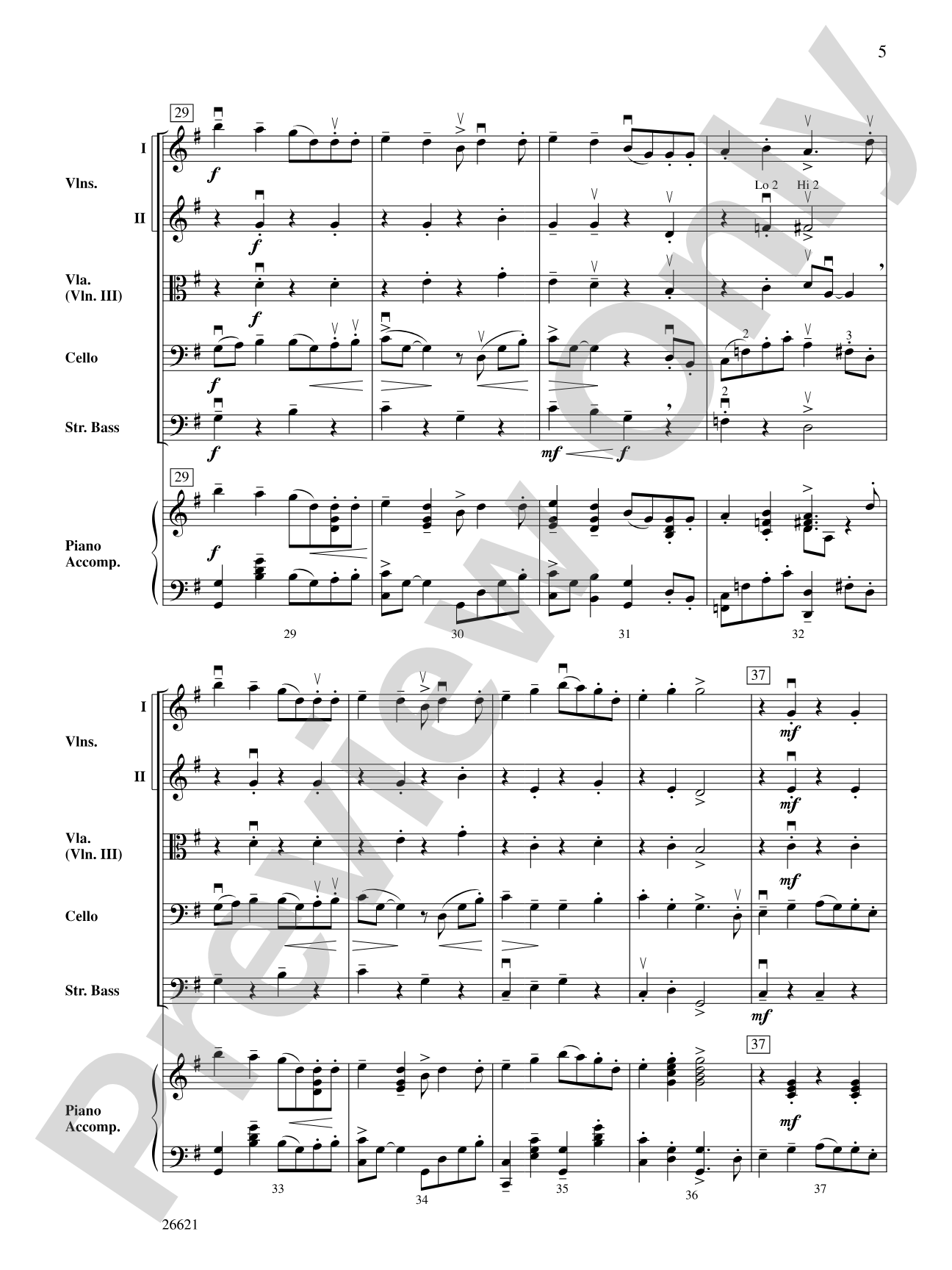
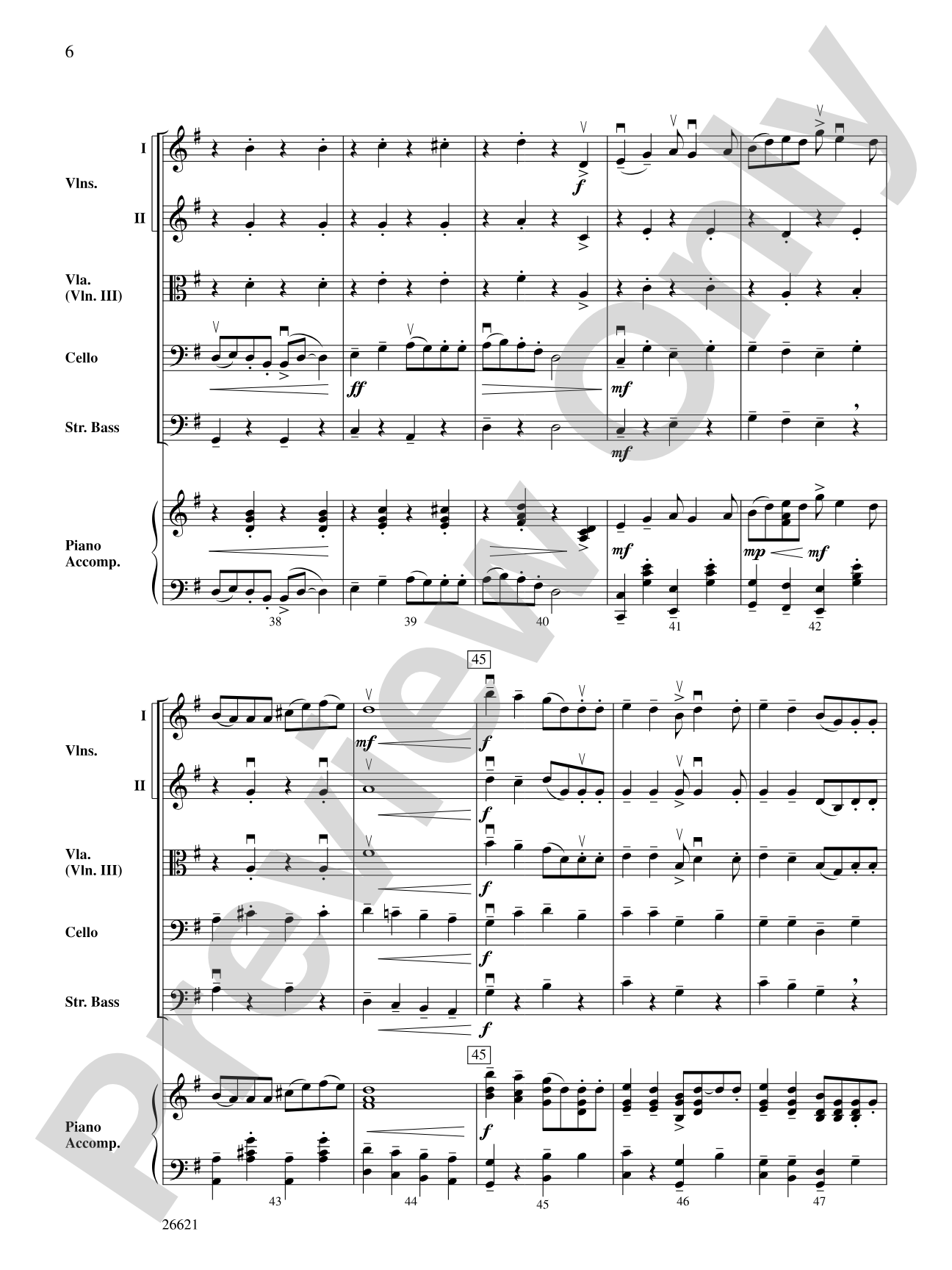
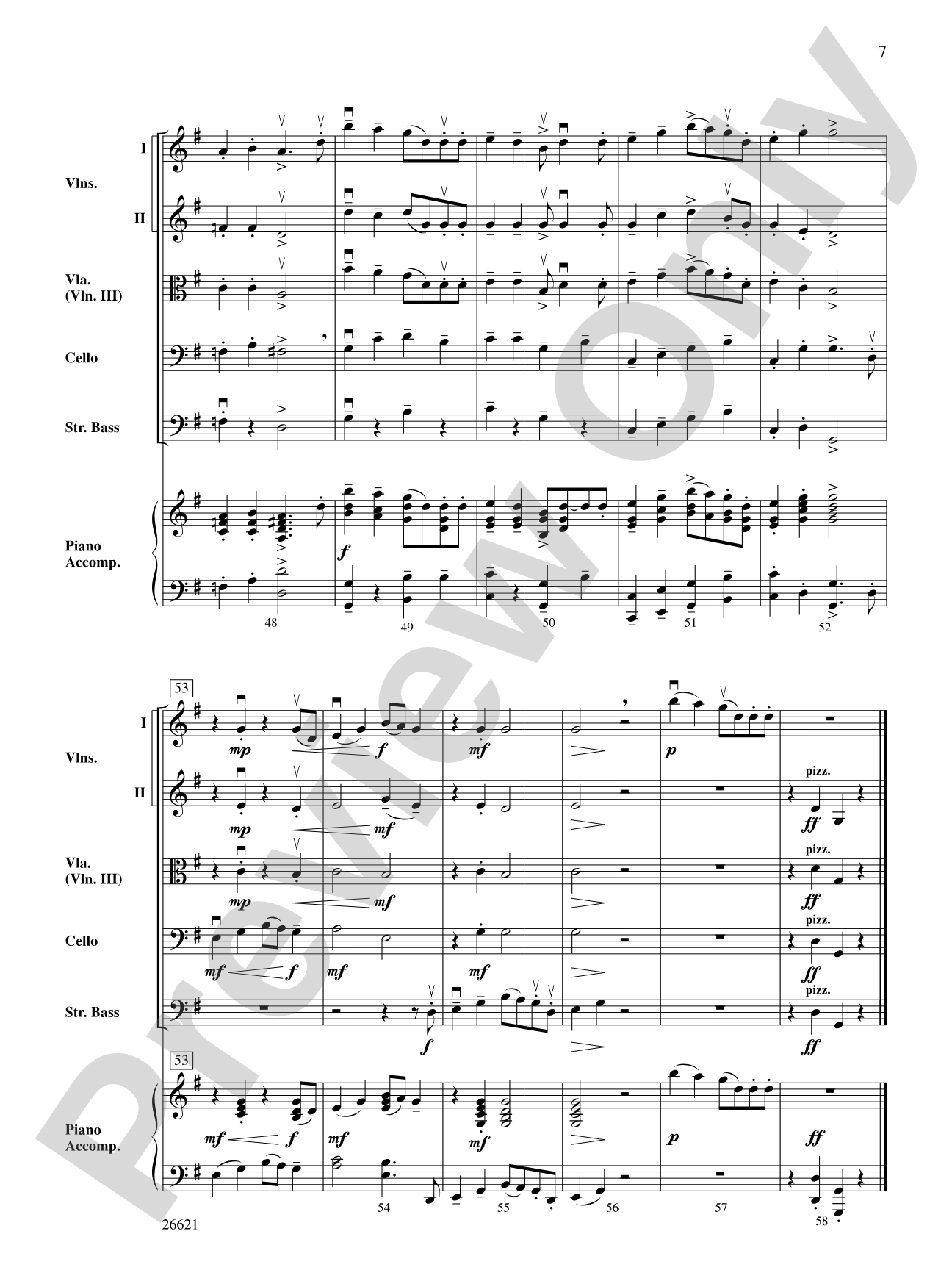


Cowboy Cactus Dance: String Orchestra Conductor Score & Parts
By Elena Roussanova Lucas
Grade: 2
Item: 00-PK-0001133

$40.00
Pickup currently not available
Buy Extra Parts (Digital PDF Download)
| Product | Price | Quantity |
|---|---|---|
| Cowboy Cactus Dance: Score | $6.00 | |
| Cowboy Cactus Dance: 1st Violin | $7.99 | |
| Cowboy Cactus Dance: 2nd Violin | $7.99 | |
| Cowboy Cactus Dance: 3rd Violin (Viola [TC]) | $7.99 | |
| Cowboy Cactus Dance: Viola | $7.99 | |
| Cowboy Cactus Dance: Cello | $7.99 | |
| Cowboy Cactus Dance: String Bass | $7.99 | |
| Cowboy Cactus Dance: Piano Accompaniment | $7.99 |
Parts Added to Cart!
Description
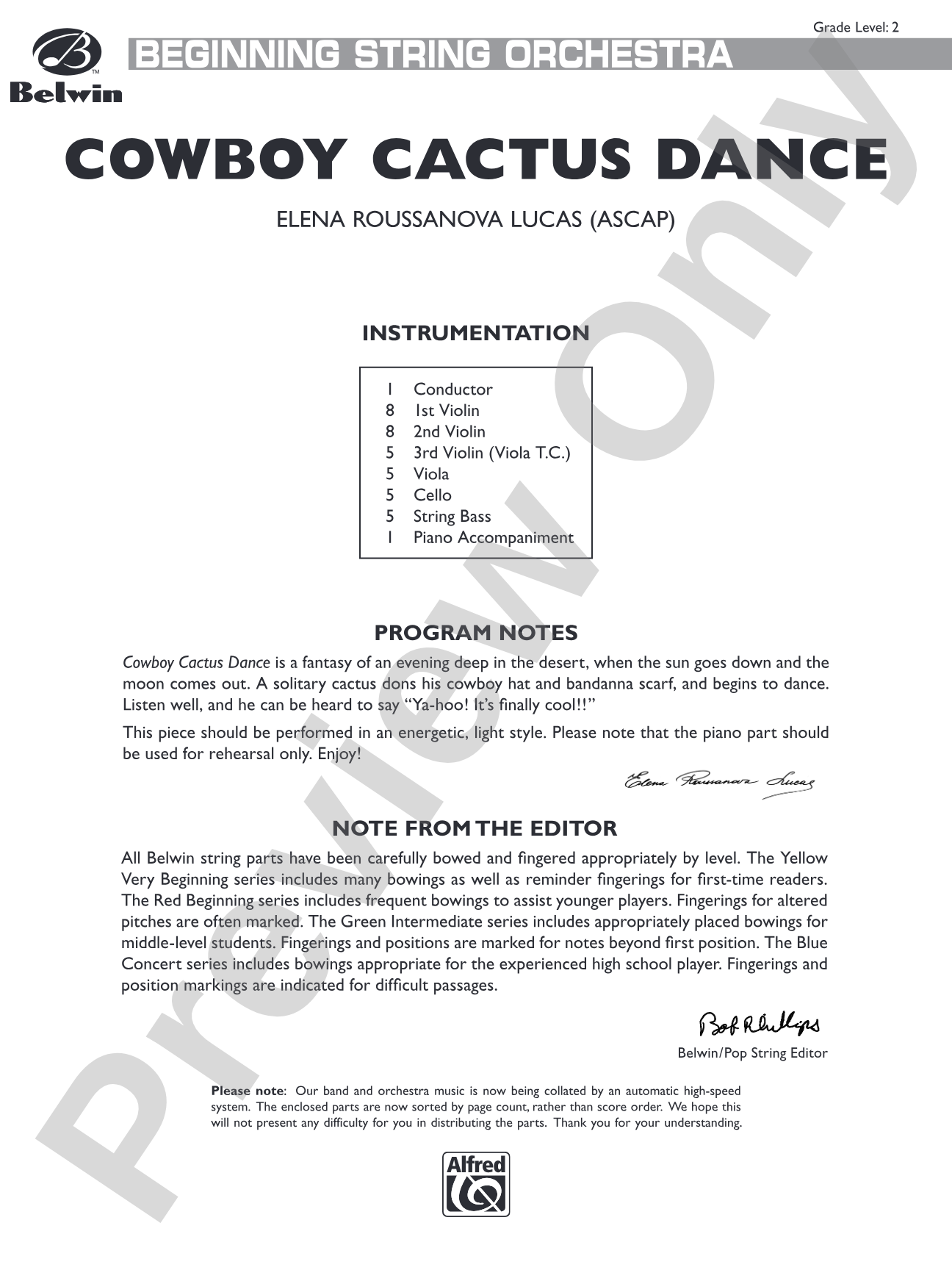
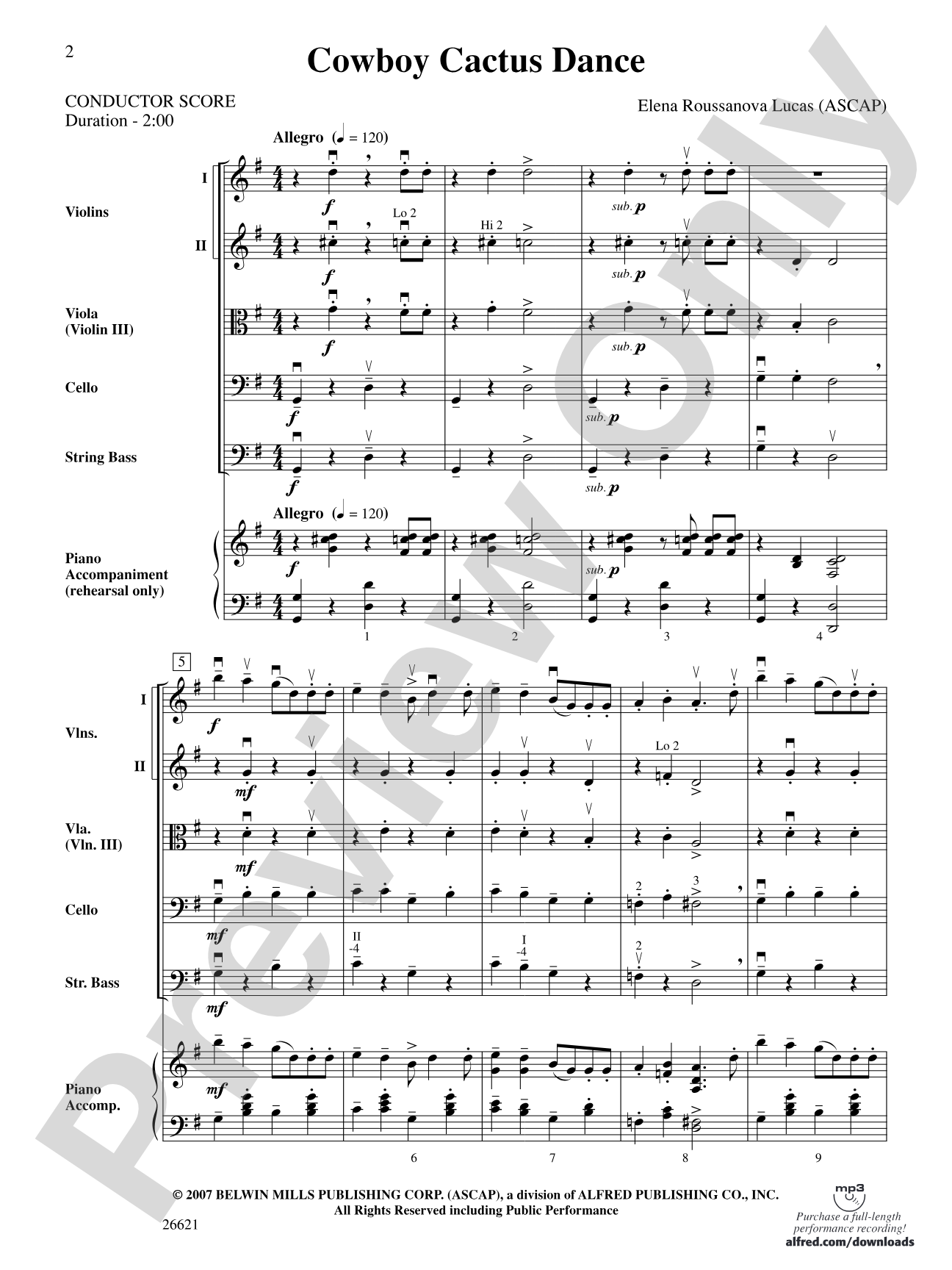
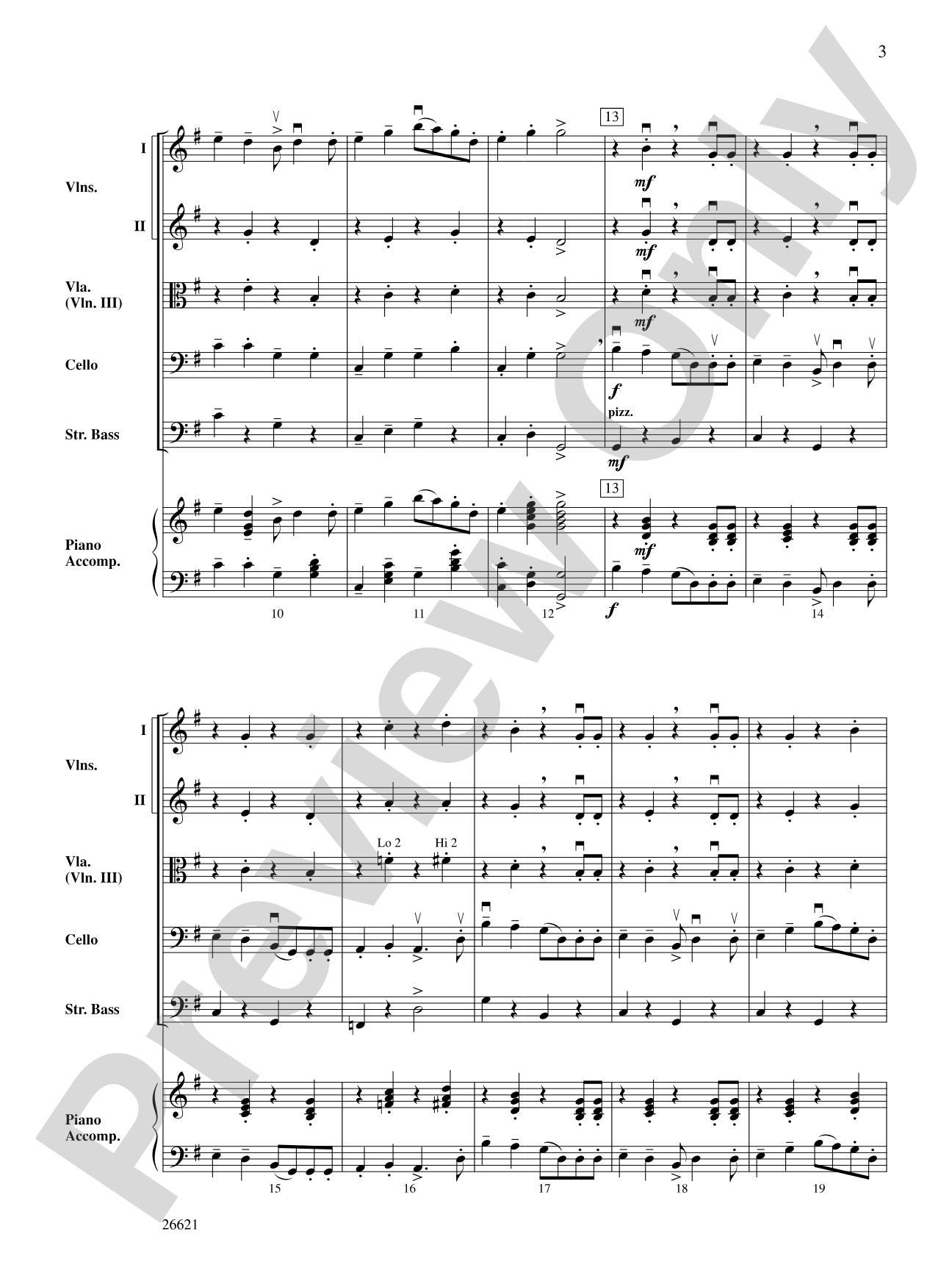
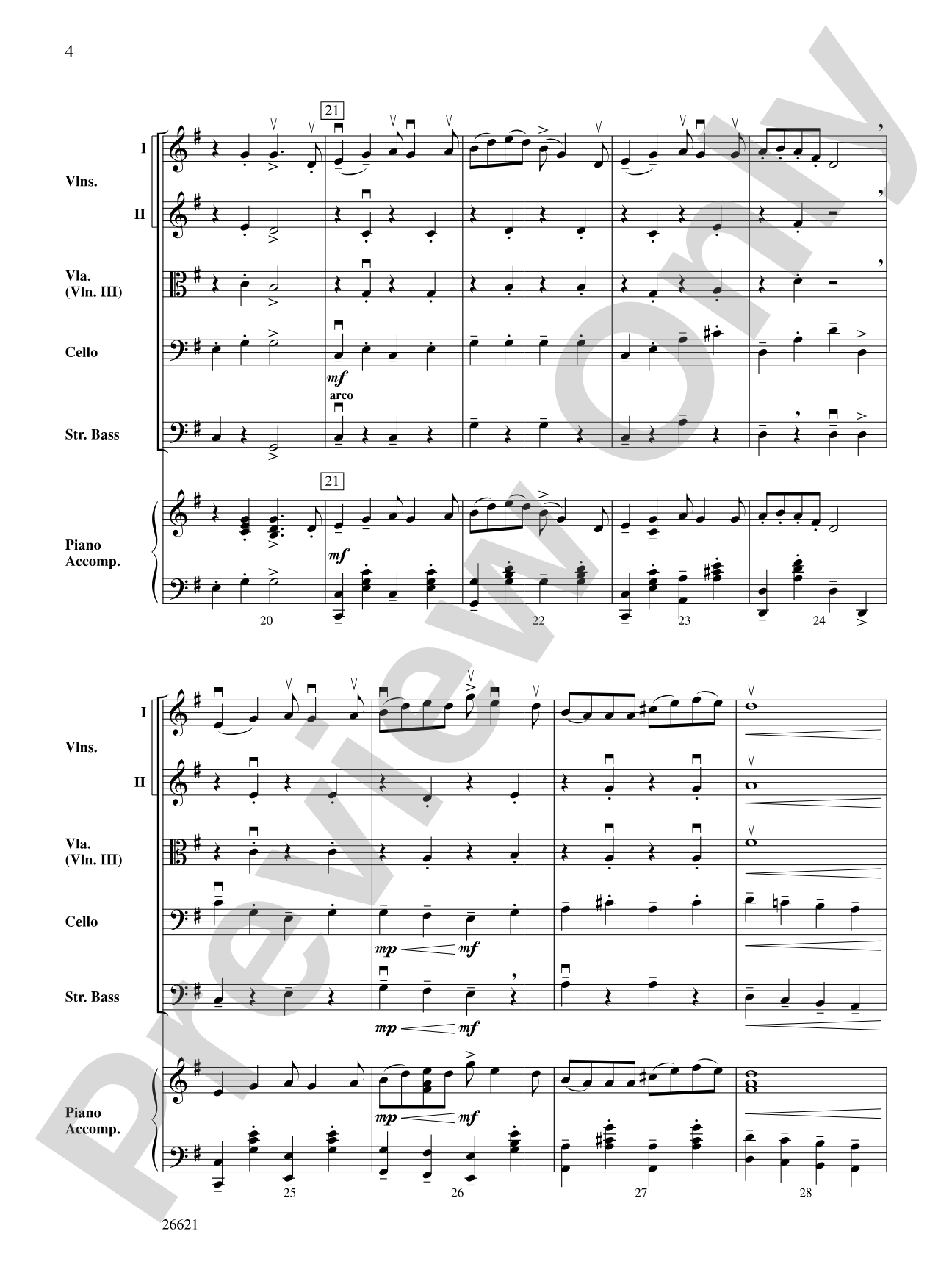
This little dance will delight! The composer leads us to a fantasy in the deep desert, after the sun goes down. Encouraged by the coolness of the evening, a cactus is spotted donning his cowboy hat and dancing in the moonlight! This title is available in MakeMusic Cloud.


Don't just read it, hear it, play along with it, and watch your students grow with it. In MakeMusic Cloud, Cowboy Cactus Dance: String Orchestra Conductor Score & Parts comes alive with professional accompaniment, adjustable tempo, and built-in practice tools that turn solo practice into real progress.
Open in the Player
Jump straight in and assign it today.
Start Your Free Trial
Open this title and explore the full library in minutes.
Sample Audio
1
Audio File
--:--
0:00
0:00
Sample Video
No sample videos found.
Additional Details
Series:
Belwin Beginning String Orchestra
Publisher:
Alfred Music
Page Count:
38
SKU:
00-PK-0001133
More about this title
About the Composer: Elena Roussanova Lucas

Elena Roussanova Lucas grew up in Moscow, where she began piano study at age three and entered the prestigious Central Music School's gifted program. She went on to study at the Tchaikovsky Conservatoire, earning the Red Diploma (Summa Cum Laude) in Composition, Music History, Theory, and Instrumentation under the mentorship of renowned composers Tihon Khrennikov and Tatiana Choodova. She also holds a diploma in Piano Pedagogy and Piano Accompaniment from the Ippolitov-Ivanov Music College.
Her compositions have been performed by major Russian orchestras, the Dallas Brass, the Russian National Orchestra Brass Quintet, and soloists including violinist Charles Castleman and trumpeter Terry Everson. Lucas has presented masterclasses in composition and performed as a pianist across Moscow, the United Kingdom, the Netherlands, and the United States, winning First Prize in a Russia-wide piano competition sponsored by the Russian Ministry of Culture. She has taught at Boston University.
Why we love this
Roussanova Lucas captures something genuinely charming here: a Grade 2 piece that entertains without talking down to young musicians. The story unfolds with real compositional imagination rather than relying on novelty alone, giving your students a piece worth investing in musically and dramatically.
What to expect
Playful, imaginative, and surprisingly vivid despite its technical simplicity. You'll hear dry humor and genuine lightness, the kind of musical storytelling that young musicians connect with immediately. The evening desert setting gives it an almost dreamy quality, a place where the impossible becomes delightful.
Who it's for
String orchestras at the Grade 2 level, including school programs building foundational ensemble skills and young players new to standard repertoire literature. This piece works equally well for students preparing for contest festivals or those performing in casual concert settings.
How to get the most out of it
- Create distinct character in the moonlit sections by shaping dynamics with the bow; even in a light dance, phrasing matters.
- Balance the whimsy of the narrative with rhythmic precision; young ensembles often rush when delighted by the story, so anchor tempo in the cello and bass parts.
- Emphasize the shift from day to night in your rehearsal by talking through the emotional arc; students who understand why a cactus dances better than those simply reading notes.
How to use it
Program this as a family concert opener or a lighter piece on a festival set to showcase your ensemble's musicality alongside more serious repertoire. Its Grade 2 accessibility makes it ideal for early-season performances when building ensemble cohesion is the priority, or as a stand-alone showpiece that audiences genuinely enjoy.
Skills your students will build
- Ensemble rhythm in unison and divisi passages
- Dynamic shaping and phrasing at an accessible level
- Bow control for articulated versus legato playing
- Reading and responding to programmatic intent
- Section balance and listening within a string orchestra texture