Coventry Carol: Timpani Sheet Music Preview

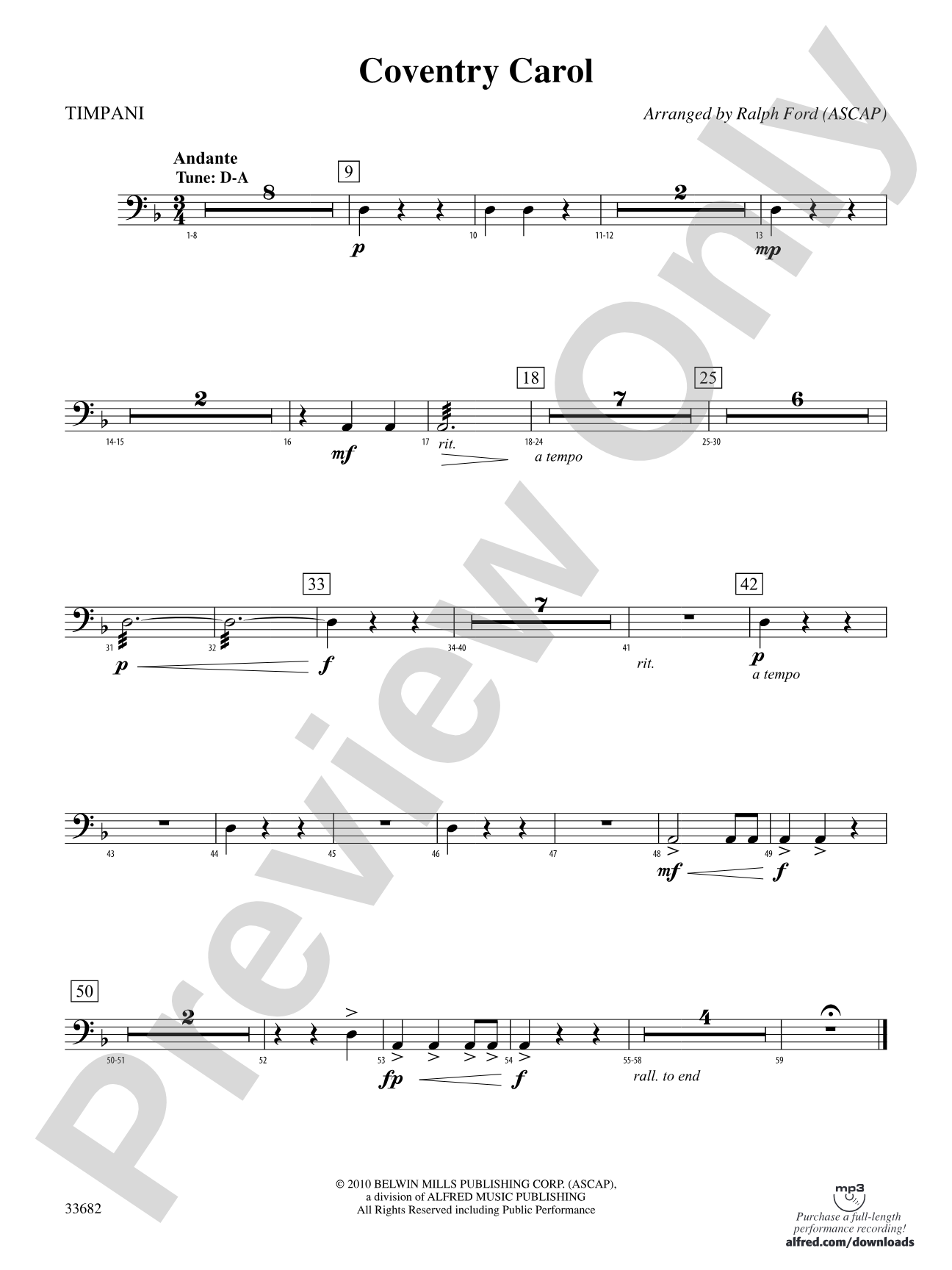
Coventry Carol: Timpani

Arr. Ralph Ford

Grade: 2.5

Item: 00-PC-0014473_TMP

Digital Download
$3.00
Description
This well-loved carol provides a wonderful introduction to music of the Renaissance and includes many opportunities to work on articulations. A great first full orchestra experience and perfect for any holiday concert!

Don't just read it, hear it, play along with it, and watch your students grow with it. In MakeMusic Cloud, Coventry Carol: Timpani comes alive with professional accompaniment, adjustable tempo, and built-in practice tools that turn solo practice into real progress.

Sample Audio
0:00
0:00
Sample Video
Additional Details
Series: Belwin Intermediate Full Orchestra
Publisher: Alfred Music
Page Count: 122
SKU: 00-PC-0014473_TMP

More about this title

About the Arranger: Ralph Ford

Ralph Ford

Ralph Ford has spent nearly three decades on university music faculties while building a parallel career as a prolific arranger and composer. His work spans orchestral, band, jazz, and marching music contexts, with more than 250 published titles for Belwin/Alfred Music. Ford began arranging professionally at fifteen and has continued to develop distinctive orchestrations that serve educational ensembles at all levels.

Beyond concert music, Ford has worked extensively in broadcast and media production, contributing jingles, commercial scoring, and news packages for national networks. His dual expertise in both academic instruction and commercial music production informs his pedagogical approach to arrangement; his scores consistently balance accessibility with genuine musical interest.

Why we love this

Ford's arrangement respects the carol's Renaissance character while making it genuinely playable for a developing orchestra. The articulation work is built into the musical texture rather than imposed as an exercise, so students absorb phrasing naturally while they play. It reads as a complete orchestral experience, not a simplified version.

What to expect

Intimate and reverent without being heavy or overly solemn. The Renaissance harmonies create a warm, slightly archaic character that reads as timeless rather than period-specific. The piece invites contemplation and rewards careful listening.

Who it's for

Orchestras in their first or second year of full ensemble experience, particularly those ready to move beyond unison melodies into genuine parts writing. Conductors introducing students to non-Baroque sacred repertoire and Renaissance style conventions will find this carol straightforward enough to rehearse efficiently while musically rewarding.

How to get the most out of it

  • Balance the melodic line between first violins and woodwinds; the carol's strength depends on a singing, unified voice at the top regardless of who carries it.
  • Shape the articulations as musical punctuation rather than technical markers. Light staccatos should breathe; longer note values need genuine weight.
  • Let the accompaniment parts have subtle dynamic shape. Supporting voices that sit still dynamically often sound lifeless; gentle swells within a soft dynamic add dimension.
  • Secure the Renaissance-era harmonic movement in early rehearsals. The chord progressions differ from Baroque or Classical conventions, and ensemble blend improves when players understand the harmonic direction.

How to use it

Pair this with modern holiday arrangements to create programming contrast that highlights stylistic range. A 2.5-grade piece works well as an opening selection before more virtuosic winter concert fare, allowing the ensemble to settle acoustically while the audience adjusts to the space. It also works effectively in a concert's quieter second half, where audiences appreciate the change of pace.

Skills your students will build

  • Renaissance harmonic progressions and voice leading conventions
  • Articulation as a musical expressive tool rather than rhythmic technique
  • Balancing between melody-dominated and accompaniment roles within orchestral texture
  • Sustaining ensemble blend across multiple middle-range parts
  • Conducting preparation for works with Renaissance or early music elements

You May Also Like