
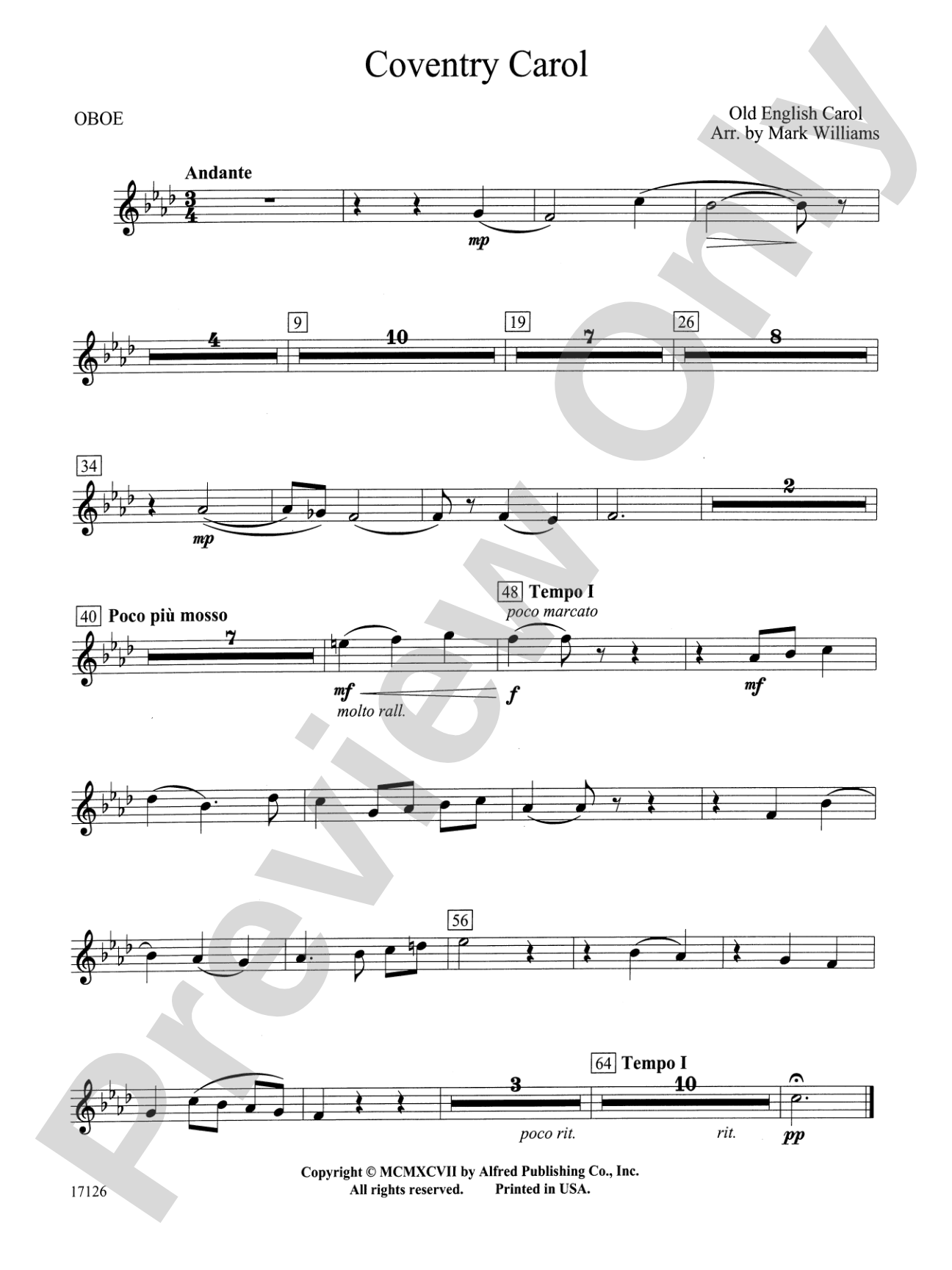

Coventry Carol: Oboe
Music by Mark Williams
Grade: 2 (Medium Easy)
Item: 00-PC-0000209_O1
$3.00
Pickup currently not available
Description
This beloved Old English carol simply glows in this sensitive, yet dramatic treatment by Mark Williams. Beginning and ending quietly, this outstanding arrangement features an alto saxophone solo, and will provide an excellent change of pace for your winter program.


Don't just read it, hear it, play along with it, and watch your students grow with it. In MakeMusic Cloud, Coventry Carol: Oboe comes alive with professional accompaniment, adjustable tempo, and built-in practice tools that turn solo practice into real progress.
Open in the Player
Jump straight in and assign it today.
Start Your Free Trial
Open this title and explore the full library in minutes.
Sample Audio
1
Audio File
--:--
0:00
0:00
Sample Video
No sample videos found.
Additional Details
Series:
Young Symphonic
Publisher:
Alfred Music
Page Count:
1
SKU:
00-PC-0000209_O1
More about this title
About the Composer: Mark Williams

Mark Williams built his reputation as one of the most prolific composers for young bands and orchestras, with over 200 published works to his name. Beyond the page, he shaped music education as co-author of the Accent on Achievement Band Method and spent decades traveling as a clinician and guest conductor across 34 states, five Canadian provinces, and Australia. His work earned recognition including the Western International Band Clinic's Gralia Competition and multiple ASCAP Special Awards.
Based in Washington for most of his career, Williams specialized in elementary band instruction and brought his expertise as a woodwind performer and arranger with the 560th Air Force Band. He held degrees from Eastern Washington University and served as conductor and artistic director for the Spokane British Brass Band, bringing the same care to ensemble leadership that defined his compositions.
Why we love this
Williams captures the carol's contemplative essence while giving your band something genuinely dramatic to sink into. The alto saxophone solo becomes a natural focal point, and the deliberate quiet opening and closing create architectural elegance that feels intentional rather than restrained. At Grade 2, this arrangement respects both the limitations and the musicianship of developing musicians.
What to expect
The piece unfolds with quiet dignity, like candlelight in a stone chapel, before deepening into something more introspective and layered. The alto saxophone solo emerges as a voice of tender reflection, supported by the band's warm harmonic backdrop. The return to stillness feels earned and contemplative, leaving listeners in a moment of genuine repose.
Who it's for
Concert bands at the middle school and early high school level will find this arrangement accessible and musically rewarding. Directors seeking a carol with genuine emotional depth rather than straightforward simplicity will appreciate Williams's layered approach. This works equally well for groups with developing soloists and those with strong alto saxophonists ready to carry a melodic responsibility.
How to get the most out of it
- Balance the saxophone solo so it projects clearly without drowning out the harmonic foundation; the ensemble's role is to frame, not overshadow, the soloist's line.
- Approach the dynamic arc with deliberate restraint in the opening phrases; resist the urge to swell too early, saving expressive weight for the middle section.
- Shape the alto saxophone entrance as a natural continuation of the band's musical thought, not an interruption; ensure seamless voice leading into the solo.
- Attend to the closing measures with particular care; the return to quietness requires disciplined ensemble control to avoid sounding rushed or diminished.
How to use it
Program this as an intermission piece or as a reflective centerpiece within a holiday concert, especially if surrounding it with more energetic seasonal selections. The single-page length makes it ideal for a concert that balances multiple works, and its emotional character offers an effective palette cleanser between festive and celebratory arrangements. Consider placing it after a rousing opening number to showcase your band's range of expression.
Skills your students will build
- Balancing solo and ensemble voices at dynamic levels below mezzo-forte
- Sustaining lyrical, connected phrasing in slower tempos
- Reading and responding to subtle expressive markings
- Supporting and accompanying a featured soloist with sensitive harmonic awareness