Coventry Carol, Fantasy on: String Bass Sheet Music Preview

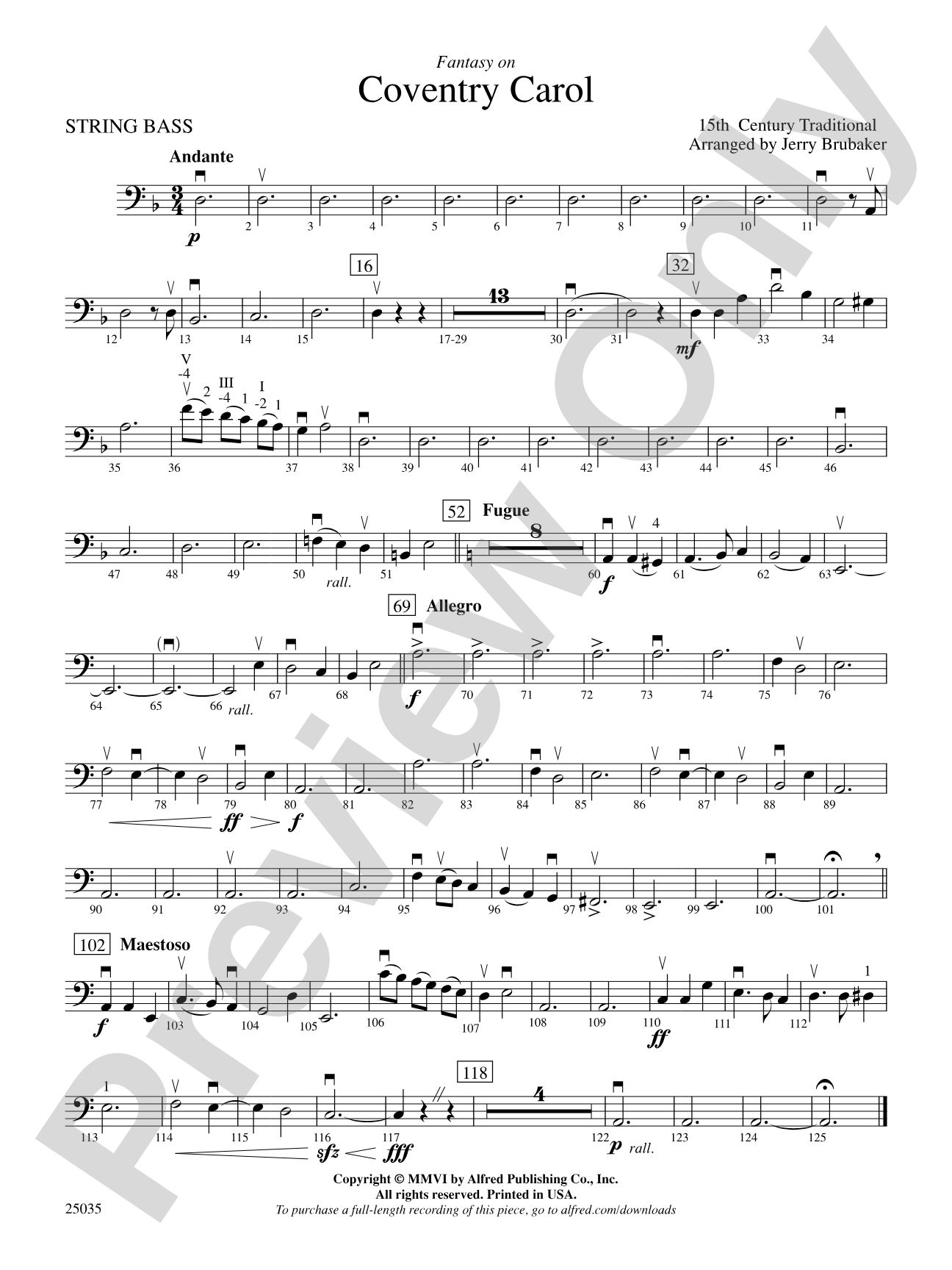
Coventry Carol, Fantasy on: String Bass

15th Century Traditional / arr. Jerry Brubaker

Grade: 3

Item: 00-PC-0001006_SB

Digital Download
$5.99
Description
"The Coventry Carol" is named after the city of Coventry. It was a carol performed in the play The Pageant of The Shearman and Tailors, written in the 15th Century as one of the Coventry Cycle Mystery Plays. For your string ensemble, Jerry Brubaker has created this marvelous "fantasy variations" on this very beautiful and well known carol. We begin with a renaissance style chorale setting followed by a fugue. There is a lively and exciting dance section leading to a dramatic and majestic conclusion. This is truly a festive holiday package magnificently tied up with bows!

Don't just read it, hear it, play along with it, and watch your students grow with it. In MakeMusic Cloud, Coventry Carol, Fantasy on: String Bass comes alive with professional accompaniment, adjustable tempo, and built-in practice tools that turn solo practice into real progress.

Sample Audio
0:00
0:00
Sample Video
Additional Details
Series: Belwin Concert String Orchestra
Publisher: Alfred Music
Page Count: 122
SKU: 00-PC-0001006_SB

More about this title

About the Arranger: Jerry Brubaker

Jerry Brubaker

Jerry Brubaker is an accomplished arranger and composer whose work spans educational and professional ensembles. His arrangements are known for respecting the integrity of source material while creating engaging variations that suit the technical level of student orchestras. Brubaker has contributed significantly to the Belwin Concert String Orchestra series, providing directors with repertoire that balances musical substance with accessibility.

Why we love this

This arrangement transforms a medieval carol into a multi-movement fantasy that keeps ensembles engaged without overwhelming them. The structural variety—Renaissance chorale, fugue, dance, and majestic conclusion—gives conductors a complete holiday package that demonstrates musical architecture and compositional technique at a manageable Grade 3 level. Students experience legitimate contrapuntal writing and stylistic contrast without sacrificing the carol's essential character.

What to expect

The arrangement unfolds like a musical narrative, beginning with reverent simplicity and evolving through intellectual rigor, festive energy, and triumphant celebration. You hear the carol's medieval origins in the opening, then witness it refracted through Baroque counterpoint and rhythmic vitality before arriving at a grand, celebratory finale that honors its sacred roots.

Who it's for

String orchestras at the Grade 3 level seeking holiday repertoire with substance and variety. This works equally well for ensembles preparing a winter concert or looking to add a significant choral-inspired work to their year without relying only on arrangements of secular material.

How to get the most out of it

  • Balance the opening chorale setting so the melody sings through without the supporting voices becoming too dense; Renaissance texture thrives on clarity between lines.
  • Prepare the fugal section by isolating subject entries in rehearsal; having individual sections hear how the theme passes through the orchestra prevents ensemble confusion.
  • Control the tempo and rhythmic precision in the dance section—the excitement comes from crisp articulation and confident pulse rather than racing.
  • Shape the dramatic conclusion with gradual dynamic and tempo control; let the majestic final statements resonate fully without rushing the ending.

How to use it

Program this as the centerpiece of a winter concert, pairing it with shorter works to create a themed first half. Its substantial length and multi-movement structure also make it ideal for spring concerts when you want to showcase student growth in technique and ensemble control without leaving the holiday season entirely behind.

Skills your students will build

  • Reading and balancing Renaissance polyphonic texture
  • Following fugal subject entries and contrapuntal development
  • Executing rhythmic precision in dance-style articulation and phrasing
  • Responding to nuanced dynamic and tempo control across multiple sections
  • Understanding thematic transformation and variation as compositional tools

You May Also Like