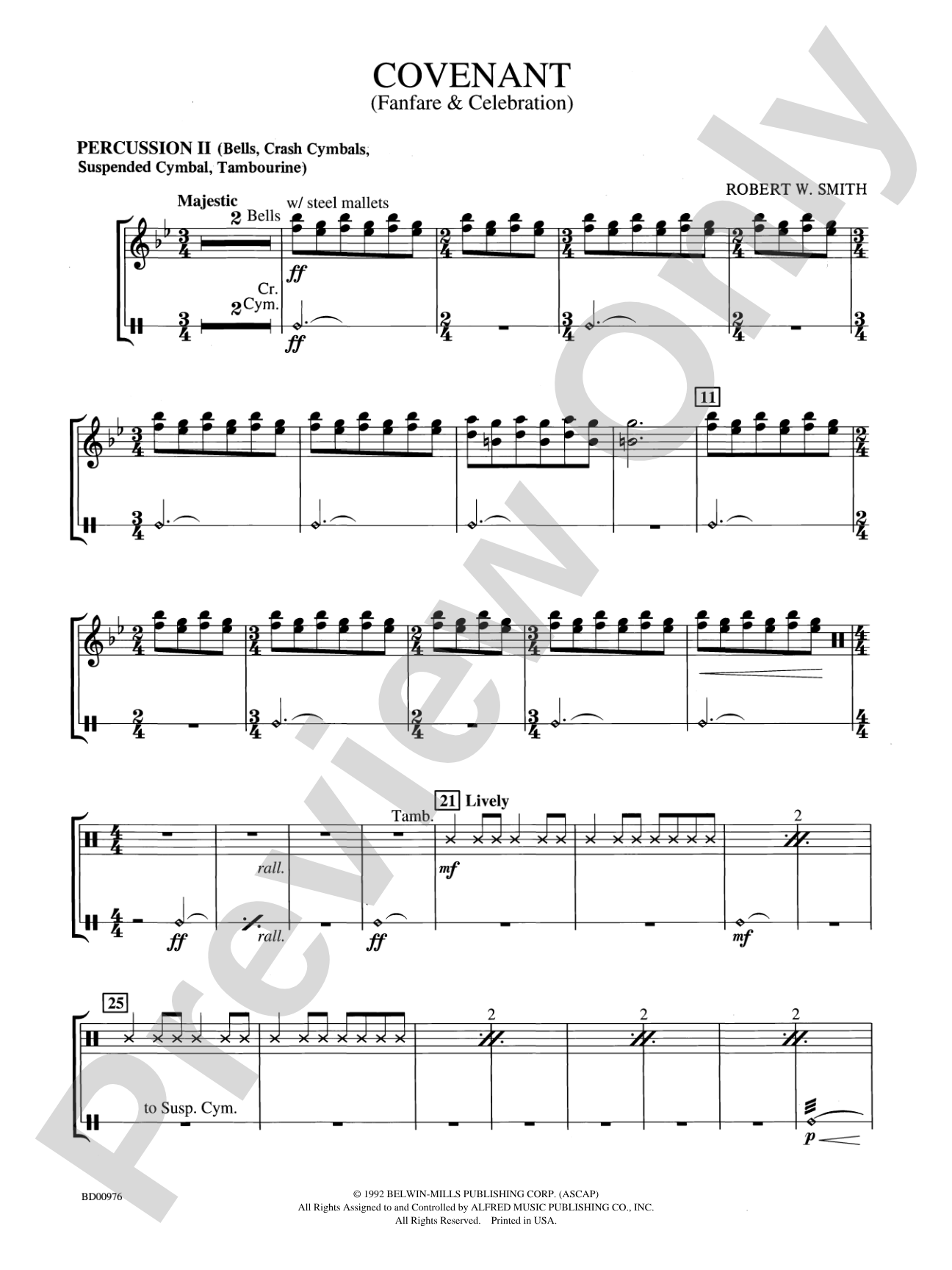
Covenant: 2nd Percussion Sheet Music Preview

Covenant: 2nd Percussion

Fanfare and Celebration

By Robert W. Smith

Grade: 4 (Medium)

Item: 00-PC-0014646_PC2

Digital Download
$3.00
Description
With the bold entrance of the chimes, the musical celebration begins. Turbulent energy unfolds in brilliant waves of sound. A rhythmic base soon becomes established and propels this work with finely focused thrust. Intense energy is released with contrasting flowing musical lines. An important new work.

Don't just read it, hear it, play along with it, and watch your students grow with it. In MakeMusic Cloud, Covenant: 2nd Percussion comes alive with professional accompaniment, adjustable tempo, and built-in practice tools that turn solo practice into real progress.

Sample Audio
0:00
0:00
Sample Video
Additional Details
Series: Belwin Concert Band
Publisher: Alfred Music
Page Count: 272
SKU: 00-PC-0014646_PC2

More about this title

About the Composer: Robert W. Smith

Robert W. Smith

Robert W. Smith stands among America's most performed composers for concert band and orchestra, with over 400 published works distributed primarily through Alfred Music. He holds degrees from Troy State University and the University of Miami, and his original compositions have been performed across North America, Europe, Australia, and Asia. His symphonic works, including The Divine Comedy and The Odyssey, have become widely recognized in international music circles.

Beyond the concert hall, Smith's music has reached millions through television broadcasts, ceremonial events, and major productions spanning from the opening of the Macy's Thanksgiving Day Parade to the Olympic Games and performances honoring world leaders. His work The Tempest and similar pieces for developing ensembles have established themselves as cornerstones of the band repertoire. As a guest conductor and clinician, he has led ensembles throughout the United States, Canada, Japan, Australia, and Europe.

Why we love this

Covenant showcases Smith's gift for structural clarity and visceral impact. The opening chimes announcement draws listeners in immediately, and the piece sustains momentum through expertly voiced contrasts between turbulent passages and flowing lyrical material, making it engaging for both ensemble and audience without sacrificing musical substance.

What to expect

Covenant opens with ceremonial confidence and builds into something larger than itself. The music swells and recedes in waves, moving between moments of turbulent excitement and passages of genuine lyricism. It feels like a celebration anchored in real emotional content rather than surface brilliance.

Who it's for

Concert bands working at the Grade 4 level who want a contemporary work with genuine musical substance and immediate audience appeal. Directors seeking a centerpiece that balances technical challenge with compositional sophistication will find Covenant rewarding for both players and listeners.

How to get the most out of it

  • Shape the opening chime entrance with intention; this is your dramatic gateway into the piece. Let the sound bloom without rushing to the next moment.
  • Balance the rhythmic foundation carefully so it propels rather than pounds. The Grade 4 scoring should allow clarity at performance tempo without muddying the texture.
  • Distinguish the flowing passages by releasing the intensity of the turbulent sections. Conduct these contrasts visibly so the ensemble understands the emotional shift.
  • Ensure the brilliant waves of sound maintain internal clarity across all sections. Test balance in full ensemble before transitioning to sectional work.

How to use it

Covenant works beautifully as a concert centerpiece or the opening selection for a program needing a strong, modern voice. Its blend of accessibility and ambition makes it ideal for spring concerts where you want to showcase what your band can do musically and technically.

Skills your students will build

  • Balancing multiple melodic lines in a dense texture
  • Executing rapid dynamic shifts and transitions
  • Sustaining energy and focus through extended passages
  • Interpreting and responding to explicit compositional contrasts (turbulent versus flowing material)
  • Developing precision in rhythmic foundation while maintaining musical flexibility

You May Also Like