
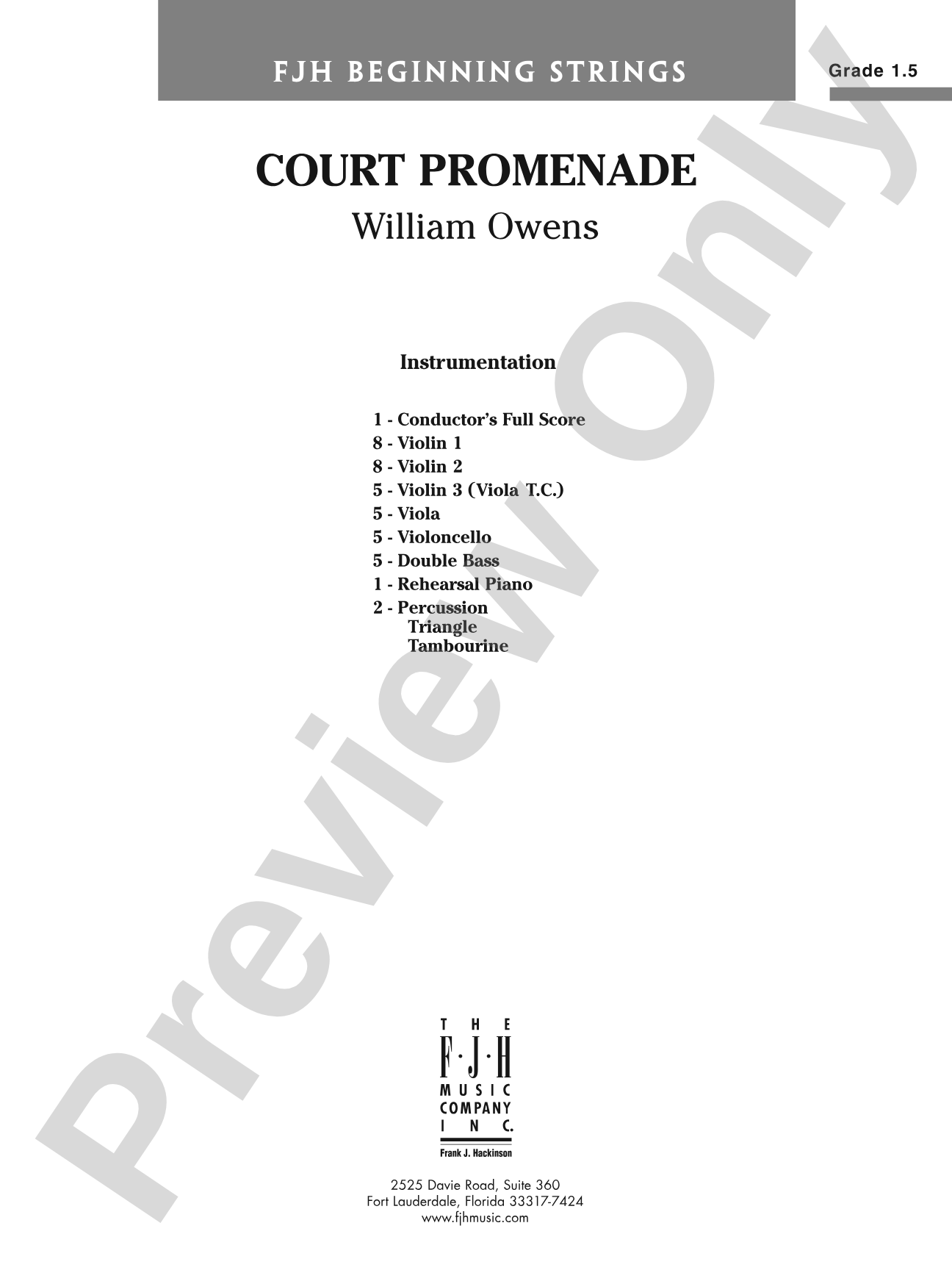
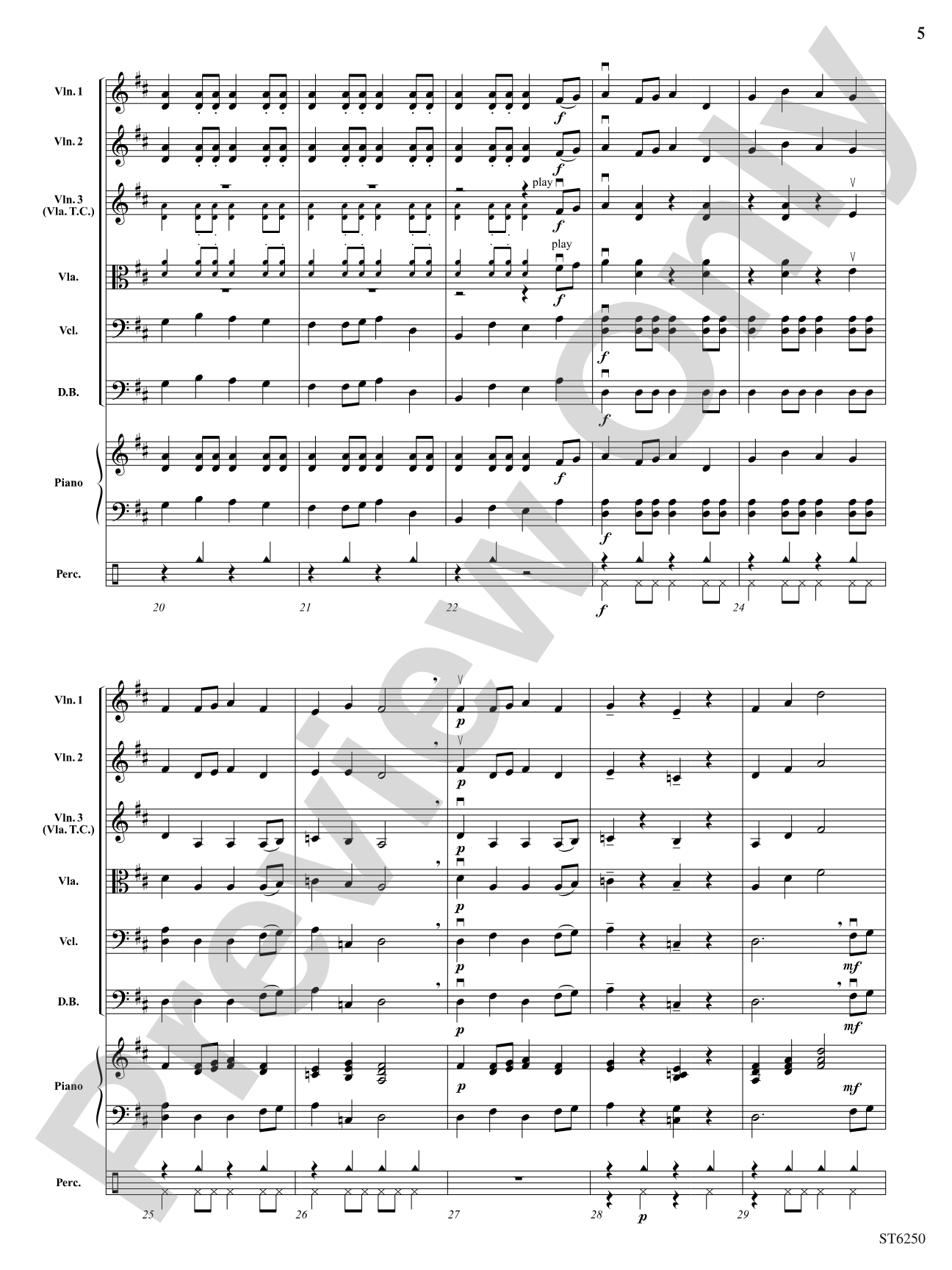
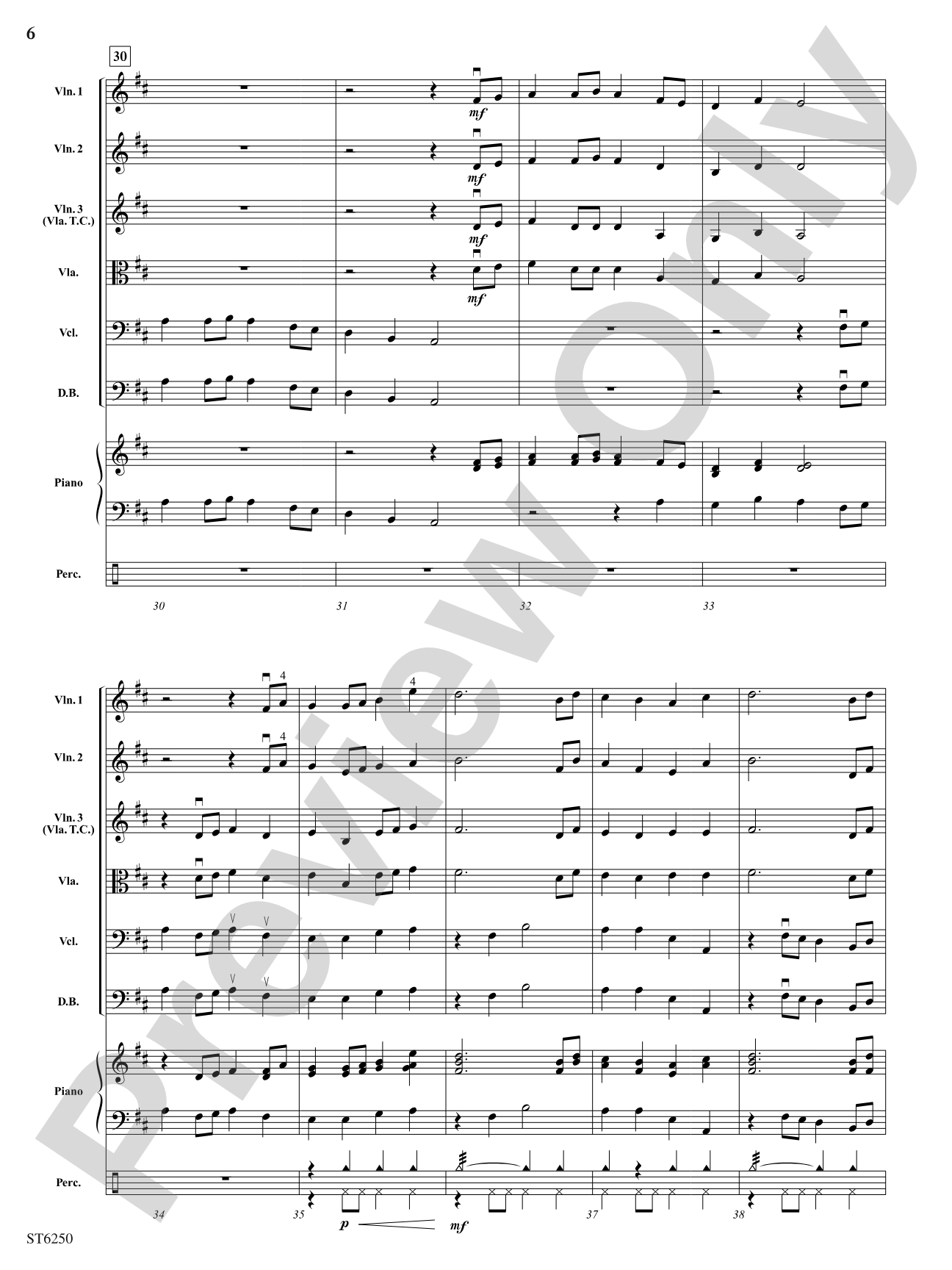
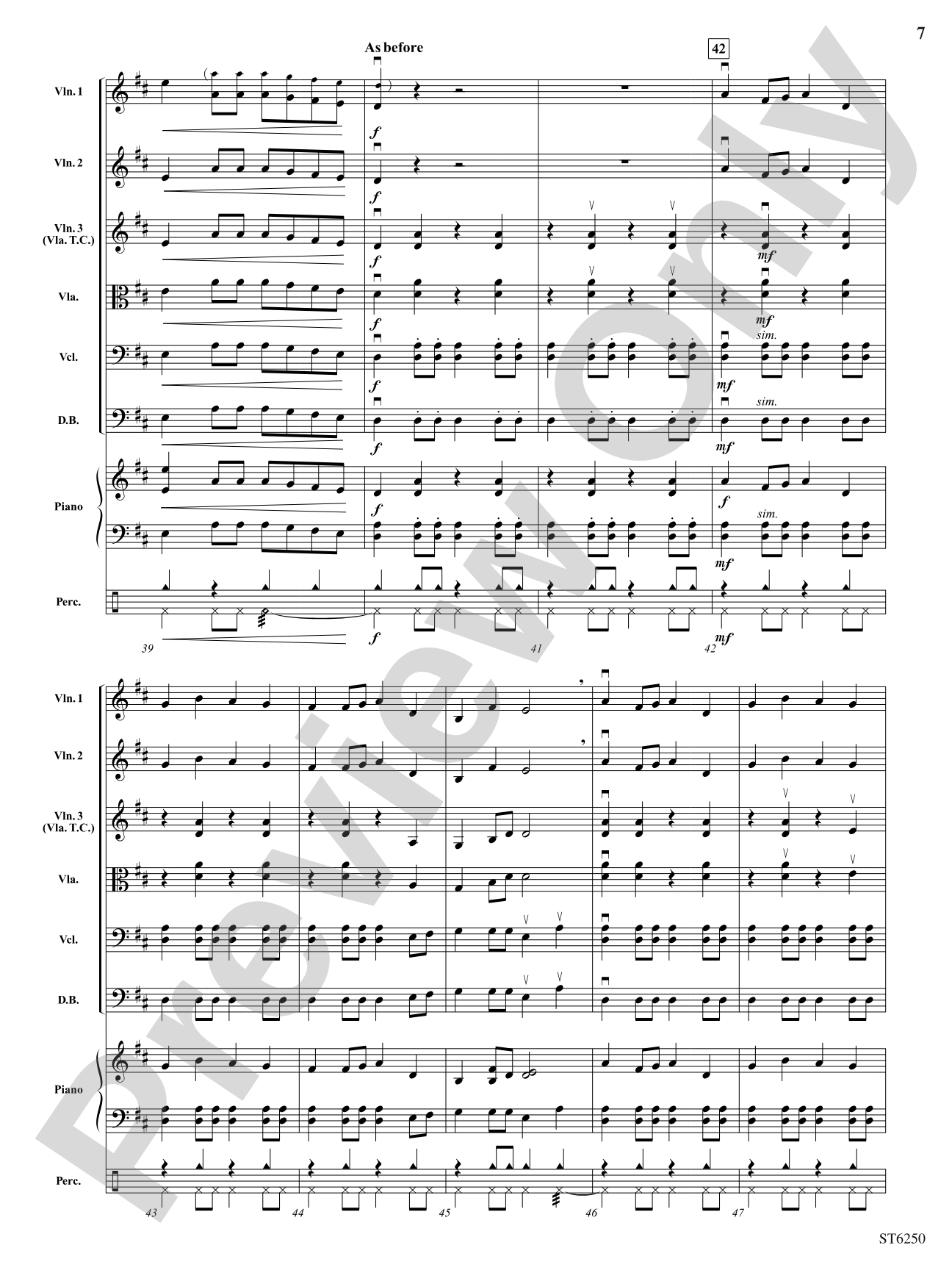
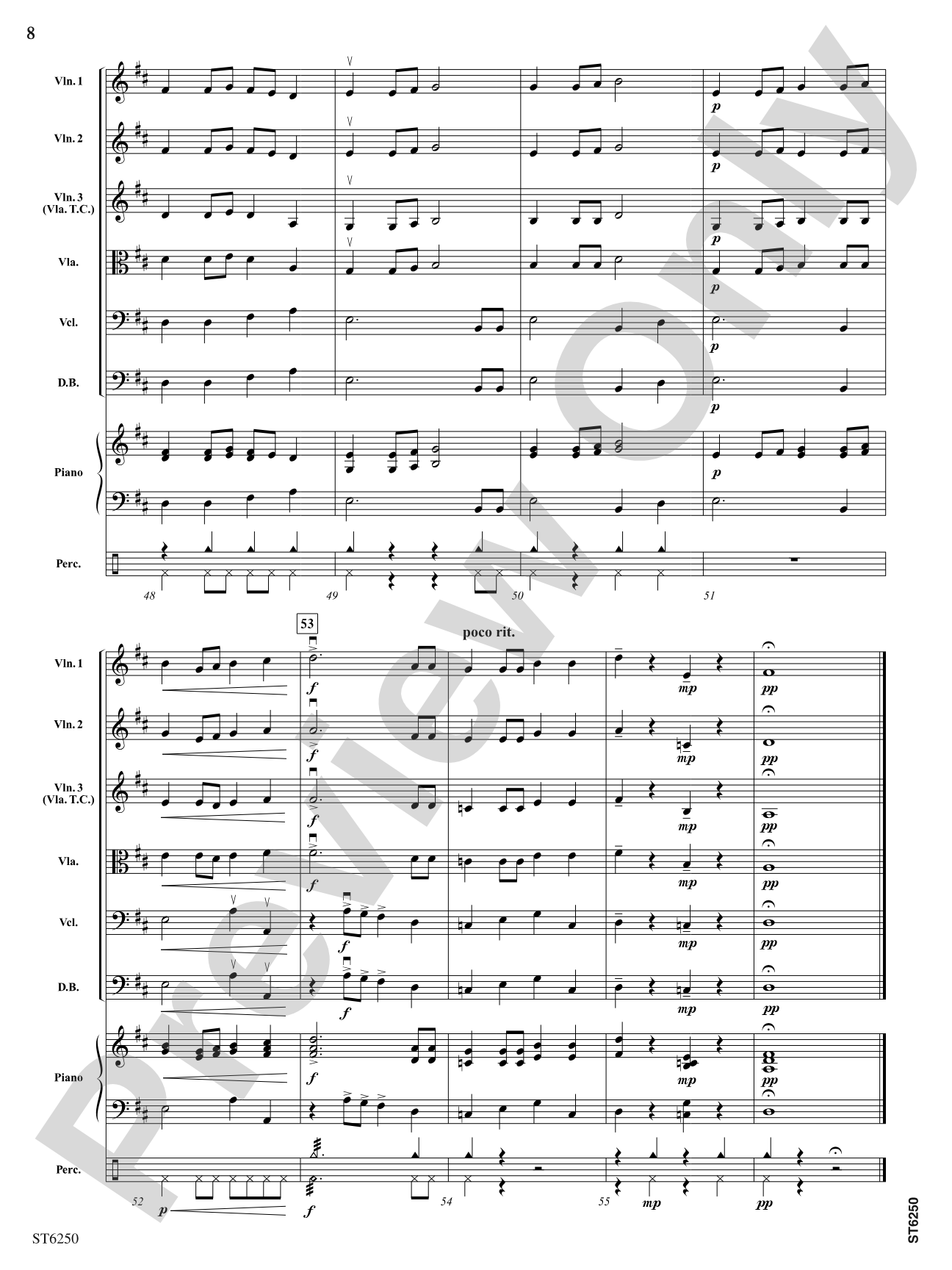

Court Promenade: String Orchestra Conductor Score & Parts
By William Owens
Grade: 1.5
Item: 98-DST6250
$40.00
Pickup currently not available
Buy Extra Parts (Digital PDF Download)
| Product | Price | Quantity |
|---|---|---|
| Court Promenade: Score | $5.00 | |
| Court Promenade: Violin 1 | $7.00 | |
| Court Promenade: Violin 2 | $7.00 | |
| Court Promenade: Violin 3 (Viola T.C.) | $7.00 | |
| Court Promenade: Viola | $7.00 | |
| Court Promenade: Violoncello | $7.00 | |
| Court Promenade: Double Bass | $7.00 | |
| Court Promenade: Rehearsal Piano | $7.00 | |
| Court Promenade: Percussion | $7.00 |
Parts Added to Cart!
Description
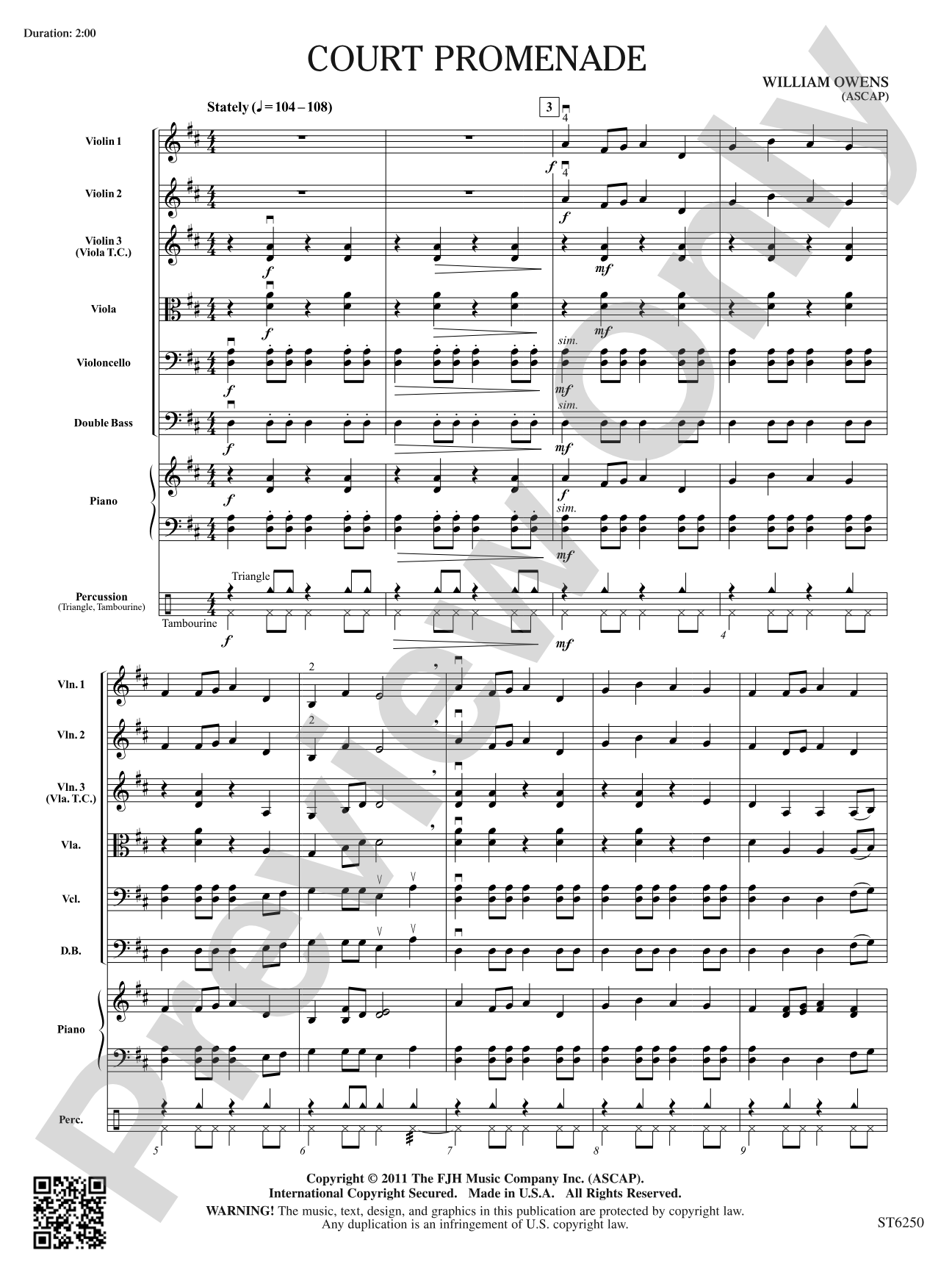
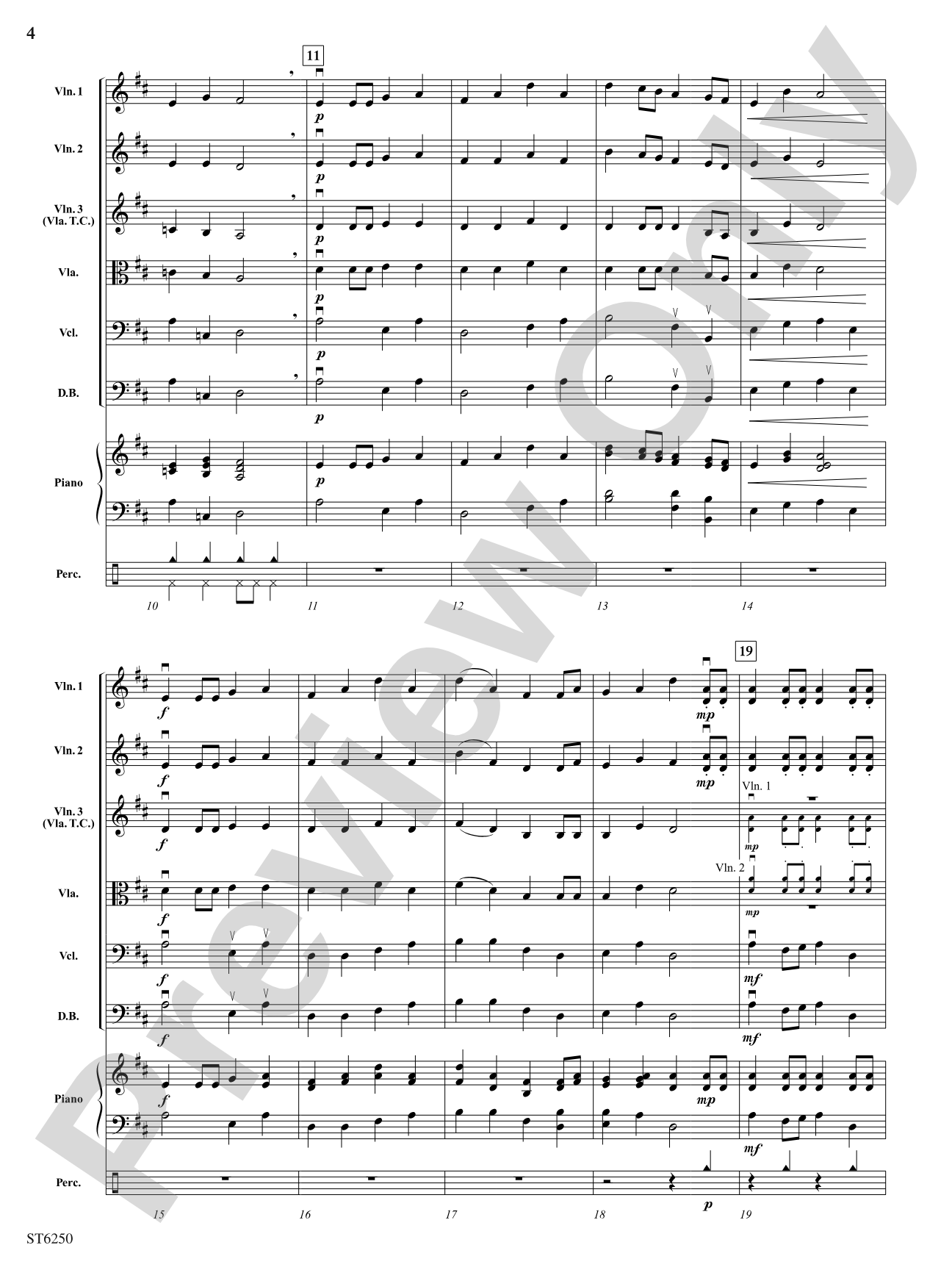
This dignified work conjures images of 17th century France with its stately melodies. Students explore a full dynamic spectrum as the piece develops and all sections have melodic material. Optional percussion parts are quite simple and add a wonderful period character to the performance.


Court Promenade: String Orchestra Conductor Score & Parts isn't in MakeMusic Cloud just yet...but it could be. Let us know you'd like to see it, and you'll help shape what comes next. In the meantime, start a free trial and dive into thousands of interactive titles your students can play along with today.
Request This Title
Tell us you want it.
Start Your Free Trial
Explore everything that's ready to play right now.
Sample Audio
1
Audio File
--:--
0:00
0:00
Sample Video
No sample videos found.
Additional Details
Series:
FJH Beginning Strings
Publisher:
The FJH Music Company, Inc.
SKU:
98-DST6250
More about this title
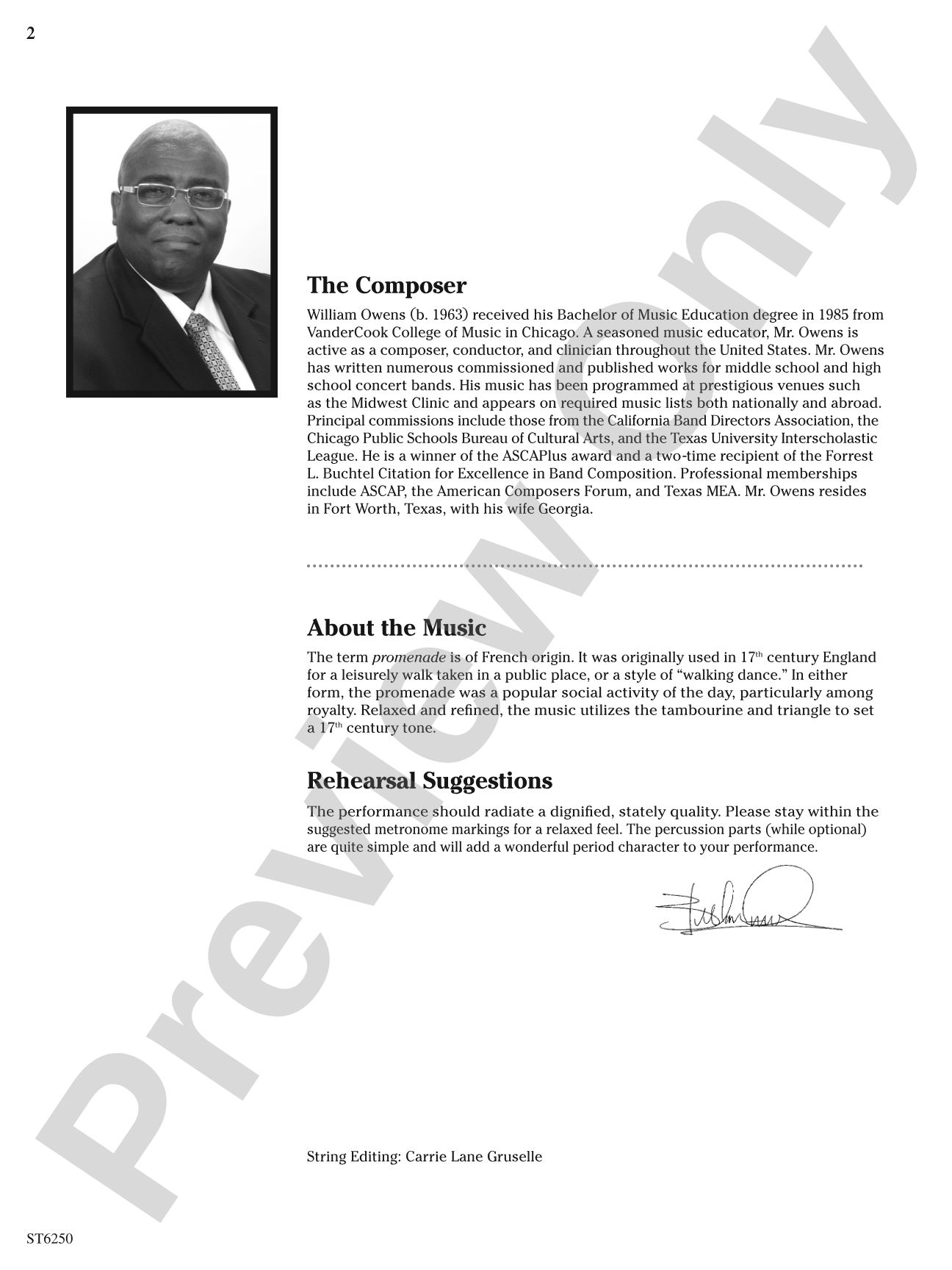
About the Composer: William Owens
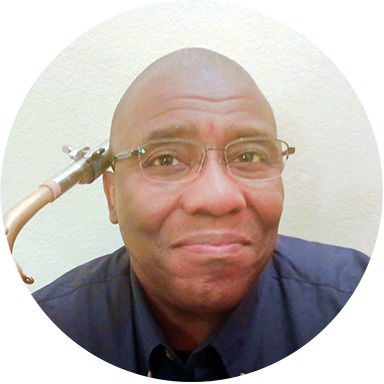
William Owens has built a distinguished career as a composer, conductor, and clinician whose work spans nearly three decades. Since graduating from VanderCook College of Music in 1985, he has authored over 300 compositions for concert band, string orchestra, and chamber ensembles, earning recognition from ASCAP, the Texas Music Educators Association, and the American Bandmasters Association. His writing is known for its pedagogical clarity and practical instrumentation choices, qualities that have made his music a fixture on festival and contest lists across North America.
Owens spent 30 years as a band director in Texas before retiring in 2014, a background that deeply informs his compositional approach. He holds memberships in Phi Beta Mu International Bandmasters Fraternity and has received commissions from institutions including South Plains College and the American Bandmasters Association. His alma mater recognized him as a Distinguished Alumnus in acknowledgment of his contributions to music education.
Why we love this
Owens crafts this Grade 1.5 work with remarkable control over texture and melodic distribution. Every string section gets genuine musical material rather than functional harmony parts, which keeps younger players engaged and invested in the ensemble sound. The optional percussion parts are genuinely simple enough for beginning players while adding authentic period color without complexity.
What to expect
Court Promenade evokes the refined, measured elegance of French Baroque court life. The stately melodies and dignified pacing create an atmosphere of ceremonial movement, while the unfolding dynamic spectrum adds subtle drama without abandoning the piece's fundamental grace.
Who it's for
This work suits string orchestras beginning to explore dynamic range and ensemble balance. It's designed for conductors seeking repertoire that gives every section a stake in the musical narrative while maintaining technical accessibility.
How to get the most out of it
- Shape the opening melodies with a clear sense of phrase, even at Grade 1.5 level; the stately character depends on deliberate, unhurried pacing rather than tempo.
- Distribute the optional percussion thoughtfully; simple doesn't mean thin, so balance the added period instruments with the string texture rather than placing them prominently.
- Ensure all sections can articulate their melodic lines cleanly; since everyone plays material of consequence, clarity across the full orchestra becomes essential to the 17th-century courtly character.
How to use it
Open a concert with this work to establish an elegant tone, or pair it with other Grade 1.5 orchestral pieces to showcase your ensemble's growing musicality. Its period character makes it an especially effective choice for programs exploring historical genres or for spring concerts emphasizing orchestral color and maturity.
Skills your students will build
- Reading and performing sustained melodic lines across all string sections
- Dynamic control across a spectrum from soft to full volume
- Ensemble balance when multiple sections carry equal musical importance
- Baroque style articulation and phrasing conventions
- Listening for period-appropriate orchestral tone