
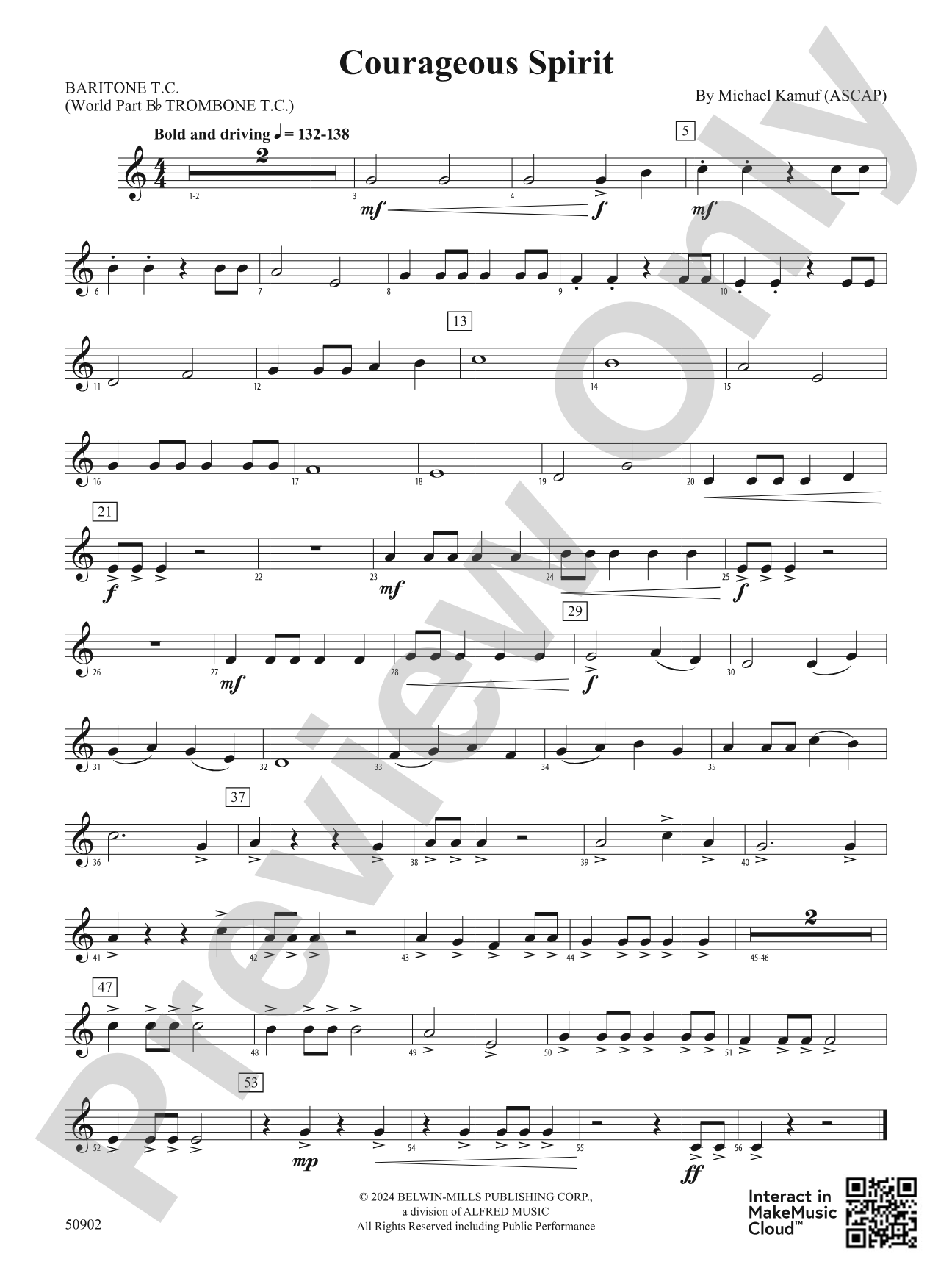

Courageous Spirit: Baritone T.C.
By Michael Kamuf
Grade: 0.5
Item: 00-PC-0019203_BTC1
$3.00
Pickup currently not available
Description
Courageous Spirit, by Michael Kamuf, is a musical celebration of the bravery we summon in the face of uncertainty. The piece features bold and contrasting melodies, making it an ideal choice to reinforce slurs and accents with your students. Additionally, the work provides an opportunity to support and explore the SEL competency of Responsible Decision-Making during rehearsals. Whether as an opening or closing selection, this piece is perfect for your next concert! (1:40)


Don't just read it, hear it, play along with it, and watch your students grow with it. In MakeMusic Cloud, Courageous Spirit: Baritone T.C. comes alive with professional accompaniment, adjustable tempo, and built-in practice tools that turn solo practice into real progress.
Open in the Player
Jump straight in and assign it today.
Start Your Free Trial
Open this title and explore the full library in minutes.
Sample Audio
1
Audio File
--:--
0:00
0:00
Sample Video
Additional Details
Series:
Belwin Very Beginning Band
Publisher:
Alfred Music
SKU:
00-PC-0019203_BTC1
More about this title
About the Composer: Michael Kamuf

Michael Kamuf earned Bachelor of Music degrees in Jazz Performance and Music Education from the Dana School of Music at Youngstown State University and a Master of Arts in Instrumental Conducting from George Mason University. His compositions and arrangements have been performed by prestigious ensembles including the Woody Herman and Glenn Miller Orchestras, the USAF Airmen of Note, the US Navy Commodores, and accomplished soloists such as James Moody, Eddie Daniels, and Sean Jones.
Kamuf has been an exclusive writer for the Belwin Division of Alfred Music Publishing for many years, with works across jazz, orchestra, and concert band catalogs. His jazz ensemble arrangements are now standard repertoire in young jazz programs, and he currently maintains over 100 published titles. For three decades, Kamuf taught instrumental music in Montgomery County Public Schools (Maryland), including twenty-seven years as Director of Bands and Orchestras and Music Department Chairperson at John T. Baker Middle School, where he led ensembles to consistent festival recognition and commissioning opportunities. He currently directs the Mike Kamuf Little Big Band, an octet based in the Baltimore and Washington, DC area.
Why we love this
Courageous Spirit delivers genuine musicality at the grade 0.5 level without sacrificing craft. The contrasting melodies and articulation markings give you real teachable moments for slurs and accents, and the emotional arc makes it engaging for students to rehearse, not just perform.
What to expect
Courageous Spirit opens with a sense of quiet determination before building into bold, assured melodies. The emotional journey reflects the process of facing uncertainty with conviction, moving between introspective moments and moments of unwavering confidence.
Who it's for
This piece works beautifully for newer concert bands learning fundamental articulation and phrasing. The grade 0.5 level makes it accessible for students building confidence, while the musical content rewards careful rehearsal and honest performance.
How to get the most out of it
- Balance the bold melodies across sections; avoid letting any single voice dominate. Use the dynamic markings to shape the overall arc rather than treating them as absolute volume targets.
- Clarify the rhythmic precision in passages with accented figures. Light tonguing will reinforce articulation without forcing the tone.
- Allow the contrasting sections breathing room. Slight rubato in transitions between bold and lyrical ideas helps convey the thematic shifts without losing ensemble cohesion.
How to use it
Program this as an opening number to set a reflective yet energized tone for a concert, or use it as a closing selection to leave audiences with a sense of resolve. It pairs well with both contemporary and traditional band repertoire and works equally as an opener or finale at festival competitions.
Skills your students will build
- Articulation clarity: distinguishing slurs from accented attacks
- Lyrical phrasing and breath control across longer melodic lines
- Dynamic contrast and shaping without sacrificing ensemble balance
- Responding to emotional content in music during rehearsal discussions