Courage and Bravery (Concert March): 2nd Percussion Sheet Music Preview

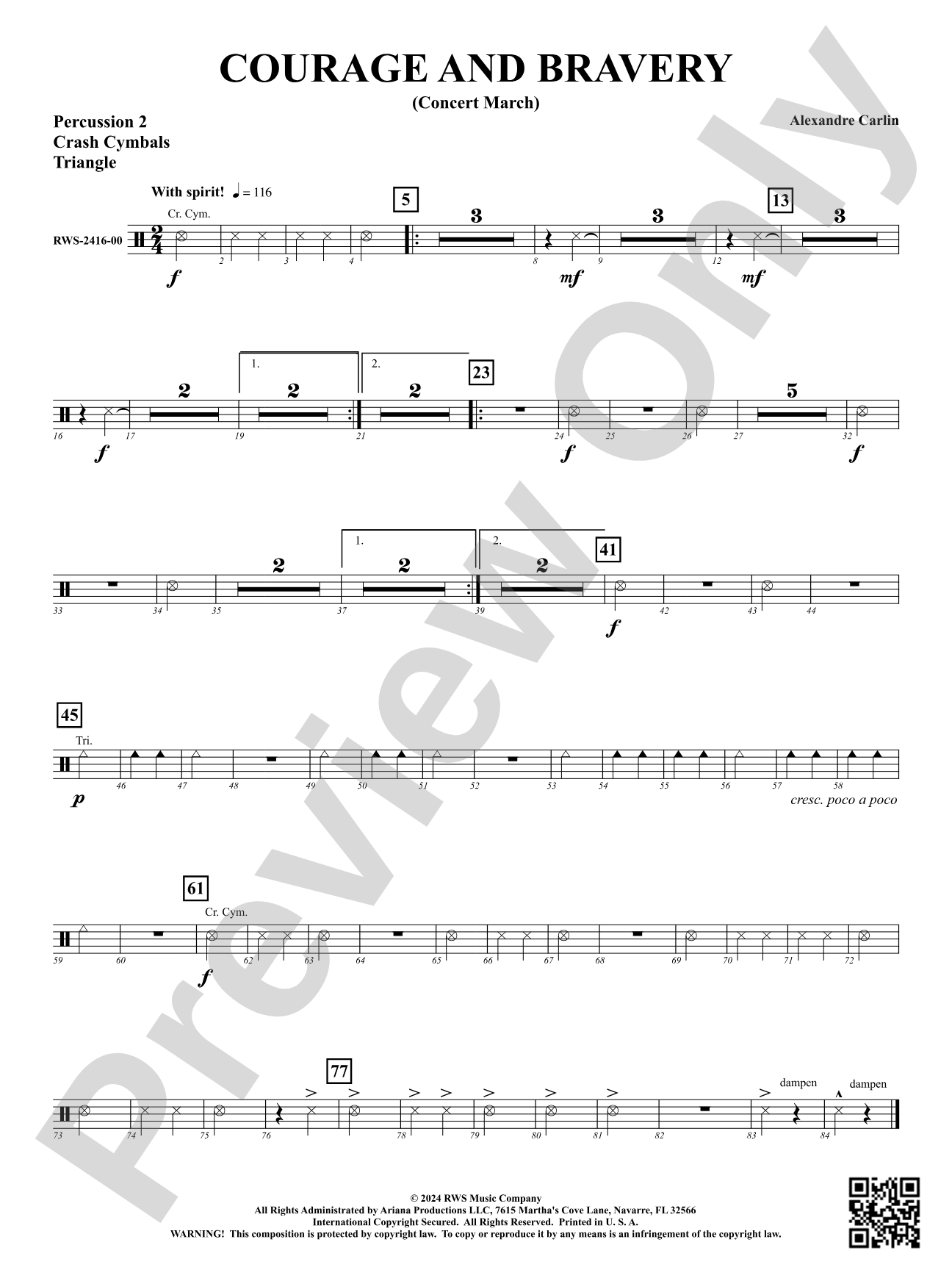
Courage and Bravery (Concert March): 2nd Percussion

(Concert March)

By Alexandre Carlin

Grade: 1.5

Item: 98-PC-RWS2416_PC2

Digital Download
$3.99
Description
Courage and Bravery is a spirited concert march by Alexandre Carlin that pays homage to the time-honored tradition of the march form in a way that is exciting and approachable for young musicians. The rhythmic drive and uplifting melodies create a sense of energy and determination, reflecting the spirit of those who face challenges with courage. May this march resonate with the spirit of perseverance and inspire all who encounter it! (1:59)

Courage and Bravery (Concert March): 2nd Percussion isn't in MakeMusic Cloud just yet...but it could be. Let us know you'd like to see it, and you'll help shape what comes next. In the meantime, start a free trial and dive into thousands of interactive titles your students can play along with today.

Sample Audio
0:00
0:00
Sample Video
Additional Details
Series: RWS - Beginning Band
Publisher: RWS Music Company
SKU: 98-PC-RWS2416_PC2

More about this title

Why we love this

Carlin captures the essential architecture of the march form without overwhelming young ensembles with complex orchestration. The piece builds genuine momentum through straightforward rhythmic figures and accessible melodic writing, giving students something genuinely satisfying to perform rather than a simplified echo of "real" band music.

What to expect

A fresh breeze of forward motion. The piece maintains the stately character of classic march form while radiating optimism and energy, anchored by rhythmic drive that even developing musicians can sustain and own.

Who it's for

Young concert bands in Grades 1-2 who are ready for structured form and ensemble sophistication but still benefit from straightforward part writing. This works equally well for festival programs, pep rallies, and formal concerts where a march serves programming and morale purposes.

How to get the most out of it

  • Establish a steady, confident tempo from the downbeat. Young bands often rush marches, so use a metronome in rehearsals and lock in the conductor's pulse before any ensemble playing begins.
  • Balance the melodic line across sections. The main themes should speak clearly without drowning out harmonic support, which means checking that trumpet voices don't overpower the lower brass foundation.
  • Shape the march character through articulation consistency. Clean, unified tonguing in the rhythmic figures drives the energy forward; sloppy articulation flattens the energy regardless of tempo.
  • Let dynamics tell the story of building determination. Resist the urge to play the entire piece at full volume; use the printed dynamics to create shape and emphasize the emotional arc.

How to use it

Use this as an opener to establish confident group identity and set an energetic tone for a concert or contest. At under two minutes, it pairs efficiently alongside longer concert works and fills programming slots where a march is expected but traditional repertoire feels overextended for your ensemble's abilities.

Skills your students will build

  • March form structure (A-B-A recognition and phrase architecture)
  • Rhythmic precision and unified ensemble articulation
  • Dynamic contrast and musical shaping across longer forms
  • Balance between melody and harmonic support
  • Sustaining tempo and energy through repetitive rhythmic figures

You May Also Like