

Couperin: Clavichord Pieces (Volume III): Piano Book
By François Couperin
Item: 00-PK-0003006

$14.99
Pickup currently not available
Buy Extra Parts (Digital PDF Download)
Parts Added to Cart!
Related Items
Clavichord Pieces, Volume III: Piano Book |
$14.95
|
View |
Description
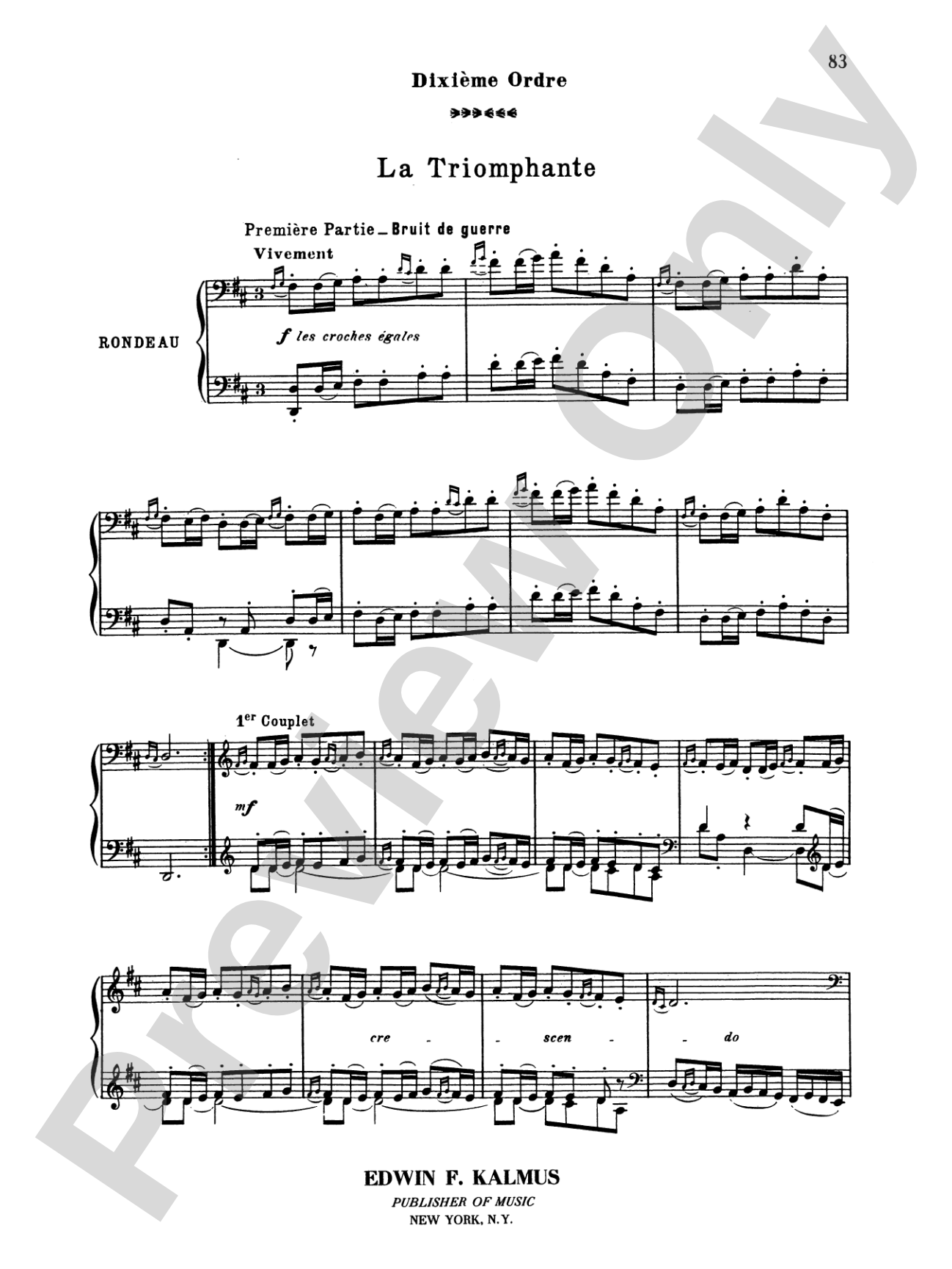
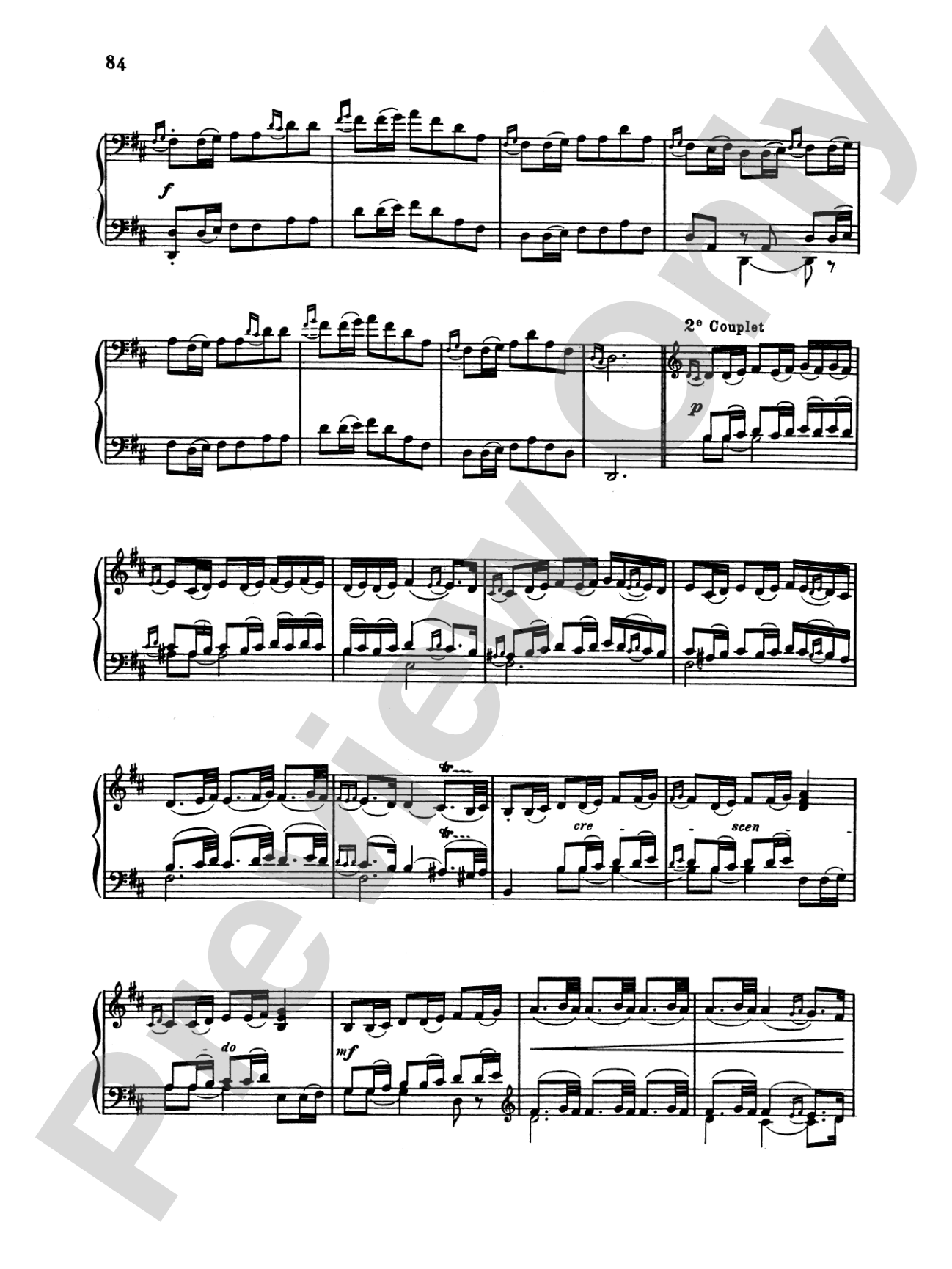
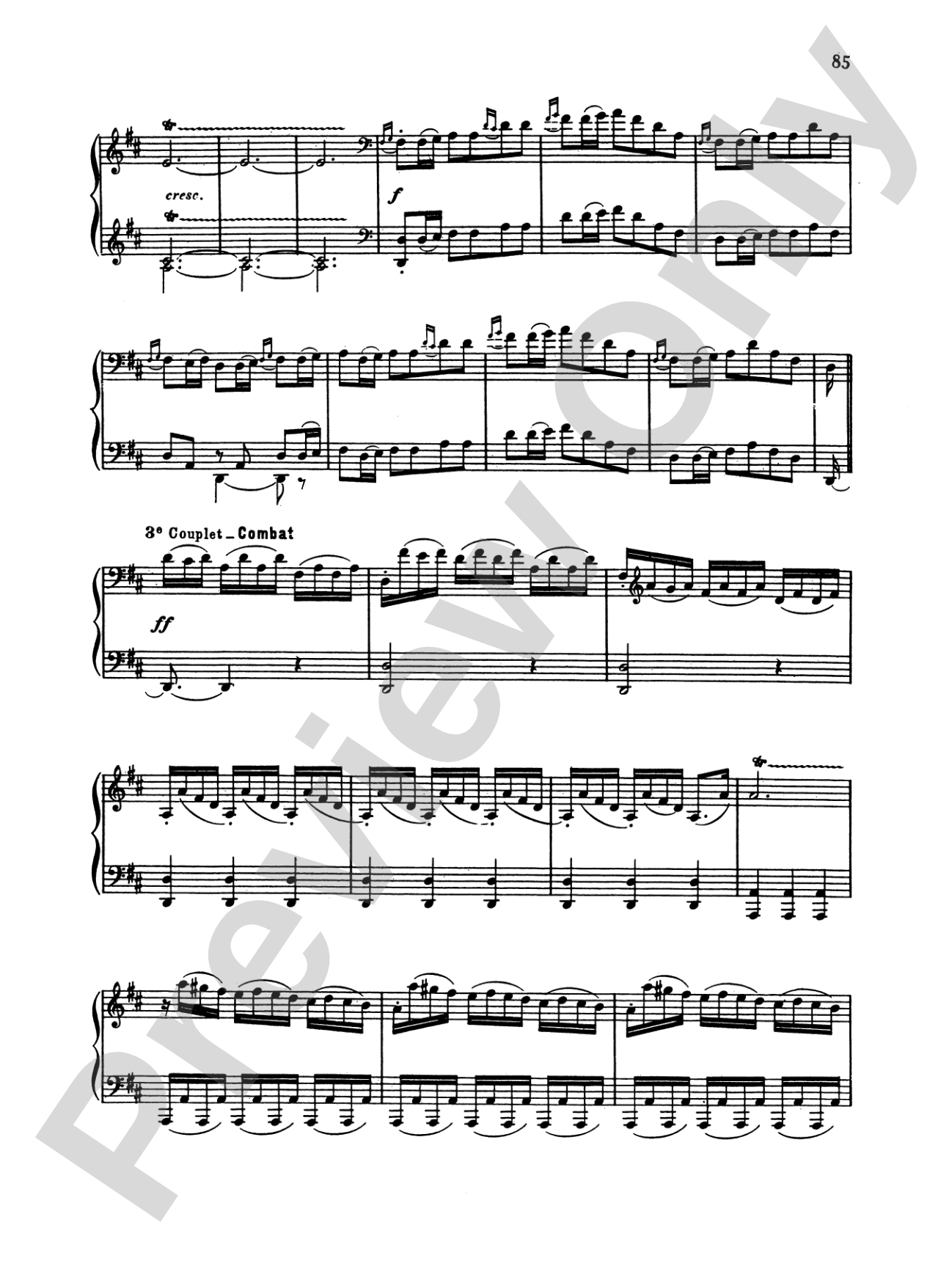
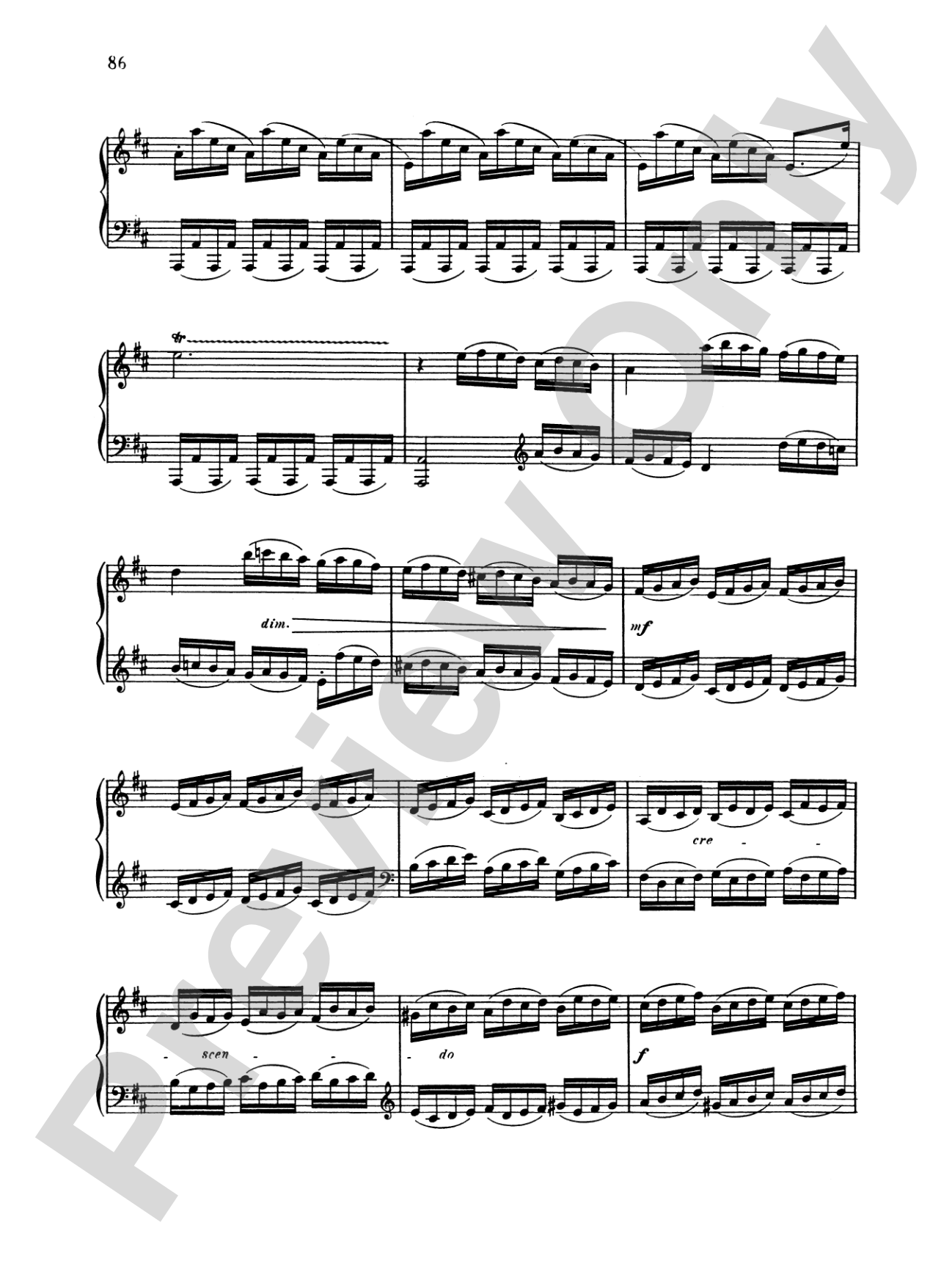
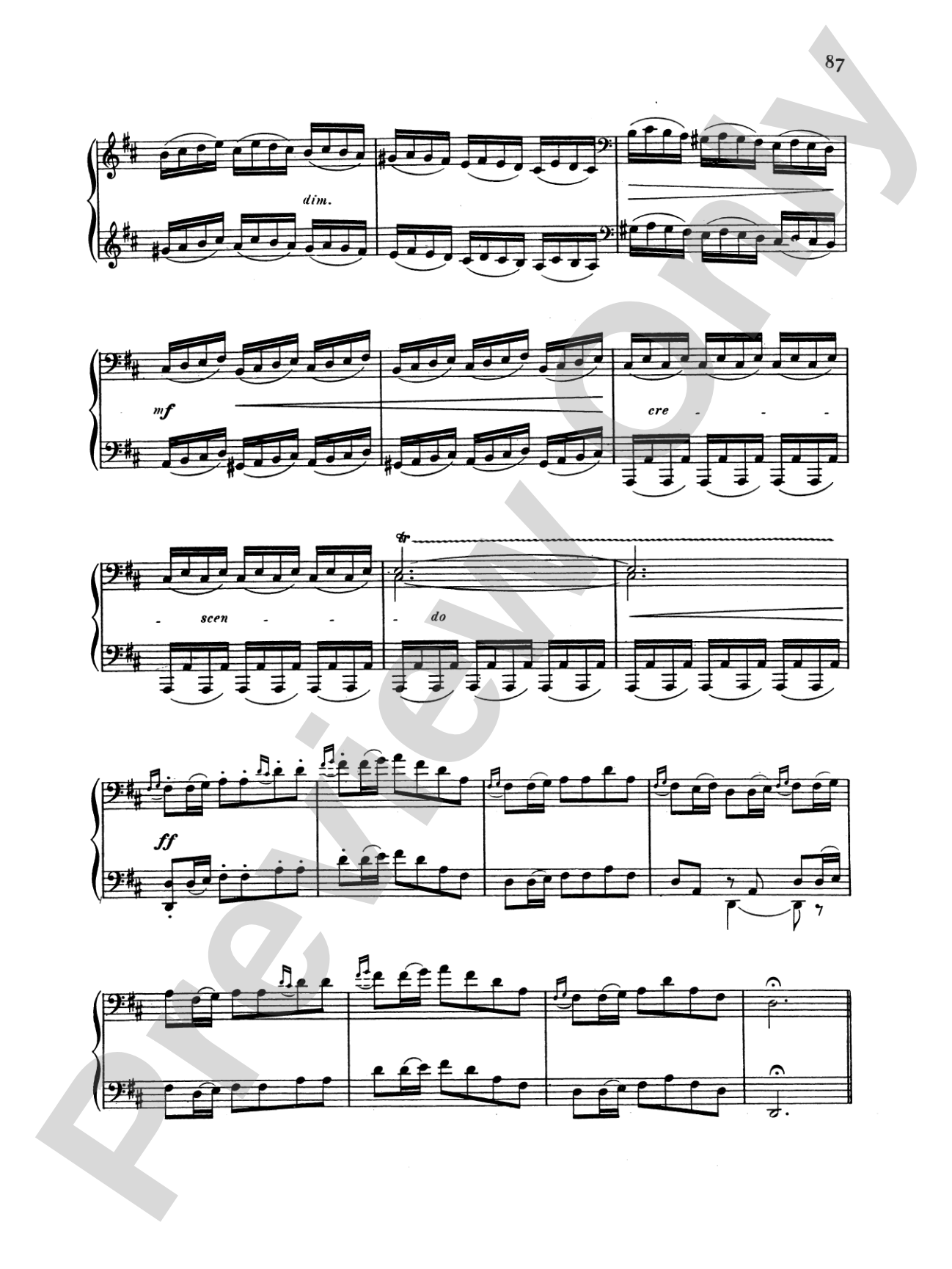
Couperin's harpsichord music can be played on solo harpsichord or performed as small chamber works. These pieces were grouped into ordres, which were Couperin's own version of suites, containing traditional dances as well as descriptive pieces. Many of Couperin's keyboard pieces have evocative, picturesque titles and express a mood through key choices, adventurous harmonies and (resolved) discords. They have been likened to miniature tone poems. This collection contains Ordres 10-12.


Don't just read it, hear it, play along with it, and watch your students grow with it. In MakeMusic Cloud, Couperin: Clavichord Pieces (Volume III): Piano Book comes alive with professional accompaniment, adjustable tempo, and built-in practice tools that turn solo practice into real progress.
Open in the Player
Jump straight in and assign it today.
Start Your Free Trial
Open this title and explore the full library in minutes.
Sample Audio
No sample audio found.
Sample Video
No sample videos found.
Additional Details
Series:
Kalmus Edition
Publisher:
Alfred Music
Page Count:
64
SKU:
00-PK-0003006
More about this title
About the Composer: François Couperin
François Couperin (1668, 1733) was the dominant keyboard composer of the French Baroque, setting the standard for harpsichord music across Europe. His four volumes of Pièces de clavecin established a new aesthetic: keyboard music that rivaled the emotional depth and narrative quality of vocal music, achieved through refined harmony, ornamentation, and structural clarity. Couperin's influence on keyboard technique and composition was immediate and lasting, shaping how composers thought about the expressive possibilities of the instrument.
What made Couperin's approach revolutionary was his integration of dance forms with character pieces. Rather than treating ordres as mere collections, he crafted unified suites where traditional movements (allemandes, courantes, sarabandes, gigues) sat alongside inventive descriptive pieces with titles like "La Tendre Nanette" or "Les Moissonneurs." This blend of structural rigor and imaginative storytelling became a model for keyboard writing that influenced Bach, Scarlatti, and generations of composers who followed.
Why we love this
These ordres showcase Couperin at his most inventive, combining the intellectual architecture of Baroque form with an almost romantic sensibility for mood and color. Advanced pianists find themselves wrestling with authentic ornamentation and phrasing while discovering that these miniatures demand absolute clarity of voice and remarkable control of the harpsichord's bite and sustain, skills that transfer beautifully to any keyboard literature. The collection sits perfectly between the measured elegance of J.S. Bach and the galant sensibilities emerging in the Classical era, making it invaluable for students building a nuanced understanding of Baroque keyboard aesthetics.
What to expect
These pieces unfold like intimate character sketches, each with its own distinct personality shaped through key color and harmonic invention. The writing is refined and precise, favoring elegance over virtuosity, yet demands complete control of touch and phrasing. You'll find moments of unexpected harmonic richness alongside dance-like clarity, creating a world that feels both intellectually structured and emotionally immediate.
Who it's for
Advanced pianists and serious keyboard students ready to engage with Baroque compositional logic and performance idiom. This collection also serves teachers seeking repertoire that builds facility with French Baroque ornamentation, voicing, and the interpretive skills needed to realize character through small-scale forms.
How to get the most out of it
- Attend closely to Couperin's key signatures and harmonic language; unexpected resolutions and chromatic voice-leading are compositional features, not errors. Resist the urge to smooth over them.
- Shape phrases through subtle dynamic gradation and articulation choices rather than relying on the sustain pedal. These pieces were conceived for harpsichord, where color comes from touch and part-writing clarity.
- Ornaments and trills should be executed with rhythmic precision and independence from the underlying pulse. Use them to clarify the harmonic structure rather than obscure it.
- Research the evocative titles and mood markings; they function as compositional instructions guiding interpretation of tempo and character.
How to use it
Ordres from this volume work beautifully as single items on recitals devoted to Baroque keyboard music or as part of a program pairing French and Italian harpsichord traditions. They also function as excellent study pieces alongside a core concert program, offering the kind of refined musical experience that benefits from intimate performance contexts.
Skills your students will build
- Executing French Baroque ornamentation with rhythmic independence
- Voicing and part-independence in contrapuntal writing
- Interpreting character and mood through harmonic language and key color
- Performance practice for Baroque keyboard music on the modern piano
- Reading and understanding suite forms and dance rhythms of the French Baroque