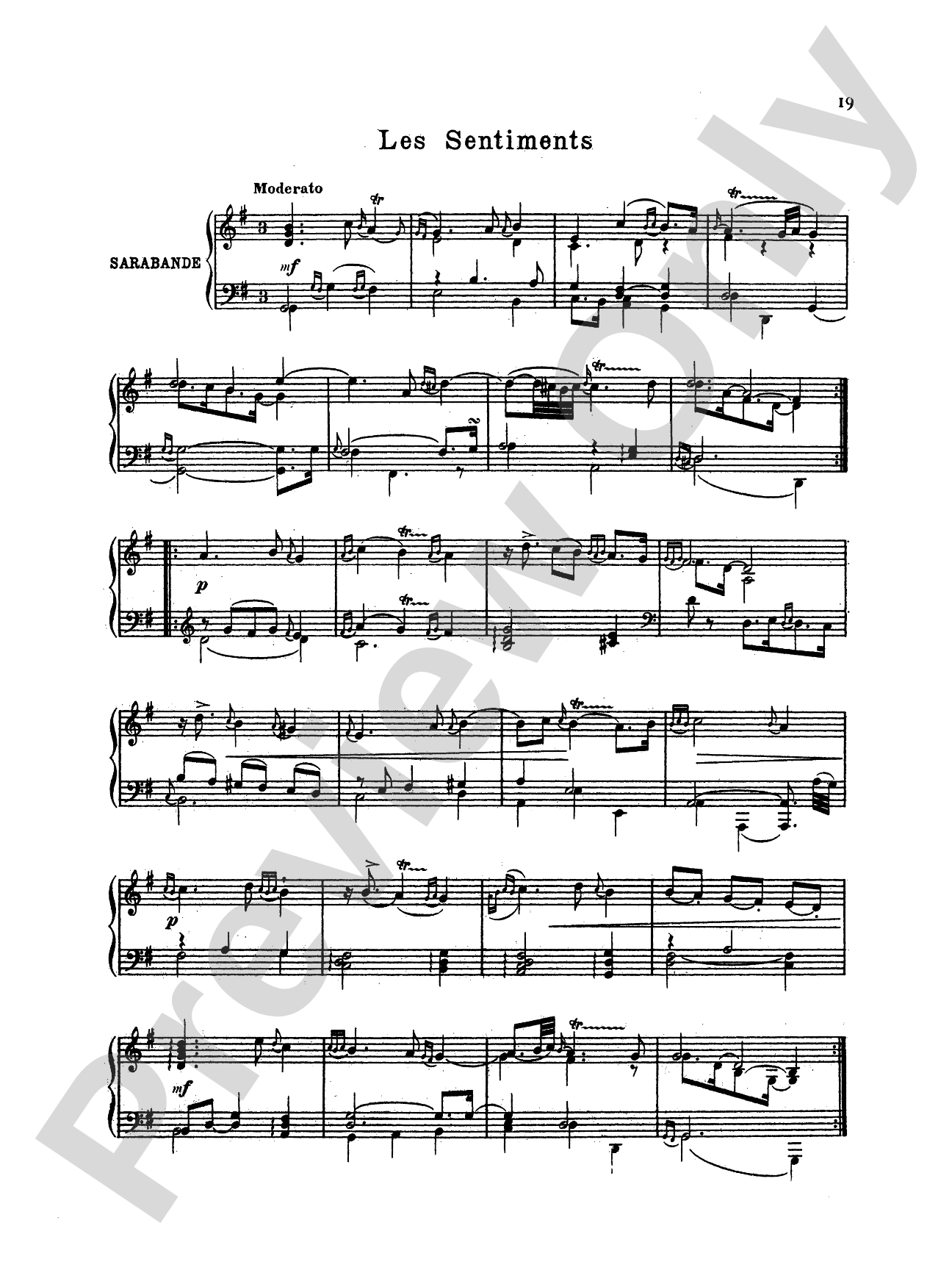
Couperin: Clavichord Pieces (Volume I) Sheet Music Preview

Couperin: Clavichord Pieces (Volume I)

By François Couperin

Item: 00-PC-0006229

Digital Download
$0.99
Description
Couperin's harpsichord music can be played on solo harpsichord or performed as small chamber works. These pieces were grouped into ordres, which were Couperin's own version of suites, containing traditional dances as well as descriptive pieces. Many of Couperin's keyboard pieces have evocative, picturesque titles and express a mood through key choices, adventurous harmonies and (resolved) discords. They have been likened to miniature tone poems. This collection contains Ordres 1-4.

Don't just read it, hear it, play along with it, and watch your students grow with it. In MakeMusic Cloud, Couperin: Clavichord Pieces (Volume I) comes alive with professional accompaniment, adjustable tempo, and built-in practice tools that turn solo practice into real progress.

Sample Audio
No sample audio found.
Sample Video
Additional Details
Series: Kalmus Edition
Publisher: Alfred Music
Page Count: 112
SKU: 00-PC-0006229

More about this title

About the Composer: François Couperin

François Couperin (1668-1733) was the most celebrated member of the Couperin family and one of the leading keyboard composers of the French Baroque. His four books of harpsichord pieces, published between 1713 and 1730, represent the pinnacle of French keyboard style and established him as a bridge between the ornamental traditions of his predecessors and the expressive possibilities of Baroque harmony.

Couperin's approach to keyboard composition was revolutionary for its specificity. Rather than generic dance forms, he titled his pieces with poetic names that suggested character, mood, or narrative. His harmonic language moved beyond conventional progressions, employing unexpected resolutions and chromatic movement to achieve emotional depth. For pedagogical purposes, his work teaches pianists how gesture, ornamentation, and harmonic color can convey narrative without text.

Why we love this

These ordres showcase keyboard writing that feels both intimate and sophisticated. The descriptive titles and emotional palette invite pianists to move beyond technical display into genuine musical storytelling, making this collection rewarding for performers ready to engage with Baroque expression beyond the predictable.

What to expect

These pieces shimmer with elegance and emotional specificity. Beneath the ornamental surface, Couperin's harmonies move unexpectedly, creating moments of poignant beauty alongside spirited dances. The music feels personal and intimate, more like reading a diary of moods than performing standardized keyboard exercises.

Who it's for

Advanced undergraduate piano students and professional pianists seeking substantive Baroque keyboard repertoire beyond Bach and Scarlatti. This collection serves musicians who want to deepen their understanding of French style, ornamentation, and harmonic language through direct engagement with Couperin's published masterworks.

How to get the most out of it

  • Honor the ornaments as structural elements, not decorative additions. Couperin's trills, mordents, and turns articulate phrase shape and harmonic direction.
  • Treat dissonances with care. Where Couperin resolves chromatic or unexpected harmonies, allow time for those resolutions to register; the drama lies in the tension and release.
  • Shape phrases by the titles and moods Couperin assigns. A piece named "La Tendre" requires different touch and timing than one marked descriptively as a dance or character piece.
  • Experiment with tempo relationships between ordres. Couperin organized pieces in suites where contrasting movements benefit from deliberate pacing choices.

How to use it

Program an ordre or individual movements as part of a Baroque keyboard recital to show the range of French style beyond German and Italian composers. The descriptive nature of these pieces also pairs well with chamber contexts, where keyboard music functioned as part of intimate musical gatherings rather than solo display.

Skills your students will build

  • Baroque ornamentation and its relationship to phrasing and harmony
  • Harmonic analysis of chromaticism and unprepared dissonance in the Baroque era
  • Stylistic interpretation through character indication and evocative titles
  • Voice leading in keyboard writing across multiple registers
  • Expressive use of articulation and pedal color in period keyboard music

You May Also Like