
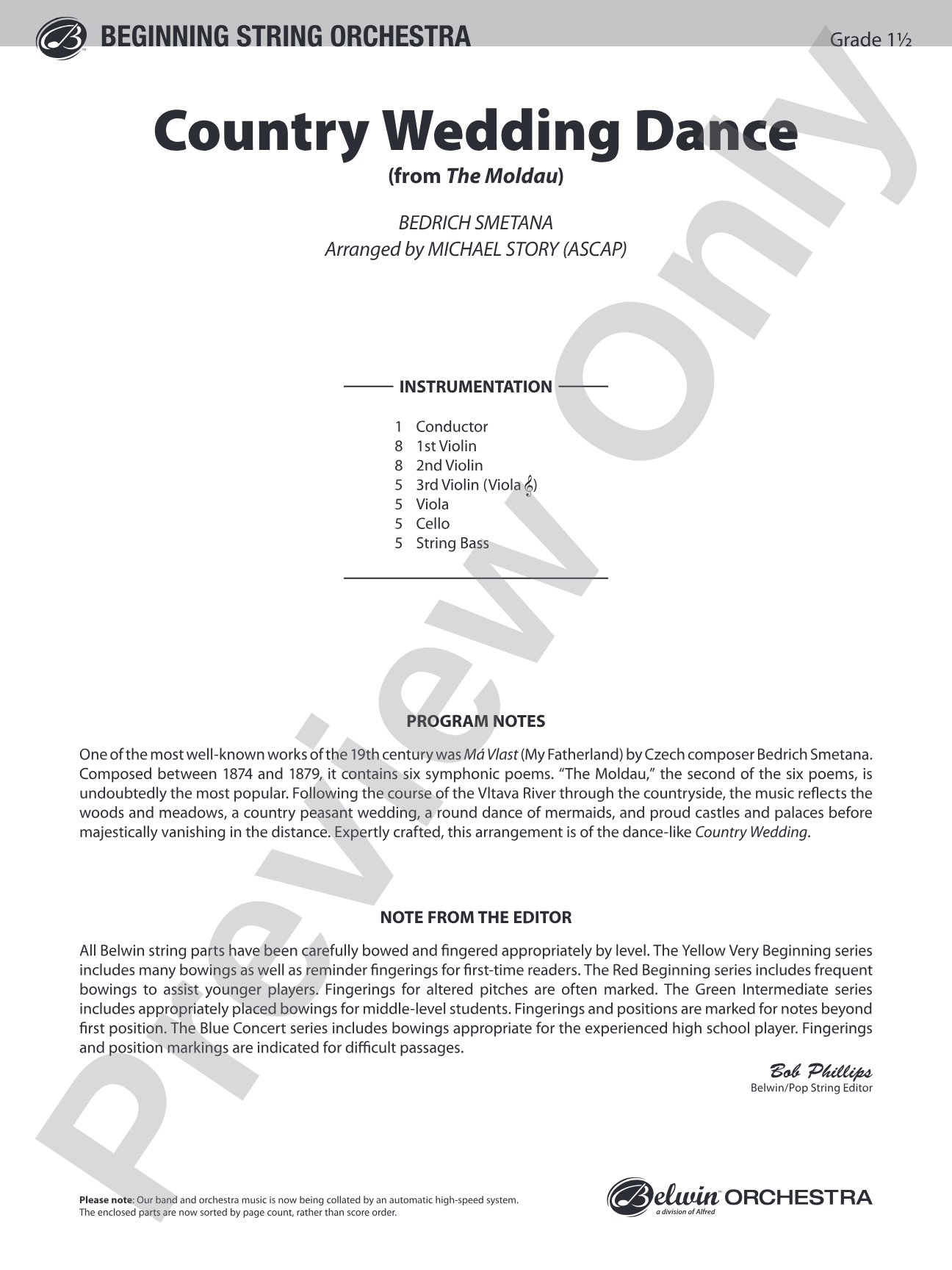
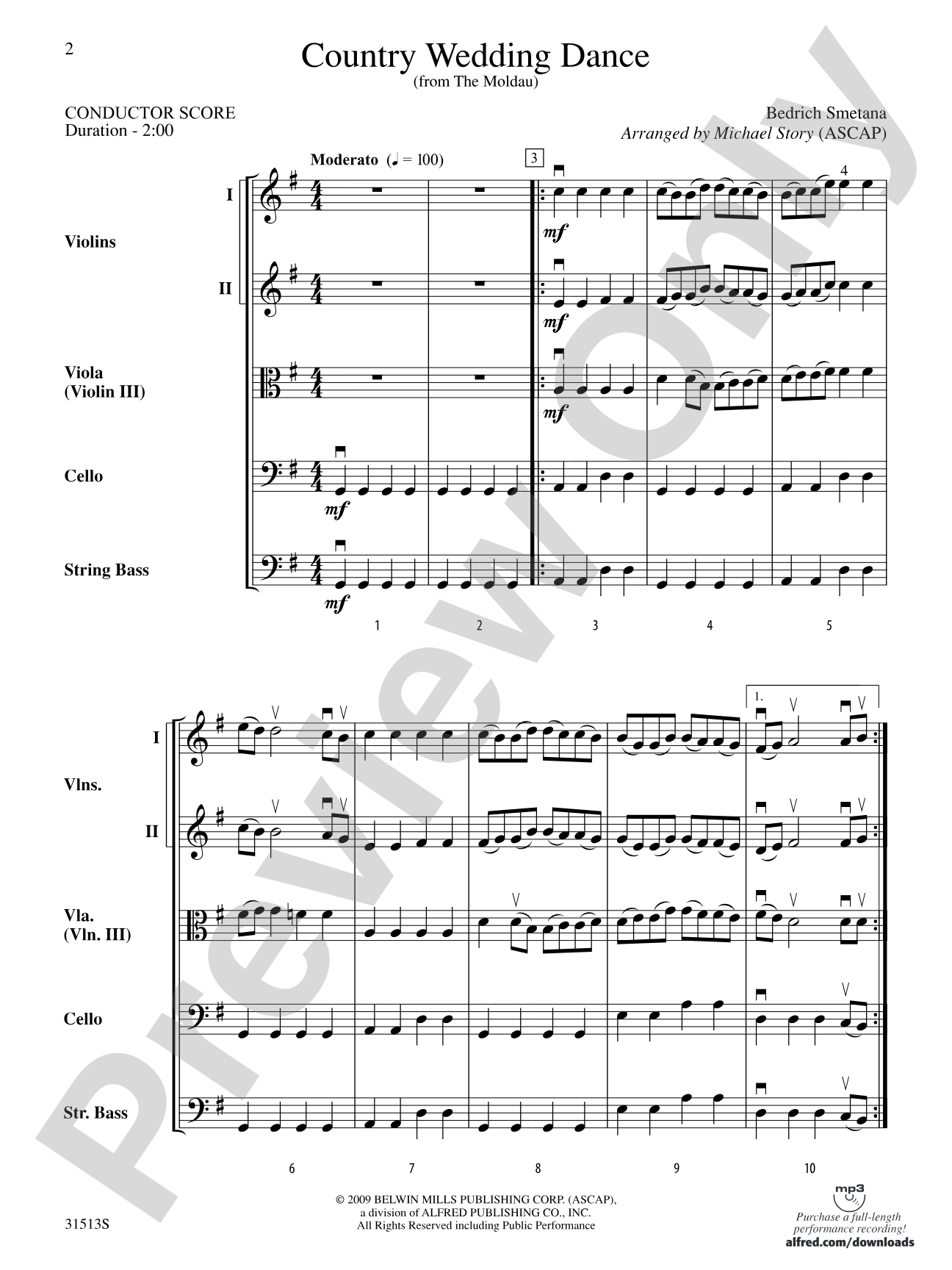
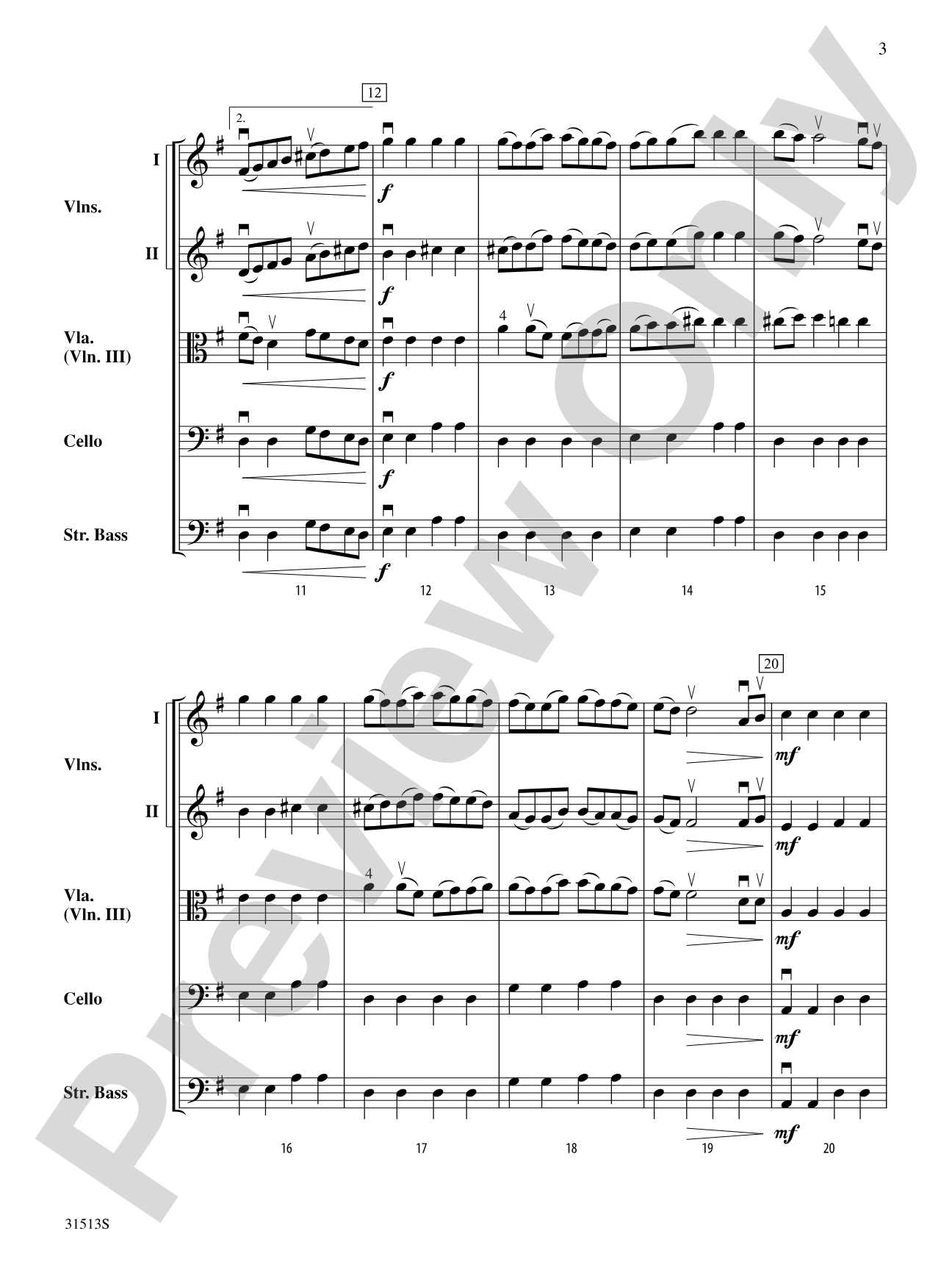
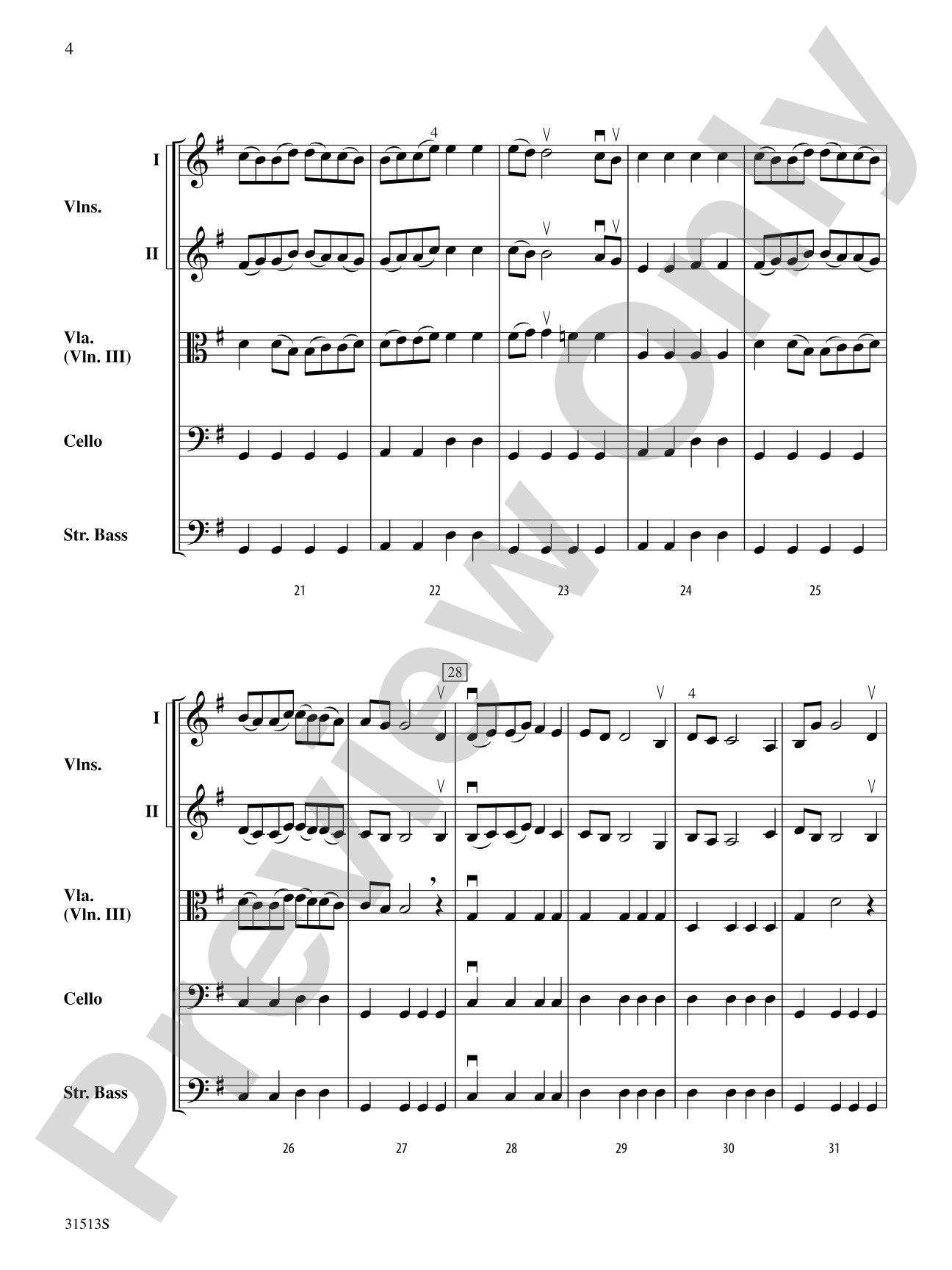
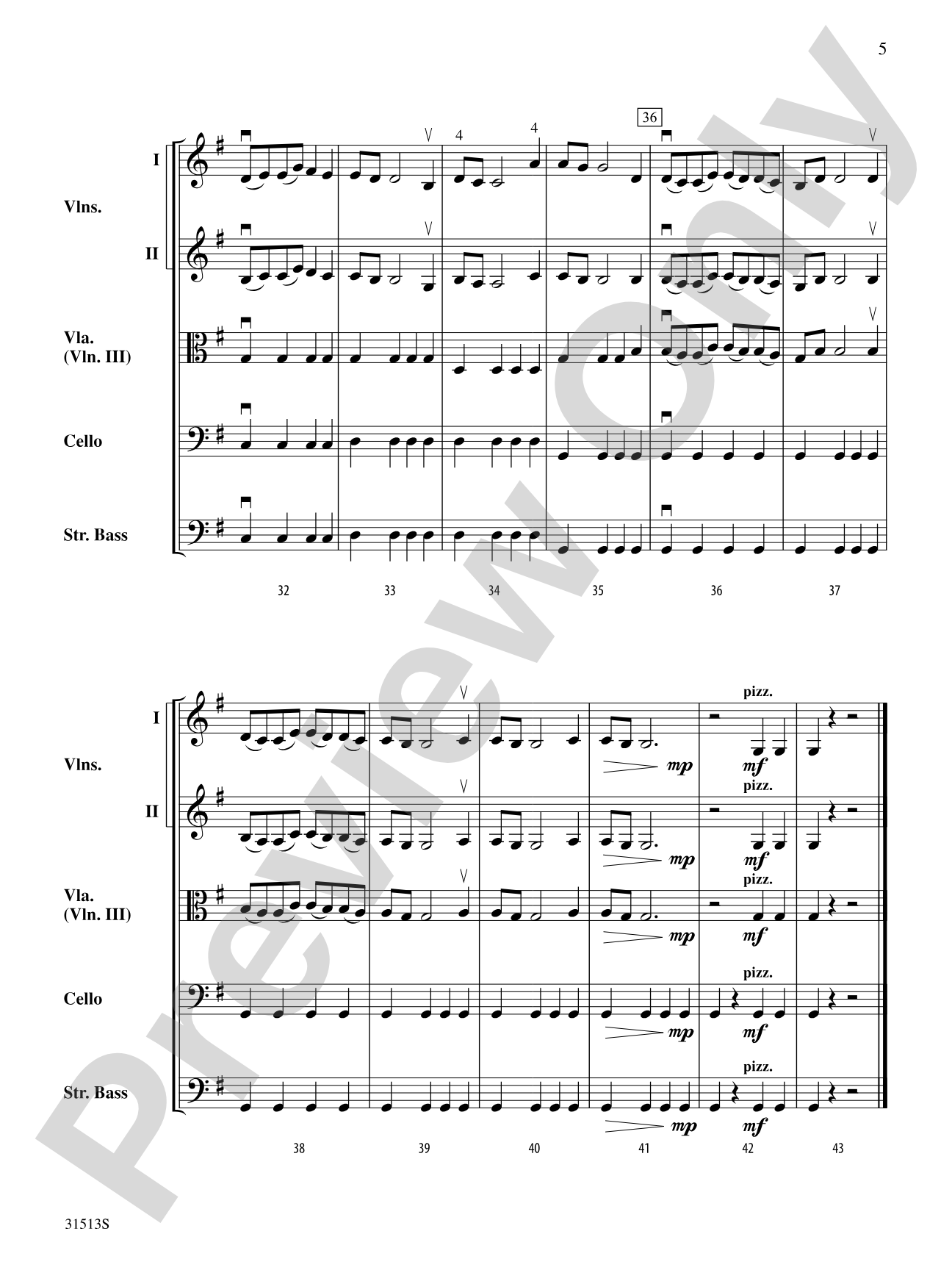




Country Wedding Dance (from The Moldau): Score
By Bedrich Smetana / arr. Michael Story
Grade: 1.5
Item: 00-PR-0001686
$8.00
Pickup currently not available
Description
As we follow the course of the Vltava River portrayed musically in Bedrich Smetana's The Moldau, we pass the scene of the wedding depicted in this lovely arrangement. We can watch the dance and enjoy one of the most well-known works of the 19th century. This timeless music has been crafted into an extremely playable version for your beginning string orchestra. This title is available in MakeMusic Cloud.


Don't just read it, hear it, play along with it, and watch your students grow with it. In MakeMusic Cloud, Country Wedding Dance (from The Moldau): Score comes alive with professional accompaniment, adjustable tempo, and built-in practice tools that turn solo practice into real progress.
Open in the Player
Jump straight in and assign it today.
Start Your Free Trial
Open this title and explore the full library in minutes.
Sample Audio
1
Audio File
--:--
0:00
0:00
Sample Video
No sample videos found.
Additional Details
Series:
Belwin Beginning String Orchestra
Publisher:
Alfred Music
Page Count:
72
SKU:
00-PR-0001686
More about this title
About the Composer: Bedrich Smetana
Bedrich Smetana (1824-1884) stands as the founding figure of Czech national music. His compositions deliberately drew on Czech folk idioms, language, and landscape to establish a distinctive musical identity at a time when Czech culture was suppressed under Austro-Hungarian rule. The Moldau, part of his symphonic poem cycle Má vlast, became his most internationally recognized work and remains a cornerstone of the concert repertoire.
Smetana's legacy extends beyond his own compositions; his work opened pathways for generations of Central European composers to embrace their own national traditions. For music educators, his music offers students direct access to how folk elements, programmatic narrative, and accessible melody can combine to create enduring art.
Why we love this
Michael Story's arrangement captures the lyrical sweep of the wedding scene without requiring advanced technique, making this beloved Romantic masterwork genuinely playable for beginning orchestras. A Grade 1.5 version of The Moldau removes a significant barrier: students can experience the full emotional arc and historical significance of one of the 19th century's most performed works within their first year or two of ensemble playing.
What to expect
A country celebration in miniature: intimate and warm in its opening moments, then building into a spirited, joyful dance. The familiar melody sits comfortably in the strings, and the accompaniment patterns evoke the simple pleasure of a folk celebration captured in music.
Who it's for
Beginning string orchestra programs that want to program a recognized masterwork without sacrificing playability or student engagement. This arrangement works equally well for schools introducing orchestral literature to younger students and for community or adult string ensembles seeking a rewarding Romantic-era piece.
How to get the most out of it
- Conduct with a clear, flowing beat. The dance rhythms will settle naturally if you establish a steady pulse rather than pushing the tempo.
- Balance the melody across your first violins and violas in the opening phrases. Younger players often play too tentatively; encourage them to sing through the line.
- Mark the key dynamic shifts in rehearsal. The piece moves from quieter, intimate passages to fuller dance sections; these contrasts bring the wedding scene to life.
- Isolate the rhythmic accompaniment patterns (particularly in the lower strings) so they lock in before adding the melody. This prevents rushing during the faster dance sections.
How to use it
Open a concert with this piece to establish an accessible, joyful tone before moving to more challenging repertoire. Its recognizable melody and cultural significance make it an excellent choice for family-friendly concerts or school showcases where audiences include non-musicians.
Skills your students will build
- Sustaining long melodic lines with consistent tone and intonation
- Playing rhythmic accompaniment patterns accurately while listening to melody
- Responding to dynamic contrast and shaping phrases musically
- Recognizing and playing in multiple key centers within a single piece
- Accessing programmatic music and connecting narrative to instrumental performance