
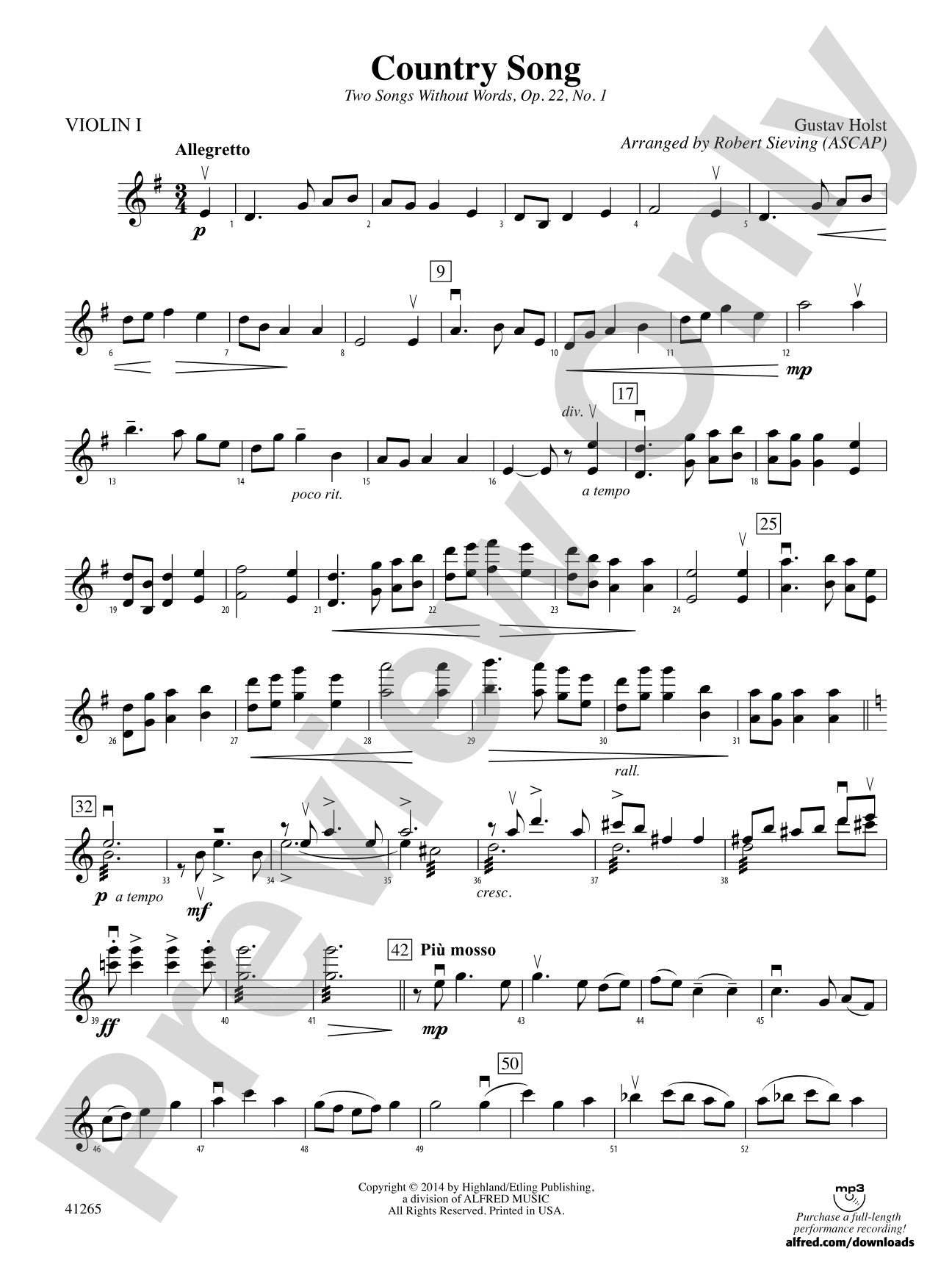

Country Song: 1st Violin
From Two Songs Without Words, Op. 22, No. 1
By Gustav Holst / arr. Robert Sieving
Grade: 4
Item: 00-PC-0016382_VN1
$5.99
Pickup currently not available
Description
This beautiful folk melody will capture the hearts of students and audiences. Originally scored for large orchestra, this string arrangement captures the essential qualities often heard in the English style of chamber music for strings from the late nineteenth and early twentieth centuries. Holst's melody, with its simple pentatonic folksong theme, receives the kind of mystical transformation we often associate with British composers' treatments of their indigenous wellspring---the folksong. All sections share in the melodic themes while passages for a quartet of soloists add textural interest. (4:15) This title is available in MakeMusic Cloud.


Don't just read it, hear it, play along with it, and watch your students grow with it. In MakeMusic Cloud, Country Song: 1st Violin comes alive with professional accompaniment, adjustable tempo, and built-in practice tools that turn solo practice into real progress.
Open in the Player
Jump straight in and assign it today.
Start Your Free Trial
Open this title and explore the full library in minutes.
Sample Audio
1
Audio File
--:--
0:00
0:00
Sample Video
No sample videos found.
Additional Details
Series:
Highland/Etling String Orchestra
Publisher:
Alfred Music
Page Count:
124
SKU:
00-PC-0016382_VN1
More about this title
About the Composer: Gustav Holst
Gustav Holst (1874-1934) shaped British musical identity by drawing deeply from his nation's folk traditions. His gift lay in recognizing the harmonic and orchestral possibilities hidden within simple melodies, treating folksongs not as historical artifacts but as living material worthy of sophisticated compositional treatment.
Holst's approach to orchestration influenced generations of arrangers and educators. His understanding of how strings could illuminate a melody while maintaining its essential character made his works natural choices for student orchestras seeking to study both accessible material and refined compositional craft.
Why we love this
Robert Sieving's arrangement preserves every ounce of Holst's harmonic subtlety while writing idiomatically for string sections at this level. The scoring distributes melodic responsibility across all sections rather than isolating it in violins, giving every student something meaningful to play and building genuine ensemble awareness. Quartets of soloists emerge naturally from the section writing, creating performance opportunities without requiring auditions or separate rehearsals.
What to expect
A folksong catches light as it moves through strings. What begins as a plain melody gradually reveals layers of color and texture, never losing its humble emotional core. The piece carries a quiet mysticism and sense of timelessness, evoking English countryside landscapes and the composers who found profound beauty in ordinary music.
Who it's for
Grade 4 string orchestras ready to tackle more sophisticated harmonic language and chamber-style writing while remaining grounded in a folksong's accessibility. This arrangement works equally well for ensembles seeking compelling contest or festival repertoire and directors wanting students to experience how master composers expand simple material into something luminous.
How to get the most out of it
- Balance the quartet passages so soloists blend with their section rather than stepping out as featured players. This maintains the mystical quality Holst's original treatment achieves.
- Shape the pentatonic melody with long phrases that breathe as folk music does, resisting the impulse to push forward or add vibrato that would modernize its character.
- Listen carefully to harmonic movement beneath the melody; Holst's orchestration often supports the tune with shimmering, shifting colors that deserve attention even when not carrying the primary line.
How to use it
Program this as a centerpiece in a concert exploring British string writing or folk-inspired repertoire. Its moderate length and introspective character make it an excellent companion to works by other British composers or as a gentle interlude between more dramatic pieces. Contest and festival formats favor this combination of accessibility and genuine substance.
Skills your students will build
- Balancing a singing melodic line across multiple sections
- Playing with expressive restraint (phrasing without over-interpretation)
- Reading and responding to harmonic movement beneath the primary melody
- Blending as quartet soloists within a larger ensemble context
- Understanding folk melody as a foundation for sophisticated orchestral writing