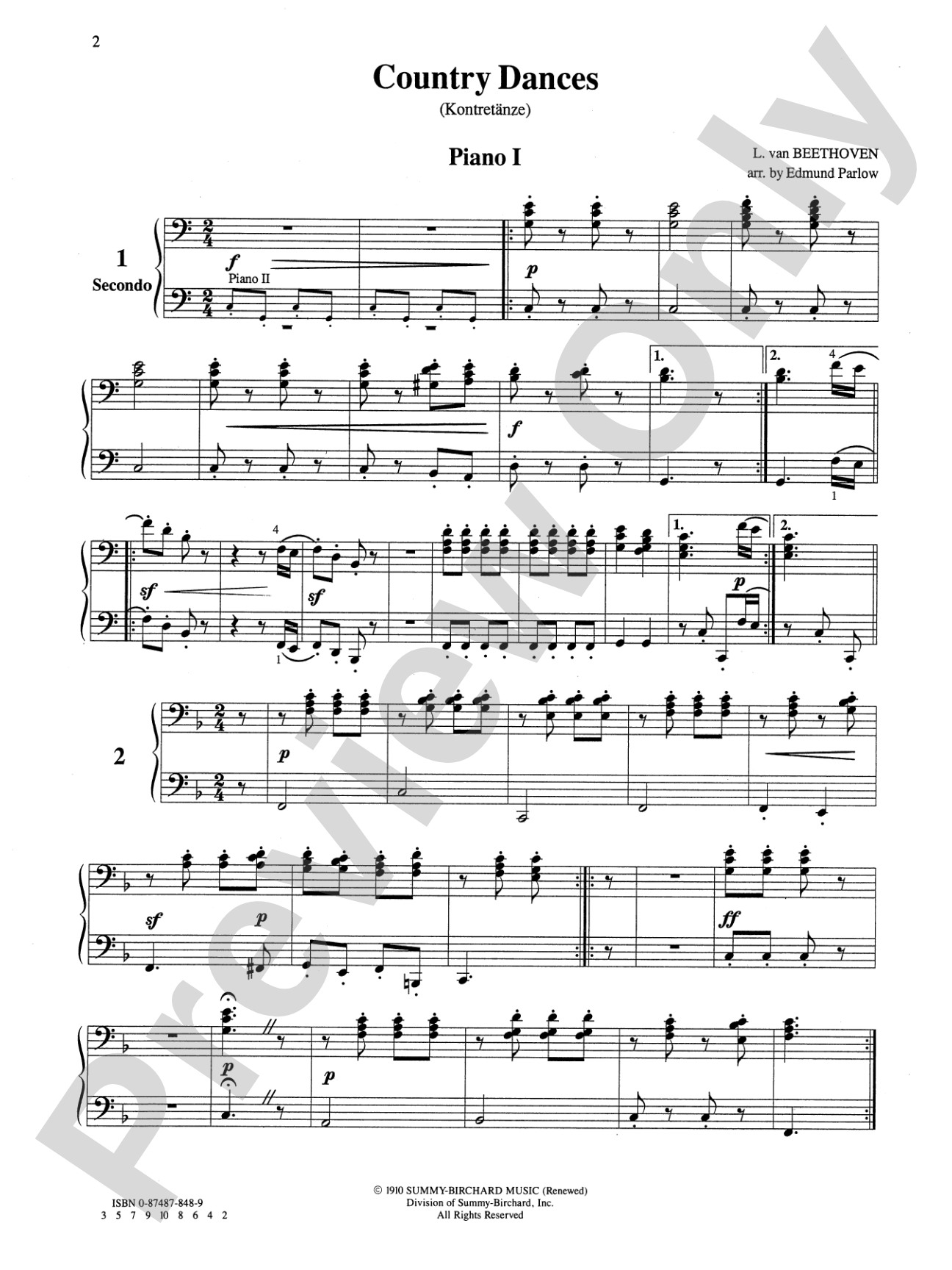
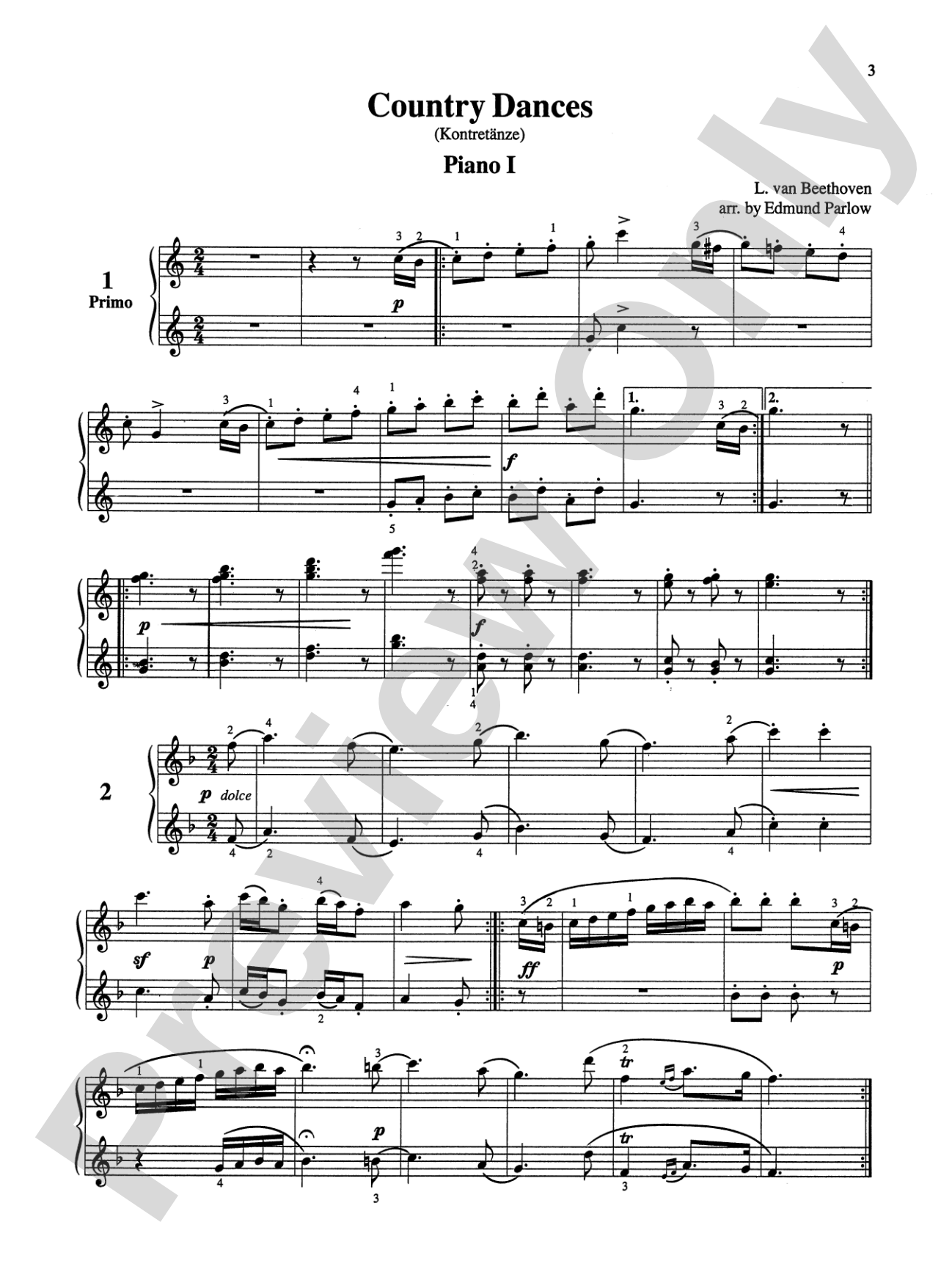
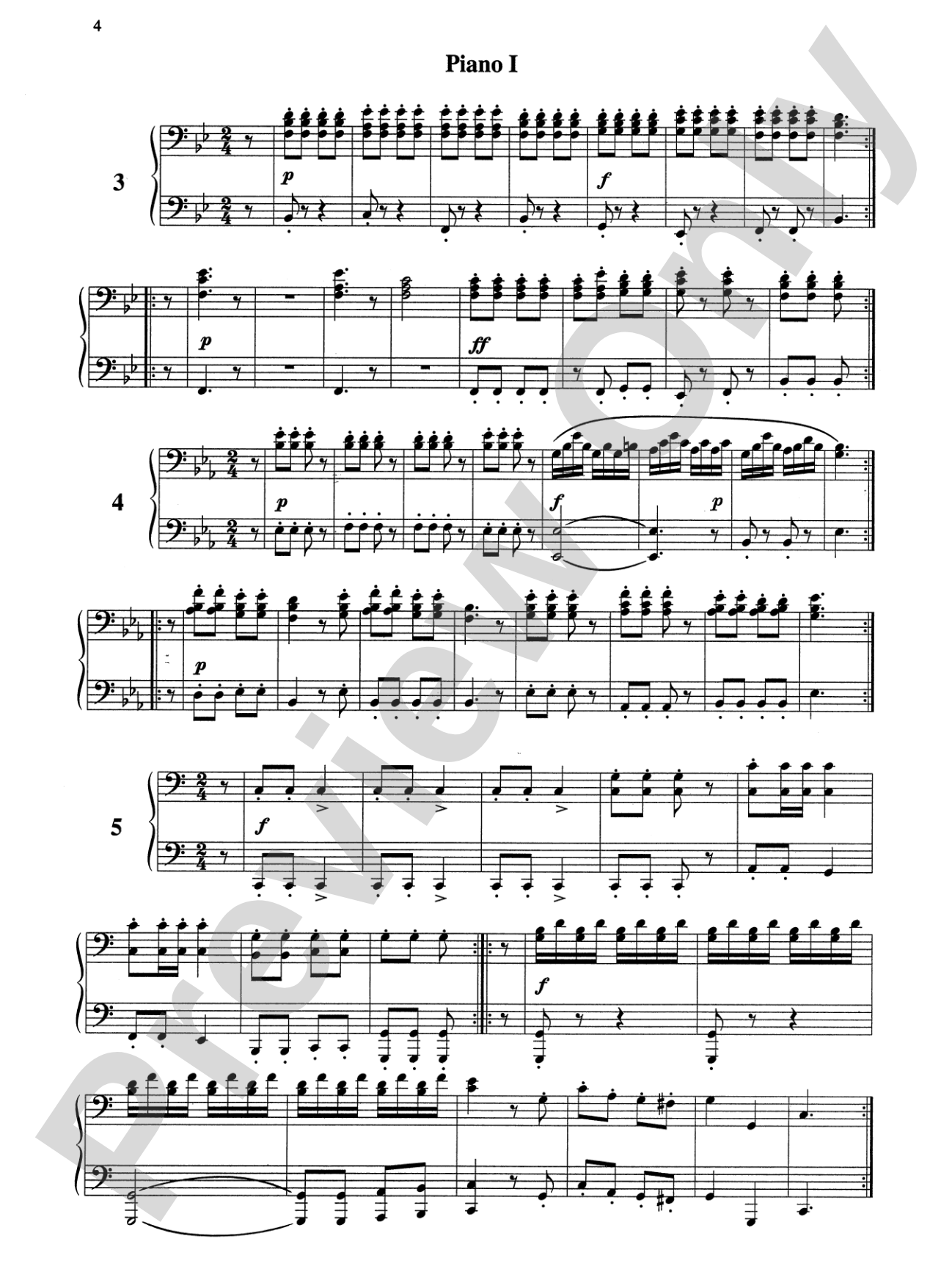
Country Dances - Piano Quartet (2 Pianos, 8 Hands) Sheet Music Preview

Country Dances - Piano Quartet (2 Pianos, 8 Hands): Piano

By Ludwig van Beethoven / arr. Edmund Parlow

Level: Late Intermediate

Item: 00-PB-0000694

Digital Download
$6.99
Description
Beethoven's "Country Dances" are well-known and often played as solo pieces. This arrangement for two pianos, eight hands, puts these pieces within the reach of intermediate to late intermediate level pianists and also adds a higher level of texture and richness with the addition of the extra voices. Two parts (Piano 1 and Piano 2) included. Part of the Treasury of Sheet Music selected and edited by FRANCES CLARK. A Federation Festivals 2024-2028 selection.

Country Dances - Piano Quartet (2 Pianos, 8 Hands): Piano isn't in MakeMusic Cloud just yet...but it could be. Let us know you'd like to see it, and you'll help shape what comes next. In the meantime, start a free trial and dive into thousands of interactive titles your students can play along with today.

Sample Audio
No sample audio found.
Sample Video
Additional Details
Series: Summy-Birchard Sheet Music
Publisher: Alfred Music
Page Count: 16
SKU: 00-PB-0000694

More about this title

About the Composer: Ludwig van Beethoven

Beethoven's orchestral dances occupy a curious place in his output: lighter in weight than his symphonies and sonatas, yet stamped with the same harmonic imagination and formal clarity. Written between 1802 and 1825, these Country Dances served the Viennese ballroom market, but Beethoven treated even this commercial work with compositional seriousness, crafting melodies that stick and harmonic progressions that surprise.

For music educators, Beethoven's dances matter because they show students that "serious" composers engaged with popular idioms of their time. These pieces prove that accessibility and artistry are not opposing forces. They also provide entry points for students to experience Beethoven's voice in digestible form before tackling the monumental works.

Why we love this

Edmund Parlow's arrangement transforms what can feel like solo repertory into something genuinely collaborative. Four hands on two pianos create textural layers that the original solo versions simply cannot achieve, and the late intermediate level means your students actually get to inhabit these dances rather than struggle through them. It's a smart way to introduce ensemble playing while keeping the focus on Beethoven's melodic gift.

What to expect

These dances capture the spirit of the ballroom with bounce and directness. The Viennese elegance is present in the clean harmonic language and predictable formal structures, yet Beethoven's hand shows through in unexpected chromatic turns and moments of wit. The addition of a second piano enriches what might feel simple into something genuinely warm.

Who it's for

Late intermediate pianists who want the reward of performing recognizable Beethoven without wrestling with extreme technical demands. This arrangement also works for intermediate-level duo partnerships looking for accessible repertory that has substance and serves as a bridge to more complex ensemble writing.

How to get the most out of it

  • Balance the melody clearly between the two pianos rather than burying it in accompaniment texture. The arrangement adds voices, but Beethoven's themes deserve to sing.
  • Coordinate rhythmic precision across both instruments before working on tempo. The dialogue between pianos creates illusions of rubato if ensemble timing slips.
  • Shape phrases together as if the four hands belong to a single musical mind. These are dances, which means forward motion and clarity of pulse matter more than expressive flexibility.
  • Record yourselves in early rehearsals to catch balance issues that are hard to hear from within the ensemble.

How to use it

Pair this with a student recital celebrating arrangements of classical miniatures, or program it on a chamber music concert where pianists outnumber other instrumentalists. It also works well mid-program as a palate cleanser between weightier pieces, since audiences recognize Beethoven's name and the dances deliver immediate musical gratification.

Skills your students will build

  • Balance and texture awareness across two instruments playing simultaneously
  • Reading two independent piano parts with different rhythmic profiles
  • Maintaining ensemble pulse through dialogue and accompaniment roles
  • Shaping Classical phrase structures with period-appropriate clarity

You May Also Like