Country Dance: 2nd B-flat Clarinet Sheet Music Preview

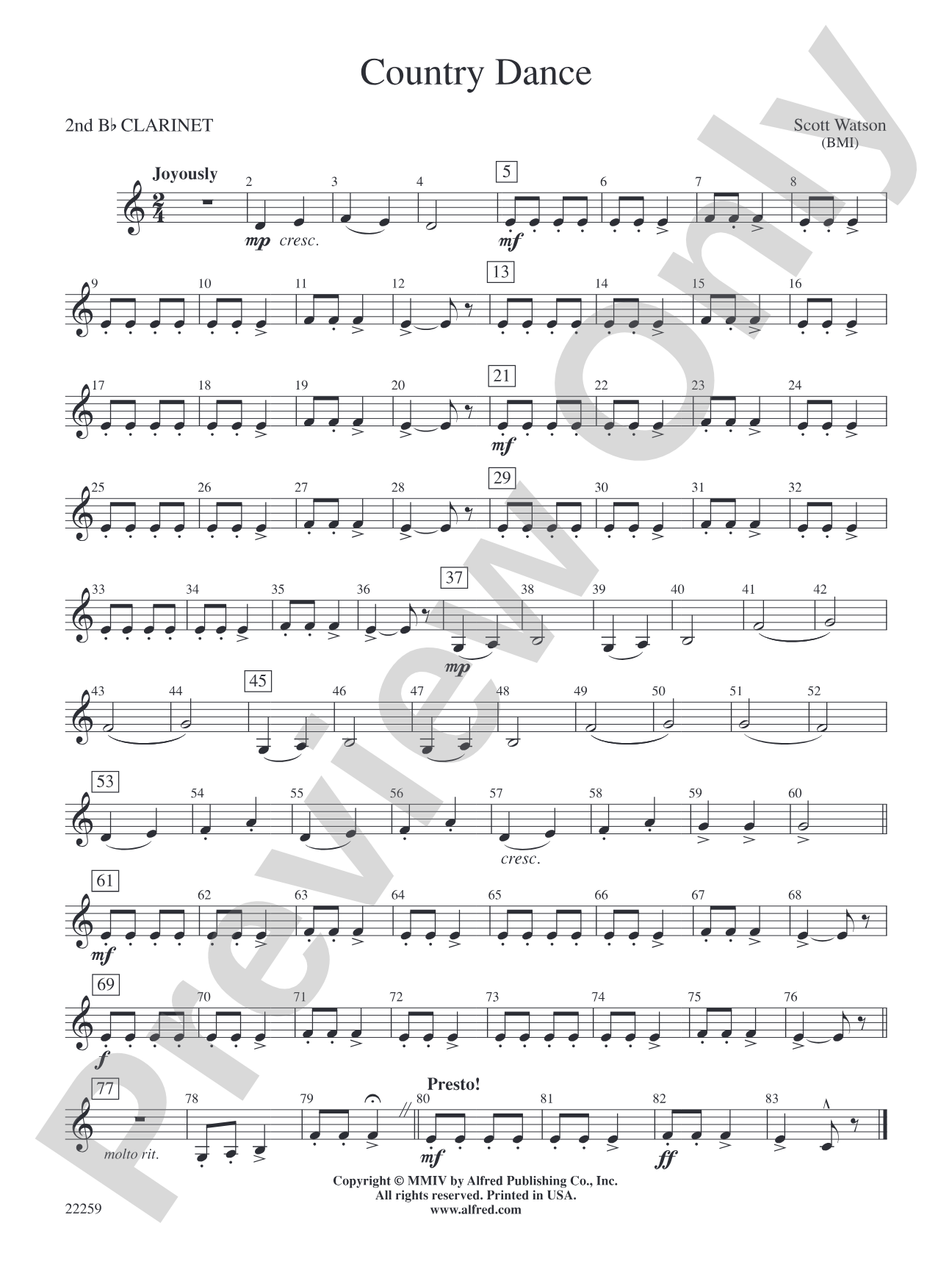
Country Dance: 2nd B-flat Clarinet

Music by Scott Watson

Grade: 1 (Very Easy)

Item: 00-PC-0000513_C2

Digital Download
$3.00
Description
"Country Dance" is the sort of spirited, rustic folk tune heard when the people of small towns and villages gather together to celebrate. Careful attention to articulations, dynamics and tempo changes will heighten the playful character of the piece.

Don't just read it, hear it, play along with it, and watch your students grow with it. In MakeMusic Cloud, Country Dance: 2nd B-flat Clarinet comes alive with professional accompaniment, adjustable tempo, and built-in practice tools that turn solo practice into real progress.

Sample Audio
0:00
0:00
Sample Video
Additional Details
Series: Alfred Debut Series
Publisher: Alfred Music
SKU: 00-PC-0000513_C2

More about this title

About the Composer: Scott Watson

Scott Watson

Scott Watson brings three decades of classroom experience to his work as a composer and educator. After spending 35 years teaching instrumental music in the Parkland School District (Allentown, PA), where he directed the high school band program and later coordinated elementary band and strings across the district, he now serves as Associate Professor of Music at Cairn University in Langhorne, Pennsylvania.

Watson's compositional voice draws equally from contemporary concert music and the practical demands of the ensemble classroom. With over 120 published works spanning concert band, string orchestra, and chamber settings at all levels, his music has been performed internationally and at venues including the Academy of Music in Philadelphia, the Midwest Clinic in Chicago, and the White House. He is an exclusive composer and clinician for Alfred Publications, contributes to their Sound Innovations series, and authored the music education text "Using Technology to Unlock Musical Creativity" (Oxford University Press, 2011). Visit scottwatsonmusic.com to explore more of his catalog.

Why we love this

Watson captures the joy of a village gathering in music that Grade 1 students can actually perform with character. The piece demands attention to details like articulation and dynamics that young players often overlook, yet the straightforward melodic line and harmonic support keep the work accessible. It's the kind of early repertoire that teaches musicianship without requiring technical gymnastics.

What to expect

Imagine a town square on a warm evening, fiddles and voices raised in celebration. The melody has the simplicity and repetition of music passed down through generations, yet it sparkles with life. There's a rustic warmth here, not quaint or cutesy, but genuinely joyful.

Who it's for

"Country Dance" works beautifully for young concert bands at the start of their musical journey. Grade 1 ensembles with mixed instrumentation will find accessible parts that sit well for developing players, while the expressive requirements challenge students to think beyond the mechanics of reading and playing.

How to get the most out of it

  • Shape the articulations crisply to bring out the playful, celebratory mood. Mark staccatos and legato passages clearly in your parts so the band hears where the character shifts.
  • Honor the tempo changes marked in the score. These shifts aren't arbitrary; they shape the narrative of the piece and keep the folk-tune character fresh.
  • Balance dynamics carefully across sections. Even at this level, Grade 1 students can control the difference between a mf section and a p passage, and doing so lifts the piece from sounding flat.

How to use it

Open a concert with this piece to set a bright, accessible tone that welcomes the audience in. It pairs well with other folk-inspired works in a thematic concert on cultural traditions, or stand it alone as a palate-cleanser between more complex repertoire. Early in the rehearsal season, it's also an ideal choice for building ensemble cohesion and teaching students how dynamics and articulation shape style.

Skills your students will build

  • Control of articulation (staccato and legato) to shape musical character
  • Dynamic expression and balance across sections
  • Response to tempo changes and their expressive function
  • Listening for ensemble blend while maintaining individual clarity

You May Also Like