
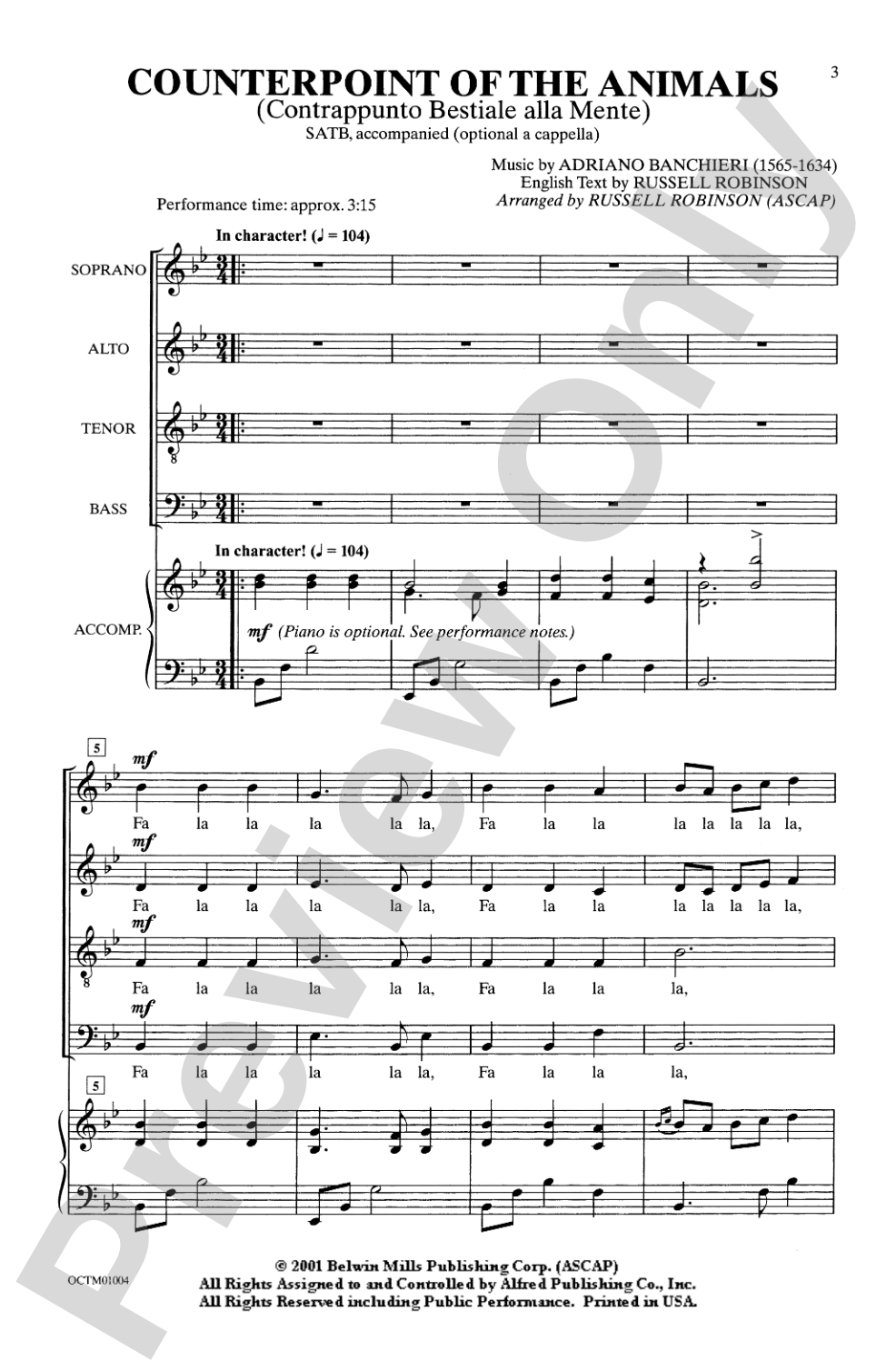
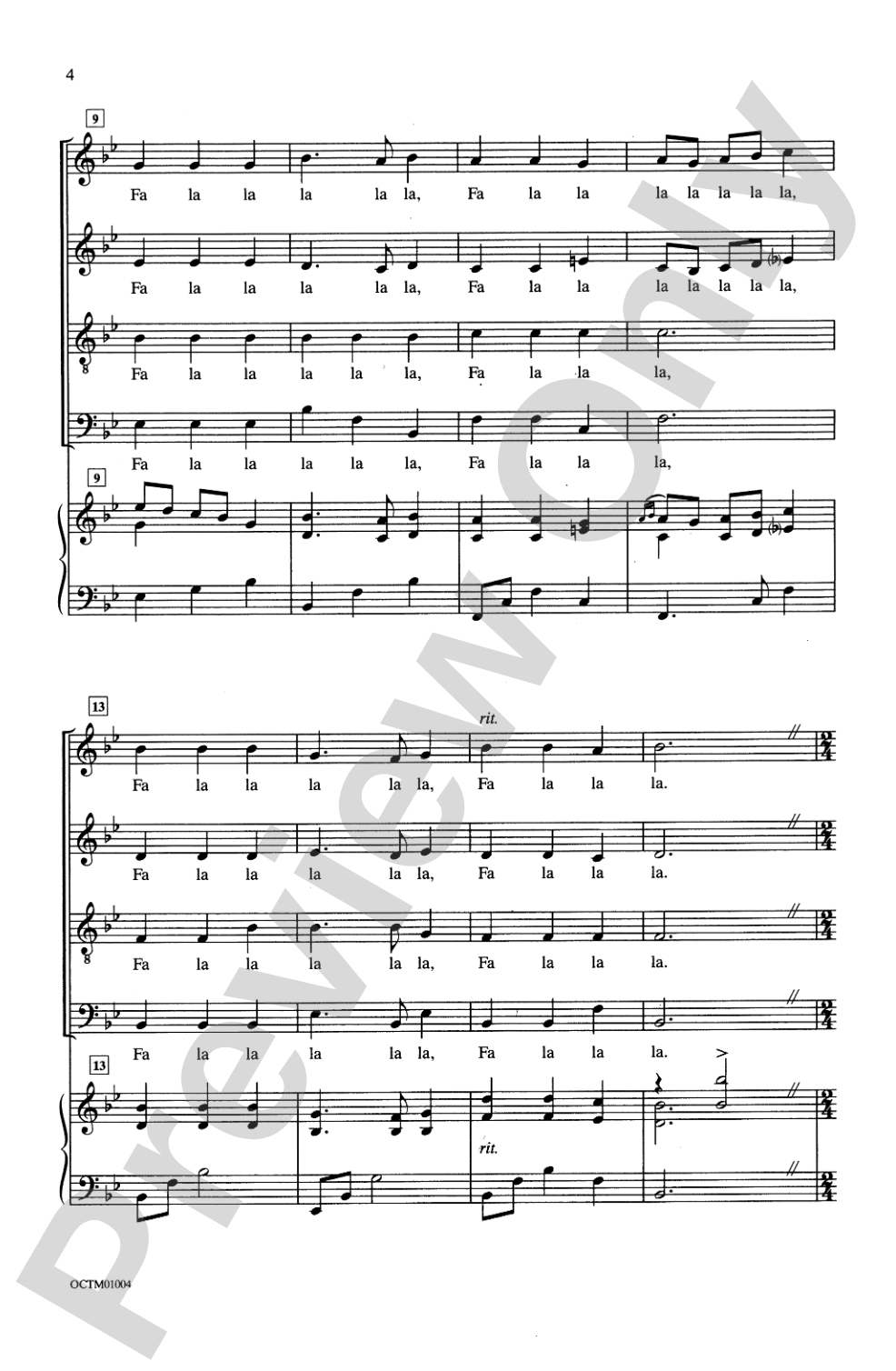

Counterpoint of the Animals: SATB (Opt. a cappella) Choral Octavo
English text by Russell Robinson, music by Adriano Banchieri / arr. Russell Robinson
Level: Moderate
Item: 00-PO-0005166
$2.25
Minimum order quantity: 20 copies
Pickup currently not available
Description
Sixteenth century Italian composer Adriano Banchieri must have had quite the sense of humor. This classic light-hearted concert work has been a staple in choral repertoire for decades. Now Russell Robinson brings us a new setting that will add a touch of classy fun to any serious concert.


Counterpoint of the Animals: SATB (Opt. a cappella) Choral Octavo isn't in MakeMusic Cloud just yet...but it could be. Let us know you'd like to see it, and you'll help shape what comes next. In the meantime, start a free trial and dive into thousands of interactive titles your students can play along with today.
Request This Title
Tell us you want it.
Start Your Free Trial
Explore everything that's ready to play right now.
Sample Audio
No sample audio found.
Sample Video
No sample videos found.
Additional Details
Series:
Alfred Archive Edition: Belwin Festival Series
Publisher:
Alfred Music
Page Count:
8
SKU:
00-PO-0005166
More about this title
About the Composer: Adriano Banchieri
Adriano Banchieri (1568-1634) was an Italian composer, organist, and Benedictine monk whose output spanned sacred and secular vocal music. Working primarily in Bologna, he became known for blending learned counterpoint with popular melodies and theatrical humor, creating works that entertained educated audiences while demonstrating sophisticated compositional technique.
Banchieri's secular vocal works, including his famous animal madrigals, reveal a composer unafraid to playfulness within the rigorous framework of Renaissance polyphony. His ability to combine technical skill with genuine wit made his music beloved across Italy and beyond, and these pieces remain valuable teaching tools for understanding how Renaissance composers engaged with their audiences.
Why we love this
Russell Robinson's arrangement captures the original's mischievous charm while giving modern choirs an accessible entry point into Renaissance secular vocal writing. The piece delivers genuine musical substance beneath its lighthearted surface, making it an ideal choice for concerts that need both sophistication and immediate audience appeal.
What to expect
Banchieri's animal characters come alive through overlapping voices and playful imitation, creating moments of genuine comedy without sacrificing musical sophistication. The piece sparkles with Renaissance elegance while inviting the audience into the composer's wry observation of barnyard life.
Who it's for
Intermediate to advanced high school choirs and mixed adult ensembles looking for program material with character and musical substance. This arrangement works equally well for groups comfortable singing a cappella or those wanting the security of instrumental support.
How to get the most out of it
- Articulate the text clearly and rhythmically; the humor lands only when audiences understand what the animals are doing and saying.
- Maintain independence between voice parts even in moments of homophonic writing so that the imitative passages sparkle with clarity.
- Balance the optional accompaniment carefully if used. The a cappella version showcases the arrangement's voice-leading more directly.
- Shape phrases through subtle dynamic contours rather than sudden changes; Renaissance sensibilities favor continuity and flow.
How to use it
Position this after more serious repertoire to refresh audiences and showcase your choir's versatility and warmth. It pairs naturally with other secular Renaissance or Baroque works, or stands alone as a delightful contrast in a mixed concert featuring art songs, motets, or contemporary pieces.
Skills your students will build
- Reading and executing Renaissance-era note values and rhythmic conventions
- Sustaining independent voice lines while listening for blend and balance in imitative textures
- Text expression and character work within a vocal ensemble setting
- Sight-reading at moderate difficulty in four-part SATB writing