
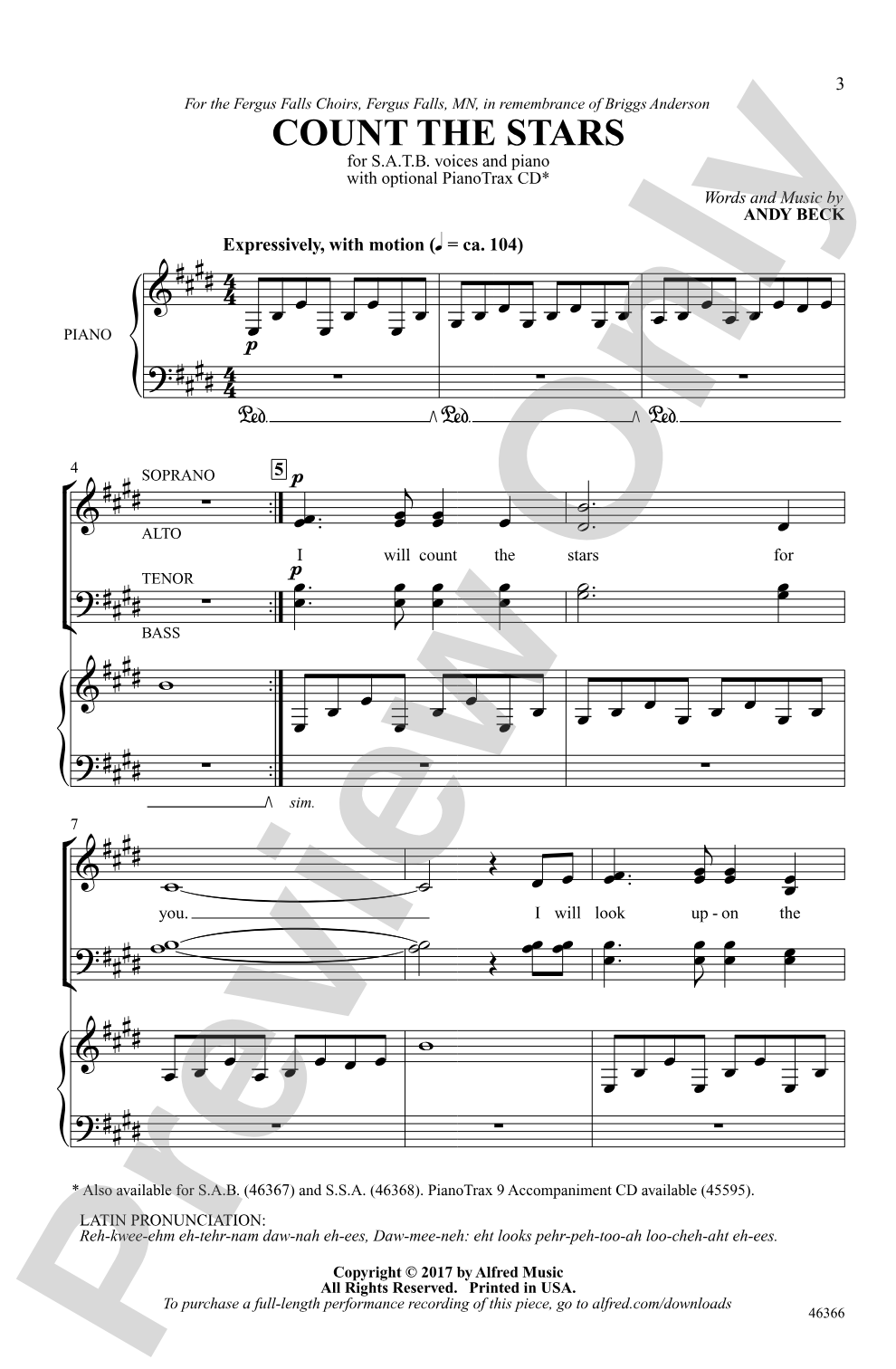

Count the Stars: SATB Choral Octavo
Words and music by Andy Beck
Item: 00-PO-0005613

$2.05
Minimum order quantity: 20 copies
Pickup currently not available
Description
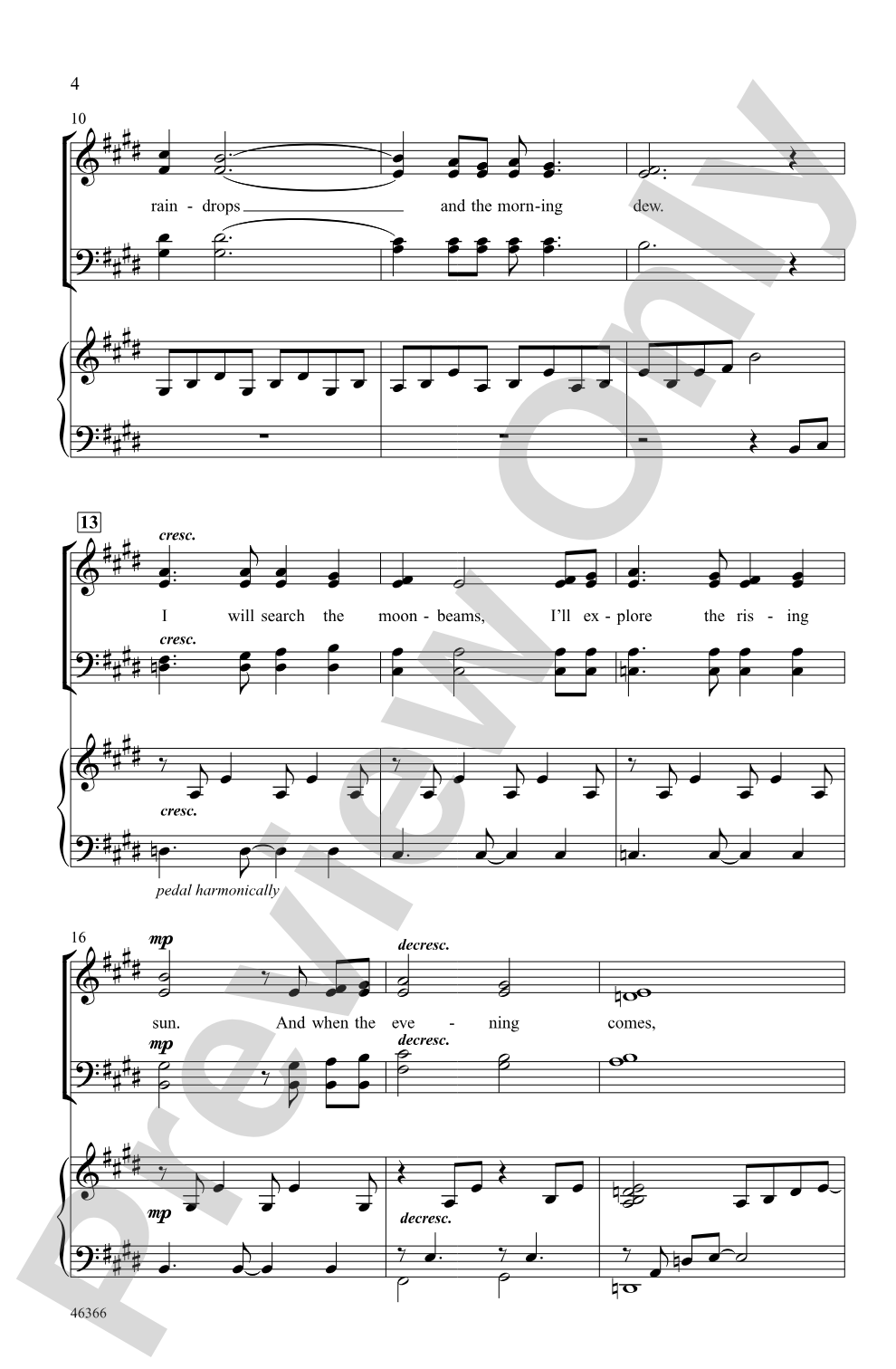
This tender song of remembrance features a poignant original text combined with Latin phrases from the Requiem Mass. Close cluster chords, beautifully sculpted phrases, and expressive dynamics leave the listener with a sense of awe and wonder. Not to be missed! This title is available in MakeMusic Cloud.


Don't just read it, hear it, play along with it, and watch your students grow with it. In MakeMusic Cloud, Count the Stars: SATB Choral Octavo comes alive with professional accompaniment, adjustable tempo, and built-in practice tools that turn solo practice into real progress.
Open in the Player
Jump straight in and assign it today.
Start Your Free Trial
Open this title and explore the full library in minutes.
Sample Audio
1
Audio File
--:--
0:00
0:00
Sample Video
Additional Details
Series:
Alfred Choral Designs
Publisher:
Alfred Music
Page Count:
12
SKU:
00-PO-0005613
More about this title
About the Composer: Andy Beck

Andy Beck directs the choral publications program at Alfred Music, where he shapes the voice of contemporary choral literature. His catalog includes more than 450 published works spanning secular and sacred repertoire, children's musicals, and essential vocal resources for singers of all ages. His compositions have earned recognition through performances across YouTube and concert stages worldwide, a testament to their accessibility and musical substance.
Beyond composing and arranging, Beck maintains an active presence as a guest conductor, clinician, and adjudicator at honor choirs and all-state festivals throughout the United States. He holds degrees in Music Education from Ithaca College and Northwest Missouri State University. A tenor himself, he performs regularly with the North Carolina Master Chorale Chamber Choir and has contributed to Alfred's studio recording library since 1992. His dual commitment to compositional craft and music education shapes every publication that bears his name.
Why we love this
Count the Stars balances profound text with sophisticated harmonic writing in a way that feels both accessible and deeply musical. The integration of Latin Requiem phrases grounds the piece in liturgical tradition while Andy's original melody and cluster harmonies create something entirely fresh, making it ideal for directors seeking repertoire with both emotional depth and artistic distinction.
What to expect
The piece unfolds with a sense of intimate reverence. Close harmonies create a sheltered, almost cathedral-like acoustic space while the sculpted phrases breathe with intention. Listeners are drawn into quiet wonder, held gently by the interplay of original melody and echoes of the ancient Requiem tradition.
Who it's for
This octavo works well for choirs with solid four-part blend and the maturity to embrace expressive, contemplative material. Strong enough for festival and contest contexts, it also serves as a memorable choice for memorial services, sacred concerts, and programming that honors human reflection on loss and remembrance.
How to get the most out of it
- Shape the expressive dynamic arc carefully; the written dynamics are compositional choices, not just volume markers. Let them guide phrasing and breath placement rather than treating them as mechanical.
- Balance the cluster chords so that no single voice drowns the sonority. These moments benefit from rehearsal at slow tempo with careful listening to blend.
- Approach the Latin text with intentional clarity without sacrificing the vocal line. Pronunciation preparation pays dividends in concert performance.
How to use it
Place this as a centerpiece in a thematic program about memory or spirituality, where it can anchor the emotional arc. It pairs beautifully with other contemporary sacred or secular works that explore similar introspective territory, and its 12-page length makes it feasible even in tightly scheduled concert settings.
Skills your students will build
- Balancing cluster chords for unified sonority
- Performing Latin text with clear articulation and rhythmic precision
- Shaping expressive dynamic changes to serve phrasing and emotional intent
- Reading and executing sculpted phrase architecture across multiple voice parts
- Understanding the relationship between original melody and traditional liturgical material