Count Bubba's Revenge Cover Image

Count Bubba's Revenge: Jazz Ensemble Conductor Score

$11.00 USD
Sale price  $11.00 USD Regular price 
Skip to product information
Count Bubba's Revenge Cover Image

Count Bubba's Revenge: Jazz Ensemble Conductor Score

By Gordon Goodwin

Grade: 5.5 (Advanced / Difficult)

Item: 00-JEM04007C

$11.00
Shipped

One moment…

Description
Revenge is very sweet! Gordon Goodwin is the hot writer of today's big band charts and this arrangement proves it. Count Bubba's Revenge features a shuffle swing that builds and builds. On top of that, it showcases all the sections by trading back and forth, playing a cappella, and so on. Solo space is provided for tenor, bari, trumpet, trombone, and piano or guitar. Gordon is masterful at creating a chart that exudes energy and excitement, and this one delivers. Standard instrumentation---no doubles. (6:24) This title is available in MakeMusic Cloud.

Count Bubba's Revenge: Jazz Ensemble Conductor Score isn't in MakeMusic Cloud just yet...but it could be. Let us know you'd like to see it, and you'll help shape what comes next. In the meantime, start a free trial and dive into thousands of interactive titles your students can play along with today.

Sample Pages

Sample Audio
No sample audio found.
Sample Video
Additional Details
Series: Gordon Goodwin Series
Publisher: Alfred Music
Page Count: 28
UPC: 654979069683
SKU: 00-JEM04007C

More about this title

About the Composer: Gordon Goodwin
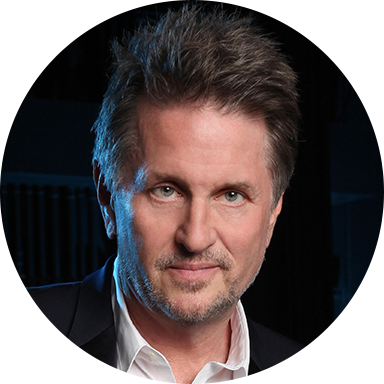
Gordon Goodwin

Gordon Goodwin began composing full orchestrations in his mind at age five, translating the music he heard directly onto paper rather than sketching fragments. By thirteen, he had already written his first big band chart, Hang Loose, a feat that signaled his arrival as an exceptional voice in jazz composition and arrangement. His work has earned three Emmy Awards and multiple Grammy nominations across film scoring (Bad Boys II, Con Air, Gone in 60 Seconds, Star Trek: Nemesis, and others) and recordings with artists including Christina Aguilera, Ray Charles, and Quincy Jones.

Since founding Gordon Goodwin's Big Phat Band in 2000, he has balanced his Hollywood career with leading one of Los Angeles's most dynamic jazz ensembles. The band's albums have achieved Grammy recognition, with his second release, XXL, earning three nominations including Best Large Jazz Ensemble Album. Goodwin continues to conduct major symphony orchestras and remains active as both a performer and composer, bringing the same cinematic sensibility and rhythmic sophistication to his big band writing that defines his work across all genres.

Why we love this

Goodwin writes big band music that never sits still. Count Bubba's Revenge builds momentum through a relentless shuffle swing, trades between sections that feel conversational rather than mechanical, and gives meaningful solo space to five different voices (tenor, baritone, trumpet, trombone, and piano or guitar). The result is a chart that sounds as exciting to perform as it does to hear, with enough structural variety to keep an ensemble engaged across its 6:24 runtime.

What to expect

Count Bubba's Revenge swings hard with a groove that never lets go. The piece builds from a tightly wound shuffle into a celebration of ensemble energy, with sections stepping forward and stepping back in a conversation that feels alive and unpredictable. There's humor in the title and the writing, but no winking at the audience; this is a big band chart that takes its craft seriously.

Who it's for

Advanced and difficult level jazz ensembles with solid section reading skills and soloists prepared to take on jazz-inflected passages. Conductors programming this chart should have access to strong tenor and baritone saxophonists, lead trumpet and trombone players, and a flexible pianist or guitarist who understands comping.

How to get the most out of it

  • Lock the shuffle groove early in rehearsal by isolating the rhythm section and bass line until the swing feel is locked and comfortable; the energy of the entire chart depends on that foundation holding steady.
  • Balance section trades carefully so that each section (saxes, trumpets, trombones) maintains the same intensity and articulation during back-and-forth passages; use the a cappella sections to highlight individual voice quality and intonation.
  • Work with soloists individually on phrasing and time feel before full ensemble rehearsals; Goodwin's charts demand soloists who can push and pull the rhythm in jazz-informed ways, not simply play the written notes.
  • Keep the tempo consistent even as intensity builds; this chart's excitement comes from layering and sectional interplay, not from rushing or dragging.

How to use it

This works perfectly as a concert closer or as the centerpiece of a set dedicated to contemporary big band writing. Its 6:24 length and high energy make it an ideal follow-up to a more lyrical piece, giving audiences a final impression of ensemble joy and technical mastery. It also programs well alongside other Goodwin charts if you're building a full-length feature on his compositional approach.

Skills your students will build

  • Shuffle swing feel and behind-the-beat phrasing
  • Section trading and ensemble balance during back-and-forth passages
  • Solo space management across multiple voices (tenor, baritone, trumpet, trombone, piano/guitar)
  • Maintaining groove consistency while building dynamic intensity
  • Reading and executing a cappella section passages with accuracy and blend

You May Also Like