
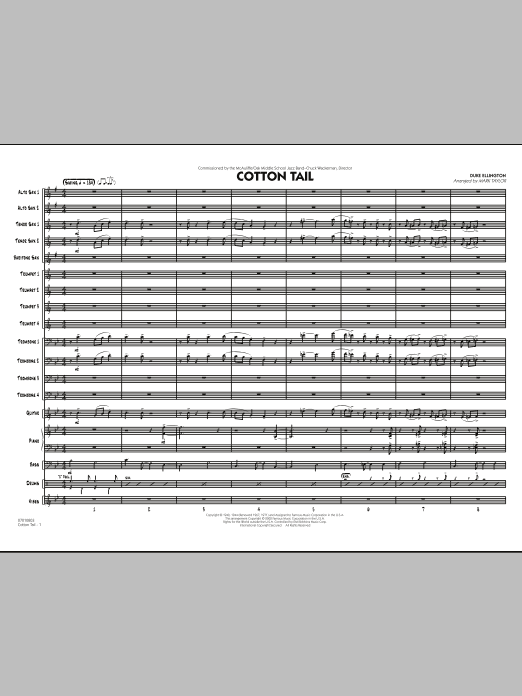

Cotton Tail: Jazz Ensemble Conductor Score & Parts
By Duke Ellington / Arranged by Mark Taylor
Grade: 3
Item: 35-PK00141166
$50.00
Pickup currently not available
Buy Extra Parts (Digital PDF Download)
| Product | Price | Quantity |
|---|---|---|
| Cotton Tail - Conductor Score (Full Score) | $7.50 | |
| Cotton Tail - Alto Sax 1 | $6.00 | |
| Cotton Tail - Alto Sax 2 | $6.00 | |
| Cotton Tail - Tenor Sax 1 | $6.00 | |
| Cotton Tail - Tenor Sax 2 | $6.00 | |
| Cotton Tail - Baritone Sax | $6.00 | |
| Cotton Tail - Trumpet 1 | $6.00 | |
| Cotton Tail - Trumpet 2 | $6.00 | |
| Cotton Tail - Trumpet 3 | $6.00 | |
| Cotton Tail - Trumpet 4 | $6.00 | |
| Cotton Tail - Trombone 1 | $6.00 | |
| Cotton Tail - Trombone 2 | $6.00 | |
| Cotton Tail - Trombone 3 | $6.00 | |
| Cotton Tail - Trombone 4 | $6.00 | |
| Cotton Tail - Guitar | $6.00 | |
| Cotton Tail - Piano | $6.00 | |
| Cotton Tail - Bass | $6.00 | |
| Cotton Tail - Drums | $6.00 | |
| Cotton Tail - Vibes | $6.00 |
Parts Added to Cart!
Description
Here is the classic Ellington swinger in a fabulous version for younger players. The drive and excitement of the original is still there as Mark starts out with a small combo of 2 tenors and 2 trombones, then gets the full band involved. Includes solos for alto and/or trombone and also for trumpet and/or piano. This chart will sound great with any band!


Cotton Tail: Jazz Ensemble Conductor Score & Parts isn't in MakeMusic Cloud just yet...but it could be. Let us know you'd like to see it, and you'll help shape what comes next. In the meantime, start a free trial and dive into thousands of interactive titles your students can play along with today.
Request This Title
Tell us you want it.
Start Your Free Trial
Explore everything that's ready to play right now.
Sample Audio
No sample audio found.
Sample Video
No sample videos found.
Additional Details
Publisher:
Hal Leonard
SKU:
35-PK00141166
More about this title
About the Composer: Duke Ellington
Duke Ellington transformed jazz from a regional American music into a sophisticated art form worthy of concert halls worldwide. His compositional genius lay in his ability to write for specific players while creating pieces that transcended their original context, as evidenced by the enduring vitality of works like Cotton Tail.
Ellington's legacy extends far beyond his own orchestra. His charts and compositions have become essential teaching repertoire because they demand musicianship at every level while remaining accessible to developing ensembles. His understanding of instrumental color and his gift for memorable melodies make his works ideal vehicles for teaching jazz fundamentals.
Why we love this
Mark Taylor's arrangement captures the infectious swagger of the original while keeping the technical demands reasonable for younger players. The structure that moves from small combo to full ensemble engagement gives directors a natural teaching tool for discussing arrangement technique and texture, plus every student gets time to listen actively before entering the conversation.
What to expect
The piece radiates the joy and swagger of the Ellington orchestra, with a groove that feels effortless and driving. Those opening statements from the smaller combo have an intimate, conversational quality before the full band arrives with celebratory energy.
Who it's for
This arrangement serves Grade 3 jazz ensembles looking for repertoire that sounds sophisticated without requiring advanced soloists. It works equally well for students encountering Ellington for the first time and for ensembles building their swing jazz vocabulary.
How to get the most out of it
- Balance the opening combo section so the two tenor saxophones and two trombones sit comfortably together without either section overwhelming the other. This interplay sets the groove for everything that follows.
- The solo sections need clear time keeping from your rhythm section. Have the bassist and pianist lock in during rehearsals separate from the full ensemble so they can anchor the soloists confidently.
- Treat the transitions between combo and full band as moments to reset energy, not as dead space. A crisp ensemble entrance after a solo will land with much more impact.
- The original drive of Cotton Tail comes from rhythmic precision in the horn section. Spend time on articulation consistency within and across sections so the swung eighth notes really sing.
How to use it
Cotton Tail fits naturally into a concert celebrating swing era jazz or as part of a Duke Ellington showcase. Its accessible level and crowd-pleasing character also make it an excellent choice for pops concerts or jazz festival performances where you want the full ensemble sounding polished without material that demands months of preparation.
Skills your students will build
- Swung eighth note interpretation and consistency
- Combo playing and balancing multiple sections
- Soloing over blues and jazz changes
- Listening and responding to other musicians during ensemble playing
- Section articulation and unity in syncopated passages