
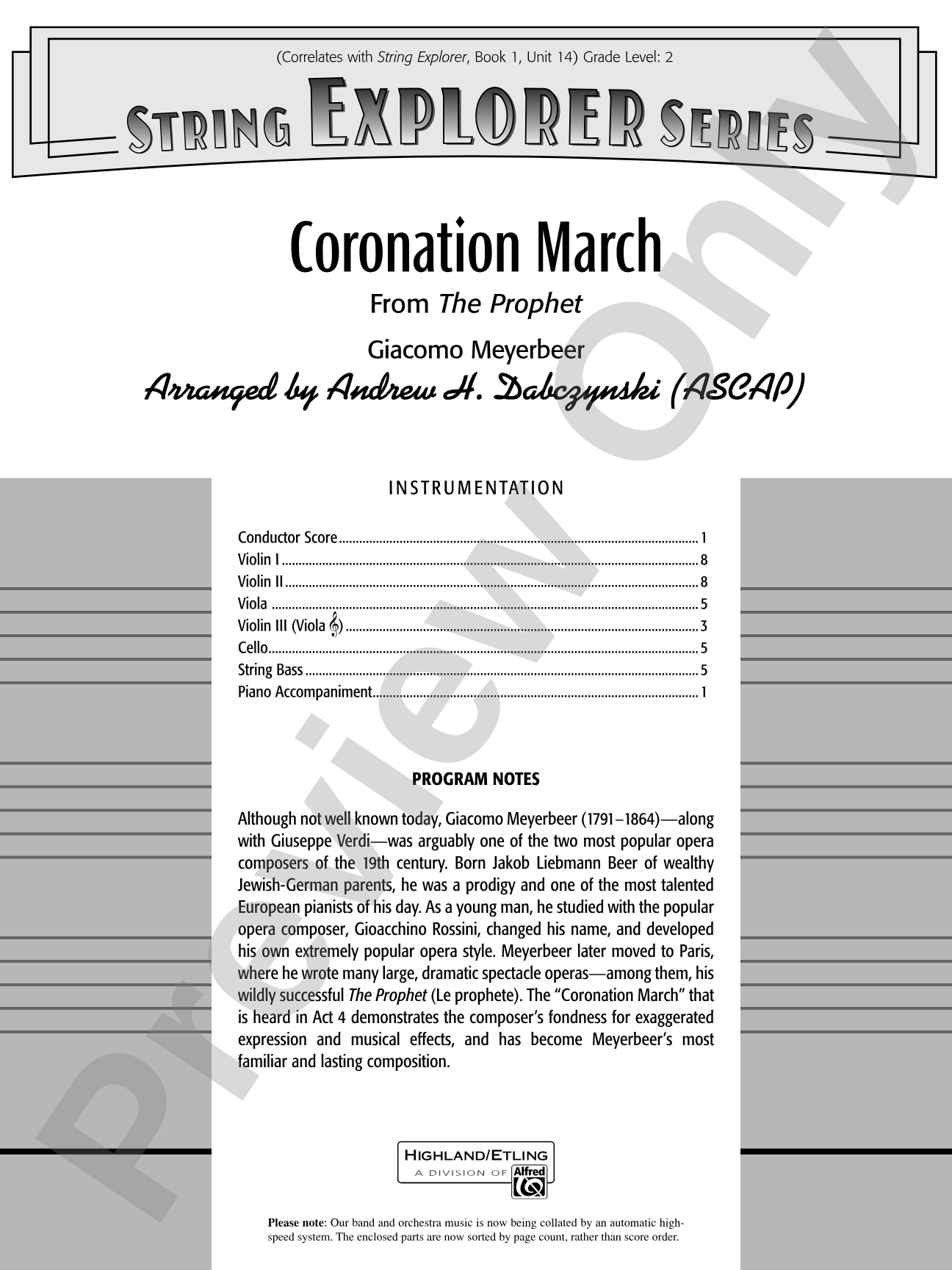
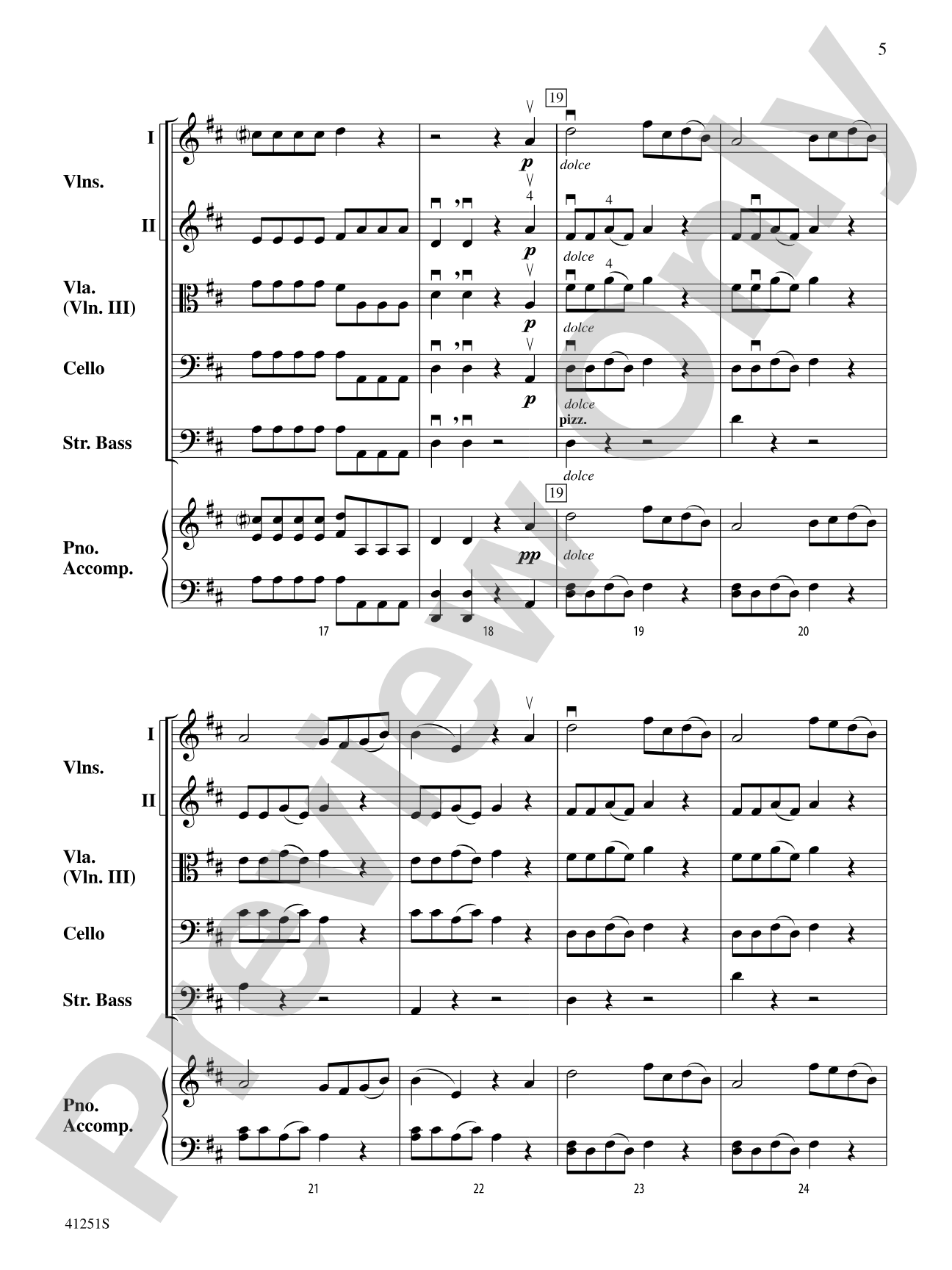
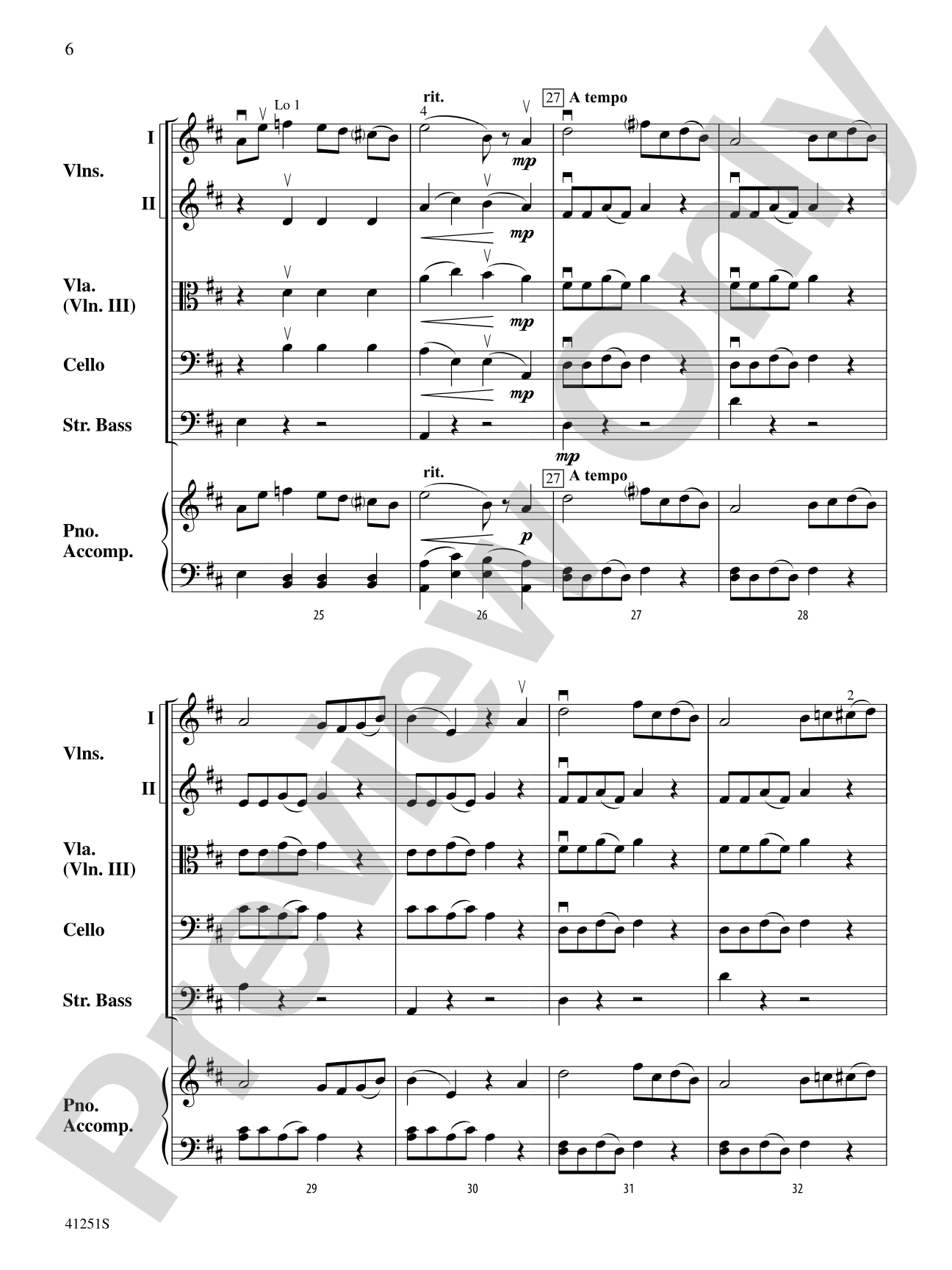
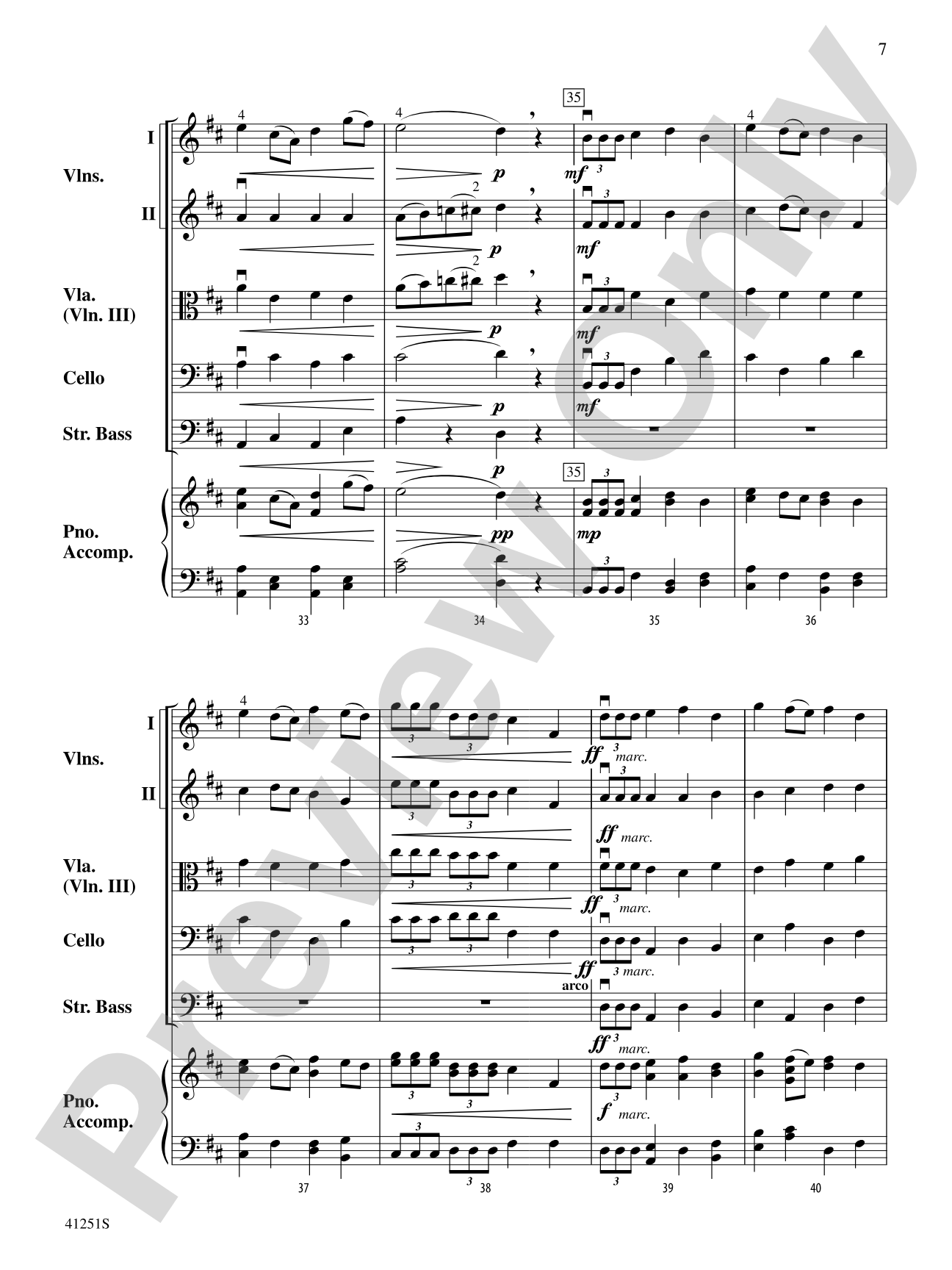
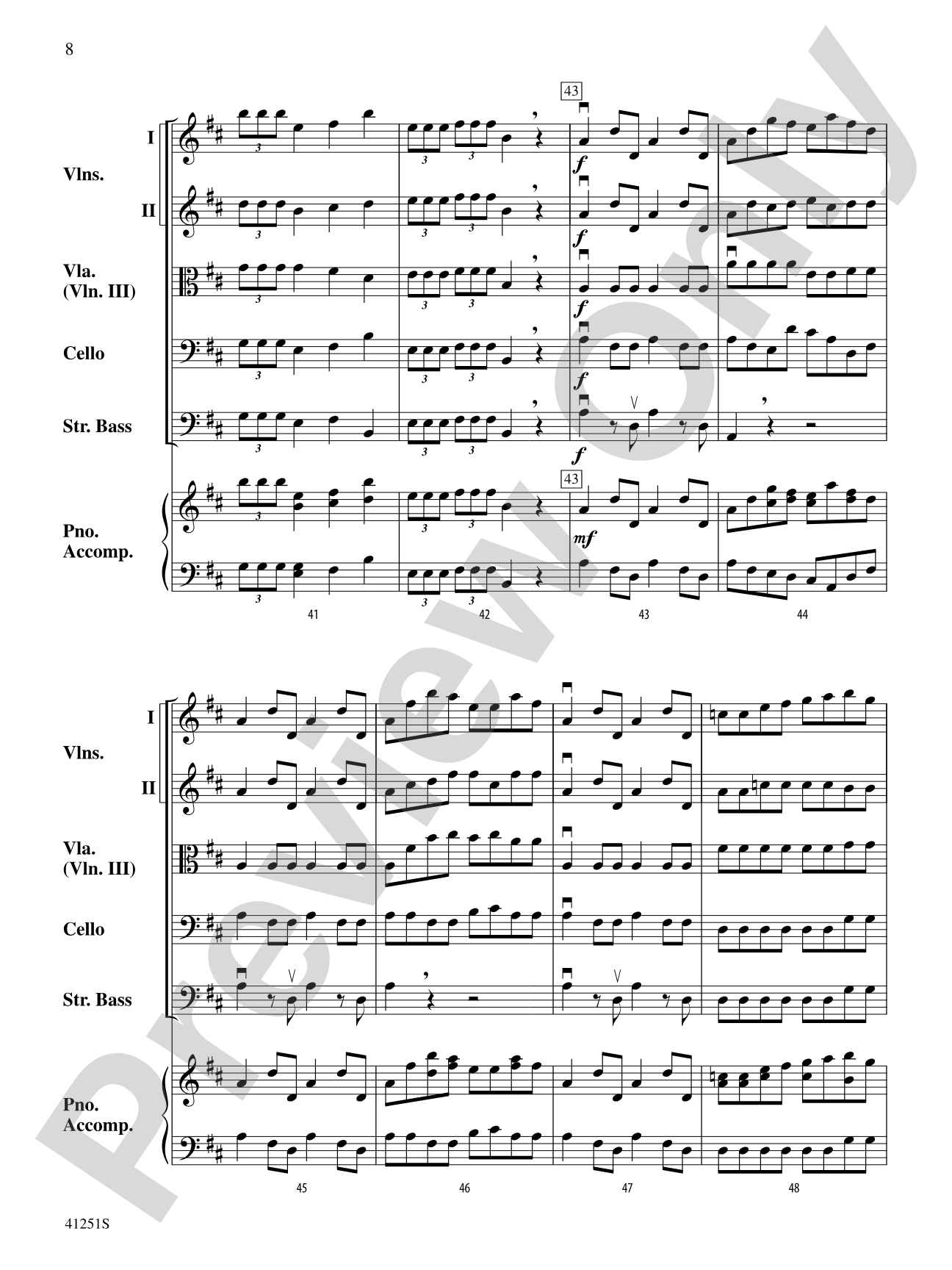
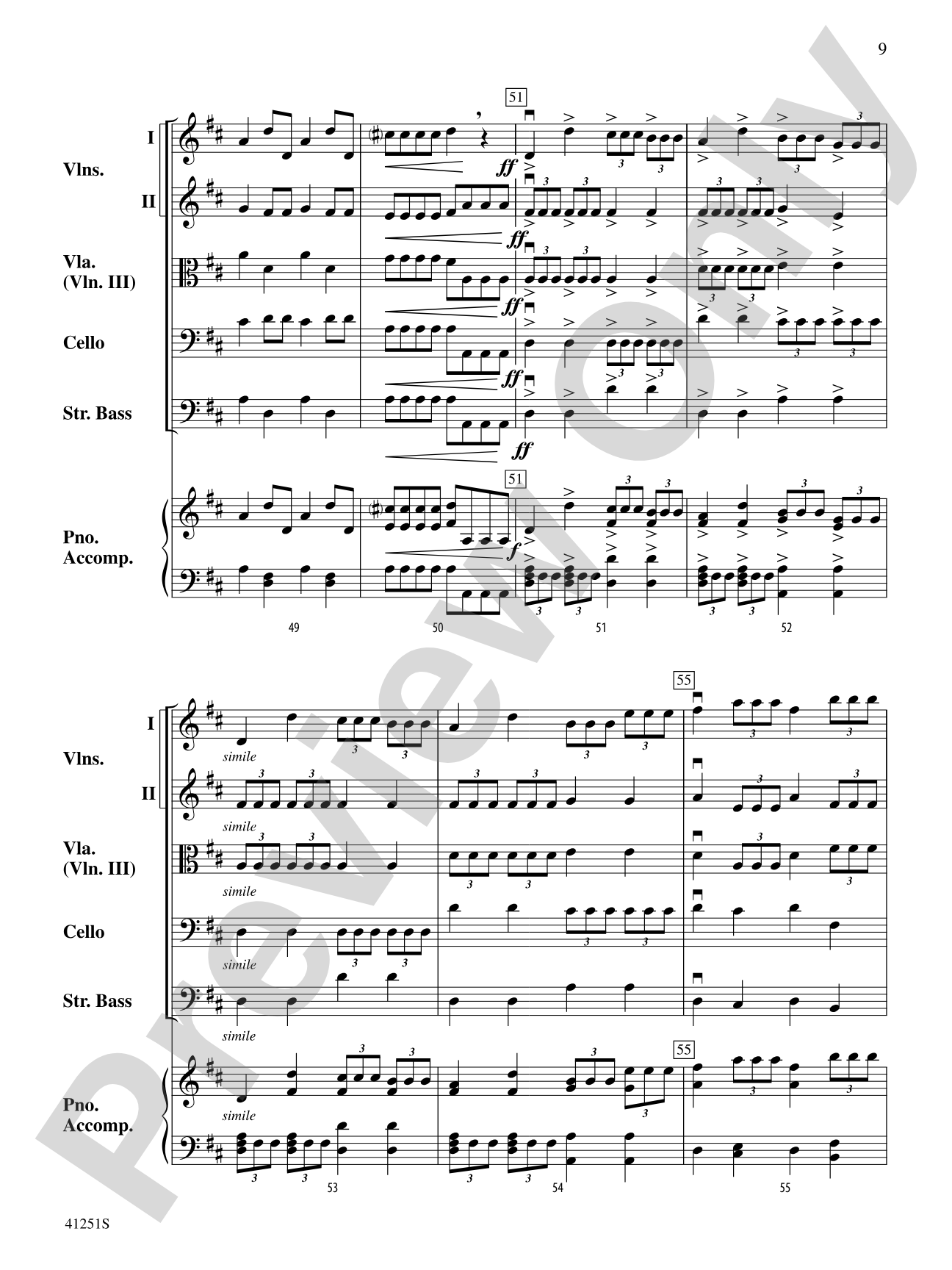
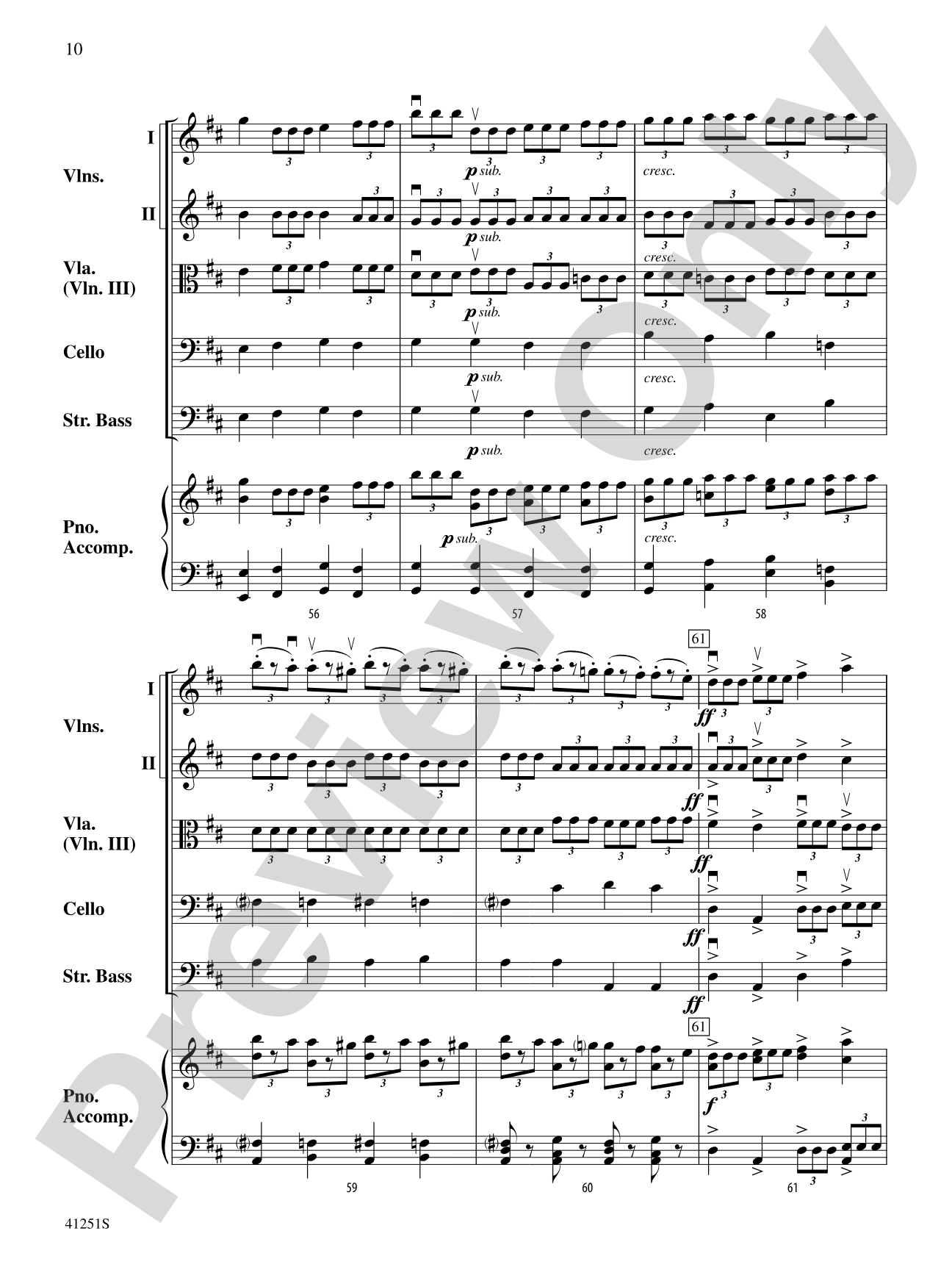
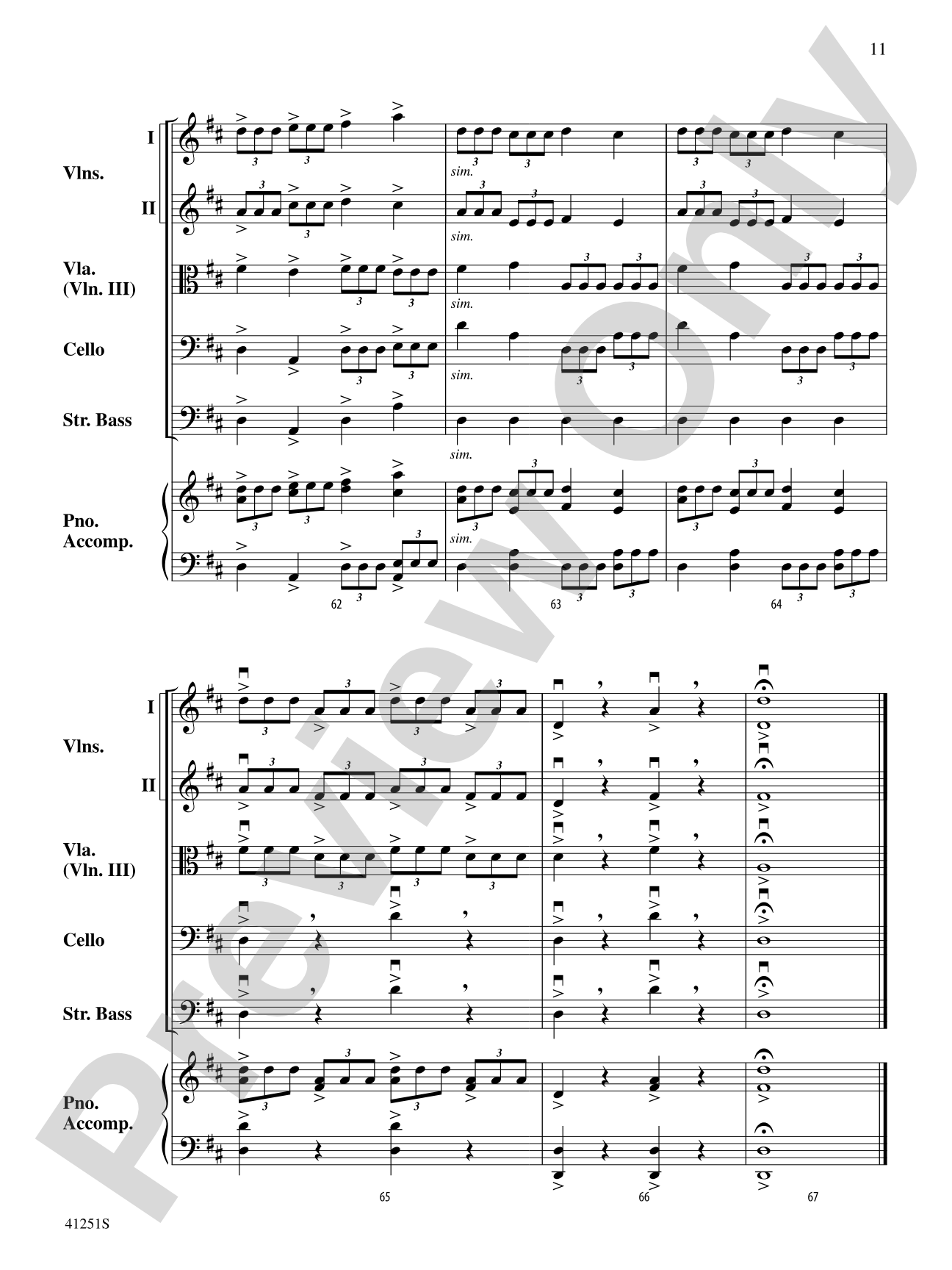

Coronation March (from The Prophet): String Orchestra Conductor Score & Parts
By Giacomo Meyerbeer / arr. Andrew H. Dabczynski
Grade: 2
Item: 00-PK-0006114

$46.00
Pickup currently not available
Buy Extra Parts (Digital PDF Download)
Parts Added to Cart!
Description
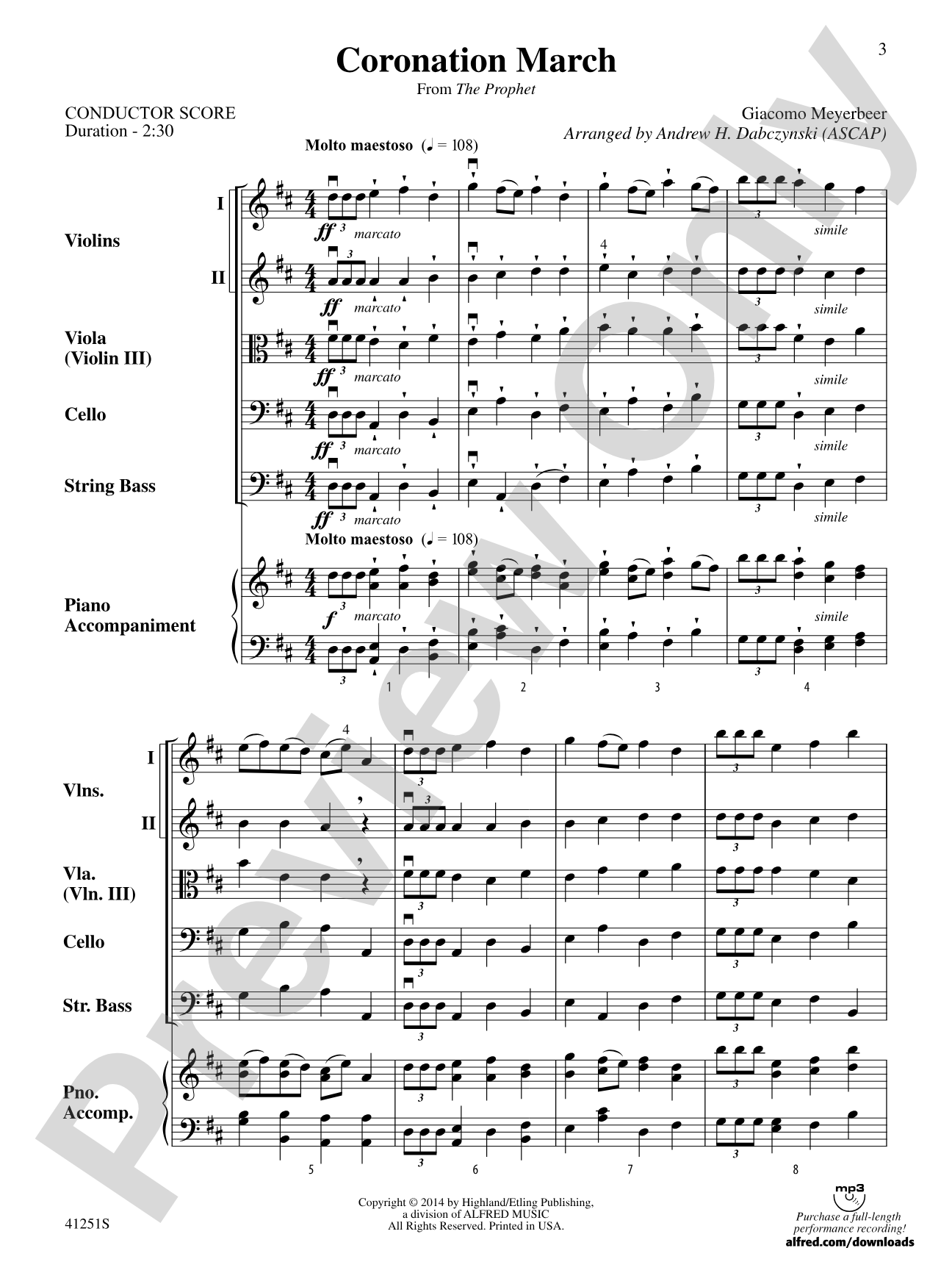
The powerful sound of this classic march is now approachable for young players, bringing a spirit of grand excitement to your concert. An effective vehicle for introducing triplets to students, it makes a perfect opener or closer that players and audiences will long remember. (2:30)
Correlates to String Explorer Book 1, Unit 14. This title is available in MakeMusic Cloud.


Correlates to String Explorer Book 1, Unit 14. This title is available in MakeMusic Cloud.
Don't just read it, hear it, play along with it, and watch your students grow with it. In MakeMusic Cloud, Coronation March (from The Prophet): String Orchestra Conductor Score & Parts comes alive with professional accompaniment, adjustable tempo, and built-in practice tools that turn solo practice into real progress.
Open in the Player
Jump straight in and assign it today.
Start Your Free Trial
Open this title and explore the full library in minutes.
Sample Audio
1
Audio File
--:--
0:00
0:00
Sample Video
No sample videos found.
Additional Details
Series:
Highland/Etling String Explorer
Publisher:
Alfred Music
Page Count:
140
SKU:
00-PK-0006114
More about this title
About the Composer: Giacomo Meyerbeer
Giacomo Meyerbeer (1791-1864) dominated European opera in the 19th century, creating grand historical operas that combined spectacle, vocal brilliance, and orchestral innovation. His works shaped the direction of Romantic opera and remain central to the operatic canon, with The Prophet standing as one of his most ambitious and musically substantial achievements.
For string educators, Meyerbeer's music offers something rare: melodies and harmonic language that sound unmistakably "classical" and important, yet remain accessible to developing players. His gift for memorable, singable lines makes his work ideal for introducing young musicians to the composers who defined the Romantic era.
Why we love this
This arrangement captures the ceremonial grandeur of Meyerbeer's original without overwhelming a Grade 2 string section. The march structure is clear and propulsive, the parts balance all sections fairly, and the introduction of triplets happens within musical context rather than as an isolated exercise. Conductors report that students are genuinely excited to learn and perform it.
What to expect
Ceremonial procession and courtly grandeur, built on confident rhythmic momentum and lyrical strength. The march invites players into the formal dignity of Romantic opera without asking them to carry complex passages or sustained ensemble independence.
Who it's for
String orchestras at the Grade 2 level who are ready to move beyond simple duple rhythms and want to program a work that audiences recognize as "real" classical music. This works equally well for students learning their first march repertoire and for ensembles that need a strong concert opener with genuine musical substance.
How to get the most out of it
- Keep the march pulse steady and unapologetic. This is ceremonial music; rhythmic confidence makes it shine.
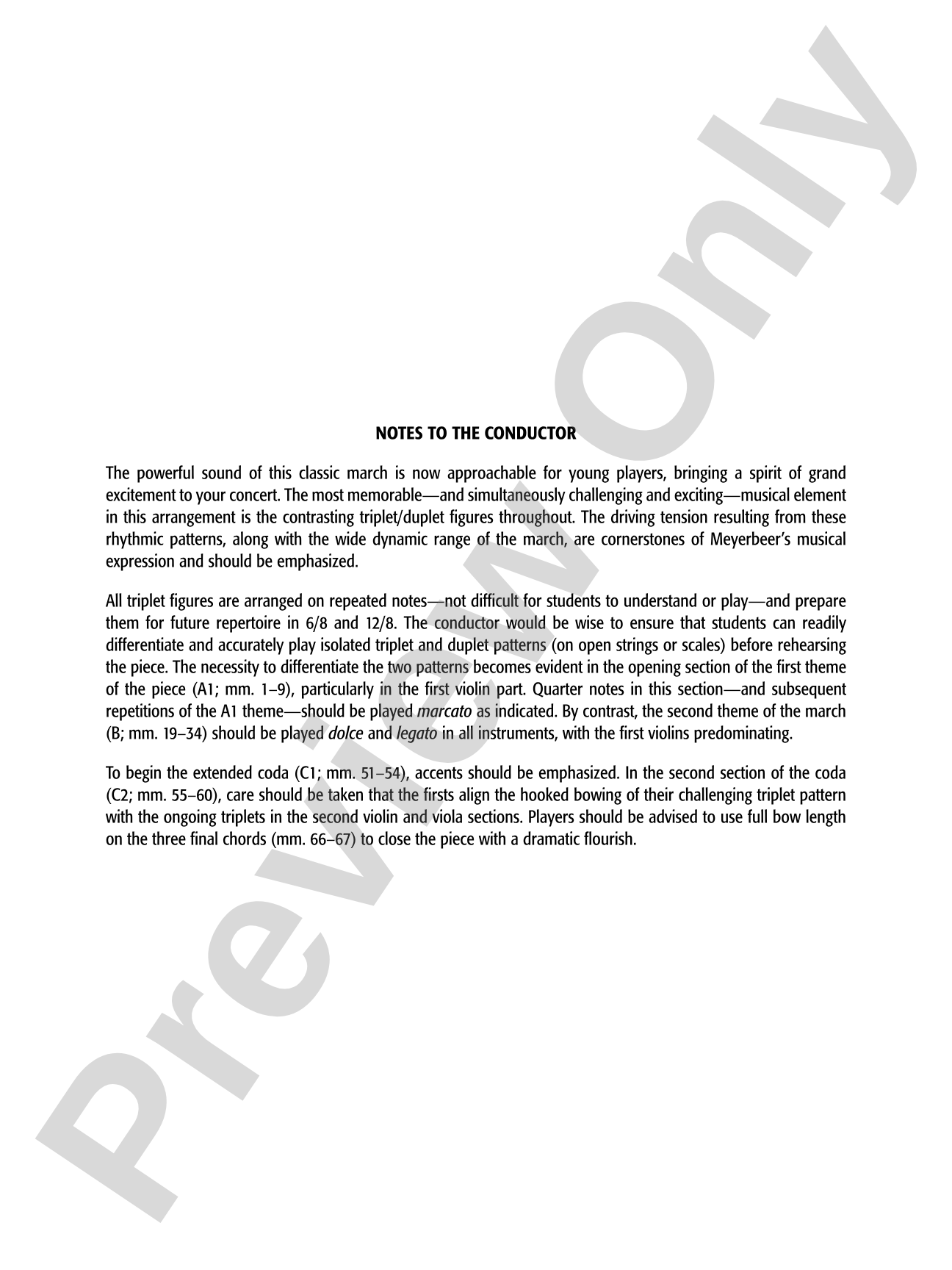
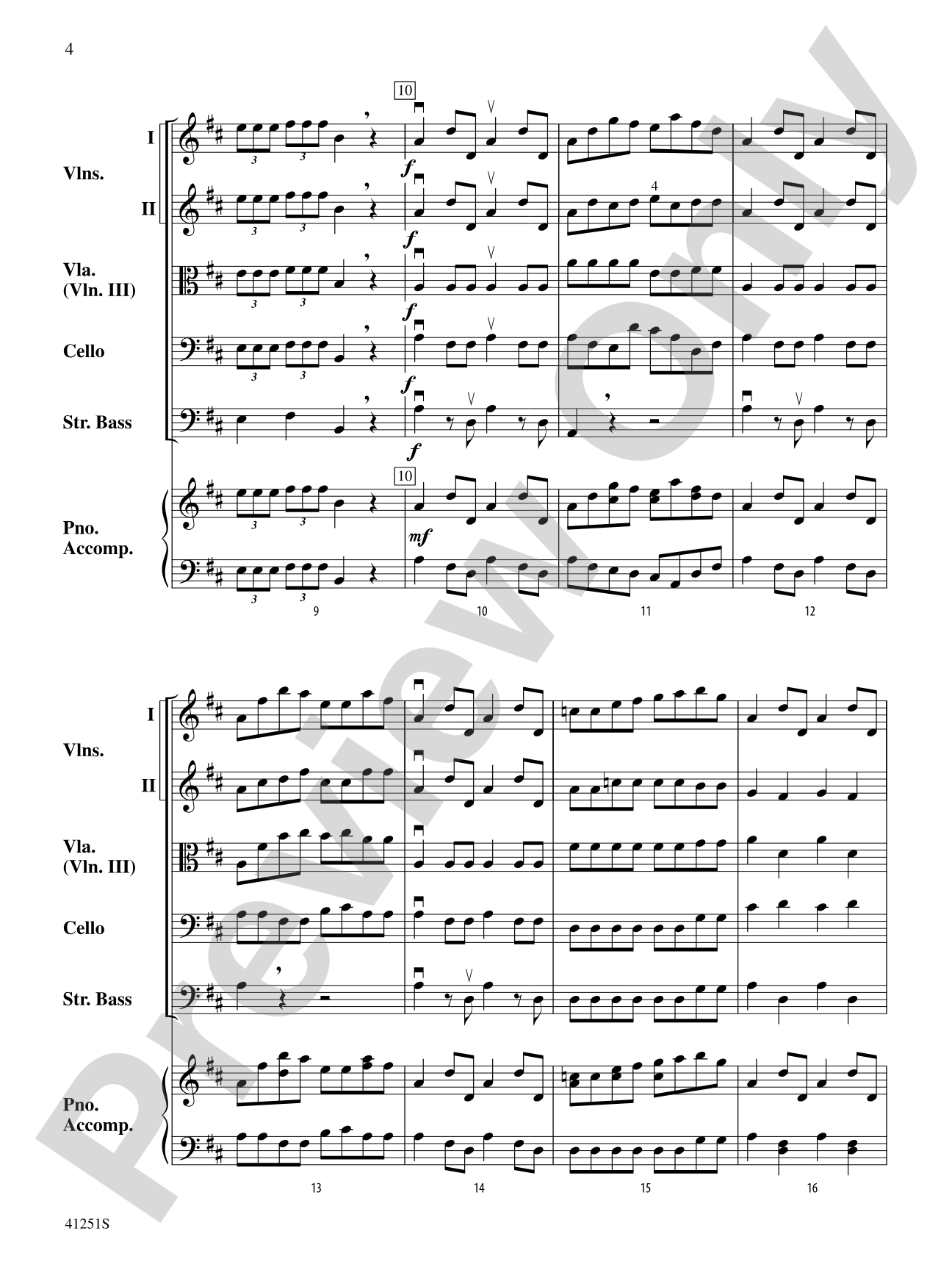
- Balance the triplets against the straight eighth-note passages so the rhythmic vocabulary reads as intentional contrast rather than confusion.
- Shape the melodic line across all sections, especially in the opening passages. Meyerbeer wrote for singers first; honor that lyrical impulse even on strings.
- Check that second violins and violas support the harmonic foundation without overplaying. They anchor the color, not the drama.
How to use it
Open a concert with this to establish musical authority and set a formal tone. It also serves as a finale if you want to close on a note of collective accomplishment and celebration. At about 2 minutes 30 seconds, it programs efficiently alongside larger works or as the centerpiece of a shorter concert.
Skills your students will build
- Reading and performing triplets in a musically coherent context
- Maintaining steady march tempo under conducting
- Balancing melodic and harmonic roles across sections
- Responding to phrase shapes and dynamic contour in Romantic-era music