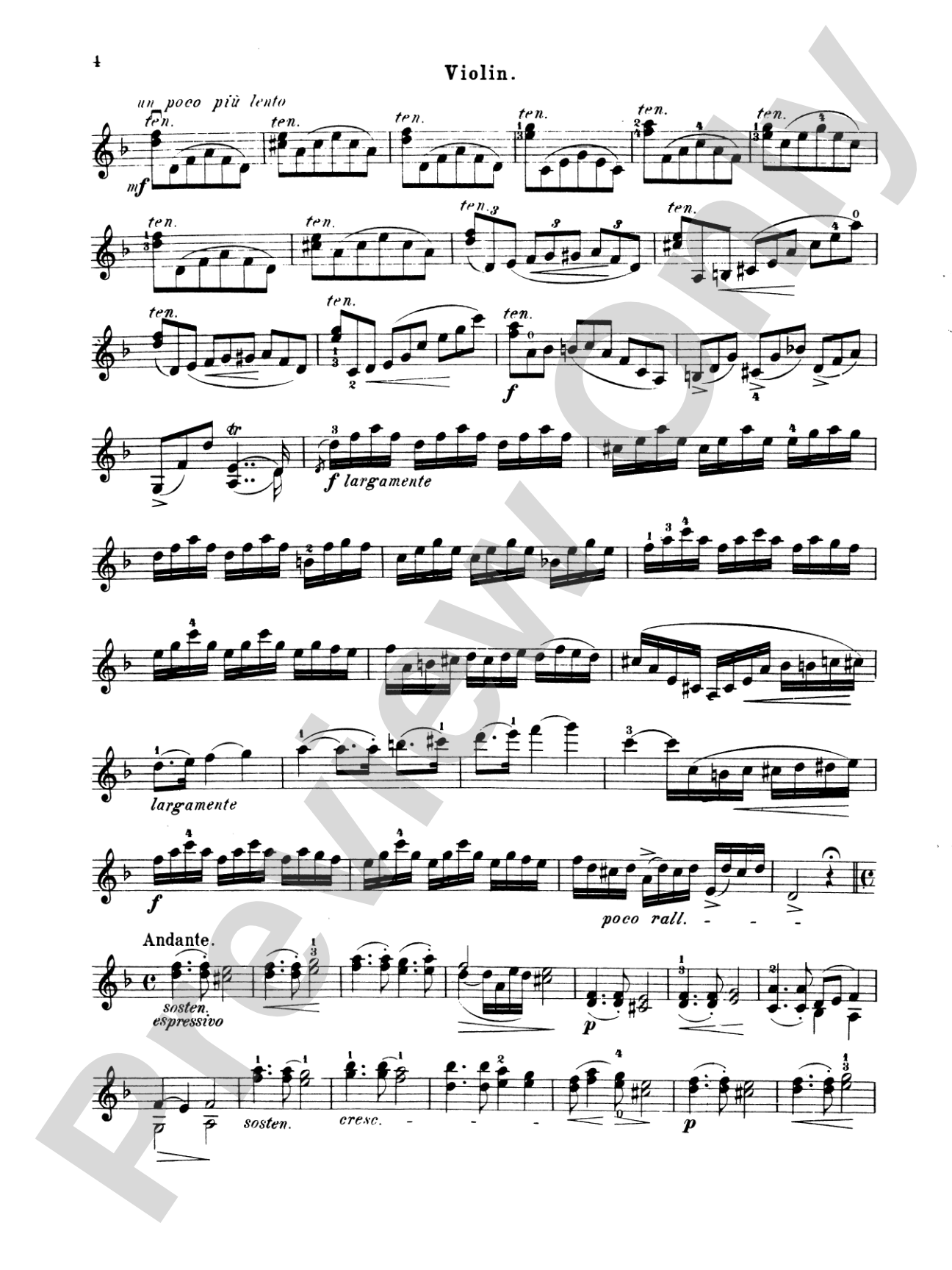
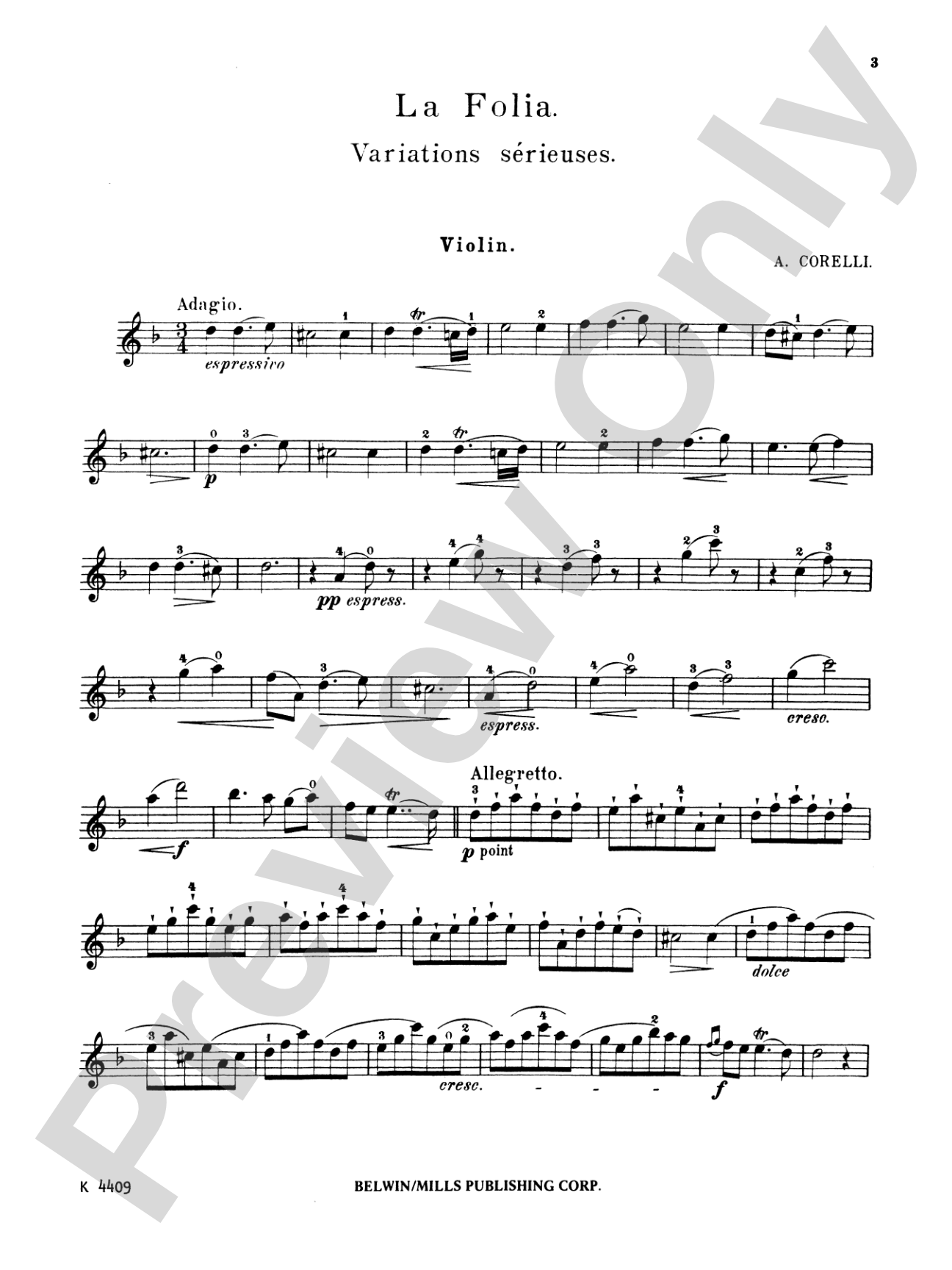
Corelli: La Folia Sheet Music Preview

Corelli: La Folia

By Arcangelo Corelli

Item: 00-PC-0010356

Digital Download
$2.99
Description
A Violin solo with Piano Accompaniment composed by Arcangelo Corelli.

Don't just read it, hear it, play along with it, and watch your students grow with it. In MakeMusic Cloud, Corelli: La Folia comes alive with professional accompaniment, adjustable tempo, and built-in practice tools that turn solo practice into real progress.

Sample Audio
No sample audio found.
Sample Video
Additional Details
Series: Kalmus Edition
Publisher: Alfred Music
Page Count: 8
SKU: 00-PC-0010356
Instrumentation: Violin & Piano

More about this title

About the Composer: Arcangelo Corelli

Arcangelo Corelli (1653-1713) stands as one of the most influential violin composers of the Baroque era. His twelve concerti grossi and five sets of sonatas established the modern violin technique and defined the sound of late Baroque instrumental music across Europe. Working primarily in Rome, Corelli trained a generation of violinists whose legacy shaped the development of the instrument for centuries.

His compositions emphasize clarity, elegance, and singing melody over technical display. Corelli's music became the foundation of violin pedagogy; his works remain standard repertoire for advanced students and professionals alike. His influence on later composers, from Vivaldi to Bach, cannot be overstated.

Why we love this

La Folia sits at the intersection of virtuosity and musicality, demanding both technical precision and interpretive maturity from the soloist. The theme and variations structure gives violinists room to develop their own voice while maintaining the disciplined elegance Corelli's writing requires. It's a showpiece that doesn't rely on gymnastics, making it equally valuable in the studio and on the concert stage.

What to expect

La Folia unfolds with the disciplined grace of Baroque rhetoric. Each variation transforms the theme without abandoning its harmonic foundation, creating a sense of inevitable architecture beneath increasingly ornate surface figuration. The overall arc moves from reflective to energetic, offering moments of genuine intimacy alongside brilliant passagework.

Who it's for

Advanced high school violinists and undergraduate string students preparing for competitions, juries, or recitals will find substantial musical and technical challenges in this standard contest repertoire. The work also suits experienced adult amateur violinists seeking repertoire that showcases both refinement and capability.

How to get the most out of it

  • Shape the opening statement of the theme with warm tone and clear phrasing before the variations accelerate the figuration; the accompanist should anchor the harmonic progression without overshadowing the solo line.
  • Maintain rhythmic independence in faster variations by letting the piano's steady pulse support rather than drive your playing; Baroque accompaniment breathes differently than Classical or Romantic.
  • Balance ornamentation with structural clarity; embellishments should illuminate the melodic line, not obscure it.
  • Pay close attention to dynamic contrast between variations; use the quieter passages to reset before building intensity again.

How to use it

This work functions beautifully as the centerpiece of a Baroque recital, paired with dance-form movements or other theme-and-variation pieces from the era. Its 8-page scope makes it manageable for festival play-throughs and concerto competitions. Consider programming it alongside a chamber work to demonstrate the violinist's range across textures.

Skills your students will build

  • Baroque style and ornamentation
  • Theme and variation form
  • Extended passage work across multiple string positions
  • Coordination with piano accompaniment in solo repertoire
  • Dynamic control within a single musical idea
  • Sustained legit tone production over longer phrases

You May Also Like