
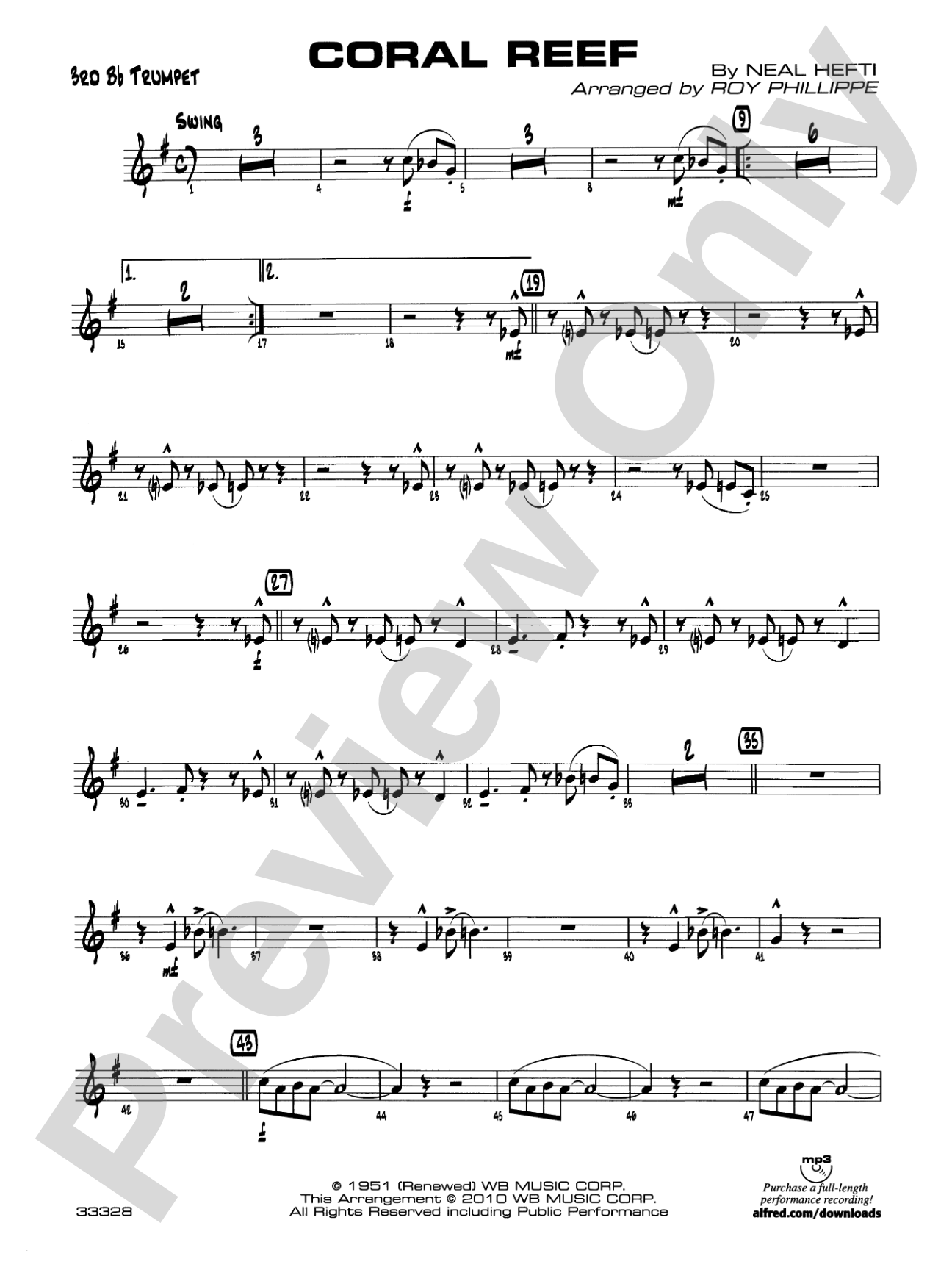

Coral Reef: 3rd B-flat Trumpet
By Neal Hefti / arr. Roy Phillippe
Grade: 1 (Easy)
Item: 00-PC-0015291_T3
$3.00
Pickup currently not available
Description
Coral Reef is a level 1 piece from the First Year Charts for Jazz Ensemble series designed for first year jazz ensembles. Full instrumentation includes 5 saxophones, 6 brass and 4 rhythm parts. The piece is playable with reduced instrumentation. These parts include 3 saxophones, 2 trumpets, 1 trombone and 3 rhythm. Optional parts include flute, tuba, horn in F and baritone T.C./tenor sax. All solos are written out, the rhythm section parts suggest chord voicings and rhythms and guitar chord frames are provided to assist young guitarists.


Don't just read it, hear it, play along with it, and watch your students grow with it. In MakeMusic Cloud, Coral Reef: 3rd B-flat Trumpet comes alive with professional accompaniment, adjustable tempo, and built-in practice tools that turn solo practice into real progress.
Open in the Player
Jump straight in and assign it today.
Start Your Free Trial
Open this title and explore the full library in minutes.
Sample Audio
1
Audio File
--:--
0:00
0:00
Sample Video
Additional Details
Series:
First Year Charts for Jazz Ensemble
Publisher:
Alfred Music
Page Count:
78
SKU:
00-PC-0015291_T3
More about this title
About the Composer: Neal Hefti
Neal Hefti (1922-2002) was a composer and arranger who shaped the sound of American jazz and popular music across five decades. His work on The Odd Couple television theme and his arrangements for Count Basie's orchestra demonstrated his gift for crafting memorable melodies and sophisticated yet accessible orchestrations. Hefti's compositions and arrangements remain staples in jazz education because they balance musical substance with playability, making them ideal teaching tools for developing ensembles.
Why we love this
Coral Reef delivers exactly what first-year jazz ensembles need: a piece that sounds mature and engaging while respecting the reading level and technical abilities of young players. Roy Phillippe's arrangement provides flexibility through optional parts and reduced instrumentation options, so you can field it with whatever lineup you have on any given day. The written-out solos remove guesswork for inexperienced improvisers, and the guitar chord frames with suggested voicings make rhythm section parts approachable without sacrificing musicality.
What to expect
Coral Reef captures the bright, exploratory energy of underwater discovery with a swinging melody and gentle harmonic movement that feels inviting rather than overwhelming. The piece unfolds with the ease of water flowing around natural structures, never demanding more than your ensemble can give while always sounding intentional and musical.
Who it's for
This score and parts set is designed for jazz directors launching their first-year ensembles or working with younger high school players new to the jazz idiom. It works equally well in middle school jazz programs where students are encountering swing and jazz vocabulary for the first time.
How to get the most out of it
- Balance the ensemble by having rhythm section players rehearse their parts separately first; clarity in the groove makes everything else lock in faster.
- Walk through the written solos as a full section before asking anyone to solo, so players hear how each solo sits melodically and harmonically within the tune.
- Let guitarists spend time with the chord frames independently; having a comfortable grip on the voicings removes anxiety during rehearsal and performance.
- Use the reduced instrumentation parts strategically during the year. Play the piece with full instrumentation late in the season when your ensemble has more experience with blend and balancing.
How to use it
Program Coral Reef early in your concert season to build ensemble confidence and demonstrate how jazz repertoire can be both fun and substantial. Its accessibility makes it an excellent follow-up to warm-up exercises and a natural predecessor to slightly more complex second-year charts, creating a clear progression through your First Year Charts selections.
Skills your students will build
- Reading and executing swing rhythms and articulations
- Understanding basic jazz harmony and chord progression navigation
- Balancing individual voices within a jazz ensemble texture
- Playing written-out jazz solos with rhythmic precision and stylistic authenticity
- Interpreting rhythm section voicings and maintaining steady timekeeping in jazz context