Coquette: Piano Digital Sheet Music

Coquette: Piano Digital Sheet Music

Carmen Lombardo, Johnny Green, Gus Kahn, Teddy Wilson

Item: 00-PS-0000926

Digital Download
$3.99
Description

Coquette: Piano Digital Sheet Music isn't in MakeMusic Cloud just yet...but it could be. Let us know you'd like to see it, and you'll help shape what comes next. In the meantime, start a free trial and dive into thousands of interactive titles your students can play along with today.

Sample Audio
No sample audio found.
Sample Video
Additional Details
SKU: 00-PS-0000926

More about this title

About the Artist: Teddy Wilson

Teddy Wilson (1912-1986) was a pianist and bandleader who shaped the sound of swing jazz in the 1930s and 1940s. His elegant touch, harmonic sophistication, and ability to accompany vocalists made him one of the most recorded pianists in jazz history. Wilson's work with Benny Goodman's integrated small groups broke racial barriers in American music while establishing a standard of musicianship that influenced generations of jazz pianists.

Wilson's compositions and arrangements reflect his gift for blending stride piano traditions with modern swing sensibilities. He remained active as a performer, composer, and educator throughout his life, demonstrating that technical mastery and lyrical expression go hand in hand.

Why we love this

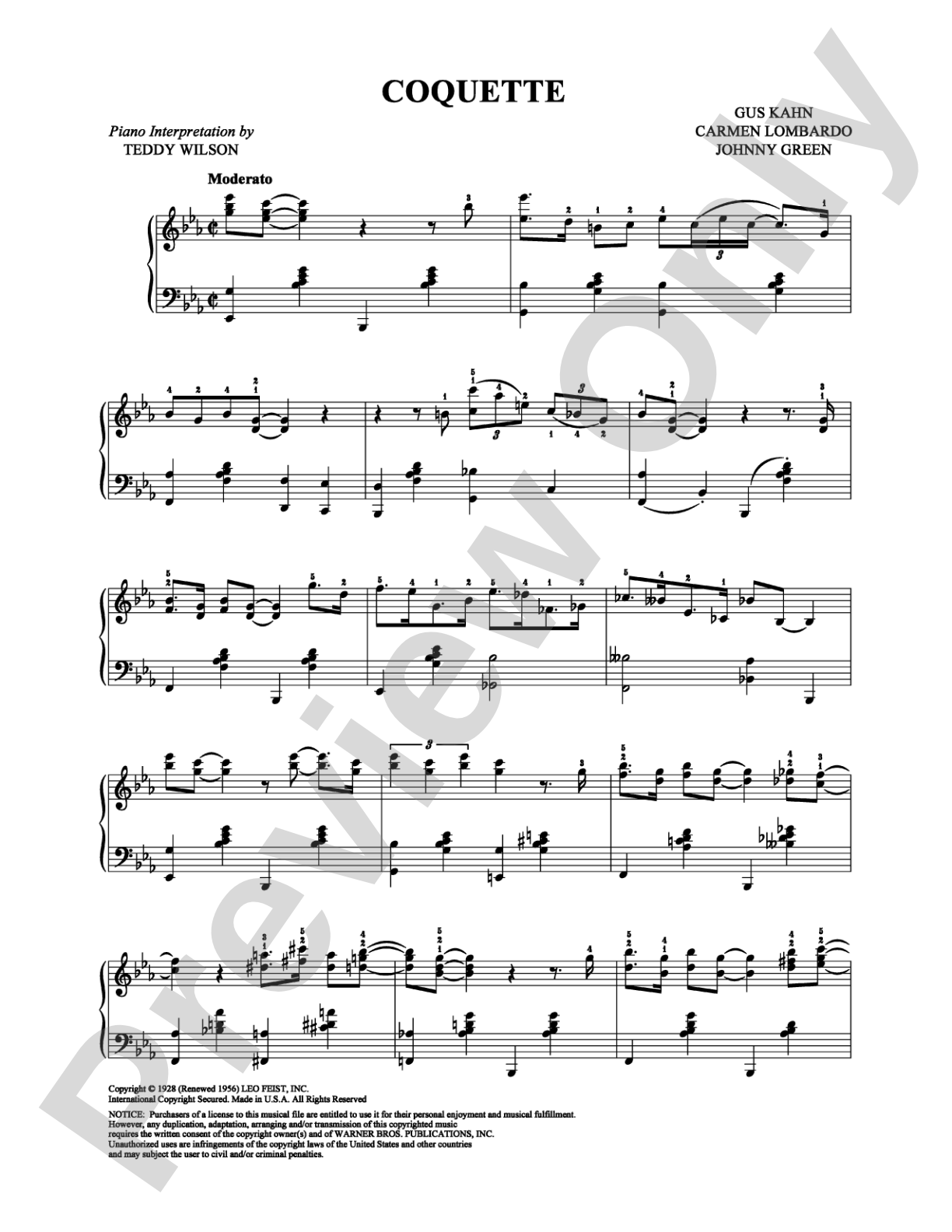
Coquette showcases Wilson's ability to take a standard melody and reshape it through his harmonic vocabulary and touch. The arrangement captures the playful character of the tune while demanding real pianistic control and jazz sensibility from whoever plays it. This is the kind of piece that reveals what a player actually knows about jazz phrasing and comping.

What to expect

Elegant and slightly mischievous, Coquette balances sophistication with playfulness. The piece has a conversational quality, as if the pianist is gently flirting with the melody rather than displaying virtuosity. There's refinement in every measure without a hint of pretense.

Who it's for

Jazz pianists working on swing-era repertoire and the harmonic language of 1930s-1940s jazz. This piece rewards pianists who have solid left-hand technique and who are ready to study jazz comping and reharmonization in a real performance context.

How to get the most out of it

  • Listen closely to how Wilson handles the melody's phrasing; his rubato and rhythmic flexibility are subtle but crucial to the piece's charm.
  • Balance the left-hand accompaniment so it supports rather than overwhelms the right hand. The goal is conversation, not accompaniment-heavy texture.
  • Pay attention to voicing choices in the harmony; Wilson's sophistication lies in unexpected chord substitutions and reharmonization, not flashy runs.
  • Shape phrases with dynamic control and careful pedaling rather than tempo swings. Let the harmony breathe.

How to use it

Feature this in a jazz recital or concert program that explores swing-era piano styles. It pairs well alongside other standards arranged in the classic swing tradition, giving audiences a glimpse into how great jazz musicians approached melody and harmony.

Skills your students will build

  • Jazz reharmonization and chord substitution
  • Swing phrasing and rhythmic flexibility within a steady pulse
  • Left-hand comping and independence between hands
  • Voicing choices and harmonic color in accompaniment
  • Stylistic interpretation of a standard melody

You May Also Like