

Copland, The Cat and the Mouse - Piano Solo: Piano
By Aaron Copland / ed. Jane Magrath
Level: Early Advanced
Item: 00-PB-0000811
$4.99
Pickup currently not available
Related Items
Copland, The Cat and the Mouse: Piano Sheet |
$4.99
|
View |
Description
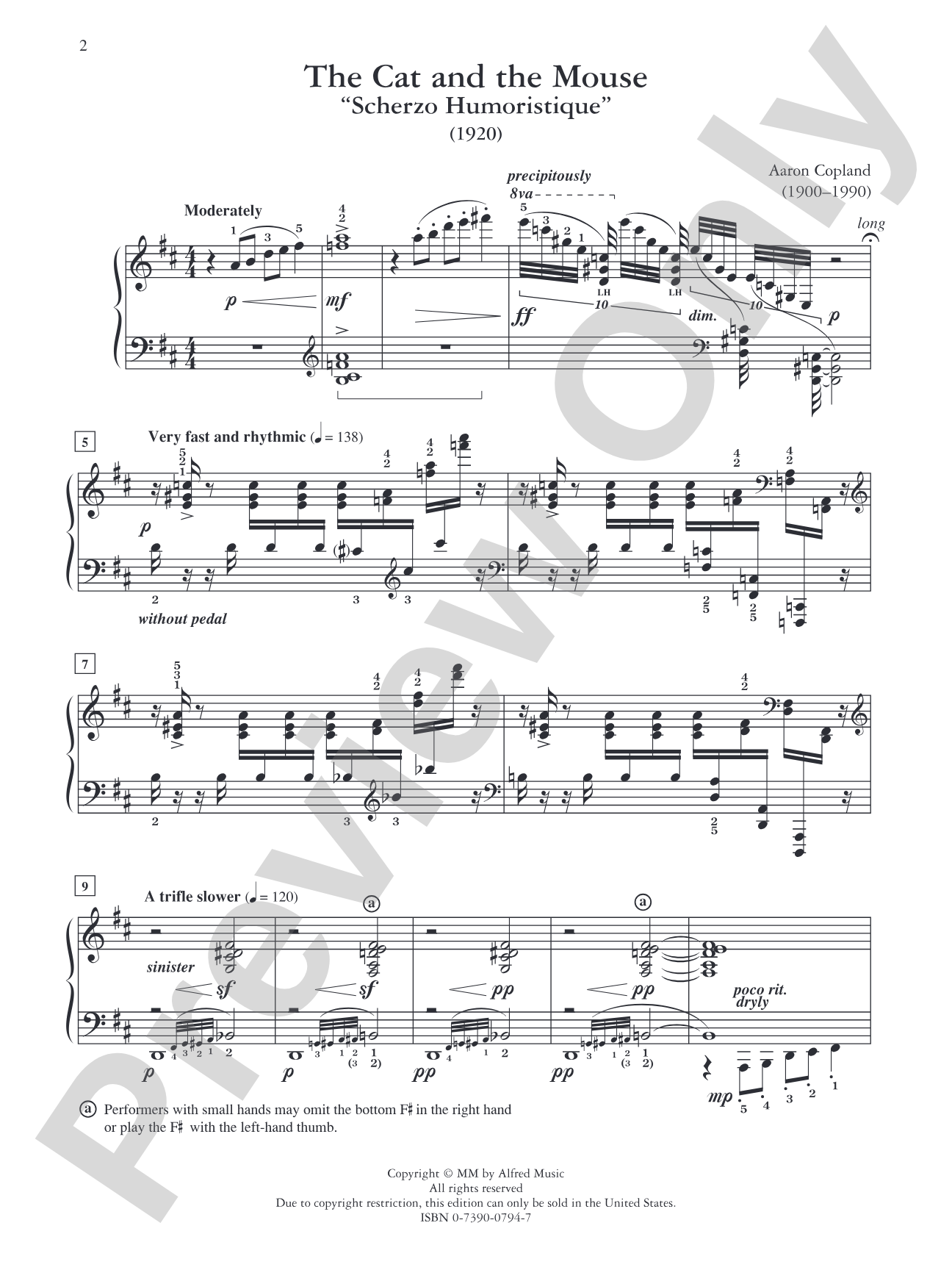
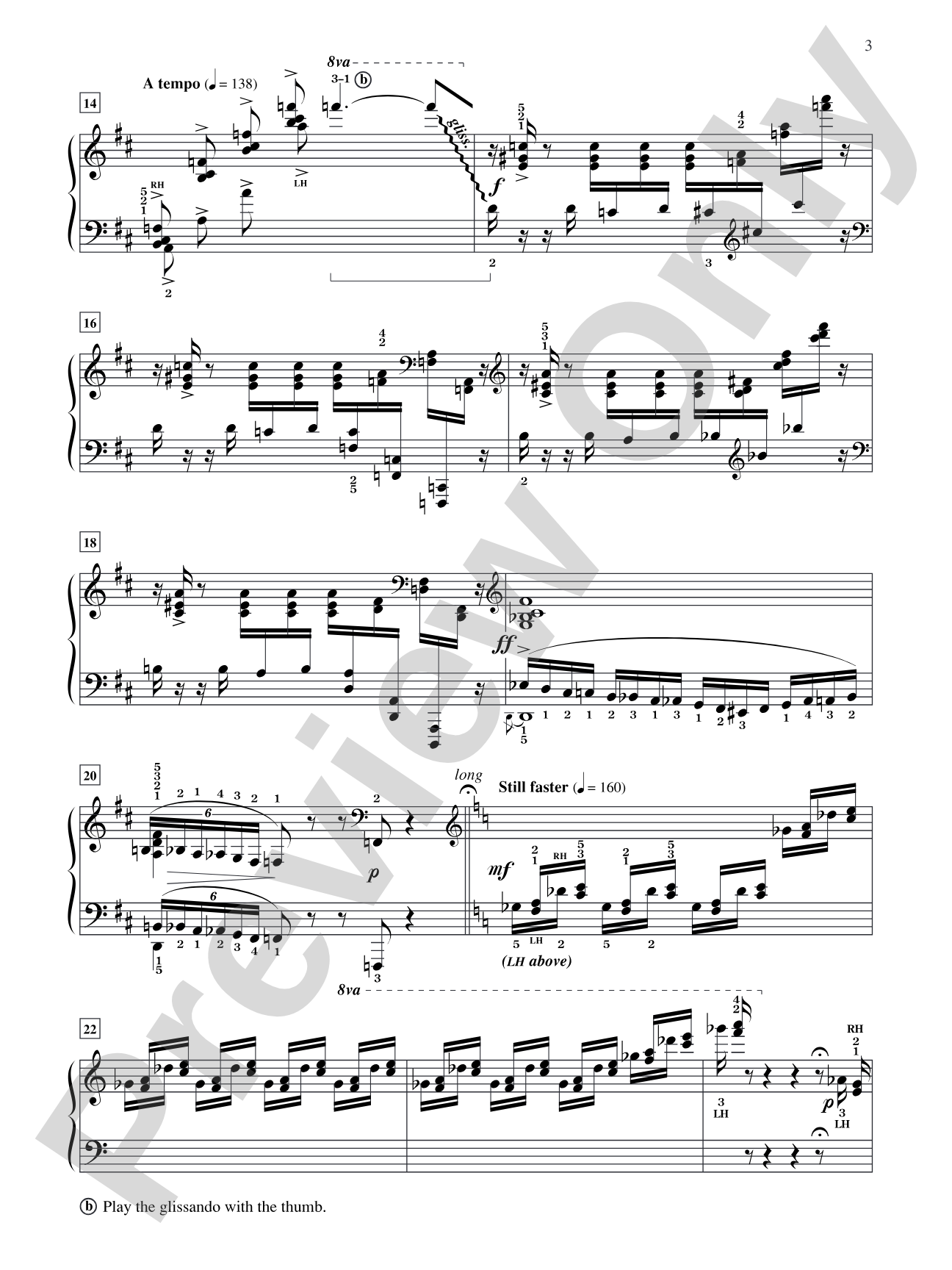
Aaron Copland's "Scherzo Humoristique," written in 1920, is indeed musically humorous as it depicts the skittering rodent and sinister feline in a demanding, but very enjoyable etude setting, using complex 1/16 note patterns, glissando, grace notes, chromatic scale work, and a generous use of the entire keyboard. There are sudden shifts in tempo and dynamics, and the performer tells a definite story, albeit without narration. Large hand reaches, sometimes 9ths, are required on some of the full block chords. A Federation Festivals 2016-2020 selection. A Federation Festivals 2020-2024 selection.


Copland, The Cat and the Mouse - Piano Solo: Piano isn't in MakeMusic Cloud just yet...but it could be. Let us know you'd like to see it, and you'll help shape what comes next. In the meantime, start a free trial and dive into thousands of interactive titles your students can play along with today.
Request This Title
Tell us you want it.
Start Your Free Trial
Explore everything that's ready to play right now.
Sample Audio
No sample audio found.
Sample Video
No sample videos found.
Additional Details
Series:
Alfred Masterwork Edition
Publisher:
Alfred Music
Page Count:
8
SKU:
00-PB-0000811
More about this title
About the Composer: Aaron Copland
Aaron Copland (1900-1990) shaped American concert music by drawing directly from folk idioms, hymn tunes, and popular styles. His gift for orchestration and melodic clarity made him one of the most performed composers of the twentieth century, and his work remains central to American musical identity.
Beyond his symphonic works, Copland composed extensively for piano. His keyboard pieces range from accessible teaching repertoire to technically sophisticated compositions that reveal his harmonic adventurousness and rhythmic innovation. "The Cat and the Mouse" exemplifies his ability to combine virtuosic demands with narrative directness, making it equally at home in a recital program or a competition.
Why we love this
Copland delivers genuine musical humor without resorting to cheap effects. The piece demands serious technical facility while rewarding the performer with clear narrative satisfaction; the mouse's panic and the cat's menace are unmistakable in the score itself. Programming this signals to audiences and adjudicators alike that you're teaching repertoire with real musical substance, not merely technical showpieces.
What to expect
The piece skitters and pounces. The mouse darts frantically in high registers with relentless sixteenth notes, while the cat prowls in deeper, heavier chords that seem to stalk from below. Tempo and dynamic shifts jolt the listener; one moment the action freezes in tremulous grace notes, the next it explodes into full keyboard sweeps.
Who it's for
Pianists at the early advanced level with solid technical foundation and musical maturity. This is ideal for talented young performers preparing for competitions, festival selections, or recitals where they need to demonstrate both virtuosity and interpretive depth.
How to get the most out of it
- Map out the tempo shifts before memorizing. Copland's sudden accelerations and decelerations are part of the storytelling, not accidents; marking them visually helps you commit them intentionally rather than rushing from nerves.
- Practice the sixteenth-note patterns slowly with a metronome until the finger work becomes automatic, then gradually increase tempo. The glissandi and chromatic runs will feel effortless only if the underlying technique is solid.
- Shape the dynamics across the entire keyboard so that leaps between registers feel like continuous musical lines, not disconnected effects. The piece ranges from bottom to top; transitions between them need purposeful voicing.
- Use the sustain pedal sparingly and strategically. With so many notes and the need for clarity in the sixteenth patterns, too much pedal will cloud the narrative. Change the pedal with the harmony rather than holding it.
How to use it
Position this on a recital as a lighter contrast to heavier Romantic or contemporary works, or as a showcase piece late in the program where the audience's attention is still fresh. Its eight pages and moderate length make it an excellent choice for festival competitions and auditions where time is limited but impact matters.
Skills your students will build
- Executing rapid sixteenth-note patterns across multiple registers with rhythmic precision
- Managing sudden dynamic and tempo shifts to maintain narrative coherence
- Executing glissandi and chromatic scale work with clarity and control
- Voicing full block chords that require hand reaches of a ninth or larger
- Balancing technical demands with musical storytelling and character portrayal
- Pedal control in texturally complex, note-dense passages