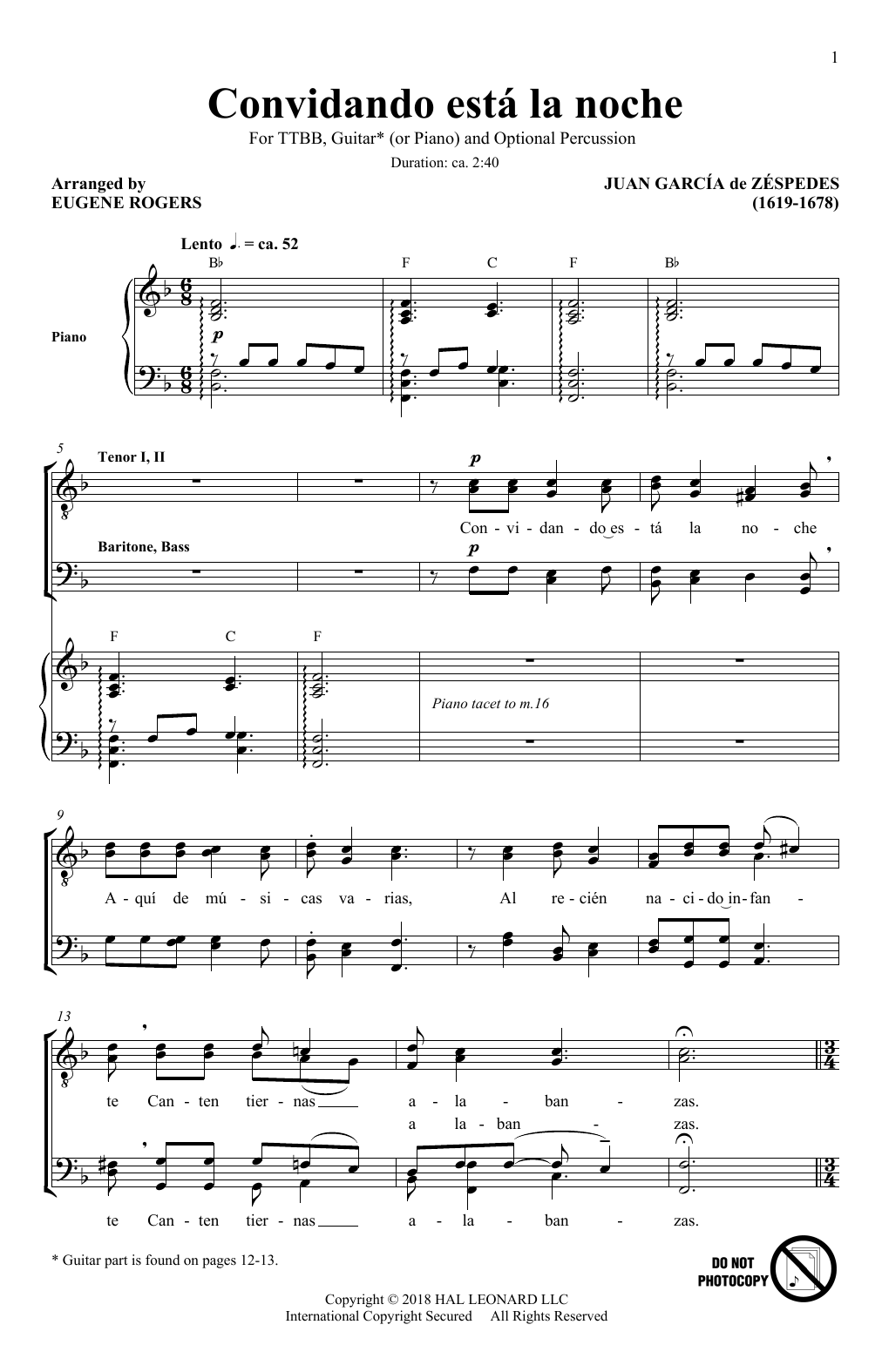
Convidando Esta La Noche (arr. Eugene Rogers) Sheet Music Preview

Convidando Esta La Noche (arr. Eugene Rogers): TTBB Choral Octavo

Arranged by Eugene Rogers

Item: 35-DS00431235

Digital Download
$2.99
Description

Convidando Esta La Noche (arr. Eugene Rogers): TTBB Choral Octavo isn't in MakeMusic Cloud just yet...but it could be. Let us know you'd like to see it, and you'll help shape what comes next. In the meantime, start a free trial and dive into thousands of interactive titles your students can play along with today.

Sample Audio
No sample audio found.
Sample Video
Additional Details
Publisher: Hal Leonard
Page Count: 13
SKU: 35-DS00431235

More about this title

Why we love this

Rogers captures the warmth and rhythmic vitality of this Spanish text while writing idiomatically for men's voices across multiple voicing options. The arrangement balances accessibility with genuine musical substance, giving singers something worth investing in rather than a simplified novelty.

What to expect

Inviting and convivial, with the energy of a gathering or celebration. The piece carries genuine Spanish character without resorting to superficial stereotypes, creating an atmosphere that feels both warm and alive.

Who it's for

Men's choirs seeking repertoire that combines cultural authenticity with practical flexibility in voicing. This works equally well for festival concerts, competitions, or community performances where Spanish language repertoire strengthens programming diversity.

How to get the most out of it

  • Establish the rhythmic foundation early in rehearsal by isolating the percussion or rhythmic accompaniment elements separately, then layering voices on top.
  • Pay attention to vowel color throughout the piece. Spanish vowels sit differently than English ones, so model the bright 'a' and open 'o' sounds consistently.
  • Allow the baritone and bass lines space to anchor the harmonies without oversinging; men's choirs often find their blend when lower voices support rather than dominate.
  • If using the recorded accompaniment, rehearse sections without it first so singers internalize their parts rather than becoming dependent on the track.

How to use it

Pair this with other world music selections for a concert that spans cultures, or use it as a programming bridge between classical and lighter repertoire. The 13 pages work well mid-set when you need energy and audience engagement without the weight of a major choral work.

Skills your students will build

  • Spanish text pronunciation and vowel formation
  • Rhythmic precision in syncopated passages
  • Voice part independence within flexible voicing configurations
  • Ensemble blend and balance across multiple harmonic textures
  • Stylistic interpretation of Latin American choral music

You May Also Like