Contredanse: String Bass Sheet Music Preview

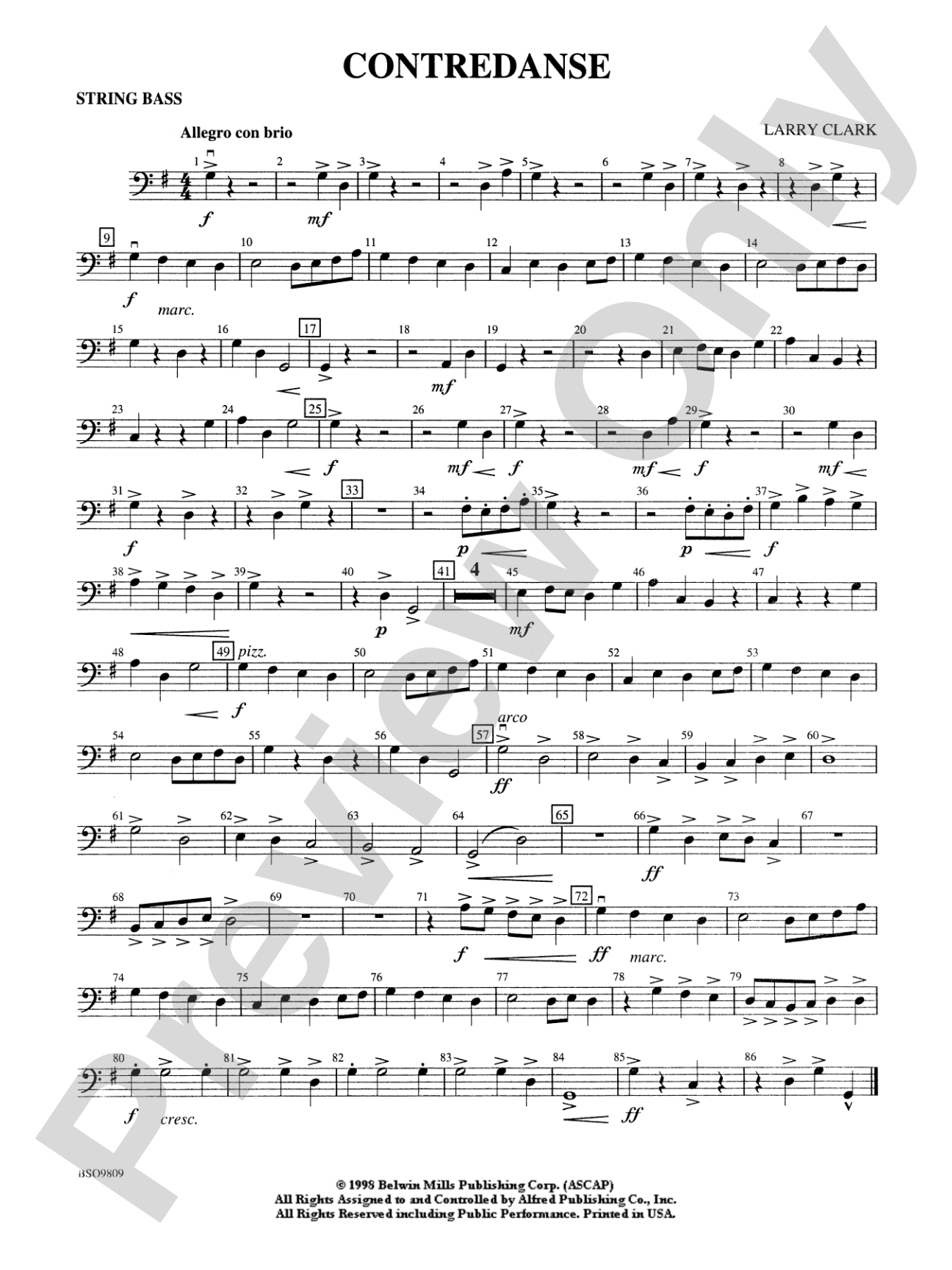
Contredanse: String Bass

By Larry Clark

Grade: 1

Item: 00-PC-0002257_SB

Digital Download
$5.99
Description
The popular 'line dancing' of today is in reality not too different from the contredanse or 'country dance' of the late 18th Century. The music accompanying this French dance form was written in eight-measure phrases repeated again and again. Composer Larry Clark gives us the flavor of this era with a look to more contemporary harmonic structuring in Contredanse. Look very seriously at this sophisticated yet audience-friendly new work for your string orchestra. (2:35)

Don't just read it, hear it, play along with it, and watch your students grow with it. In MakeMusic Cloud, Contredanse: String Bass comes alive with professional accompaniment, adjustable tempo, and built-in practice tools that turn solo practice into real progress.

Sample Audio
0:00
0:00
Sample Video
Additional Details
Series: Belwin Beginning String Orchestra
Publisher: Alfred Music
Page Count: 34
SKU: 00-PC-0002257_SB

More about this title

About the Composer: Larry Clark

Larry Clark has built a distinguished career writing accessible yet musically substantial works for young ensembles. His arrangements and original compositions consistently balance pedagogical clarity with genuine artistic merit, making him a trusted voice in music education publishing.

Why we love this

Clark nails the difficult trick of honoring historical form while keeping the harmonic language fresh enough to hold adult ears in the audience. The eight-measure phrase structure gives students a clear architecture to latch onto, yet the contemporary voicings prevent the piece from feeling like a museum exercise.

What to expect

The piece captures the social vitality of 18th-century French dance music, that sense of community and joy in shared movement, while speaking in a harmonic language audiences recognize as modern. It's spirited without being lightweight.

Who it's for

Grade 1 string orchestras looking for material that engages both players and listeners without patronizing either group. This works particularly well for programs that want to program something historically grounded yet stylistically current.

How to get the most out of it

  • Keep the eighth-note motion conversational rather than mechanical. These repeated phrases invite a light, dancing quality that disappears if players lock into metronomic precision.
  • Shape each eight-measure phrase as a small arc. Think of it as a musical sentence with a gentle rise and landing, not a series of identical blocks.
  • Balance the upper voices so the melody sits clearly without drowning out the harmonic sophistication underneath. Clark's contemporary harmonies deserve to be heard.

How to use it

Pair this with Baroque or Classical repertoire to show how composers then and now approach the same dance forms, or program it as an intermission opener where its bright energy and compact runtime reset the room's mood between heavier selections.

Skills your students will build

  • Phrasing in eight-measure units and understanding phrase hierarchy
  • Reading and executing contemporary harmonic language at Grade 1 level
  • Balancing independence of voices within a clearly structured form
  • Sustaining consistent ensemble tone across repeated material

You May Also Like