Contraption: B-flat Trumpet 1 Sheet Music Preview

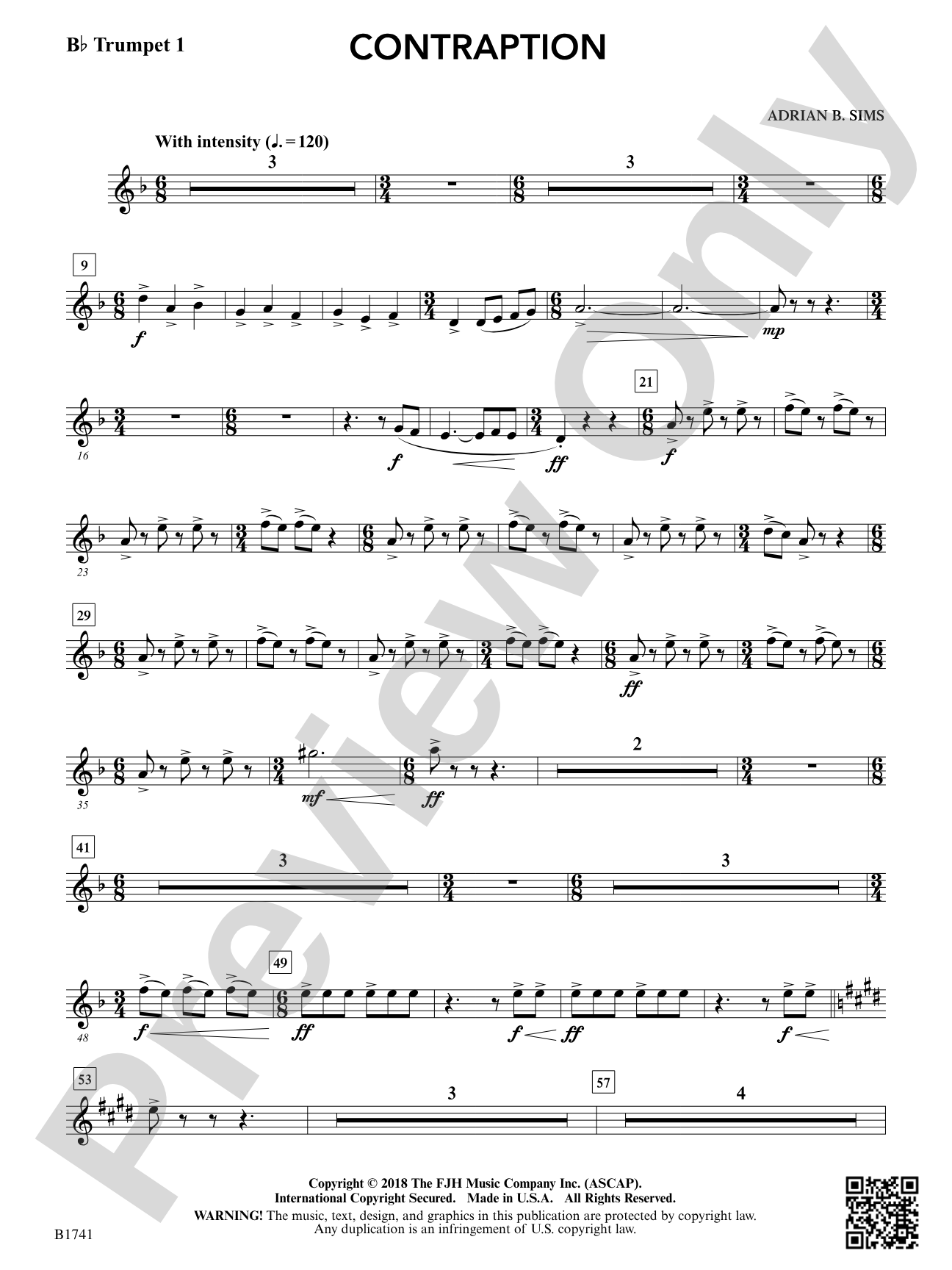
Contraption: B-flat Trumpet 1

By Adrian B Sims

Grade: 4.5

Item: 98-PC-DB1741_T1

Digital Download
$7.00
Description
This extraordinary tour-de-force was written when the composer was just a junior in high school! An excellent opportunity to let students play the music of their peers, especially when the music itself is absolutely brilliant. Moving between simple and compound meters, the piece has an undeniable pulse and energy that will electrify your concert hall.

Contraption: B-flat Trumpet 1 isn't in MakeMusic Cloud just yet...but it could be. Let us know you'd like to see it, and you'll help shape what comes next. In the meantime, start a free trial and dive into thousands of interactive titles your students can play along with today.

Sample Audio
0:00
0:00
Sample Video
Additional Details
Series: FJH Symphonic Band
Publisher: The FJH Music Company, Inc.
SKU: 98-PC-DB1741_T1

More about this title

About the Composer: Adrian B Sims

Adrian B Sims

Adrian B Sims was born in Seattle, Washington in 2000 and earned recognition as a composer while still in high school. His works have appeared at The Midwest Band and Orchestra Clinic, earned selection for the Bandworld Top 100 List, and won awards through the Maryland Music Educators Association Young Composers Project and the Make Music Young Composers Contest.

Sims studied composition at the University of Maryland under Dr. Robert Gibson and Brian Balmages while completing a dual degree in Music Education and Composition. As a trombonist, he has performed with the Baltimore Symphony Orchestra, participated multiple times in the Maryland All-State Band, and continues playing in the top ensembles at Maryland. His conductors Christopher Gnagey and Cindy Stevenson shaped his early musical development, and he remains active as both a performer and educator across Maryland schools.

Why we love this

Contraption stands out because it comes from genuine peer experience: a high school student who understands exactly what concert bands can do musically and technically. The writing demonstrates sophisticated control of meter and groove without sacrificing accessibility, and programming work by young composers signals to your students that excellent music comes from people just like them.

What to expect

Contraption pulses with youthful energy and momentum, driven by clear rhythmic intent and the constant push between different metric feels. The piece has the confidence of someone who knows what bands can do and isn't afraid to ask them to do it.

Who it's for

This score and parts suit concert bands at the upper-intermediate to advanced level (Grade 4.5) looking for music with genuine compositional voice and educational value. Directors seeking fresh repertoire by emerging composers will find Sims's writing both technically engaging and genuinely playable.

How to get the most out of it

  • Establish the pulse clearly in early rehearsals, especially during meter transitions. The energy of the piece depends on players feeling secure through the shifts between simple and compound time.
  • Work the rhythm section as a unit to lock the groove. When percussion and low brass are locked, the entire band's energy lifts.
  • Mark the meter changes visibly in all parts and conduct them clearly. Sims writes these shifts deliberately; honor them as structural moments, not obstacles.

How to use it

This works powerfully as a contest or festival selection where the combination of compositional originality and technical demands impresses adjudicators. It also serves as an excellent centerpiece for a concert section devoted to contemporary band music or emerging composers, especially in schools where students benefit from seeing their peers' published work performed at a high level.

Skills your students will build

  • Reading and maintaining independent parts through meter changes (simple to compound and back)
  • Ensemble pulse control and rhythmic precision in syncopated material
  • Dynamics and balance adjustments across changing metric contexts
  • Ensemble coordination during structural transitions

You May Also Like