Continental Divide: 1st F Horn Sheet Music Preview

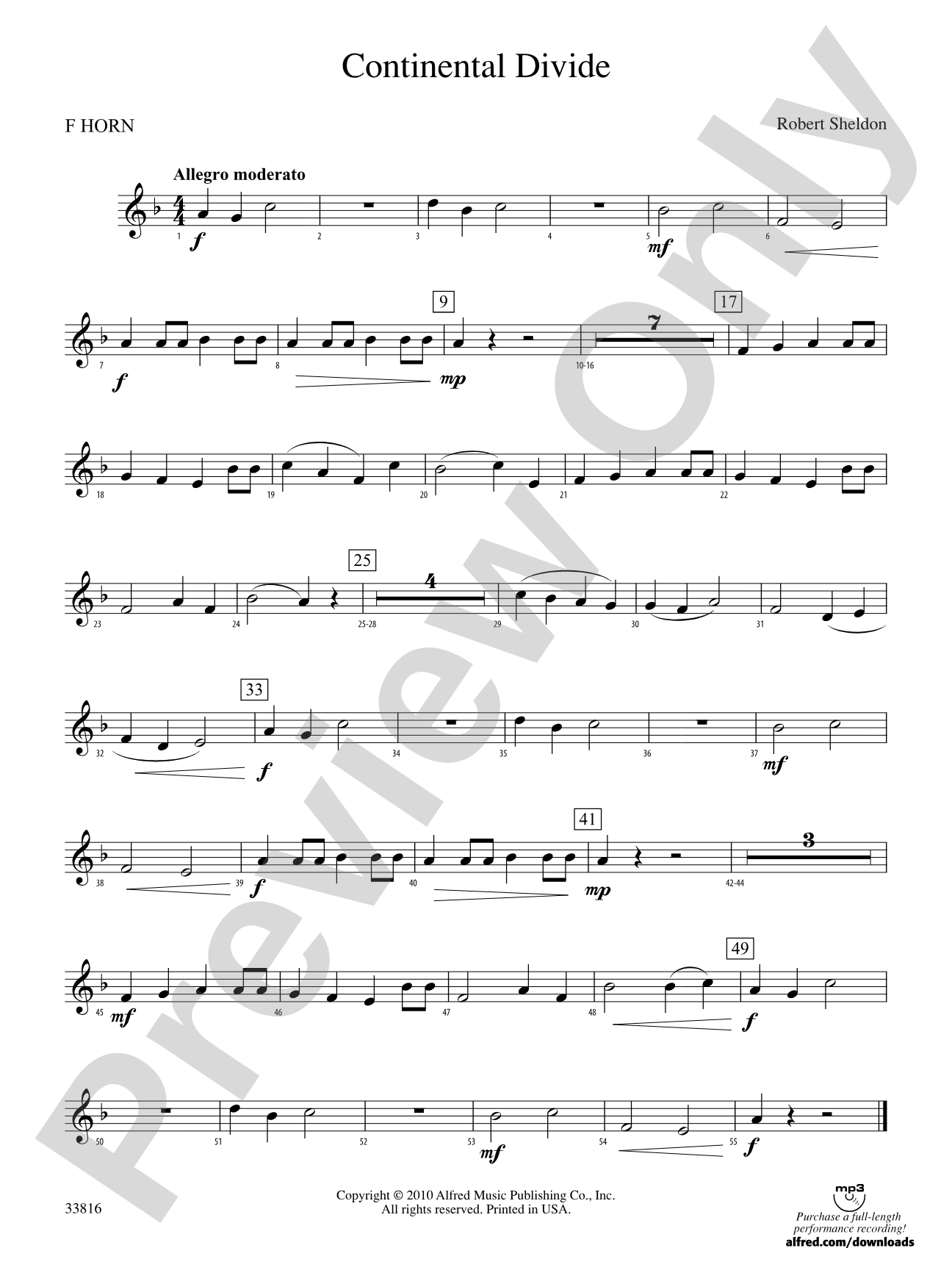
Continental Divide: 1st F Horn

By Robert Sheldon

Grade: 0.5 (Very Easy)

Item: 00-PC-0014547_H1

Digital Download
$3.00
Description
The bold opening statement and tuneful themes make Continental Divide the perfect concert opener for any young band concert. Although very accessible, it still includes varying styles and allows every section in the band an opportunity to play the melody. Using only seven notes, this impressive piece can easily be played during the first few months of instruction.

Correlates to Sound Innovations for Concert Band, Book 1, Level 2. This title is available in MakeMusic Cloud.

Don't just read it, hear it, play along with it, and watch your students grow with it. In MakeMusic Cloud, Continental Divide: 1st F Horn comes alive with professional accompaniment, adjustable tempo, and built-in practice tools that turn solo practice into real progress.

Sample Audio
0:00
0:00
Sample Video
Additional Details
Series: Sound Innovations for Concert Band
Publisher: Alfred Music
Page Count: 132
SKU: 00-PC-0014547_H1

More about this title

About the Composer: Robert Sheldon

Robert Sheldon

Robert Sheldon stands among the most frequently programmed composers of wind band repertoire. His works appear on festival circuits and concert schedules globally, earning recognition from the American School Band Director's Association, Phi Beta Mu, and ASCAP. Beyond composition, he serves as lead author of Sound Innovations for Concert Band, shaping how young musicians encounter structured, accessible repertoire.

Sheldon maintains an active schedule as guest conductor for honor bands across the United States and internationally, with appearances in Japan, Canada, Italy, Germany, Australia, and China. He regularly clinics at universities and state music education conferences, and his compositions have been performed at Carnegie Hall, Orchestra Hall, Boston Symphony Hall, the Sydney Opera House, and the Kennedy Center. VanderCook College of Music honored him with a doctorate in 2020.

Why we love this

This opener delivers immediate impact without requiring your band to have learned more than seven pitches. Sheldon writes with genuine melodic invention here—the themes are genuinely singable and memorable, so your students hear themselves making real music from week one. The opportunity for every section to carry the tune keeps engagement high across your entire instrumentation.

What to expect

Bold and straightforward, with a clear sense of forward motion and purpose. The melodic content feels fresh rather than exercise-like, built on themes that capture student and audience attention while remaining within the technical reach of beginning players.

Who it's for

Young concert bands in their first months of instruction, including mixed-ability ensembles and full-year programs where students enter with varying prior experience. Directors seeking a concert-ready piece that doesn't require advanced musicianship or independent part-reading proficiency.

How to get the most out of it

  • Balance the opening statement so it lands with confidence but remains controlled; young bands often play louder than they intend on dramatic entrances.
  • Shape the melodic lines even at this level by encouraging slight dynamic variations within phrases, which teaches phrasing without adding technical burden.
  • Let the accessible instrumentation work for you in sectional rehearsals; limited range means fewer note-learning obstacles and more time for ensemble refinement.

How to use it

Program this as a confident opening number for your first concert of the year or a spring showcase. It pairs well in a set with other accessible Sheldon works from Sound Innovations, allowing you to build a cohesive opening segment while showing growth within a single composer's catalog.

Skills your students will build

  • Reading from a limited pitch set (seven notes) with accuracy and focus
  • Producing a balanced opening entrance as a full ensemble
  • Sustaining melodic lines with consistent tone quality
  • Understanding basic sectional balance within a concert setting

You May Also Like