

Contest Winners for Two, Book 1: 7 Original Piano Duets from the Alfred, Belwin, and Myklas Libraries: Piano Duets & Four Hands
7 Original Piano Duets from the Alfred, Belwin, and Myklas Libraries
Level: Elementary
Item: 00-PB-0000568

$8.99
Pickup currently not available
Related Items
Contest Winners for Two, Book 1: Piano Duet (1 Piano, 4 Hands) Book |
$8.99
|
View |
Description
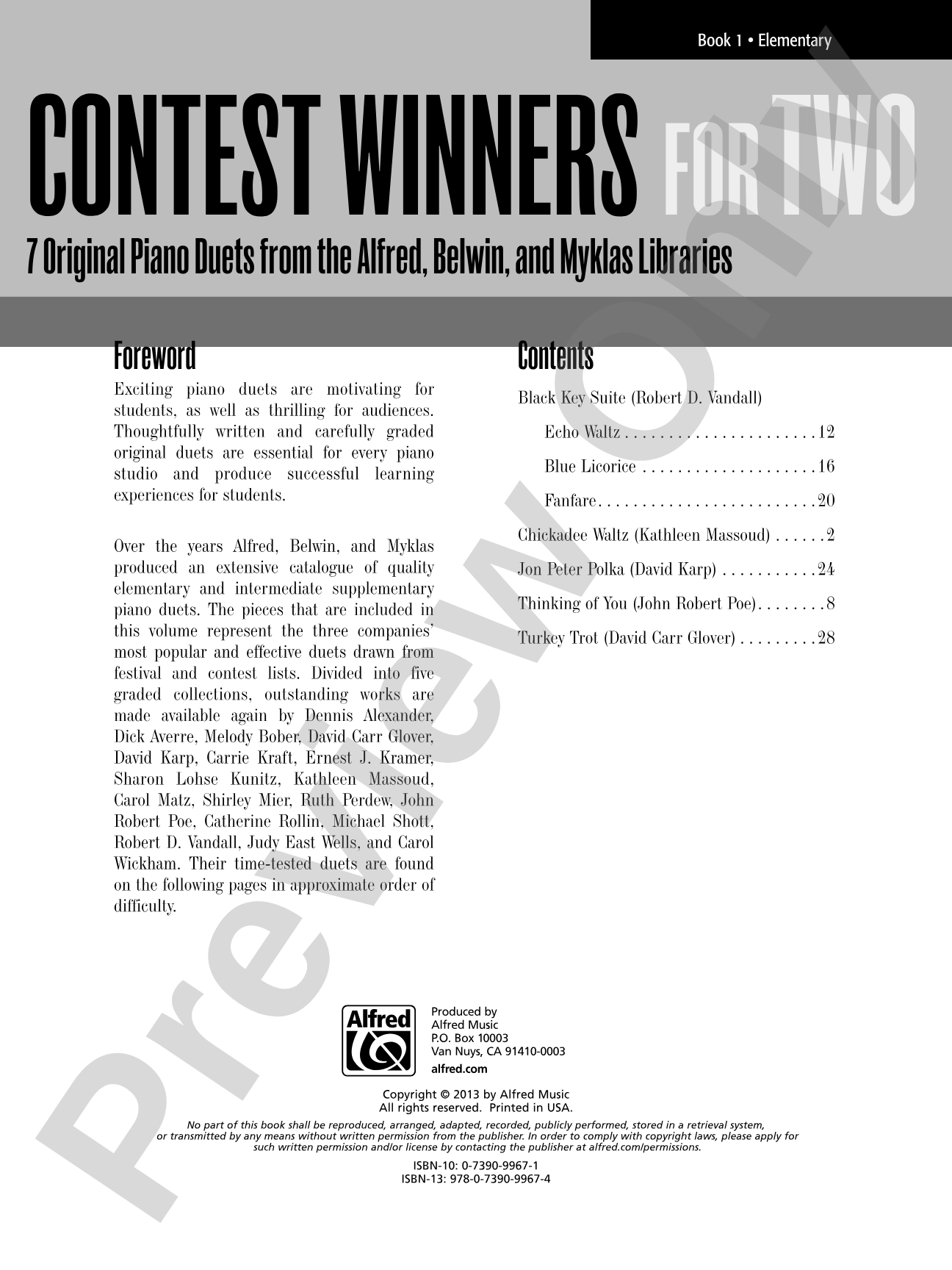
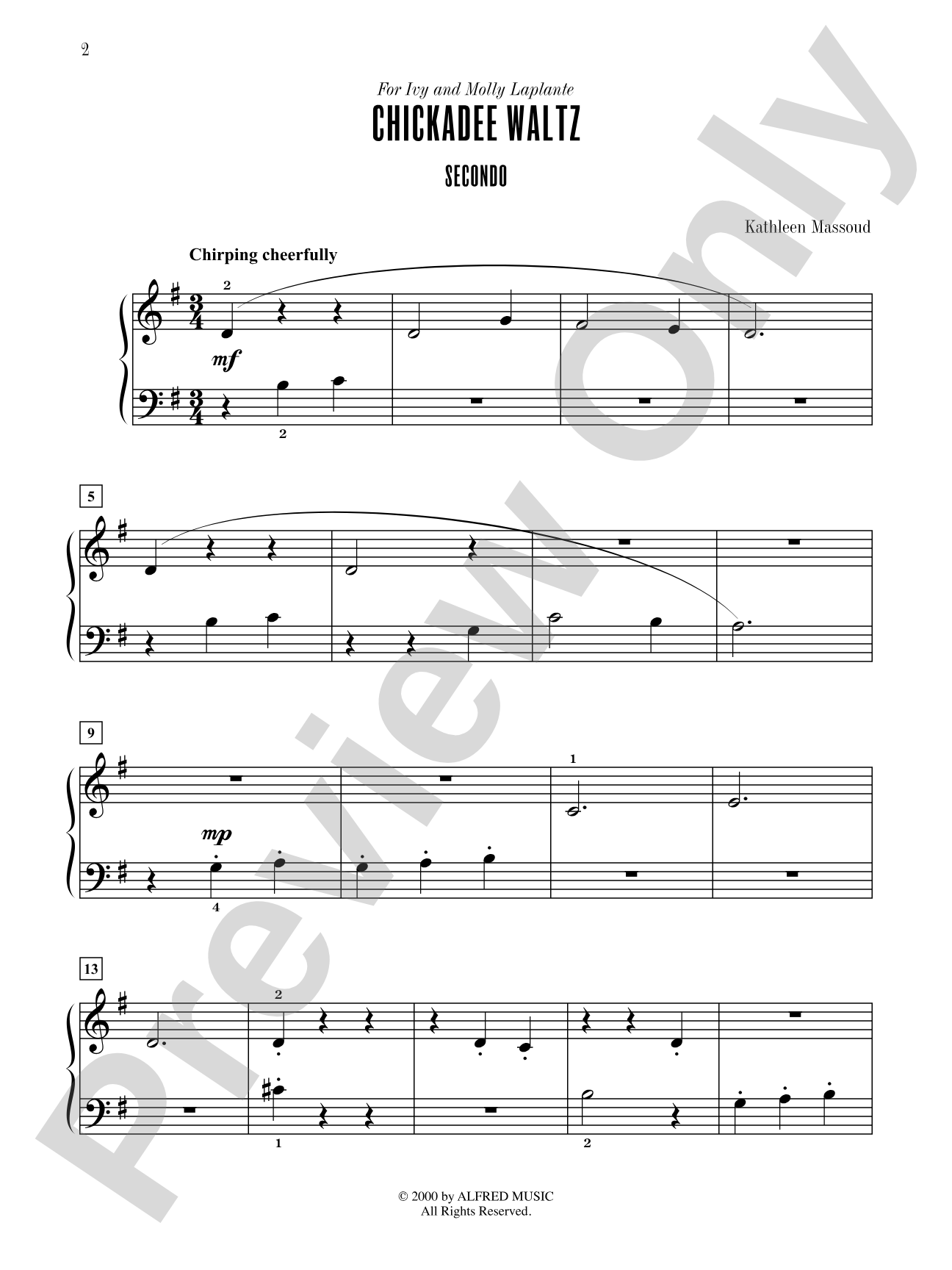
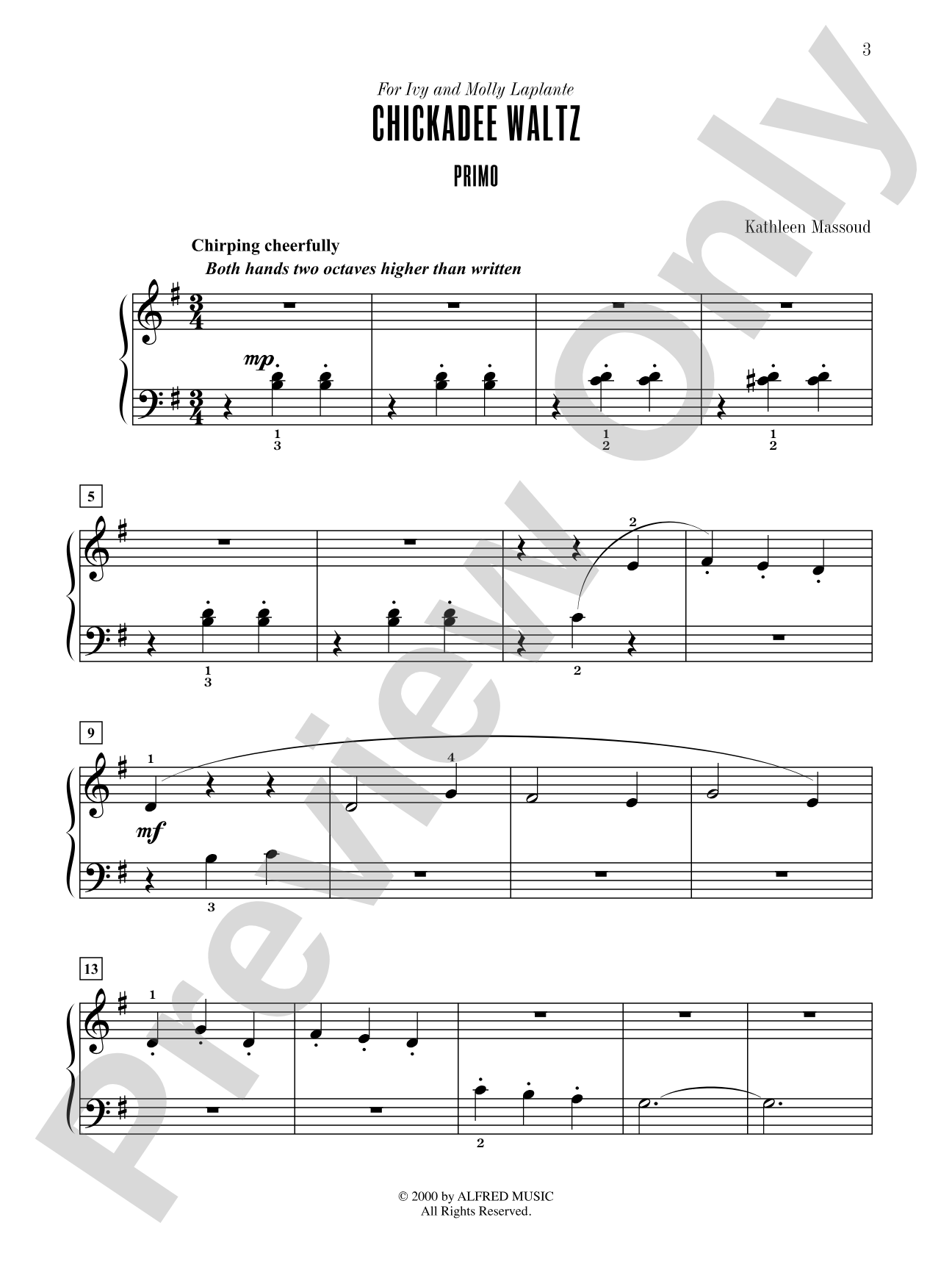
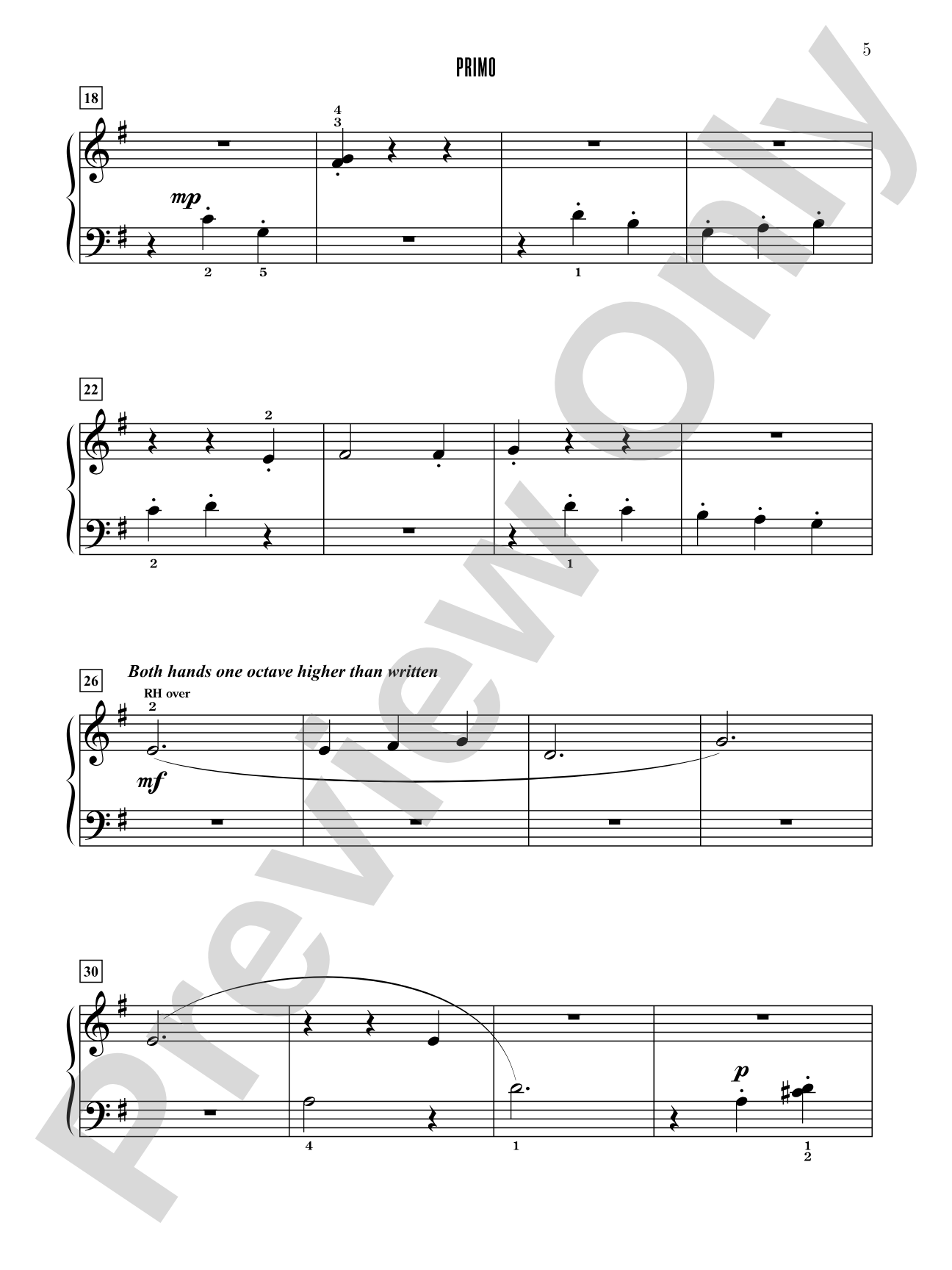
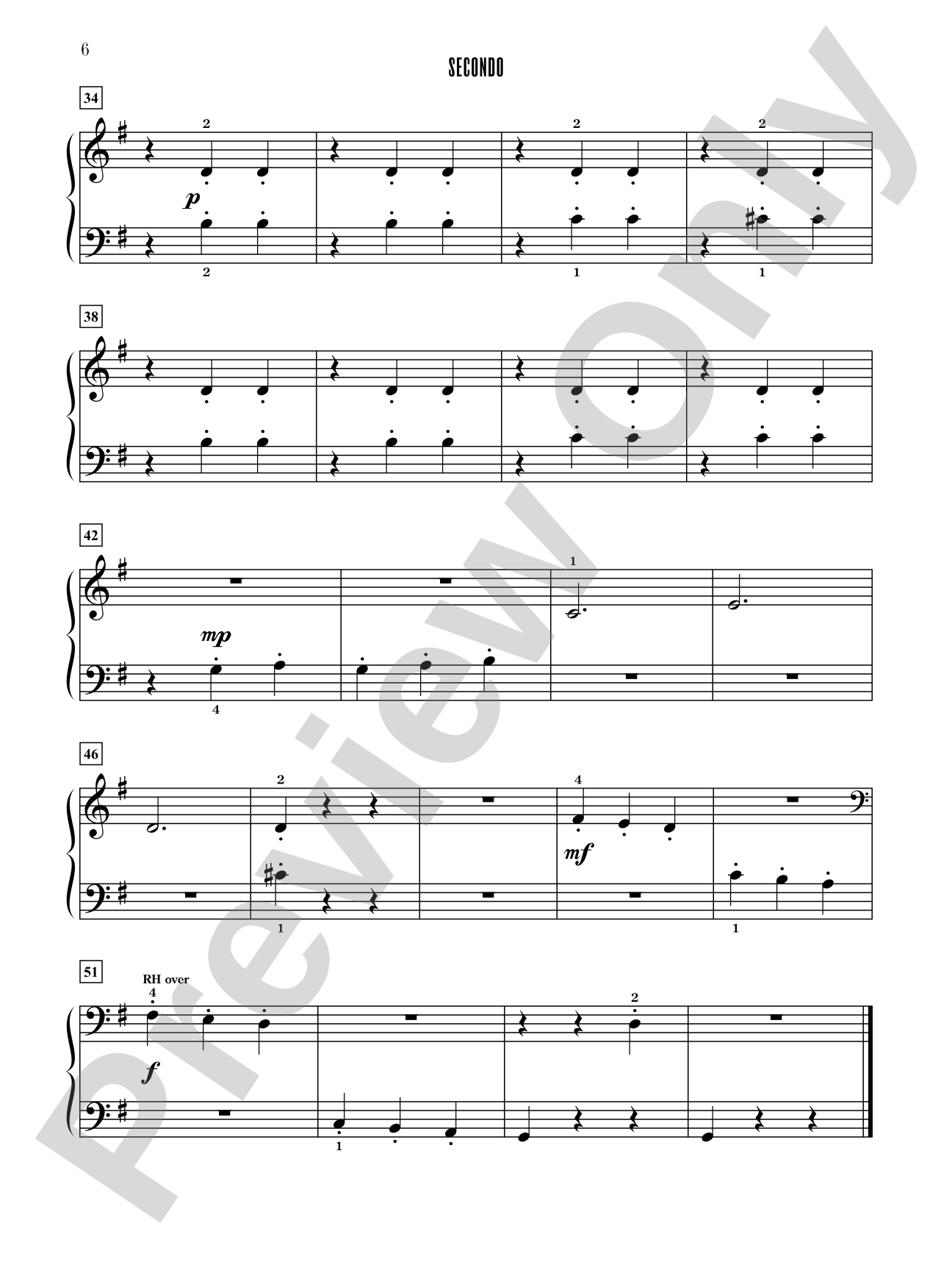
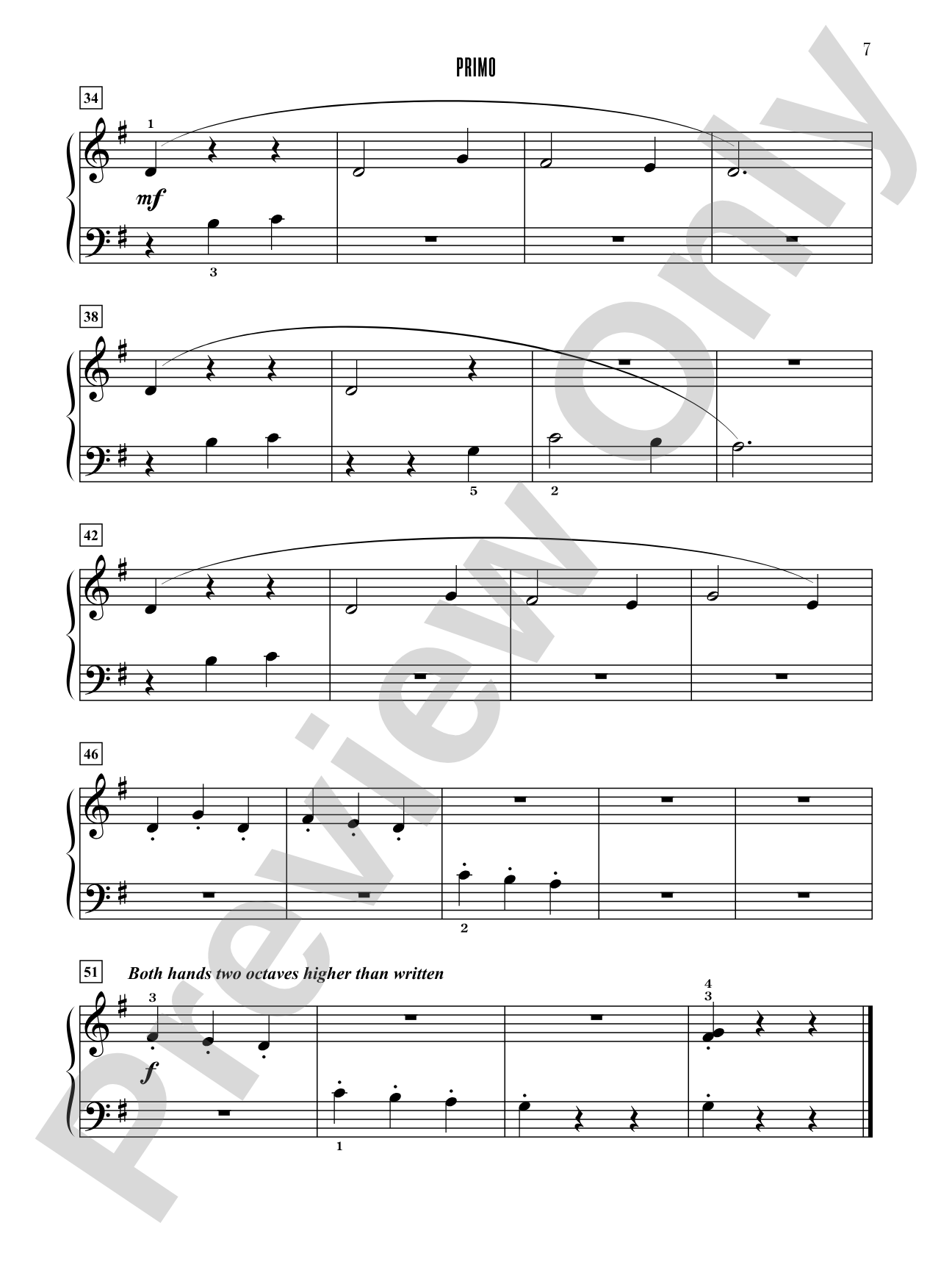
Contest Winners for Two is a series of five graded collections of original, time-tested piano duets. Over the years Alfred, Belwin, and Myklas produced an extensive catalogue of quality elementary and intermediate supplementary piano duets. The pieces that are included in this volume represent the three companies' most popular and effective duets drawn from festival and contest lists. Book 1 consists of elementary pieces, placed in approximate order of difficulty. Titles: Black Key Suite: Echo Waltz, Blue Licorice, Fanfare (Robert D. Vandall) * Chickadee Waltz (Kathleen Massoud) * Jon Peter Polka (David Karp) * Thinking of You (John Robert Poe) * Turkey Trot (David Carr Glover). A Federation Festivals 2020-2024 selection.


Don't just read it, hear it, play along with it, and watch your students grow with it. In MakeMusic Cloud, Contest Winners for Two, Book 1: 7 Original Piano Duets from the Alfred, Belwin, and Myklas Libraries: Piano Duets & Four Hands comes alive with professional accompaniment, adjustable tempo, and built-in practice tools that turn solo practice into real progress.
Open in the Player
Jump straight in and assign it today.
Start Your Free Trial
Open this title and explore the full library in minutes.
Sample Audio
No sample audio found.
Sample Video
No sample videos found.
Additional Details
Series:
Contest Winners for Two
Publisher:
Alfred Music
Page Count:
32
SKU:
00-PB-0000568
More about this title
Why we love this
This collection pulls from decades of festival-tested duets, which means every piece has already proven itself in performance. You get composers like Robert D. Vandall and David Carr Glover whose writing for young pianists balances accessibility with genuine musical interest, so neither player feels like they're just keeping time.
What to expect
A brisk tour through accessible character pieces, from the rhythmic bounce of the polka to the lyrical simplicity of "Thinking of You." Each duet unfolds with clarity and charm, letting young players experience the joy of ensemble playing without getting bogged down in complexity.
Who it's for
Elementary piano students who are ready for duet repertoire and teachers building a festival rotation or concert program. The range of styles and modest technical demands make this ideal for pianists preparing for competition or simply looking for engaging material that pairs well with solo work.
How to get the most out of it
- Balance the parts by having both players adjust dynamics independently; the secondo player should resist the habit of playing louder just because their part sits lower on the keyboard.
- Use the approximate difficulty ordering to plan rehearsal pacing, but trust your ear on tempo choices, a waltz that drags will lose its character faster than one that moves with purpose.
- Rehearse passages where the parts weave around each other (like in the Echo Waltz) separately first, then layer them back together once each player is secure.
How to use it
Program individual pieces from this collection on recitals or festival showcases; the variety means you can pair them strategically with solo repertoire or use multiple selections if you have several duet partnerships at this level. These work equally well as performance pieces or as mid-year technical studies that happen to be genuinely enjoyable.
Skills your students will build
- Reading two independent lines simultaneously while listening to a partner
- Rhythmic alignment and shared pulse in ensemble contexts
- Balance and blend between primo and secondo parts
- Maintaining character and style through waltz, polka, and march rhythms
- Sight-reading confidence with elementary-level harmonic progressions