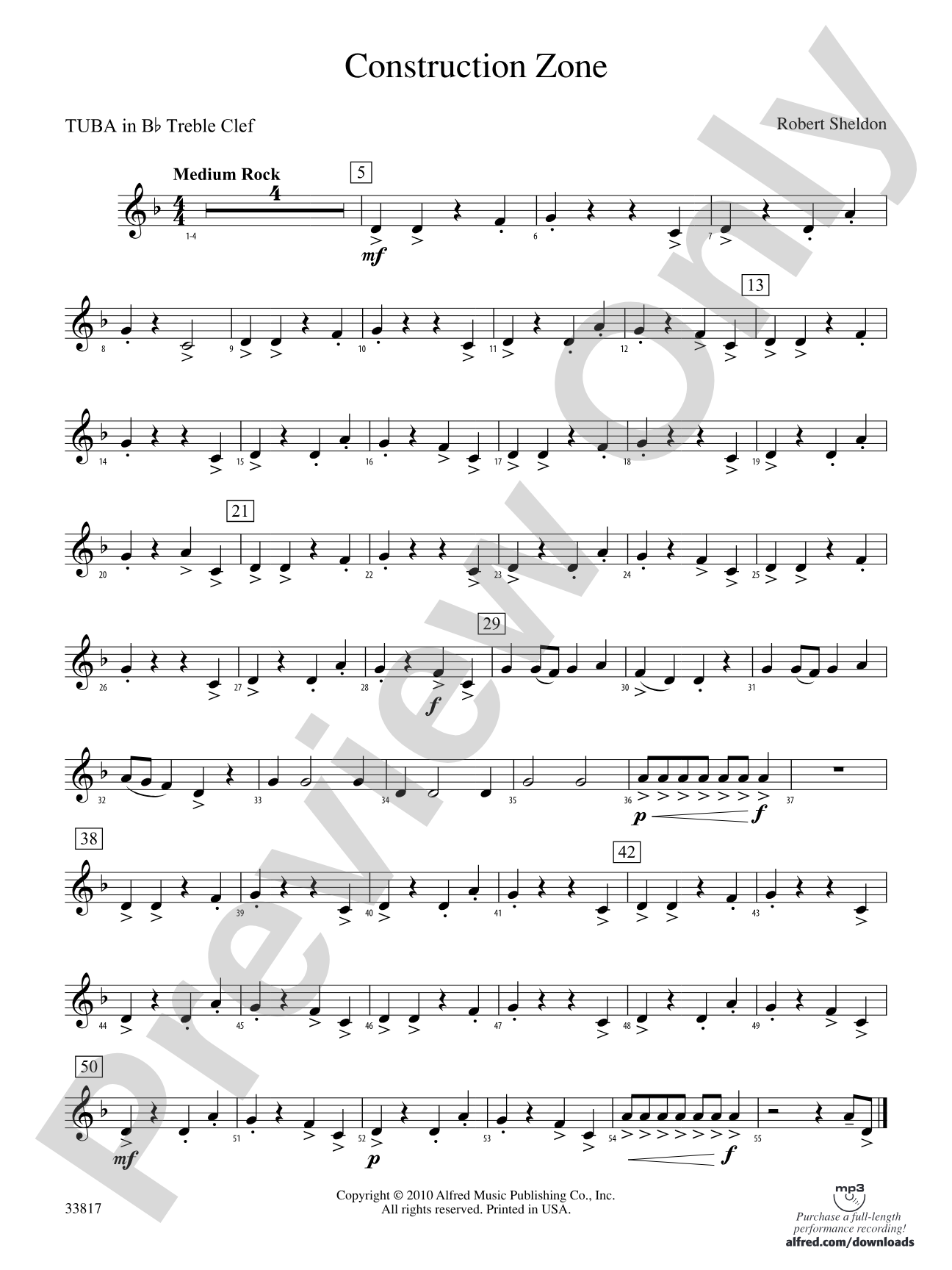
Construction Zone: (wp) B-flat Tuba T.C. Sheet Music Preview

Construction Zone: (wp) B-flat Tuba T.C.

By Robert Sheldon

Grade: 1 (Very Easy)

Item: 00-PC-0014548_wpTBBTC

Digital Download
$3.00
Description
Sounds of "jackhammers" and "post drivers" provide a rhythmic groove for this very clever rock chart for young bands. The infectious bass line sets up a catchy tune and funky accompaniment riffs that will make this a favorite for first year players.

Correlates to Sound Innovations for Concert Band, Book 1/Level 5.

Don't just read it, hear it, play along with it, and watch your students grow with it. In MakeMusic Cloud, Construction Zone: (wp) B-flat Tuba T.C. comes alive with professional accompaniment, adjustable tempo, and built-in practice tools that turn solo practice into real progress.

Sample Audio
0:00
0:00
Sample Video
Additional Details
Series: Sound Innovations for Concert Band
Publisher: Alfred Music
Page Count: 132
SKU: 00-PC-0014548_wpTBBTC

More about this title

About the Composer: Robert Sheldon

Robert Sheldon

Robert Sheldon stands among the most widely performed composers of wind band repertoire in the world. His works appear regularly on concert and contest programs globally, and his music has been performed in some of the world's most prestigious venues, from Carnegie Hall to the Sydney Opera House. Beyond composition, Sheldon serves as lead author of Sound Innovations for Concert Band, a foundational resource for young musicians.

Throughout his career, Sheldon has earned recognition from the American School Band Directors Association, Phi Beta Mu, and ASCAP. His conducting appearances span the United States and five continents, where he leads honor bands, conducts his own compositions, and presents clinics for music educators. VanderCook College of Music awarded him an honorary doctorate in 2020, reflecting his sustained impact on music education and concert band literature.

Why we love this

Sheldon understands exactly what makes a first-year band tick. The industrial sound effects grab attention immediately, the infectious bass line anchors the whole ensemble, and the funky riffs give every section something engaging to play. Programming this piece energizes rehearsals and makes students eager to come back to band.

What to expect

Industrial sounds and rhythmic energy propel this piece forward with personality and humor. The funky bass line and catchy melody create an infectious groove that feels modern and fun without sacrificing musical substance or clarity of texture.

Who it's for

This piece is designed for young concert bands encountering rock idioms for the first time. It works equally well for first-year players building ensemble skills and for established beginner bands seeking contemporary repertoire that maintains engagement and musicianship.

How to get the most out of it

  • Lock the bass line and rhythm section first. This groove is the foundation of the entire arrangement, so establish a solid pocket before layering in the melodic and accompaniment parts.
  • Emphasize the contrast between the "jackhammer" effects and the melodic sections. The novelty elements should pop without overwhelming the musical content underneath.
  • Balance the funky riffs across your accompaniment voices. Young players often play too loud on rhythmic figures, so check that the tune can breathe over the accompaniment layer.
  • Use the recorded accompaniment to help students internalize the rock feel and groove. This style may be new to many first-year players.

How to use it

Pair this with one or two traditional grade 1 selections to show your audience the full range of your band's versatility. It works especially well as a second-half opener or as the final item on a concert, where its high energy and novelty appeal leave listeners smiling.

Skills your students will build

  • Understanding and playing rock rhythmic feels and groove
  • Balancing independent parts within a funk-based harmonic framework
  • Executing rhythmic precision with syncopated accompaniment riffs
  • Distinguishing between melodic, rhythmic, and textural roles in an ensemble
  • Reading mixed articulations and dynamic contrasts within a single style

You May Also Like