
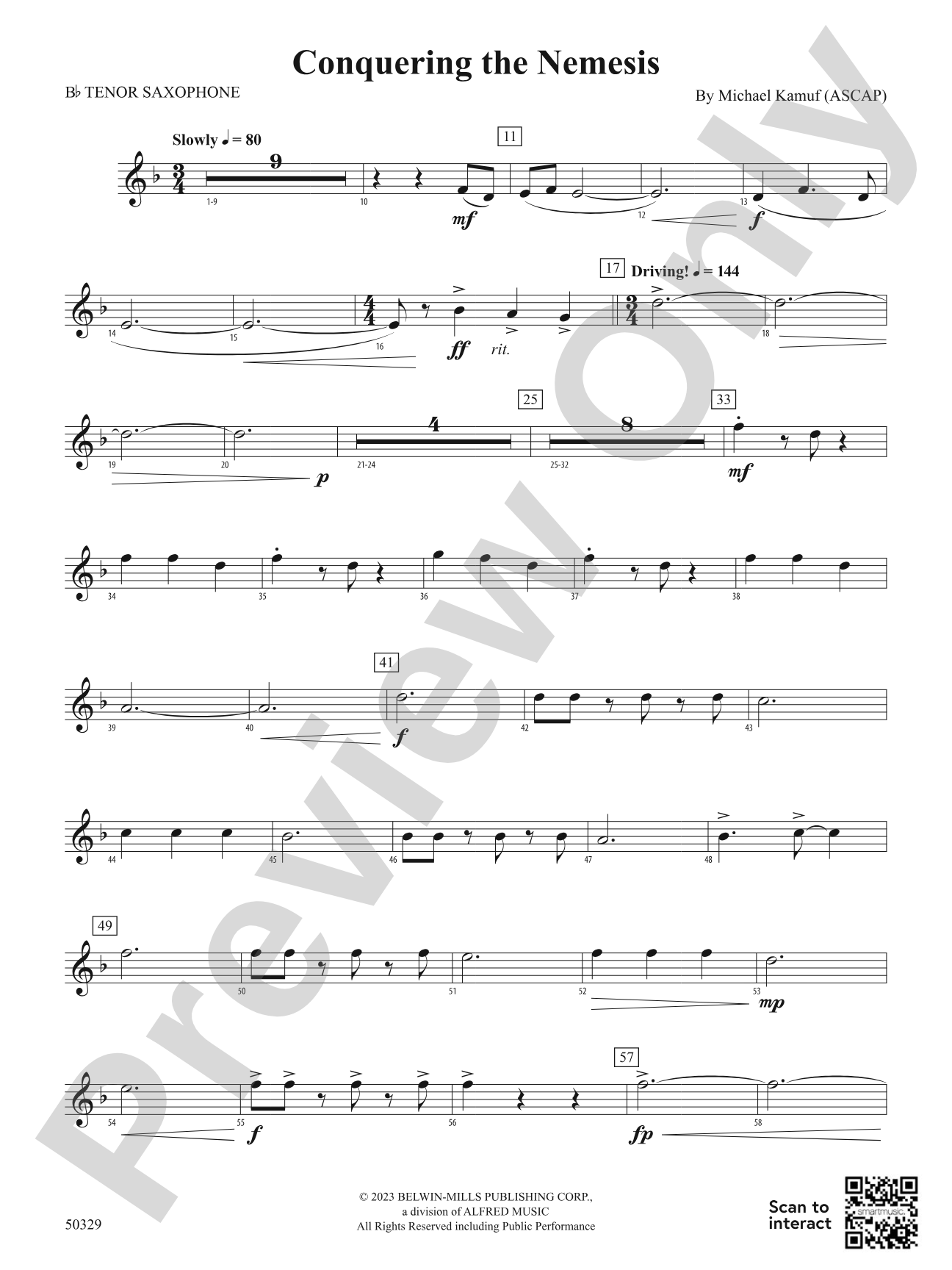

Conquering the Nemesis: B-flat Tenor Saxophone
By Michael Kamuf
Grade: 2.5
Item: 00-PC-0019053_TX1
$3.00
Pickup currently not available
Description
Portraying an epic battle, this programmatic work titled Conquering the Nemesis, by Michael Kamuf, builds suspense and intrigue from the first note! The "Nemesis"---portrayed with ominous melodies using variations of a five-note cell---contrasts with the "Hero," represented by a bold and heroic motif. These opposing themes, contrasting contemporary harmonies, and driving percussion, create a perfect selection for your next concert or festival performance! (2:45)


Don't just read it, hear it, play along with it, and watch your students grow with it. In MakeMusic Cloud, Conquering the Nemesis: B-flat Tenor Saxophone comes alive with professional accompaniment, adjustable tempo, and built-in practice tools that turn solo practice into real progress.
Open in the Player
Jump straight in and assign it today.
Start Your Free Trial
Open this title and explore the full library in minutes.
Sample Audio
1
Audio File
--:--
0:00
0:00
Sample Video
Additional Details
Series:
Belwin Young Band
Publisher:
Alfred Music
SKU:
00-PC-0019053_TX1
More about this title
About the Composer: Michael Kamuf

Michael Kamuf earned degrees in Jazz Performance and Music Education from the Dana School of Music at Youngstown State University, followed by a Master of Arts in Instrumental Conducting from George Mason University. His compositions and arrangements have been performed by celebrated ensembles including the Woody Herman Orchestra, Glenn Miller Orchestra, USAF Airmen of Note, and soloists such as James Moody, Eddie Daniels, and Sean Jones. He served as assistant principal trumpet with the Youngstown Symphony Orchestra and has performed with both the Woody Herman and Tommy Dorsey Orchestras.
Kamuf built a thirty-year career in instrumental music education with Montgomery County Public Schools in Maryland, including twenty-seven years as Director of Bands and Orchestras at John T. Baker Middle School in Damascus. Under his leadership, the Baker ensembles earned consistent festival recognition and commissioned multiple works for young concert bands. Today he remains an exclusive writer for the Belwin Division of Alfred Music Publishing across jazz, orchestra, and concert band catalogs, with over 100 publications in print. He also leads the Mike Kamuf Little Big Band, a jazz octet based in the Baltimore and Washington, DC region.
Why we love this
Kamuf has crafted a piece that balances narrative clarity with genuine musical substance. The programmatic framework gives younger players an immediate dramatic anchor, while the contrasting thematic material and contemporary harmonic language reward careful listening and musicianship. At Grade 2.5, this score delivers the sophistication that festival judges notice without asking more technically than a developing ensemble can deliver.
What to expect
The piece generates genuine dramatic tension from the opening notes. The ominous five-note cell establishes an unsettling presence, then the Hero's bold entrance creates a satisfying collision of opposing musical forces. By the end, the journey from conflict to resolution rewards both players and listeners with a sense of hard-won victory.
Who it's for
Developing concert bands at the middle school and early high school level who are ready for programmatic storytelling and thematic development. Directors seeking material that engages audiences through narrative while building ensemble cohesion and expressive control.
How to get the most out of it
- Establish the five-note cell clearly in the opening Nemesis material; its variations will thread through the entire piece, and early clarity helps your ensemble recognize its transformations.
- Bring out the rhythmic drive in the percussion section, particularly during the confrontation moments. This element gives younger players something concrete to lock onto while building energy.
- Contrast the bold Hero motif with the ominous Nemesis material by adjusting dynamic shaping and articulation between sections. Let the two themes sound like opposing forces, not mere melodic variations.
How to use it
This works exceptionally well as a standalone concert opener that captures audience attention immediately, or as a centerpiece in a program exploring programmatic band literature. It also serves as an ideal festival selection where adjudicators appreciate both the musical content and the clear architectural design.
Skills your students will build
- Recognizing and tracking a recurring musical motif through variations and transformations
- Executing clean articulation contrasts between legato (ominous Nemesis) and marcato (heroic) passages
- Responding to dynamic and textural changes that drive programmatic narrative
- Balancing individual section voices while maintaining ensemble rhythmic unity in driving passages
- Building and releasing tension through phrasing and tempo control across longer formal structures