

Conga Town: Percussion Ensembles for Upper Elementary and Middle School
Percussion Ensembles for Upper Elementary and Middle School
By Jim Solomon
Level: Elementary
Item: 00-PB-0002088
$19.99
Pickup currently not available
Related Items
Conga Town: Book |
$19.99
|
View |
Description
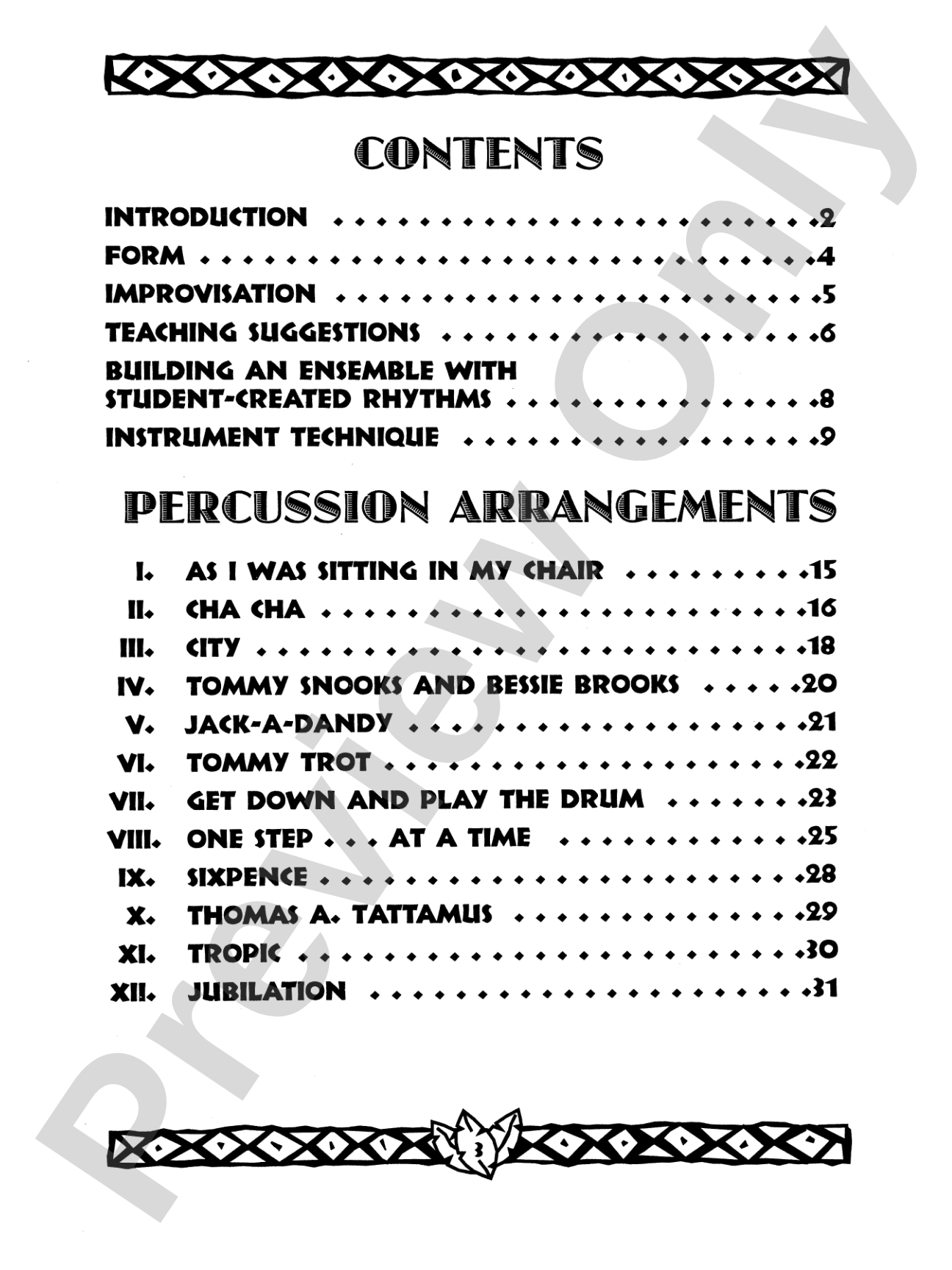
Teachers can make their classes come alive with this wonderful collection of 12 percussion ensemble arrangements with a conga focus. This upper elementary and middle school publication comes complete with teaching tips, photographs, and percussion technique instructions.


Conga Town: Percussion Ensembles for Upper Elementary and Middle School isn't in MakeMusic Cloud just yet...but it could be. Let us know you'd like to see it, and you'll help shape what comes next. In the meantime, start a free trial and dive into thousands of interactive titles your students can play along with today.
Request This Title
Tell us you want it.
Start Your Free Trial
Explore everything that's ready to play right now.
Sample Audio
No sample audio found.
Sample Video
No sample videos found.
Additional Details
Publisher:
Alfred Music
Page Count:
32
SKU:
00-PB-0002088
More about this title
About the Composer: Jim Solomon

Jim Solomon brings decades of classroom experience to his work as a National Board Certified Teacher and clinician. At R.B. Hunt Elementary in St. Augustine, Florida, he directs general music, chorus, recorder club, and D.R.U.M., a specialized percussion ensemble for fifth graders. His expertise spans multiple educational settings: he leads Orff Level 1 teacher training each summer at the Eastman School of Music and has taught at Eagle Arts Camp and the University of Oregon.
Solomon's contributions to music education extend well beyond his own classroom. Named St. Johns County Teacher of the Year in 1991, he has presented at twelve AOSA National Music Conferences and authored six books, including D.R.U.M. and Tropical Recorder. His video guide on congas, bongos, and percussion technique reflects his deep commitment to helping teachers and students master instrumental skills with confidence and joy.
Why we love this
Solomon writes from the vantage point of someone who actually teaches upper elementary and middle school percussion daily. The collection balances technical growth with genuine fun, ensuring students stay engaged while building real skills. Twelve different arrangements mean you're not locked into one sound or approach; you can sequence them strategically across a semester or year.
What to expect
Each arrangement pulses with the warmth and infectious energy of Latin rhythms, centered on the conga's rich tonal palette. The pieces invite movement and encourage listening; even simpler arrangements feel musical rather than mechanical. There's a lightness here that makes students smile while they're concentrating hard on their parts.
Who it's for
Upper elementary and middle school teachers seeking rhythmic, accessible percussion arrangements that work for mixed ability levels and mixed instrumentation. This collection works equally well in general music classes, specialized percussion ensembles, or Orff-based programs. Students with little to no prior percussion experience can jump in immediately.
How to get the most out of it
- Study the included technique instructions before introducing any new percussion instruments to your ensemble. Having clear, visual references helps students understand hand position and stroke mechanics from day one.
- Use the photographs as teaching aids during rehearsals. Point to specific hand positions or posture when students drift; visual reinforcement is faster than verbal correction alone.
- Start with lighter mallets or hands-on approaches before moving to harder mallets. This protects developing technique and helps students hear the tonal differences across the conga family.
- Rotate students between instruments across different pieces. This builds versatility, prevents boredom, and ensures no single player becomes a bottleneck for rehearsals.
How to use it
Sequence 2 or 3 pieces across the school year as standalone percussion units, or thread one new arrangement into your curriculum each month to build technique gradually. These work beautifully as performance pieces for winter and spring concerts, especially if your school community appreciates world music traditions. They also pair naturally with recorder or Orff instrument instruction if you're building a broader percussion and mallet program.
Skills your students will build
- Conga technique including proper hand position, muted and open tones, and stroke control
- Reading rhythm notation in simple and compound meters
- Listening and responding to Latin rhythmic patterns and call-and-response structures
- Ensemble coordination and part awareness among multiple percussion voices
- Mallet control and instrument selection for different timbral effects
- Foundational knowledge of world percussion instruments and their cultural contexts