

Confitemini Domino: TB Choral Octavo
By Victor C. Johnson
Item: 00-PO-0007863

$2.50
Minimum order quantity: 20 copies
Pickup currently not available
Related Items
Confitemini Domino: 3-Part Mixed Choral Octavo |
$2.05
|
View | |
Confitemini Domino: 2-Part Choral Octavo |
$2.05
|
View | |
Confitemini Domino: PianoTrax Digital Audio Download |
$9.99
|
View | |
Confitemini Domino: 3-Part Mixed Choral Octavo |
$2.05
|
View | |
Confitemini Domino: 2-Part Choral Octavo |
$2.05
|
View | |
Confitemini Domino: TB Choral Octavo |
$2.50
|
View |
Description
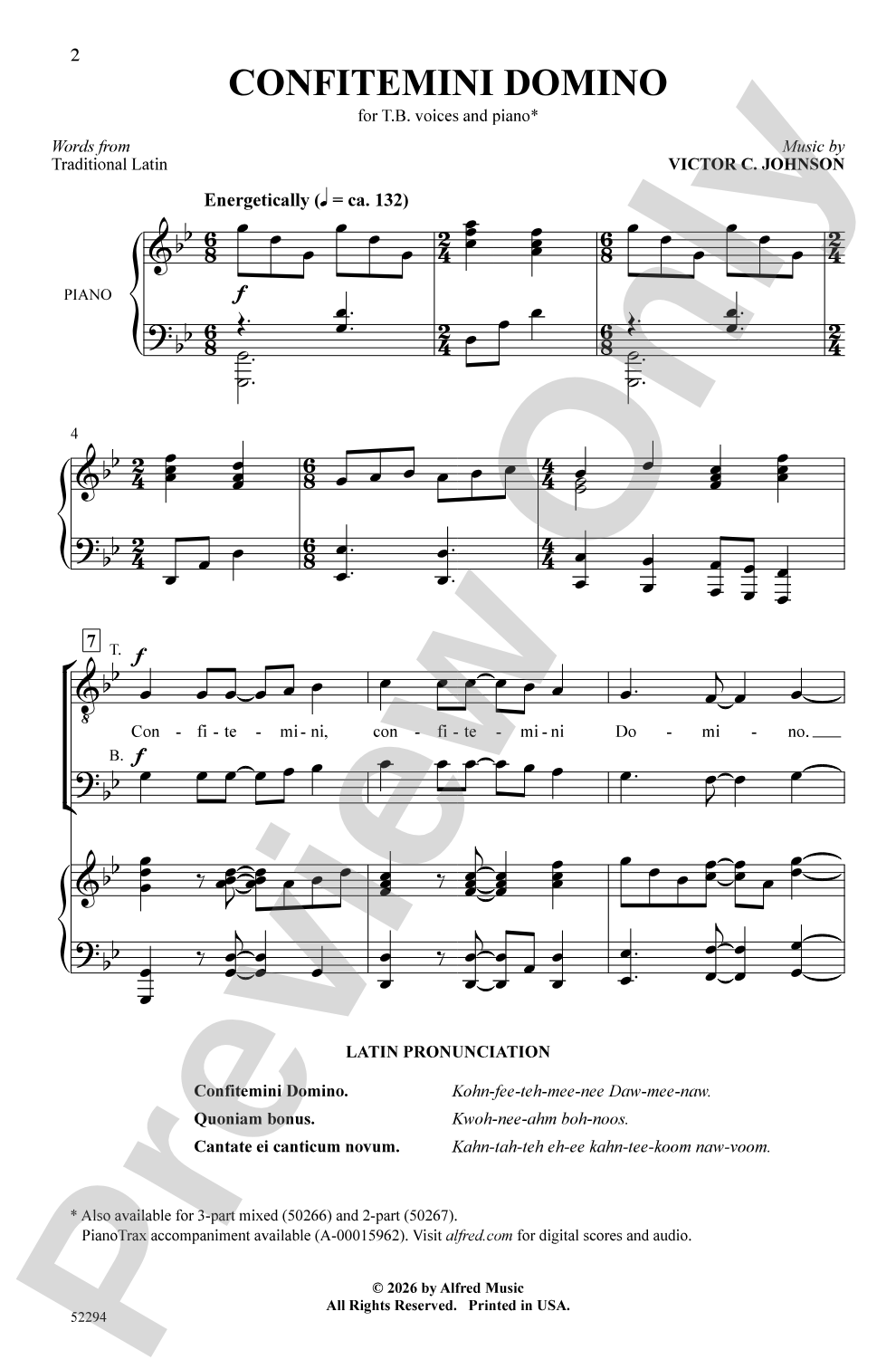
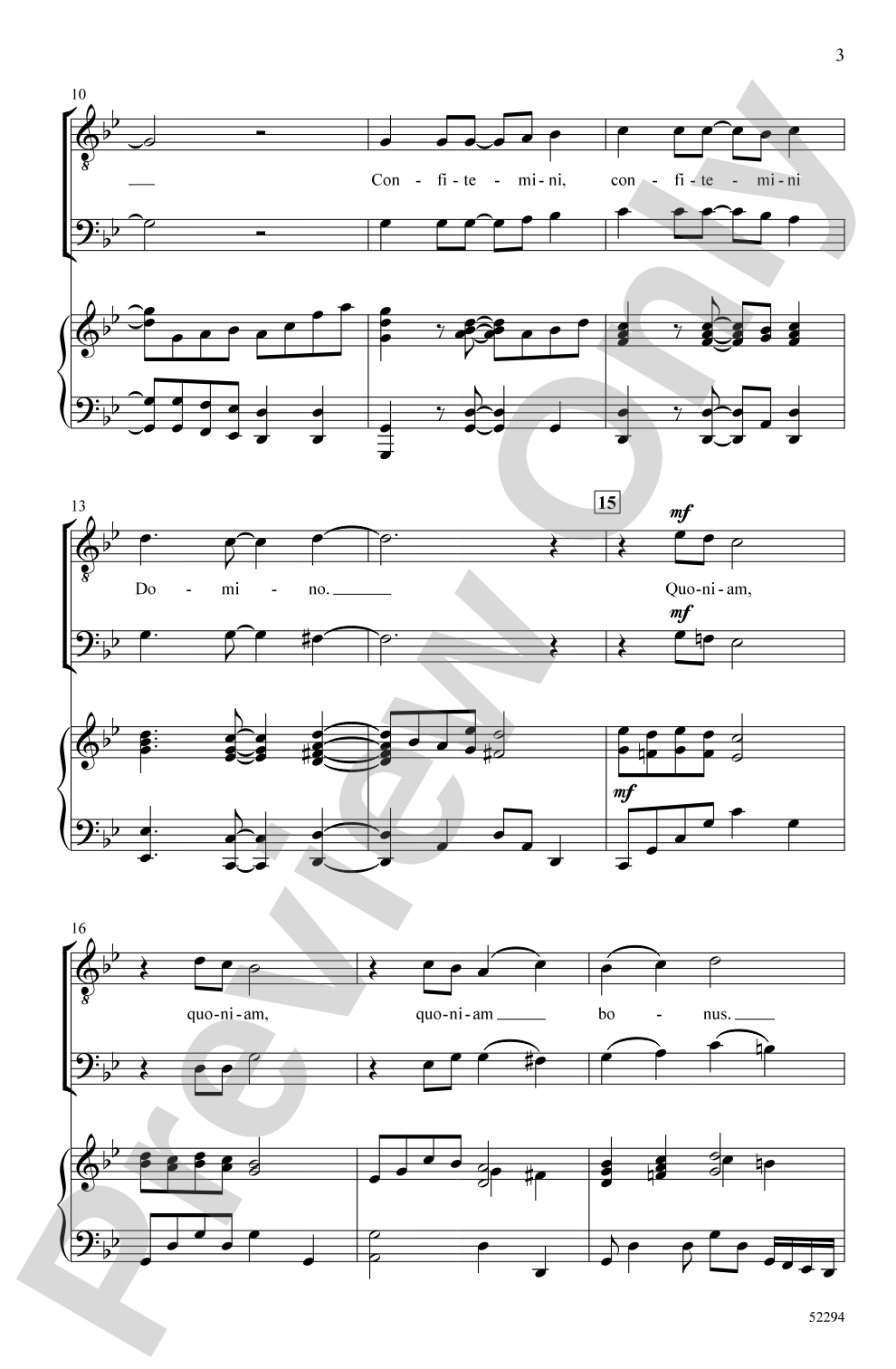
New voicing! Victor C. Johnson's jubilant setting of the traditional Latin text is ideal for developing choirs. The rousing mixed-meter introduction lays the groundwork for a syncopated presentation of the main theme that melts into a reverent middle section. A gradual crescendo and accelerando lead us back to the driving A section. Thrilling!


Don't just read it, hear it, play along with it, and watch your students grow with it. In MakeMusic Cloud, Confitemini Domino: TB Choral Octavo comes alive with professional accompaniment, adjustable tempo, and built-in practice tools that turn solo practice into real progress.
Open in the Player
Jump straight in and assign it today.
Start Your Free Trial
Open this title and explore the full library in minutes.
Sample Audio
1
Audio File
--:--
0:00
0:00
Sample Video
Additional Details
Series:
Alfred Choral Designs
Publisher:
Alfred Music
Page Count:
12
SKU:
00-PO-0007863
More about this title
About the Composer: Victor C. Johnson

Victor C. Johnson, born in Dallas, Texas, holds the position of School Choral Editor for Sing!, the educational publishing division of Choristers Guild. His compositional output spans over 500 choral works, vocal solos, and keyboard collections currently published and performed worldwide.
From 2000 to 2018, Johnson served as choral director at Ft. Worth Academy of Fine Arts, where he led the Academy Singers and Academy Men's Choir while also serving as Artistic Director of the Singing Girls of Texas and Children's Choir of Texas. In 2022, he was appointed conductor of the Dallas Symphony Children's Chorus Mixed Ensemble, which serves advanced high school singers as the resident children's choir for the Dallas Symphony Orchestra. His professional memberships include the American Choral Directors Association, American Guild of Organists, Texas Music Educators Association, National Association for Music Education, Texas Choral Directors Association, ASCAP, and Phi Mu Alpha Sinfonia.
Why we love this
Johnson builds momentum with surgical precision here. The mixed-meter introduction immediately signals that this is no ordinary sacred arrangement, and the syncopated main theme catches singers off guard in the best way. What makes this especially valuable for developing choirs is how the reverent middle section gives singers breathing room to settle harmonically before the final accelerando drives the piece home without leaving anyone behind.
What to expect
A surge of energy that turns reverent. The opening mixed meter pulls listeners in with its rhythmic drive, then the syncopated theme dances with joyful intention. The middle section strips away the urgency, letting the Latin text settle into something contemplative and quiet. By the final crescendo, you're moving forward with unstoppable momentum, thrilling precisely because you've earned it through restraint.
Who it's for
Developing TB, TTB, TBB, or TTBB choirs seeking sacred literature that challenges singers rhythmically without overwhelming them harmonically. This piece works for groups with some experience reading mixed meters and syncopated passages but does not demand advanced sight-reading skills.
How to get the most out of it
- Shape the mixed-meter introduction with clear but unrushed phrasing; let the dissonance settle naturally before the syncopated theme enters so the shift feels intentional rather than chaotic.
- Balance the syncopation in the main theme by having each voice part rehearse independently first, then layer voices gradually to prevent rhythmic muddiness.
- Bring the reverent middle section into sharp relief by dropping dynamic level and allowing vibrato to ease slightly; this contrast makes the final crescendo feel earned.
- Time the final accelerando conservatively in early rehearsals; singers often rush the drive back to the A section, so establish a clear conductor's pulse that the ensemble can follow.
How to use it
Position this as a concert opener or midprogram energizer; its length and jubilant character make it ideal for festival settings where your choir needs to make an immediate impression. It pairs well with a quieter, more introspective sacred piece later in the program, creating dynamic arc and showing range.
Skills your students will build
- Reading and performing mixed meters (introduction in contrasting meter from main theme)
- Executing syncopated rhythm patterns accurately within harmonic context
- Shaping dynamic contour across a longer form (intro, syncopated theme, reverent section, crescendo, reprise)
- Balancing ensemble sound during complex rhythmic passages
- Responding to accelerando cues while maintaining rhythmic integrity