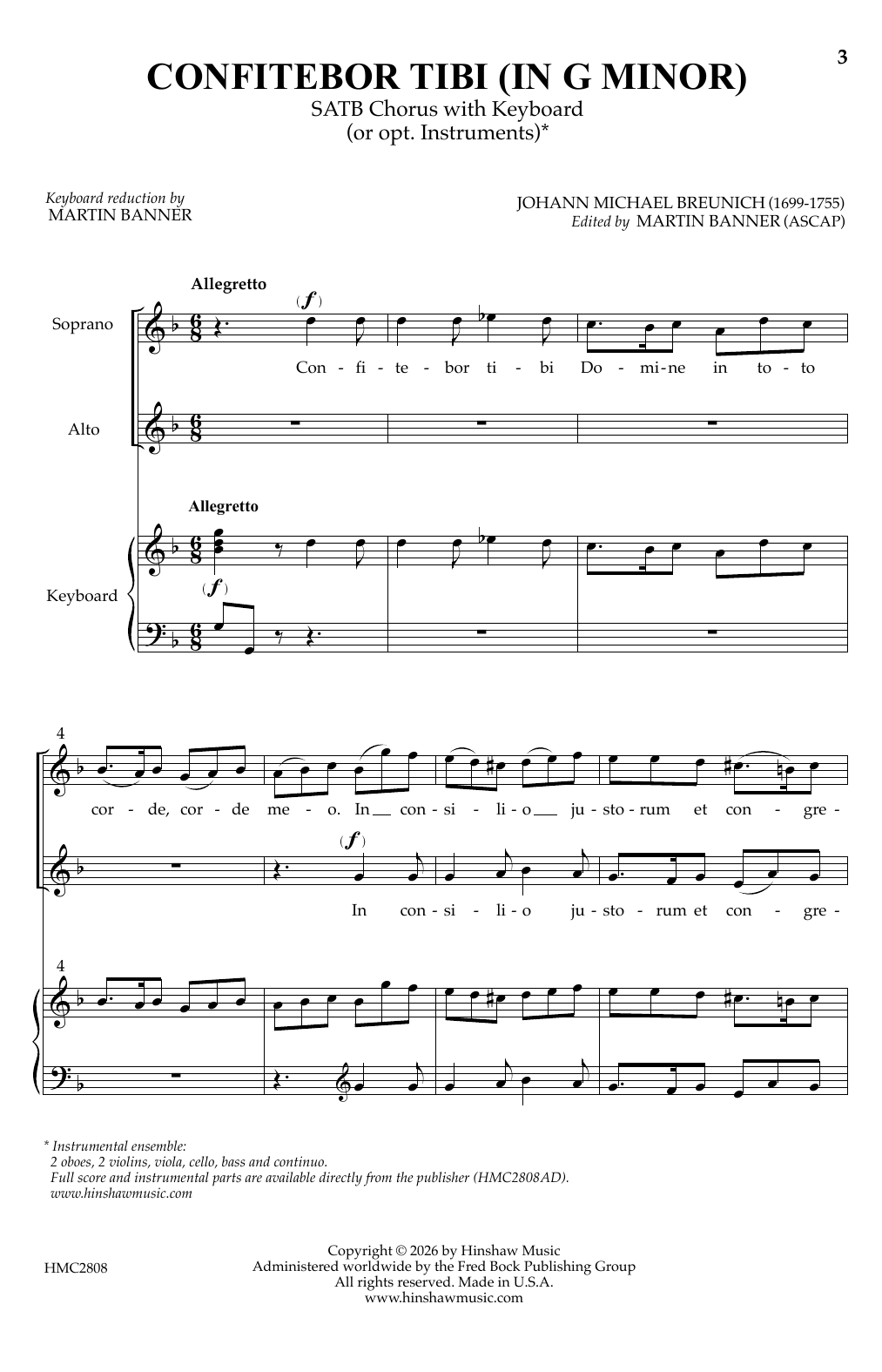
By Johann Michael Breunich / Edited by Martin Banner
Item: 35-DS01944223
Digital Download
$3.60
Minimum order quantity: 10 copies
Please note: Under U.S. copyright law, you must purchase the exact number of copies needed for your ensemble. Printing, duplicating or sharing additional copies is strictly prohibited.
Pickup currently not available
Description
Discover MakeMusic Cloud: thousands of interactive titles your students can play along with today.
Johann Michael Breunich was an 18th-century German composer and church musician whose sacred works reflect the contrapuntal sophistication and harmonic language of the Baroque period. His choral compositions demonstrate a strong command of text setting and voice leading, characteristics that made his music valuable to both cathedral and collegiate choirs throughout German-speaking regions.
Breunich's output includes motets, Latin psalms, and liturgical pieces designed for practical use in worship settings. His writing balances accessibility with musical substance, making his works enduring choices for choirs seeking repertoire that challenges singers without sacrificing spiritual depth.
Why we love this
This setting of Confitebor Tibi gives your choir a substantive Latin motet that avoids the over-familiar while remaining entirely singable. Breunich's voice leading creates organic phrasing in all four parts, so singers can find genuine musical lines rather than fighting awkward tessitura or chromatic tangles.
What to expect
Confitebor Tibi settles into the contemplative confidence of its text. The harmonic language feels grounded in Baroque practice while the melodic contours remain singerly and direct, creating music that feels both learned and devotional.
Who it's for
Advanced high school choirs and collegiate ensembles looking for Latin sacred repertoire that sits comfortably in the curriculum without overshadowing worship or concert programming. Directors seeking 15 pages of substantial material that doesn't demand specialized instrumental forces.
How to get the most out of it
Balance the inner voices with intention during the polyphonic passages. Altos and tenors often carry important harmonic movement that clarifies the harmonic rhythm.
Treat G minor not as dark or mournful but as intimate and devotional. The key choice supports textual reflection without requiring dramatic interpretive gestures.
Anchor the ensemble's tuning during sustained harmonies by having singers vocalize the chord before entering on the text. This prevents the pitch drift common in longer held notes.
Separate rehearsals for text and melody strengthen both. Have your choir sing through sections on a neutral syllable first to lock rhythms and voicing before adding Latin text.
How to use it
Pair this with other Baroque Latin settings to create a program focused on faith and confession themes, or program it as a concert closer that demonstrates your choir's command of counterpoint and diction. Its 15-page length makes it substantial enough for concert programming yet economical for rehearsal time.
Skills your students will build
reading and performing Baroque counterpoint in four-part writing
sustaining proper Latin vowel shapes across extended phrases
ensemble tuning in complex harmonic progressions
shaping musical lines within the constraints of choral balance
recognizing harmonic function in G minor tonality
You May Also Like
Scan to Complete Your Purchase
Use your phone's camera to scan the code below
You'll log in on your phone and the order will be added to your account