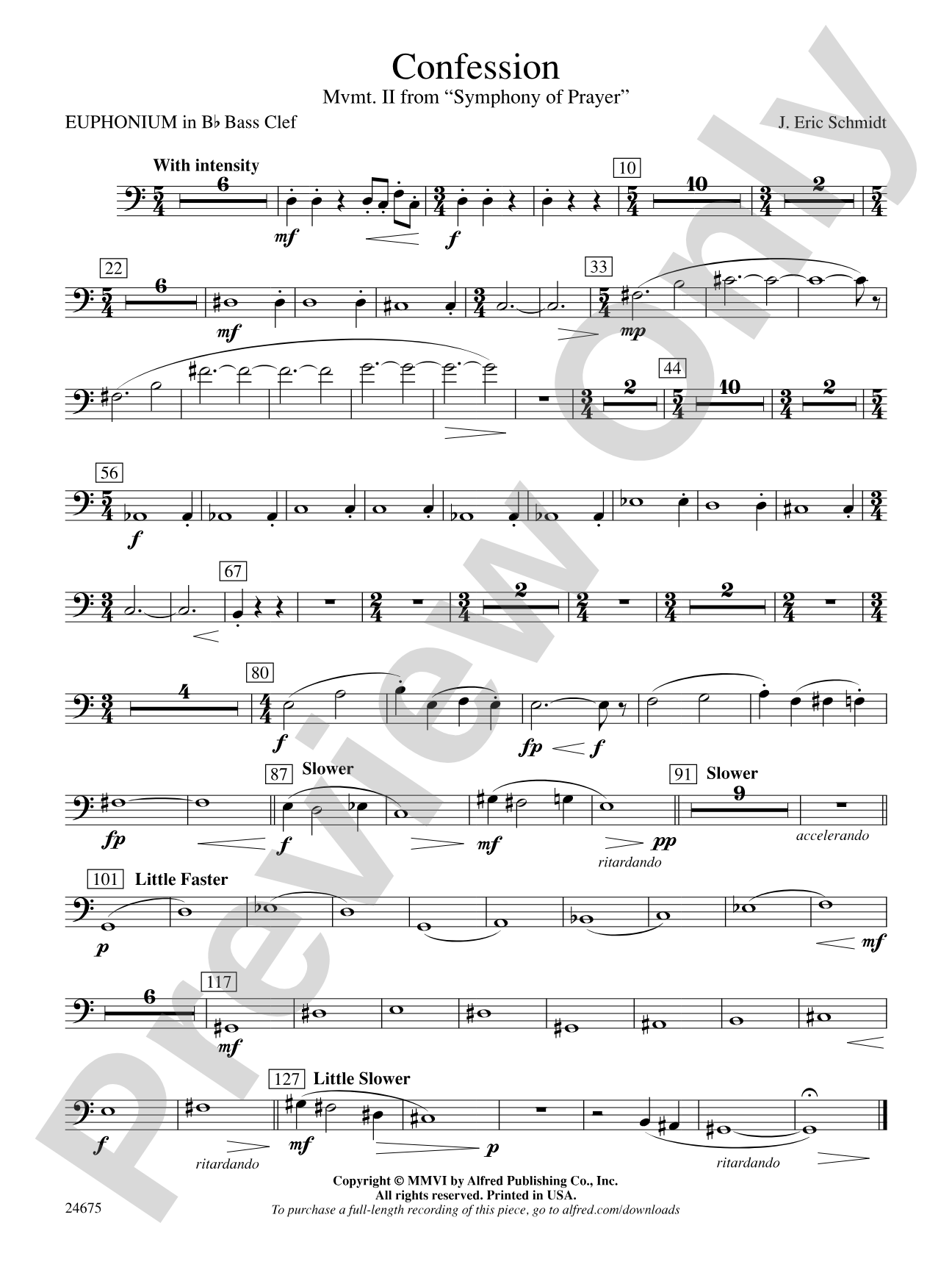
Confession (Movement 2 of Symphony of Prayer): (wp) B-flat Baritone B.C. Sheet Music Preview

Confession (Movement 2 of Symphony of Prayer): (wp) B-flat Baritone B.C.

By J. Eric Schmidt

Grade: 4 (Medium Difficult)

Item: 00-PC-0000843_wpBBBC

Digital Download
$3.00
Description
This remarkable composition is the second movement to Eric Schmidt's colorful and dramatic symphony for band. A dark and energetic work, Confession is based on a three-note motive, beginning with a menacing opening, but finally yielding to a beautiful chorale that provides a transition to a somber and reverent conclusion. Brilliant orchestration and well-crafted use of creative thematic material make this a most expressive work. Thanksgiving, the popular third movement of the Symphony of Prayer is also available and makes an excellent choice when performed following Confession. This title is available in MakeMusic Cloud.

Don't just read it, hear it, play along with it, and watch your students grow with it. In MakeMusic Cloud, Confession (Movement 2 of Symphony of Prayer): (wp) B-flat Baritone B.C. comes alive with professional accompaniment, adjustable tempo, and built-in practice tools that turn solo practice into real progress.

Sample Audio
0:00
0:00
Sample Video
Additional Details
Series: Alfred Concert Band
Publisher: Alfred Music
Page Count: 294
SKU: 00-PC-0000843_wpBBBC

More about this title

About the Composer: J. Eric Schmidt

J. Eric Schmidt is a composer whose work for concert band demonstrates a gift for dramatic orchestration and thematic development. His compositions balance accessibility with musical substance, making them valuable additions to festival and concert repertoires at the intermediate and advanced levels.

Why we love this

Schmidt's orchestration is genuinely inventive here, using the three-note motive to create architectural coherence across a piece that never feels predictable. The transition from menacing opening through energetic development to a luminous chorale works because the emotional journey feels earned, not manufactured. Band directors who program this movement report that students engage deeply with music that demands both technical precision and genuine musical maturity.

What to expect

The piece opens with unsettling energy and architectural tension, built on a small interval pattern that feels incomplete, restless. Over time, that motive becomes a vehicle for exploring emotional complexity, leading to a moment of unexpected beauty in the chorale. The final pages settle into quiet reflection, creating a profound sense of conclusion and contemplation.

Who it's for

Concert bands at the Grade 4 level looking to program a sophisticated work with genuine dramatic arc and compositional substance. This movement rewards ensembles that have developed solid fundamental musicianship and are ready to tackle dense textures and nuanced emotional expression.

How to get the most out of it

  • Balance the three-note motive across sections as it passes between instrument groups; clarity of this unifying figure matters more than blend in the opening minutes.
  • Shape the chorale section with long-line phrasing and warm, singing tone quality to create genuine contrast with the dark opening material.
  • Ensure the final measures land with reverence rather than heaviness; support this transition sonically by allowing space and breath between the last statement of the chorale and the somber conclusion.

How to use it

Program this as the second work in a thematic concert pairing it with Thanksgiving (the third movement of the same symphony), creating a complete dramatic narrative from confession to gratitude. It also stands effectively as a centerpiece concert work for groups seeking meaningful Grade 4 repertoire that deepens audience engagement.

Skills your students will build

  • Balance and blend across changing orchestration and thematic transfers between instrument families
  • Sustained phrasing and long-line playing in contrasting sections (energetic versus lyrical)
  • Precision in rhythmic articulation of a brief recurring motive used as structural foundation
  • Dynamic control and tonal flexibility to support the emotional arc from dark to luminous to somber

You May Also Like