
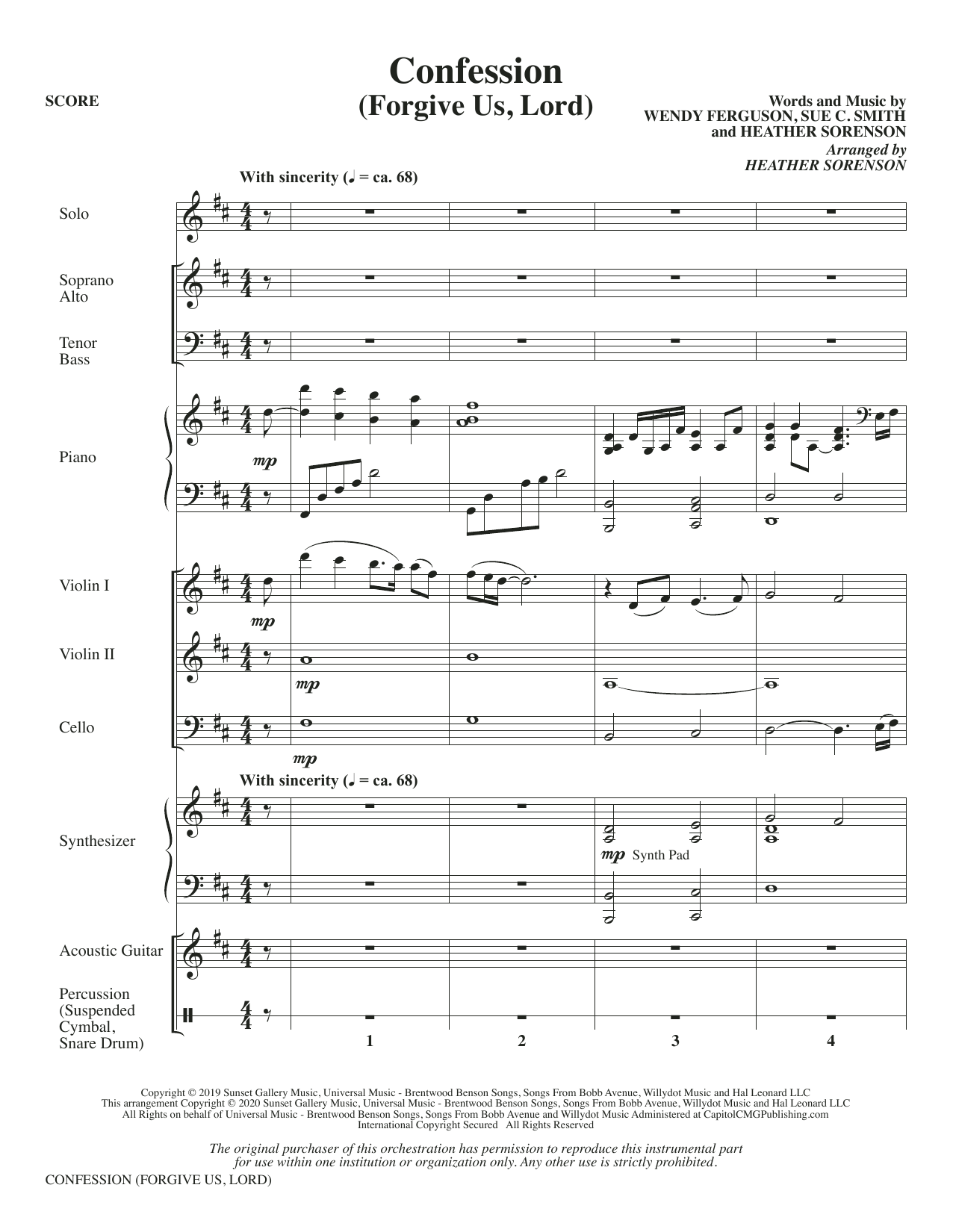

Confession (Forgive Us, Lord) (arr. Heather Sorenson): Choral Instrumental Pak
By Heather Sorenson
Item: 35-PK00466718
$40.00
Pickup currently not available
Buy Extra Parts (Digital PDF Download)
Parts Added to Cart!
Description
Liturgical sensibility meets contemporary styling in this prayer for forgiveness. Set in a classic call-and-response format, the congregation is invited to respond, "Forgive us, Lord" in a musical version of the cantor/respondent prayers of liturgical traditions. The music also follows a conversational style, bringing an interactive and authentic spirit. More than a performance piece, this significant moment of worship art is as beautiful as it is useful. Singular! Score and Parts (ac gtr, vn 1-2, vc, syn, perc) available as a digital download.


Confession (Forgive Us, Lord) (arr. Heather Sorenson): Choral Instrumental Pak isn't in MakeMusic Cloud just yet...but it could be. Let us know you'd like to see it, and you'll help shape what comes next. In the meantime, start a free trial and dive into thousands of interactive titles your students can play along with today.
Request This Title
Tell us you want it.
Start Your Free Trial
Explore everything that's ready to play right now.
Sample Audio
No sample audio found.
Sample Video
No sample videos found.
Additional Details
Publisher:
Hal Leonard
SKU:
35-PK00466718
More about this title
About the Composer: Heather Sorenson

Heather Sorenson is a Dallas-based composer and arranger whose music reaches congregations, classrooms, and concert halls across the globe. Her reputation rests on an uncommon ability to navigate both traditional and contemporary Christian music without sacrificing artistry, often blending the two into something distinctly her own. Her catalogue includes commissions from major institutions like Texas A&M University, the Kennedy Foundation, and Carnegie Hall, where her oratorio EXODUS premiered to significant acclaim.
Beyond composition, Sorenson has shaped music education at multiple levels. She taught elementary music at Grace Academy of Dallas, served as an adjunct professor at Baylor University, and regularly leads workshops in piano and songwriting at worship conferences and universities nationwide. She conducts frequently as a guest artist and dedicates time to benefit concerts supporting causes close to her heart.
Why we love this
Sorenson crafts the call-and-response format with genuine liturgical weight while keeping the musical language accessible and engaging. The conversational structure invites your congregation into the prayer itself rather than positioning them as passive observers, which transforms a performance piece into a meaningful communal moment. Instrumental flexibility means you can perform this with what you have on hand, yet it sounds complete and polished regardless of your ensemble size.
What to expect
The music carries the stillness of genuine prayer alongside an unmistakable contemporary warmth. You'll hear honest vulnerability in the call-and-response structure, a sense that forgiveness is both requested and offered in real time. The interplay of voices and instruments creates an intimate atmosphere despite the participatory nature of the piece.
Who it's for
This works for any church music program seeking a piece that honors liturgical tradition while speaking to contemporary congregations. It requires minimal ensemble forces but delivers maximum impact, making it equally valuable for large churches with full instrumentation and smaller communities working with limited resources.
How to get the most out of it
- Balance the cantor line and congregational response so the "Forgive us, Lord" moment feels like an authentic dialogue rather than an echo. The congregation's line should carry the same weight and intention as the soloist's opening.
- Let the synthetic and acoustic instruments breathe together. The synthesis should enhance rather than dominate the vocal writing, especially during the congregational sections.
- Invest in the rhythmic precision of the percussion part. Its subtle interplay with the guitars and strings keeps the piece from feeling static while maintaining its contemplative quality.
How to use it
Use this during a Lenten or penitential service where participation deepens the spiritual journey rather than interrupting it. It also serves as a powerful closing anthem for a worship-focused concert, especially one exploring themes of reconciliation or renewal. Consider pairing it with a shorter spoken reflection to frame the congregational participation and make the interactive element feel intentional rather than surprising.
Skills your students will build
- Leading and responding in liturgical call-and-response formats
- Balancing solo vocal lines with ensemble texture
- Integrating acoustic and electronic instruments seamlessly
- Sustaining legit tone through meditative, slower tempos
- Ensemble coordination across multiple instrumental families