
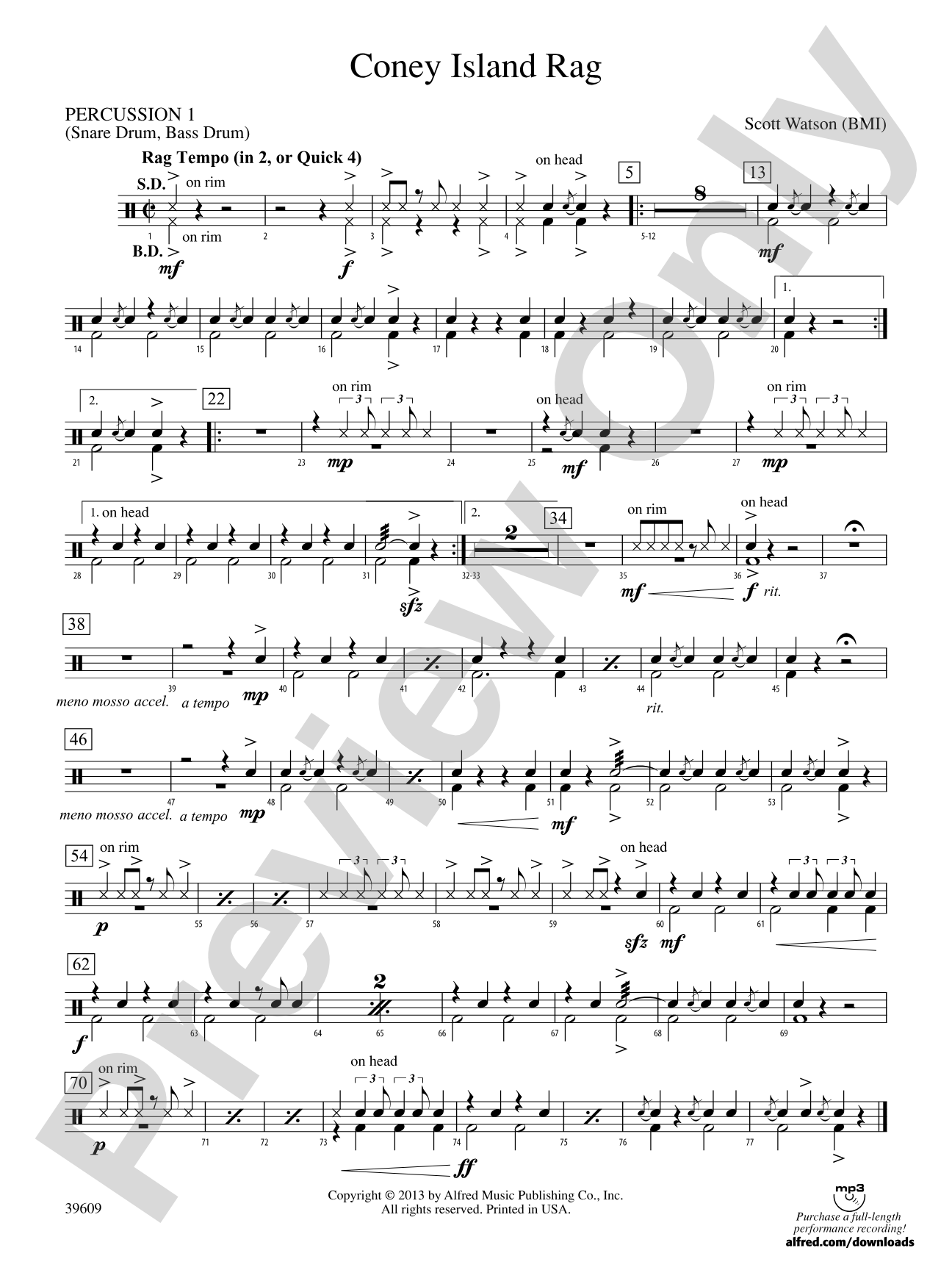

Coney Island Rag: 1st Percussion
By Scott Watson
Grade: 2 (Medium Easy)
Item: 00-PC-0015884_PC1
$3.00
Pickup currently not available
Description
This lively, nostalgic piece will musically transport players and audience alike to the iconic amusement parks of turn-of -the-century Coney Island (near Brooklyn, New York). The sweet, cheerful sounds that flowed from the carousels and bandwagons of a time gone by infuse this characteristic, but level-appropriate work. Ragtime feel is achieved via accessible syncopations, chromatics that lay well on the instruments, and sectional form. Novel percussion, including a slide whistle, adds to the fun! (2:35)


Don't just read it, hear it, play along with it, and watch your students grow with it. In MakeMusic Cloud, Coney Island Rag: 1st Percussion comes alive with professional accompaniment, adjustable tempo, and built-in practice tools that turn solo practice into real progress.
Open in the Player
Jump straight in and assign it today.
Start Your Free Trial
Open this title and explore the full library in minutes.
Sample Audio
1
Audio File
--:--
0:00
0:00
Sample Video
No sample videos found.
Additional Details
Series:
Challenger Band Series
Publisher:
Alfred Music
Page Count:
164
SKU:
00-PC-0015884_PC1
More about this title
About the Composer: Scott Watson

Scott Watson has spent four decades shaping young musicians. After 35 years directing bands and coordinating instrumental programs across the Parkland School District in Allentown, Pennsylvania, he now teaches at Cairn University as Associate Professor of Music, where he continues to influence music educators and students alike.
Watson's compositional output reflects the full arc of his career. With more than 120 published works for concert band, string orchestra, and chamber ensembles spanning all grade levels, he writes from genuine classroom experience. His music has reached stages from Philadelphia's Academy of Music to the White House, and he regularly conducts honor bands and presents clinics for music educators. He is also the author of Using Technology to Unlock Musical Creativity (Oxford University Press, 2011) and serves as exclusive composer and clinician for Alfred Publications' Sound Innovations series.
Why we love this
Watson knows exactly what a Grade 2 band can do, and he writes to unlock genuine musicality at this level. The ragtime idiom gives your students a style they can sink their teeth into—syncopations that feel natural on their instruments, melodic lines that sing, and a built-in sense of forward motion that keeps younger players engaged. The orchestration and accessible harmonic language mean everyone gets a satisfying part.
What to expect
Coney Island Rag evokes a simpler, more whimsical era. Sweet carousel melodies spiral upward over gently syncopated rhythms; chromatic passages shimmer like sunlight on spinning brass. The whole piece bubbles with nostalgic charm and innocent delight, inviting your band to inhabit a soundworld that feels both vintage and genuinely fun to play.
Who it's for
Grade 2 concert bands ready to explore a classical American vernacular style with conviction. This works equally well for ensembles seeking a fun, accessible concert opener and for directors who want to introduce ragtime idioms and syncopation in a context that feels both musically legitimate and historically grounded.
How to get the most out of it
- Keep the bounce light and infectious. Ragtime lives in the space between metronomic precision and stylistic swing; let the band find that groove rather than locking it into machine-like regularity.
- Balance the sectional colors carefully. The ragtime style depends on clear melodic dialogue between sections. Rehearse so that solo voices stand out without overshadowing the harmonic accompaniment underneath.
- Let the slide whistle shine. This novelty touch is earned and belongs to the character. Feature it cleanly in the percussion section so the audience catches that moment of period authenticity.
- Bring out the chromatic passages. Watson writes chromaticism that sits naturally on band instruments; don't underplay these figures, as they carry much of the ragtime character.
How to use it
Program this as a concert opener to set a light, engaging tone and warm up audience attention. Its 2:35 duration and upbeat character make it an ideal complement to a more serious work later on the program, or pair it with other American vernacular pieces to build a thematic set. The novelty and accessibility also make it a strong choice for community pops concerts or family-friendly events where younger audiences are present.
Skills your students will build
- Ragtime syncopation and swing feel
- Sectional independence and dialogue
- Chromatic intonation and voice leading
- Style-specific articulation and phrasing
- Balancing melodic content with harmonic accompaniment