
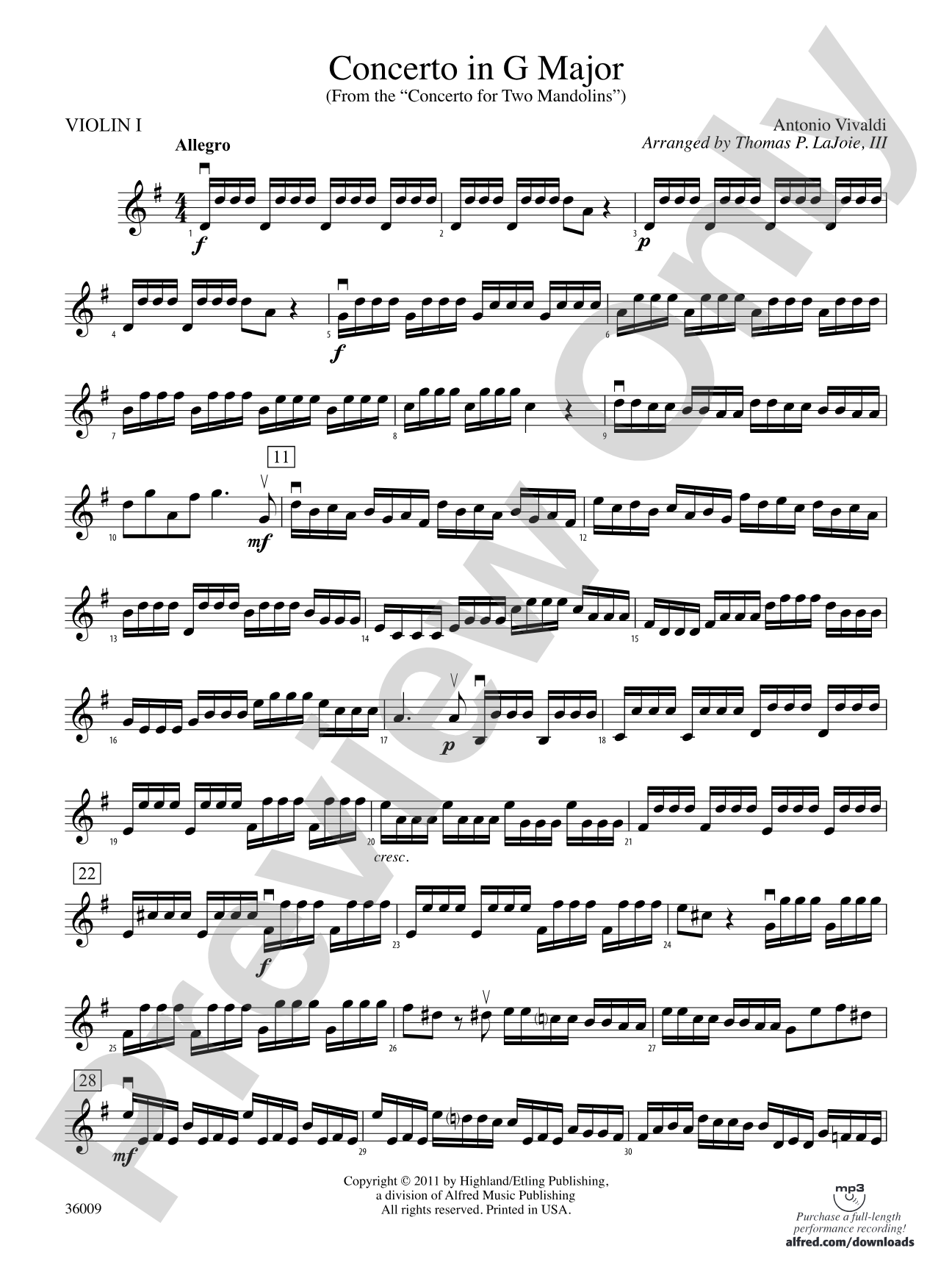

Concerto in G Major (from the Concerto for Two Mandolins): 1st Violin
Violin Solo or Section Feature
By Antonio Vivaldi / arr. Thomas P. LaJoie III
Grade: 3
Item: 00-PC-0015083_VN1
$5.99
Pickup currently not available
Description
This arrangement provides great flexibility and many performance opportunities. The piece can feature all the violins or just two soloists. A third violin part is included to be used by the sections behind soloists. Typical Vivaldi, this one is sure to be a hit.


Don't just read it, hear it, play along with it, and watch your students grow with it. In MakeMusic Cloud, Concerto in G Major (from the Concerto for Two Mandolins): 1st Violin comes alive with professional accompaniment, adjustable tempo, and built-in practice tools that turn solo practice into real progress.
Open in the Player
Jump straight in and assign it today.
Start Your Free Trial
Open this title and explore the full library in minutes.
Sample Audio
1
Audio File
--:--
0:00
0:00
Sample Video
No sample videos found.
Additional Details
Series:
Highland/Etling String Orchestra
Publisher:
Alfred Music
Page Count:
136
SKU:
00-PC-0015083_VN1
Instrumentation:
string w/ vln3
More about this title
About the Composer: Antonio Vivaldi
Antonio Vivaldi (1678-1741) was a Venetian priest and composer whose prolific output shaped the Baroque concerto into its most recognizable form. His mastery of instrumental color and rhythmic drive set the standard for generations of composers, and his works remain central to orchestral repertoire because they combine technical brilliance with immediate musical appeal.
Vivaldi's concerti grossi and solo concertos demonstrate his genius for balancing virtuosity with accessibility. Teachers and conductors return to his music repeatedly because it teaches players how to phrase with elegance, maintain ensemble precision under rapid figuration, and find joy in Baroque style without sacrificing modern musicianship.
Why we love this
This arrangement unlocks the original concerto's energy for a full string section while preserving Vivaldi's architectural brilliance. The flexibility to feature all violins or isolate two soloists with a supportive third violin line means you can program it as a full ensemble piece or spotlight your strongest players, making it remarkably adaptable to your rehearsal needs and performance context.
What to expect
The piece radiates Baroque vitality; rapid violin lines dance over steady harmonic ground, creating a sense of elegance and forward drive that feels both historical and immediate. When the soloists step into the spotlight, the texture brightens and becomes more intimate before the full section returns with renewed energy.
Who it's for
This score and parts set works for Grade 3 string orchestras seeking repertoire that showcases both full ensemble strength and individual player capability. It is ideal for conductors who want to program a recognized masterwork without sacrificing musical substance, and for orchestras preparing for concert or festival performance with moderate technical demands.
How to get the most out of it
- Establish clean articulation in the rapid passagework by having violins practice with a light, consistent bow attack; Baroque style benefits from definition without heaviness.
- Balance the soloists clearly when they emerge from the section, adjusting dynamic layers in rehearsal so the third violin part supports without overshadowing.
- Shape the Allegro sections with forward momentum; resist the urge to linger on individual notes, as Vivaldi's phrasing relies on propulsive energy across measures.
- Tune carefully around the movement's exposed harmonic shifts, particularly where the soloist and ensemble parts intersect in the faster passages.
How to use it
This arrangement works beautifully as a concert centerpiece or festival offering that demonstrates your orchestra's Baroque awareness without requiring period-specific training. Pair it with Romantic or contemporary works to show stylistic range, or program it early in the year to build ensemble precision and introduce players to Baroque phrasing conventions that will benefit all subsequent repertoire.
Skills your students will build
- Baroque articulation and phrasing conventions
- Rapid passage work at a moderate tempo
- Balancing solo and ensemble textures
- Playing as a unified section while accompanying featured soloists
- Intonation stability in harmonic movement
- Reading and executing multiple violin parts within a single piece