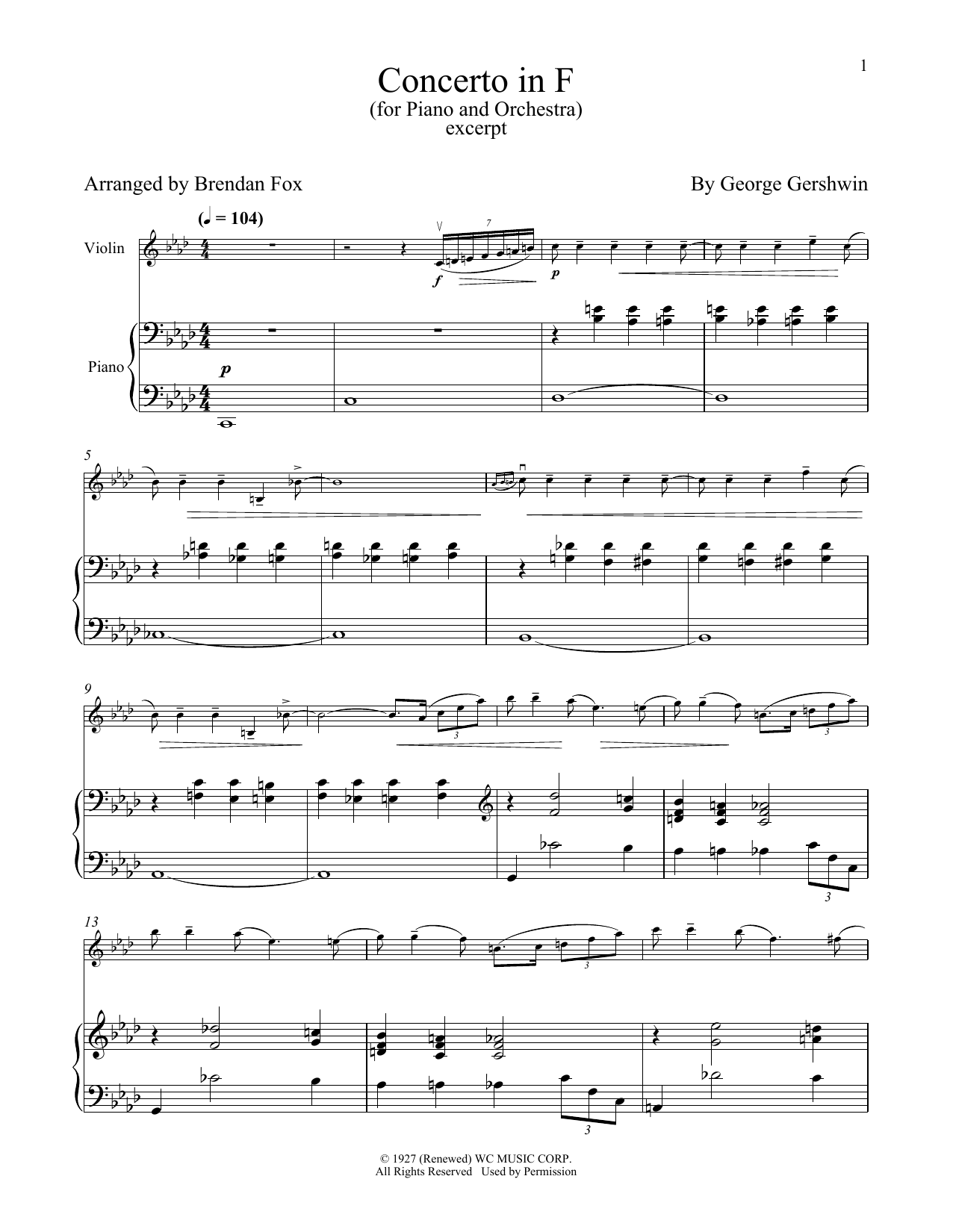
George Gershwin (1898–1937) revolutionized American classical music by authentically integrating jazz idioms into concert works. His Concerto in F stands as his most ambitious orchestral achievement, blending vernacular rhythms and blues harmonies with traditional symphonic architecture. Gershwin's approach to composition remains vital for music education because it proves that popular and classical traditions strengthen each other rather than compete.
Why we love this
This arrangement gives advanced violinists direct access to one of the 20th century's most inventive keyboard concertos without requiring a full orchestra. The Fox arrangement respects Gershwin's harmonic language while creating an intimate chamber setting that showcases the soloist's ability to phrase lyrical melodies and navigate syncopated rhythmic figures.
What to expect
Urbane and energetic, grounded in the swagger of 1920s New York jazz while maintaining the architectural rigor of a classical concerto. The music swings without sacrificing elegance, offering violin writing that feels both idiomatic to the instrument and rooted in Gershwin's characteristic bluesy harmonic vocabulary.
Who it's for
Advanced high school and college violinists seeking substantial solo repertoire that bridges classical and jazz aesthetics. Directors and violin teachers looking for meaningful concert pieces that engage audiences while building student facility with American vernacular harmony and rhythm.
How to get the most out of it
Attend to Gershwin's frequent syncopation with precision; the jazz vocabulary here sits exactly where written, never loosely or behind the beat.
Balance lyricism in the singing passages with rhythmic confidence in the busier sections; this excerpt likely contains both song and stride.
Coordinate carefully with the pianist on entrances and harmonic support, treating the accompaniment as a full orchestral reduction that shapes the solo line.
How to use it
Feature this as a solo concerto work on a recital or concert celebrating American composers, or pair it with other Gershwin arrangements to build a thematic program around his orchestral legacy. The three pages work well as a concert centerpiece that demonstrates technical artistry and musical maturity without demanding full orchestral resources.
Skills your students will build
Phrasing syncopated rhythmic figures with clarity and style
Navigating jazz harmonies and blues-inflected melodies
Coordinate soloist and accompanist in a concerto texture
Stylistic interpretation of early 20th century American vernacular idioms
You May Also Like
Scan to Complete Your Purchase
Use your phone's camera to scan the code below
You'll log in on your phone and the order will be added to your account