
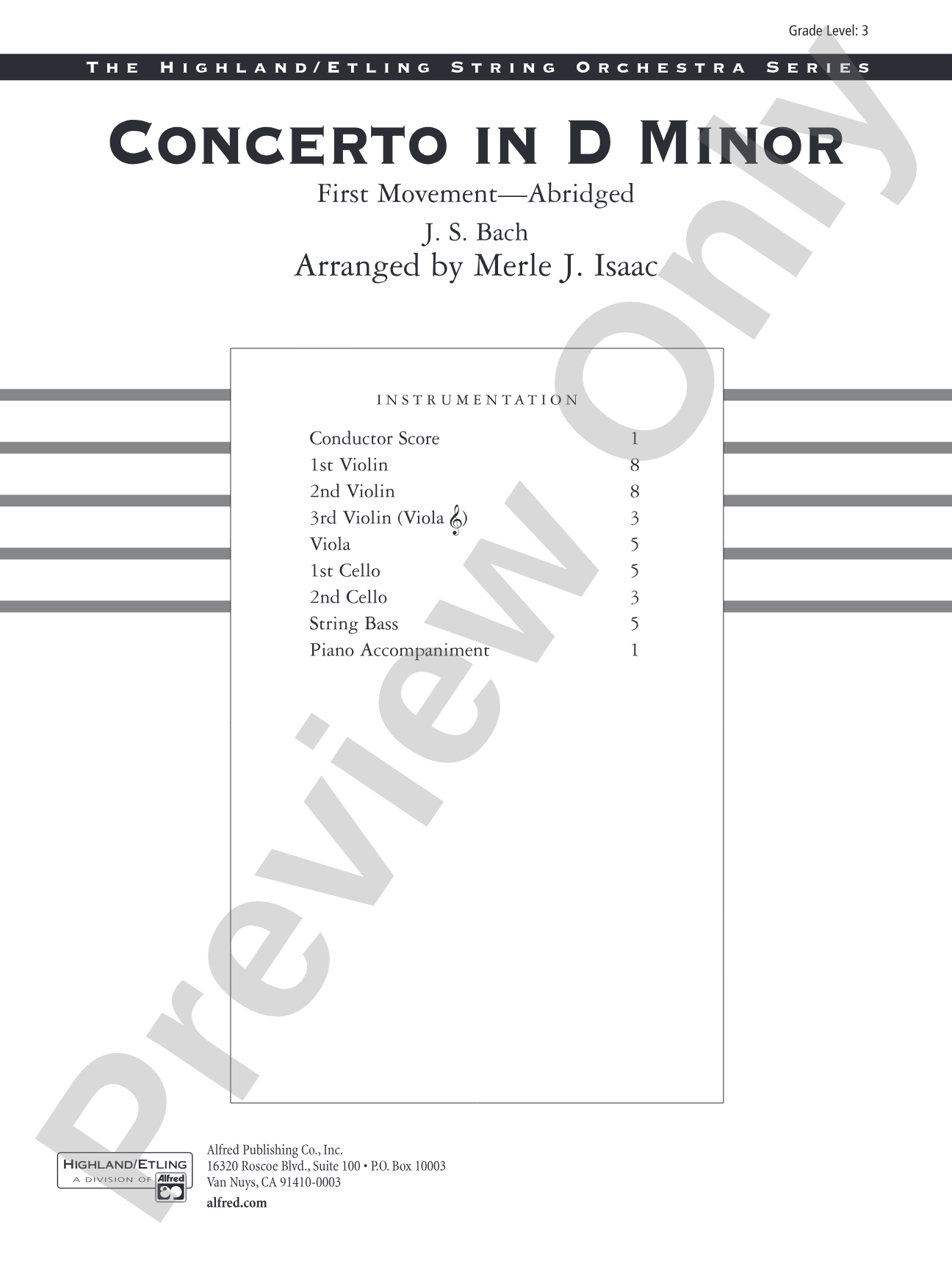

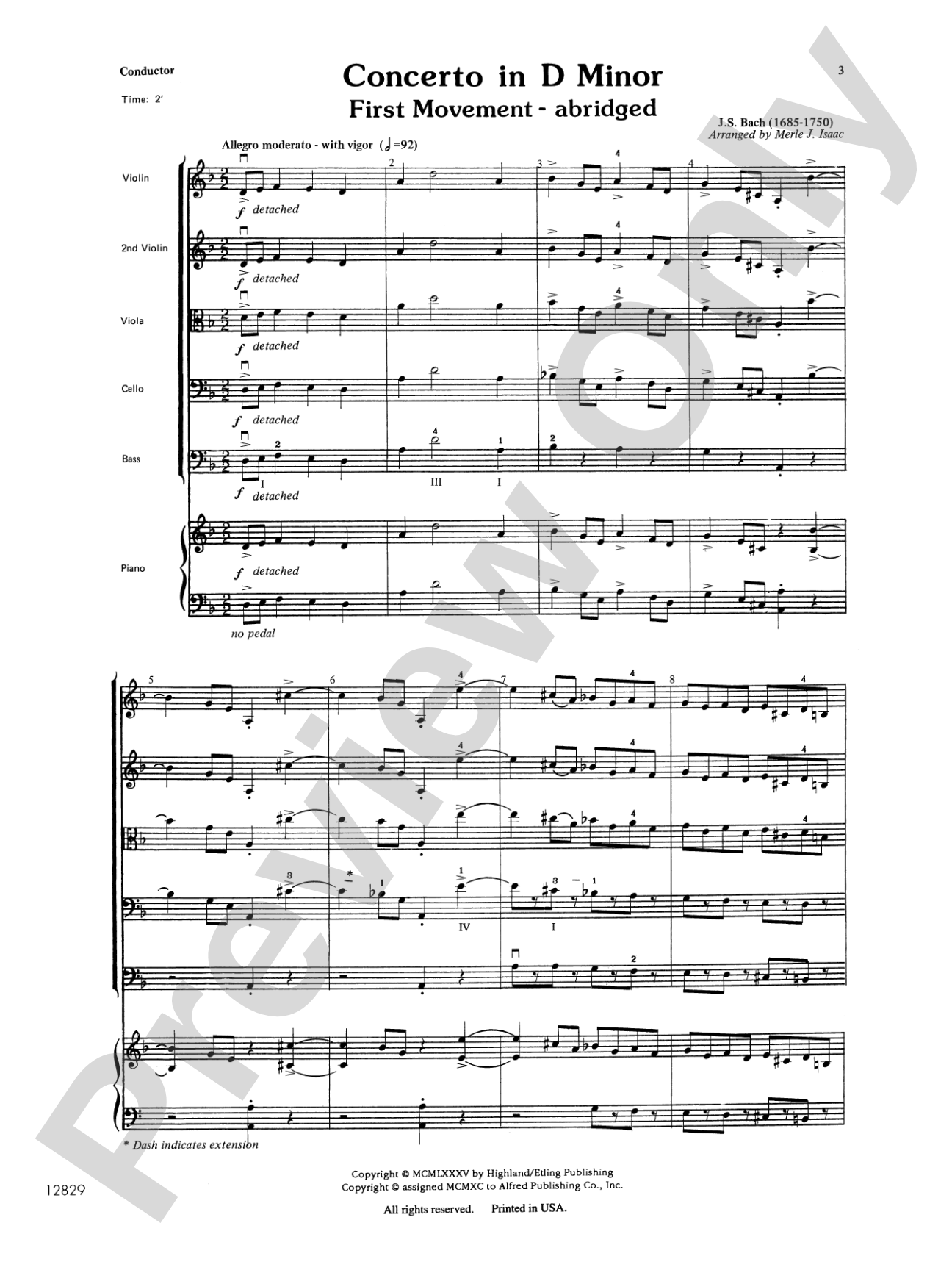
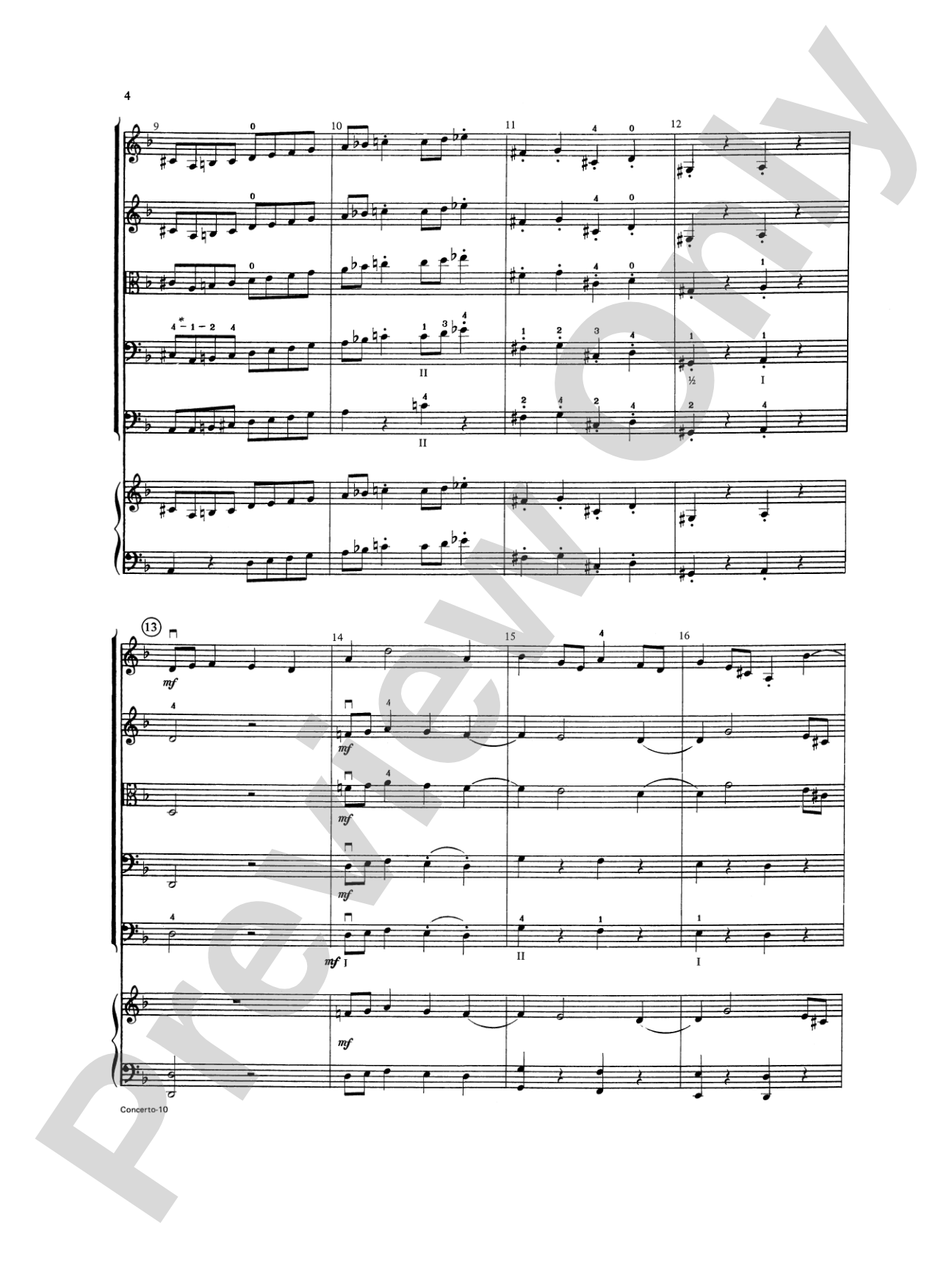
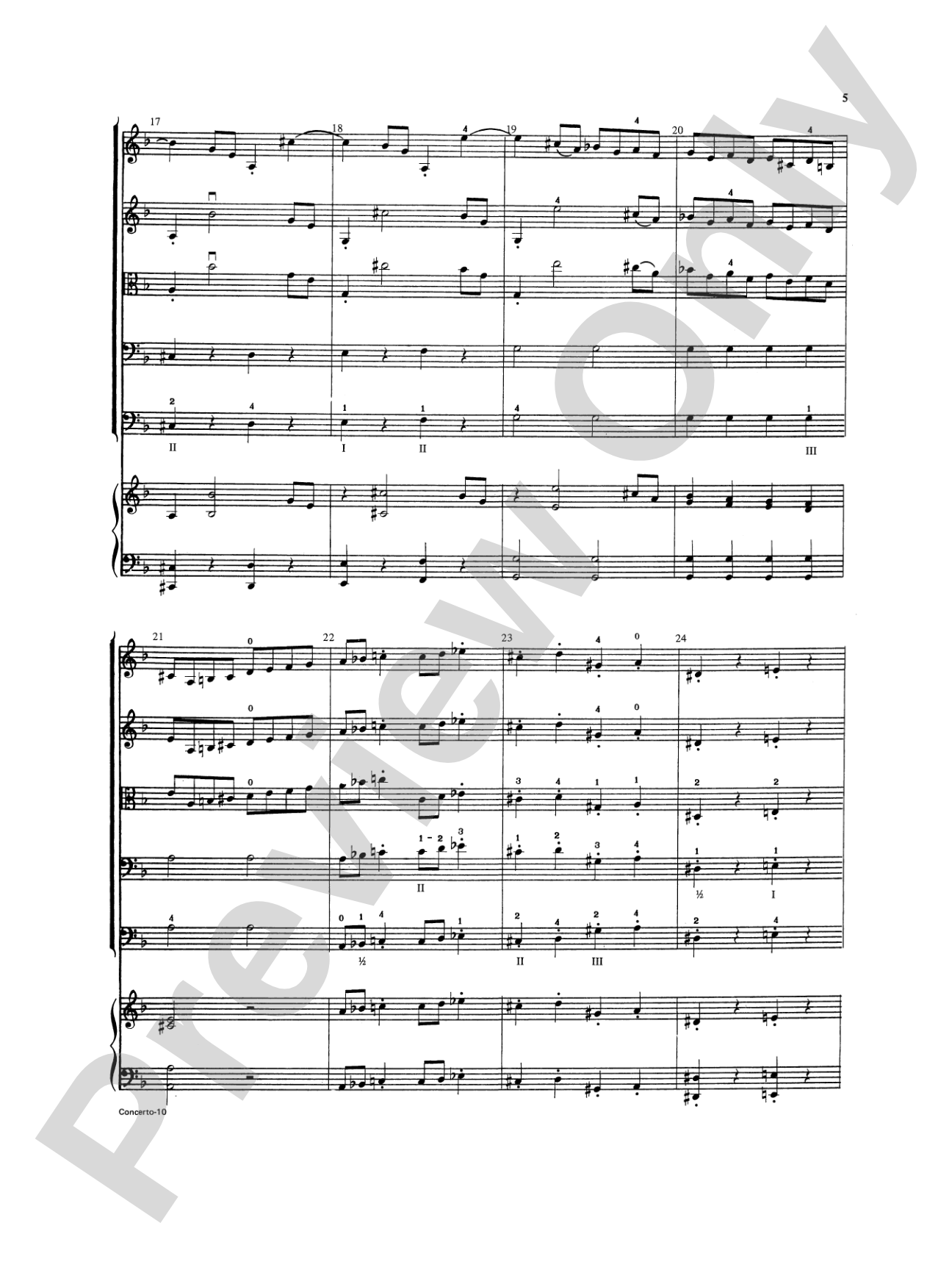
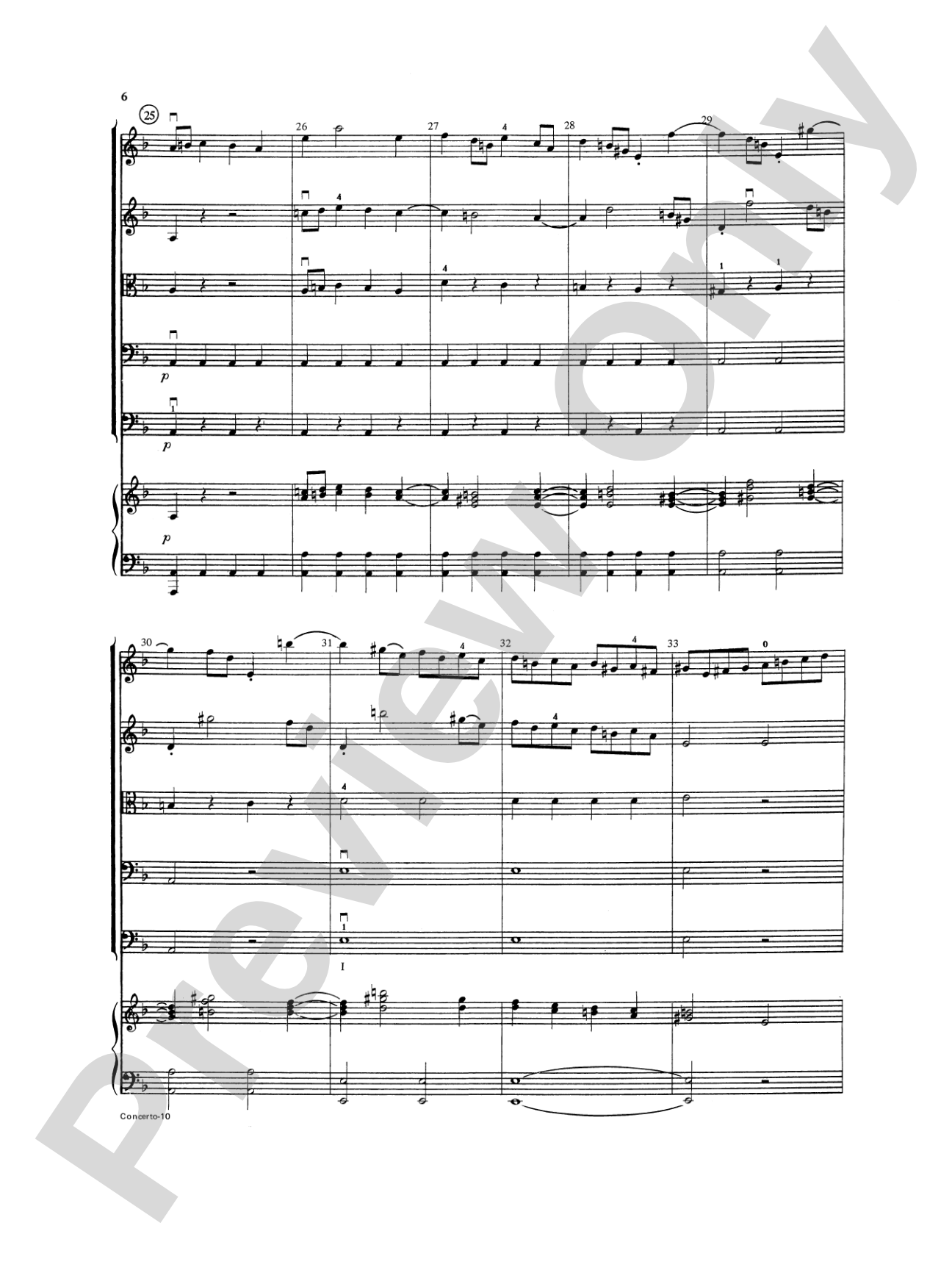
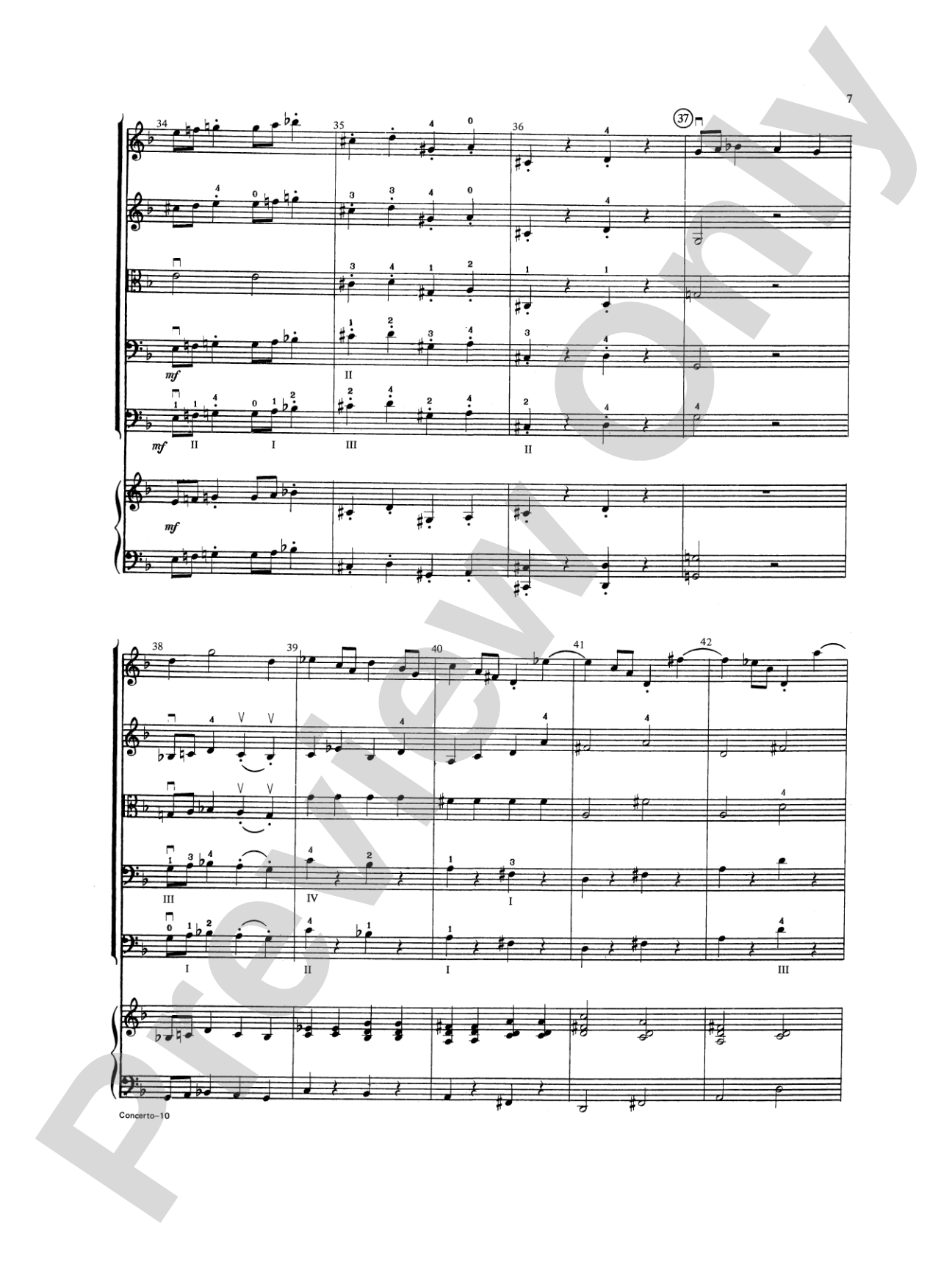
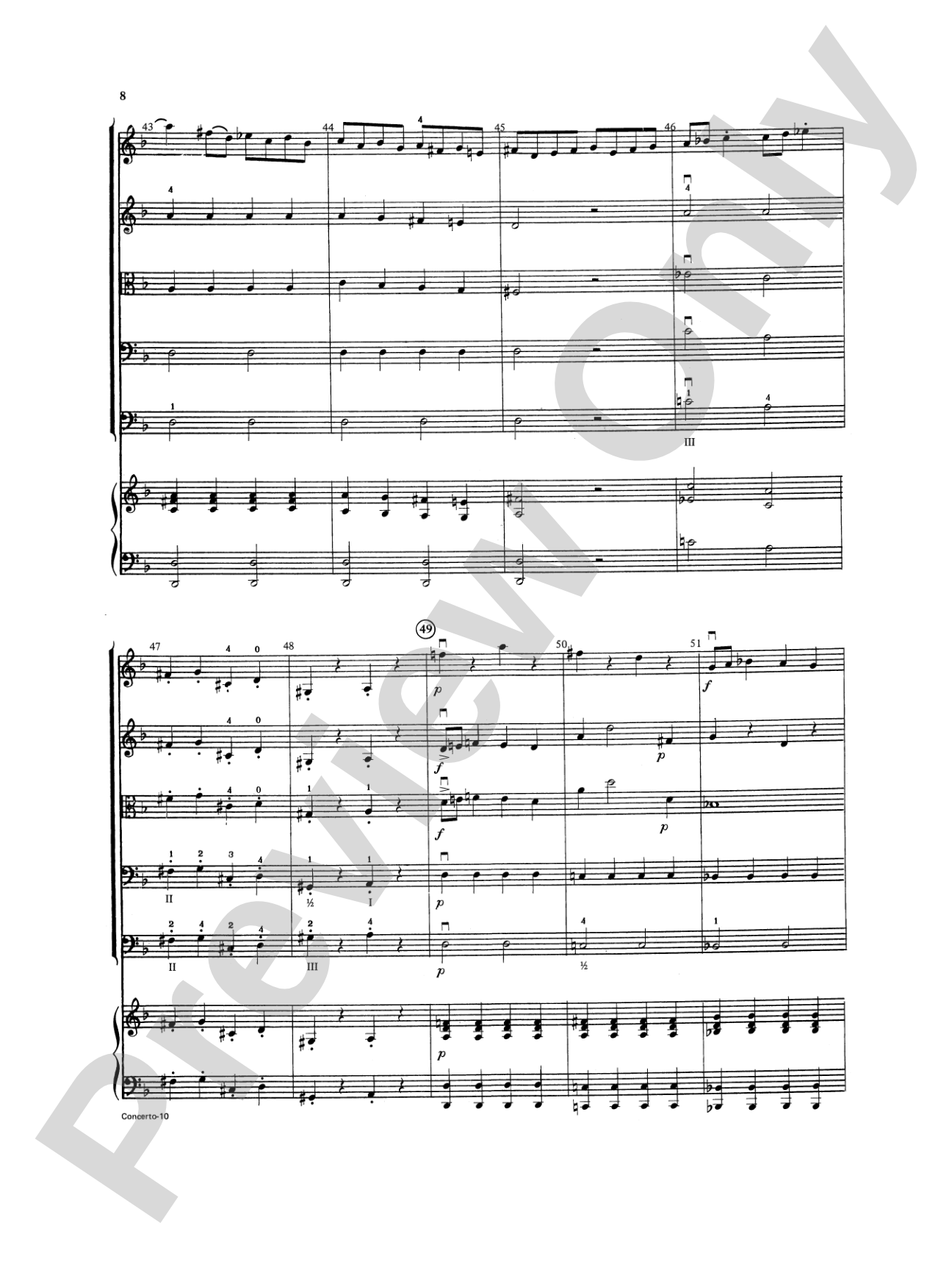
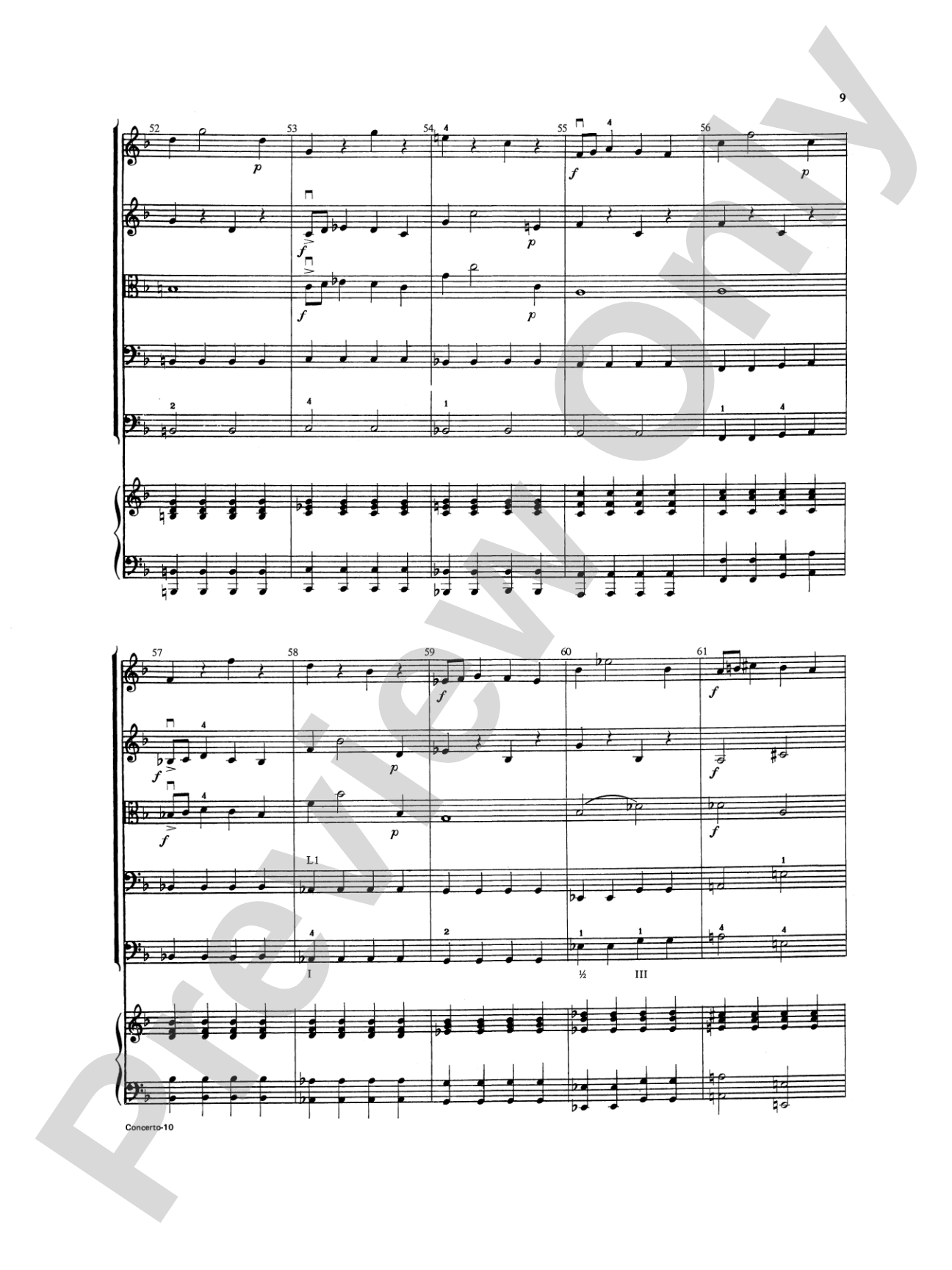
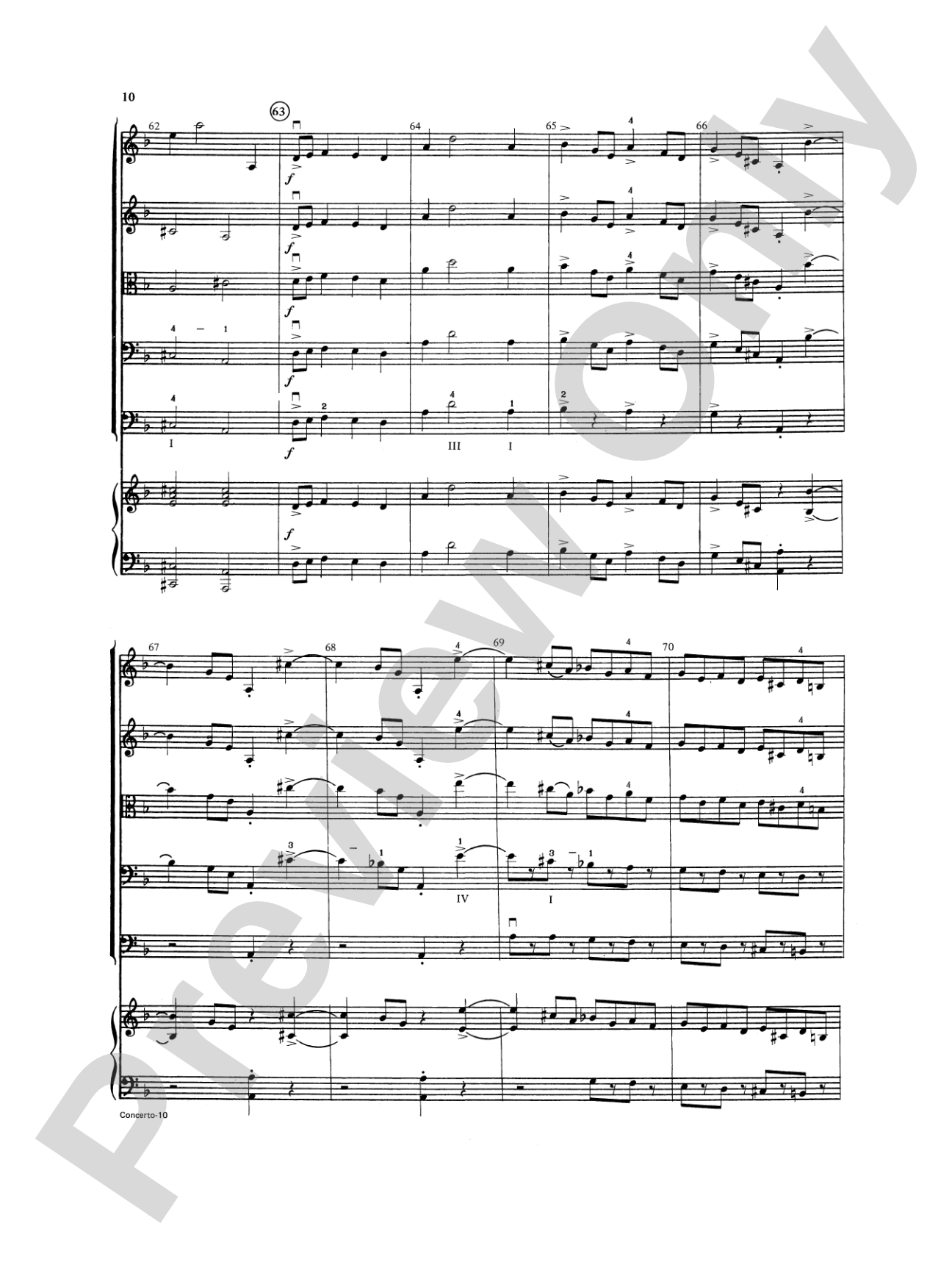
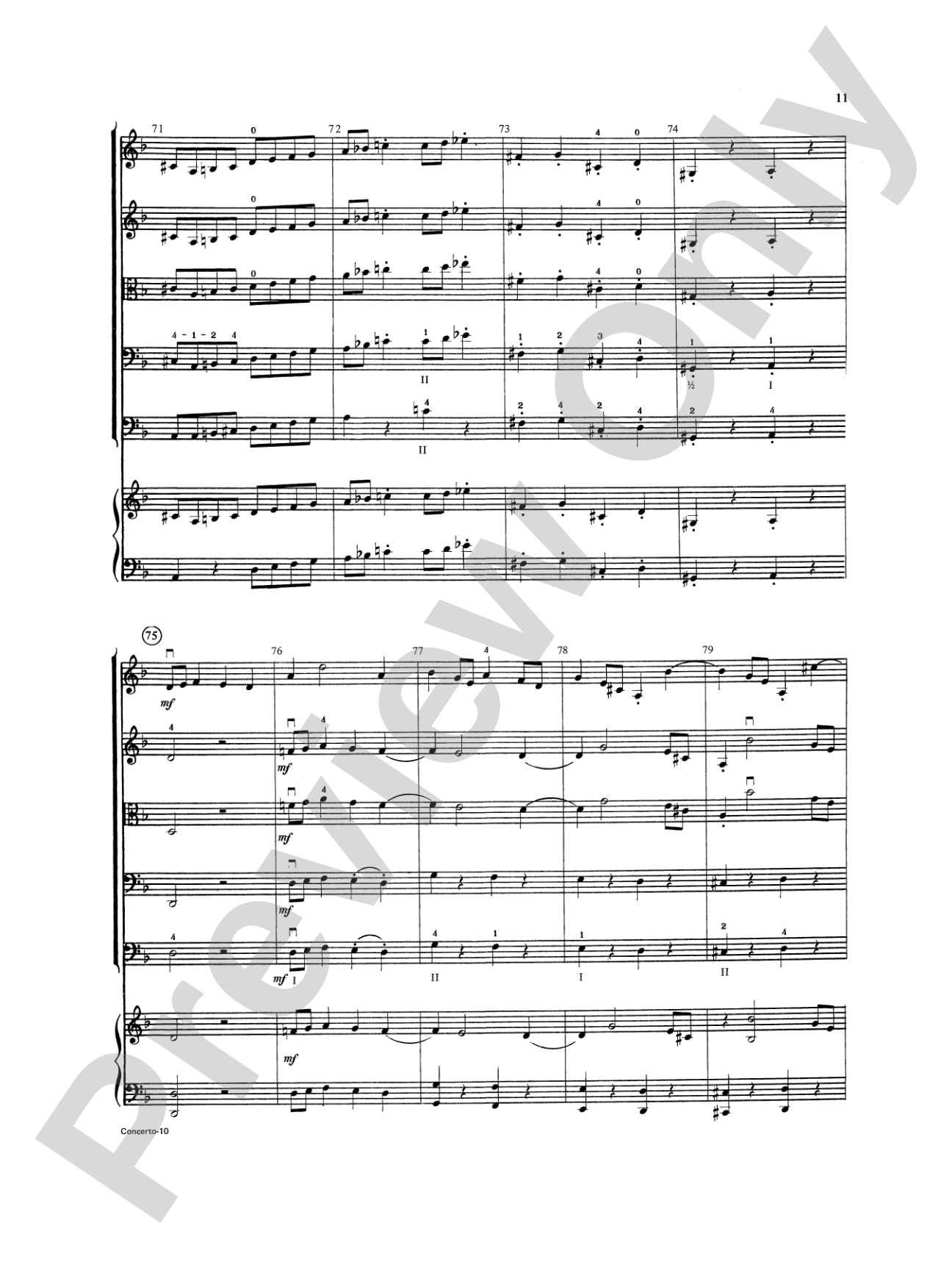
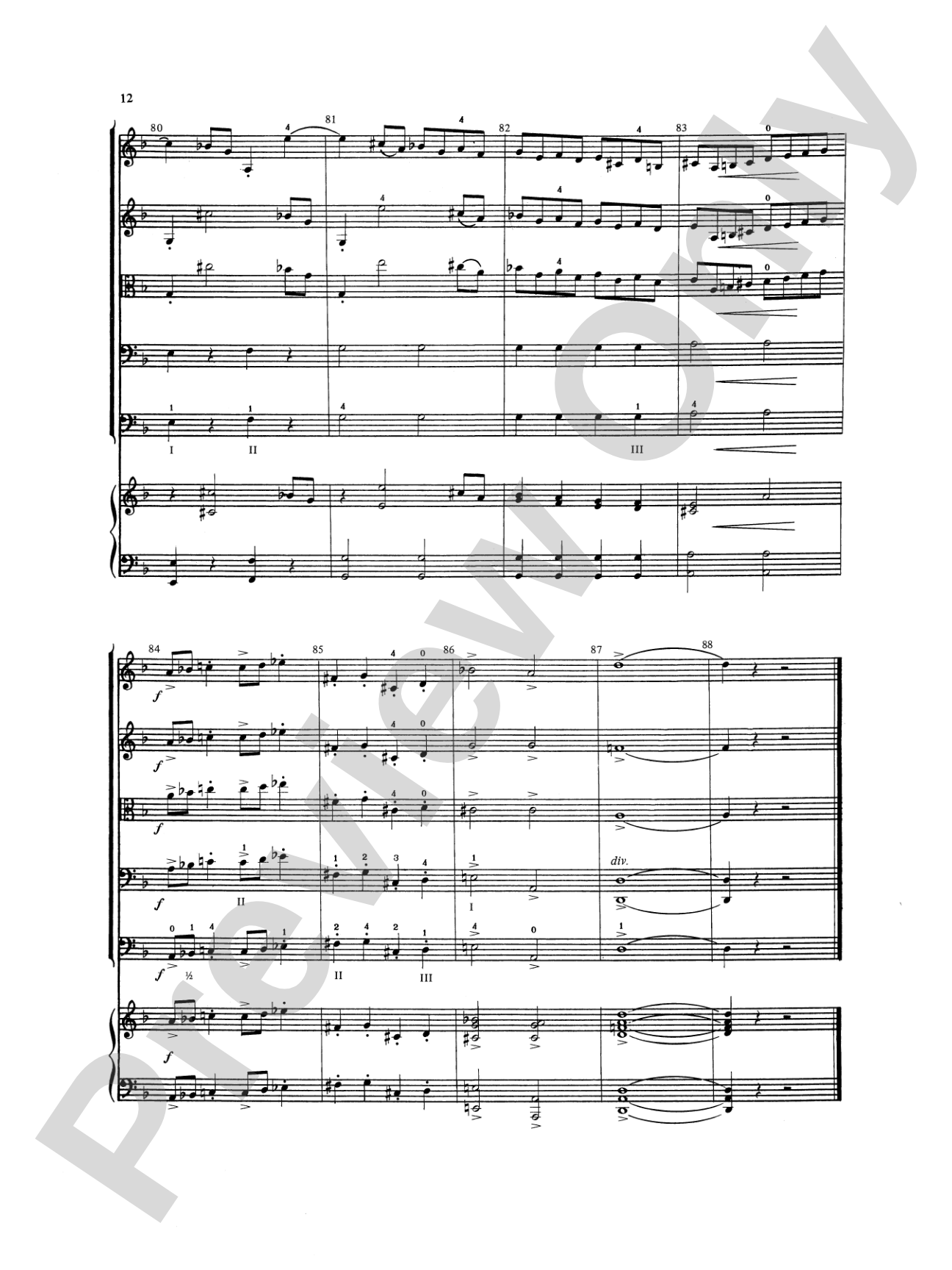

Concerto in D minor: String Orchestra Conductor Score & Parts
By Johann Sebastian Bach / arr. Merle J. Isaac
Grade: 3
Item: 00-PK-0000119

$62.00
Pickup currently not available
Buy Extra Parts (Digital PDF Download)
| Product | Price | Quantity |
|---|---|---|
| Concerto in D minor: Score | $9.00 | |
| Concerto in D minor: 1st Violin | $5.99 | |
| Concerto in D minor: 2nd Violin | $5.99 | |
| Concerto in D minor: 3rd Violin (Viola [TC]) | $5.99 | |
| Concerto in D minor: Viola | $5.99 | |
| Concerto in D minor: Cello | $5.99 | |
| Concerto in D minor: 2nd Cello | $5.99 | |
| Concerto in D minor: String Bass | $5.99 | |
| Concerto in D minor: Piano Accompaniment | $5.99 |
Parts Added to Cart!
Description


Don't just read it, hear it, play along with it, and watch your students grow with it. In MakeMusic Cloud, Concerto in D minor: String Orchestra Conductor Score & Parts comes alive with professional accompaniment, adjustable tempo, and built-in practice tools that turn solo practice into real progress.
Open in the Player
Jump straight in and assign it today.
Start Your Free Trial
Open this title and explore the full library in minutes.
Sample Audio
No sample audio found.
Sample Video
No sample videos found.
Additional Details
Series:
Highland/Etling String Orchestra
Publisher:
Alfred Music
Page Count:
156
SKU:
00-PK-0000119
More about this title
About the Composer: Johann Sebastian Bach
Johann Sebastian Bach (1685-1750) stands as one of the most influential composers in Western music history. His mastery of counterpoint, harmonic invention, and structural design set the foundation for centuries of musical practice that followed. Bach's works span nearly every genre available in the Baroque era, from intimate keyboard pieces to grand choral compositions, and his influence reaches far beyond his own time into contemporary music education and concert life.
Why we love this
Merle Isaac's arrangement brings Bach's intricate writing into the hands of young string orchestras without sacrificing the architectural integrity of the original. The Grade 3 scoring maintains the contrapuntal interest that makes Bach rewarding to play while keeping technical demands reasonable, so students encounter genuine compositional substance rather than a simplified approximation. This is the kind of arrangement that builds musicianship because it asks players to listen carefully and respond to internal voice movement, not just play their line.
What to expect
The D minor tonality opens with expressive gravity. Bach's treatment of this key brings both introspection and urgent forward motion, balancing Baroque elegance with emotional immediacy. Players experience the satisfying clarity that emerges when multiple melodic lines interweave with precision.
Who it's for
String orchestras at the intermediate level who are ready for repertoire with real compositional depth. This works equally well for groups preparing for festivals and contests or for ensembles seeking to expand their engagement with the Baroque canon beyond Vivaldi and Corelli.
How to get the most out of it
- Attend to voice independence in the slower sections. Each part carries melodic material, so encourage players to shape their phrases even when accompanying other voices. This transforms a string exercise into a lesson in counterpoint.
- Balance the harpsichord realization if you're adding continuo instrument accompaniment. It should support without obscuring the orchestral texture.
- Observe the articulation implied by Baroque style. Crisp bow attacks and gentle releases clarify the linear writing and prevent the sound from becoming murky.
- Let the D minor tonality breathe. The home key carries weight and drama; resist the urge to rush through structural arrivals.
How to use it
This arrangement fits naturally into a concert exploring Baroque instrumental music or as a centerpiece in a program celebrating Bach's legacy. It also serves well as a contest selection that demonstrates an orchestra's technical control and musical maturity without requiring the largest ensemble.
Skills your students will build
- Independent part-singing and voice leading awareness
- Baroque style and articulation conventions
- Balance and blend within polyphonic textures
- Listening to concurrent melodic lines while maintaining individual phrase shape
- Harmonic analysis and chord function in Baroque tonality