
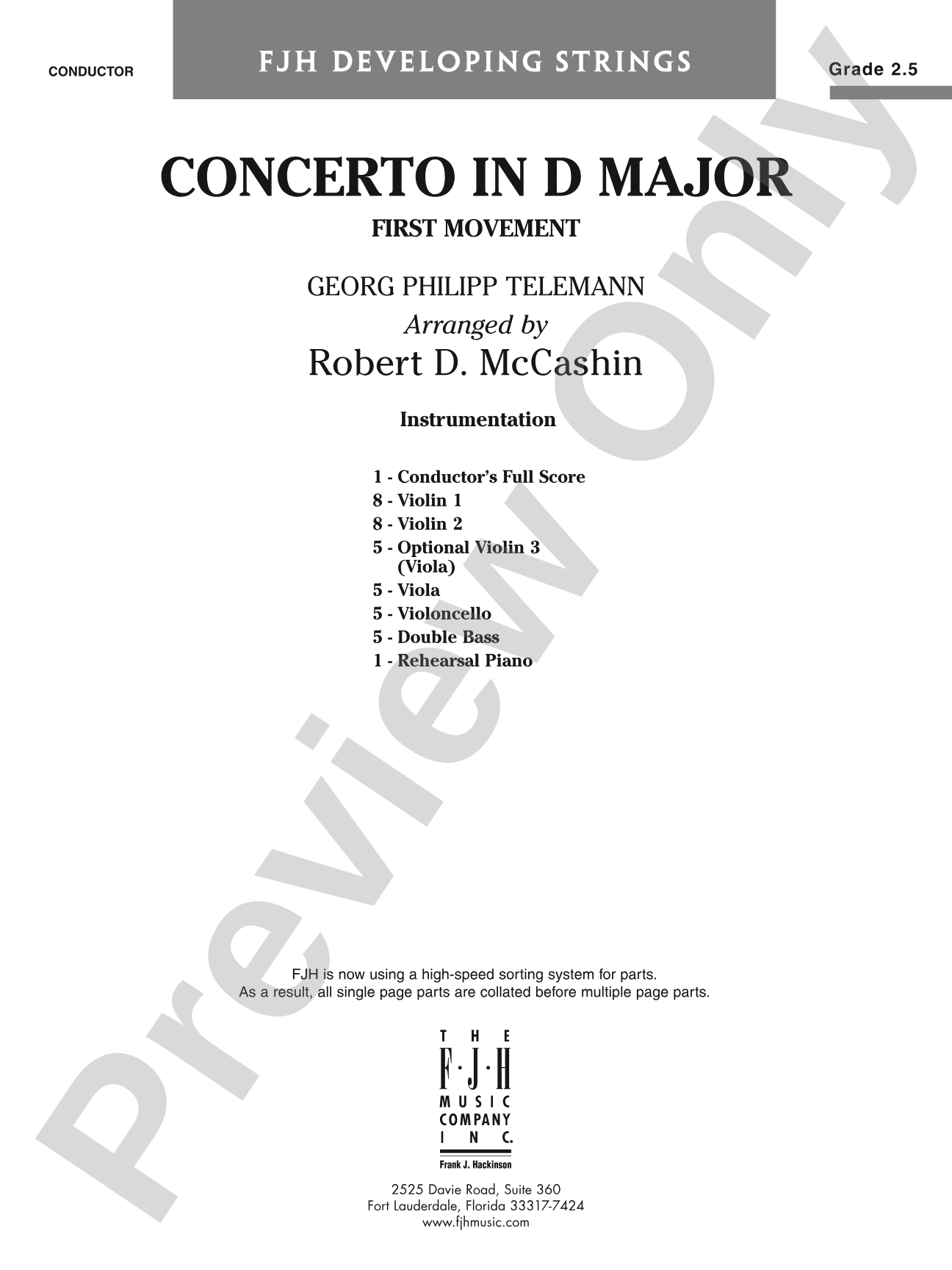
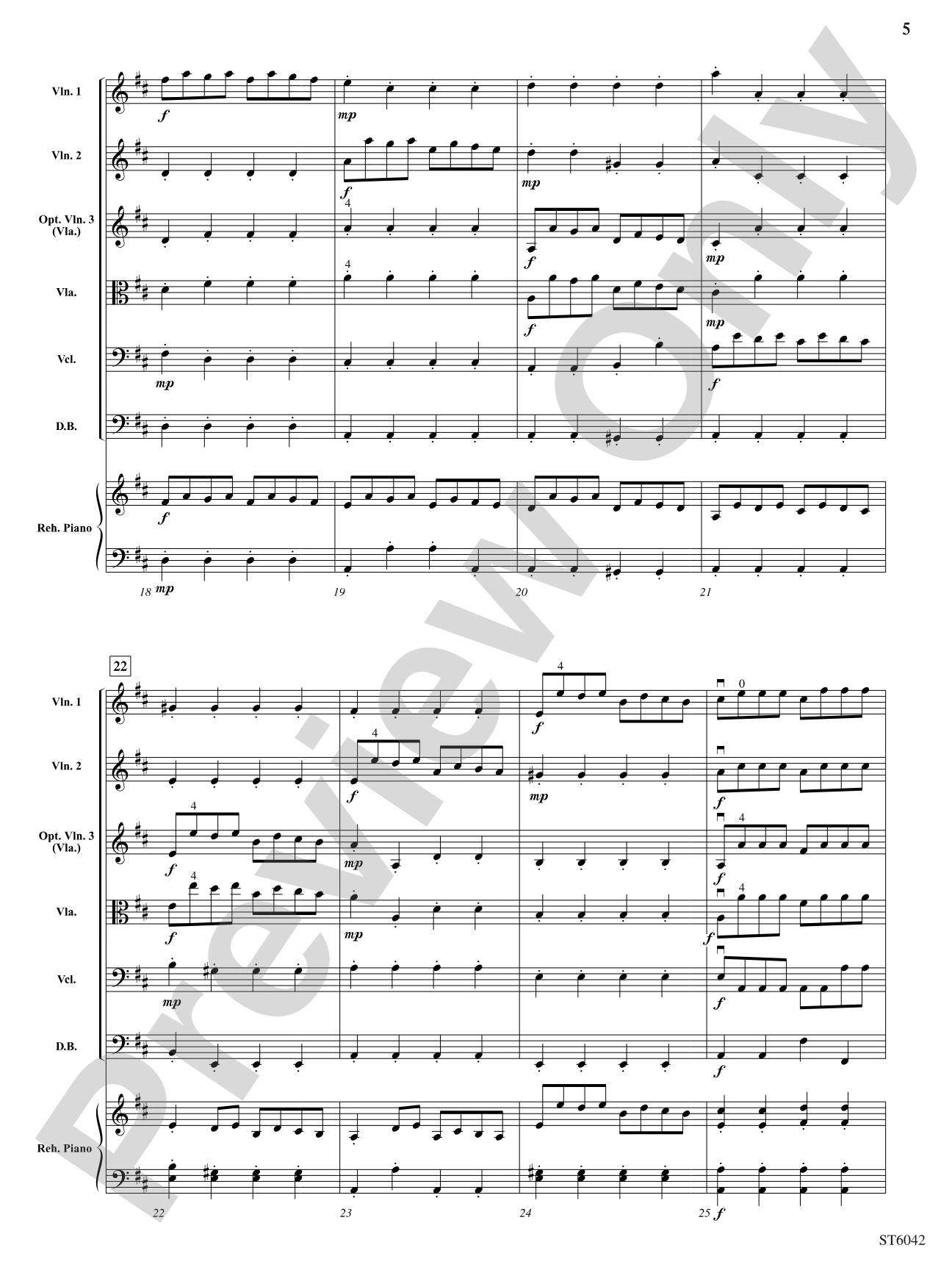
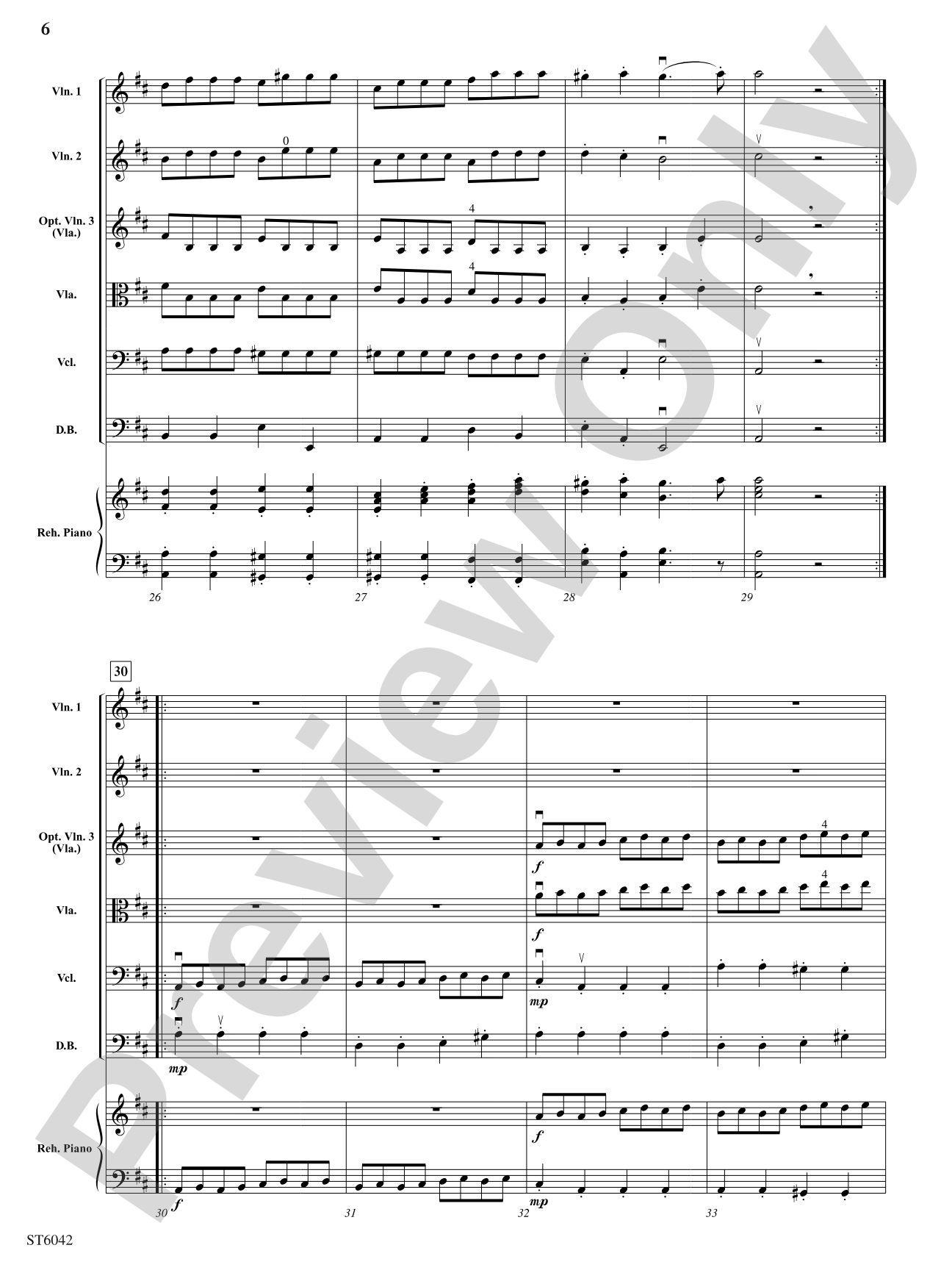
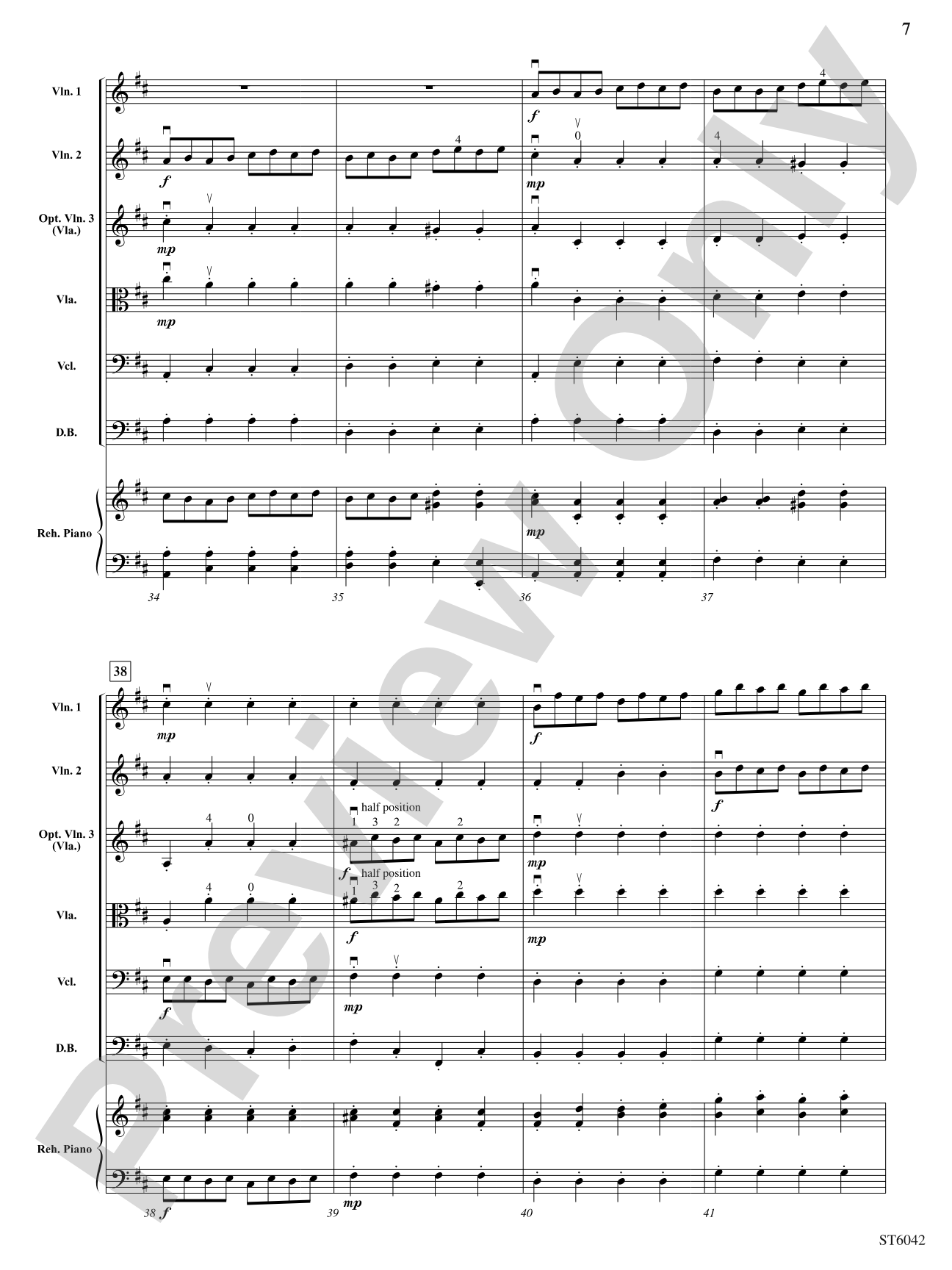
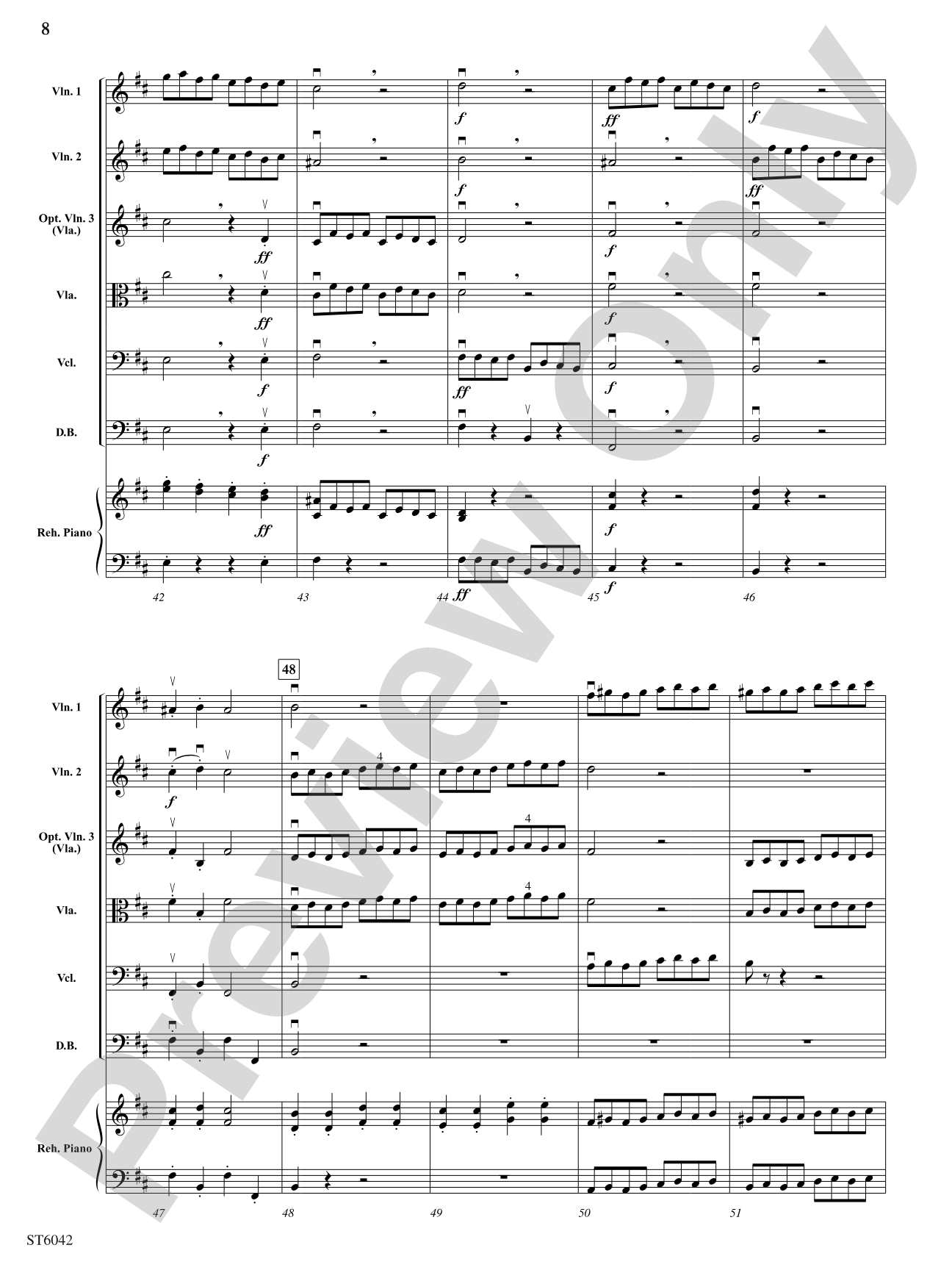
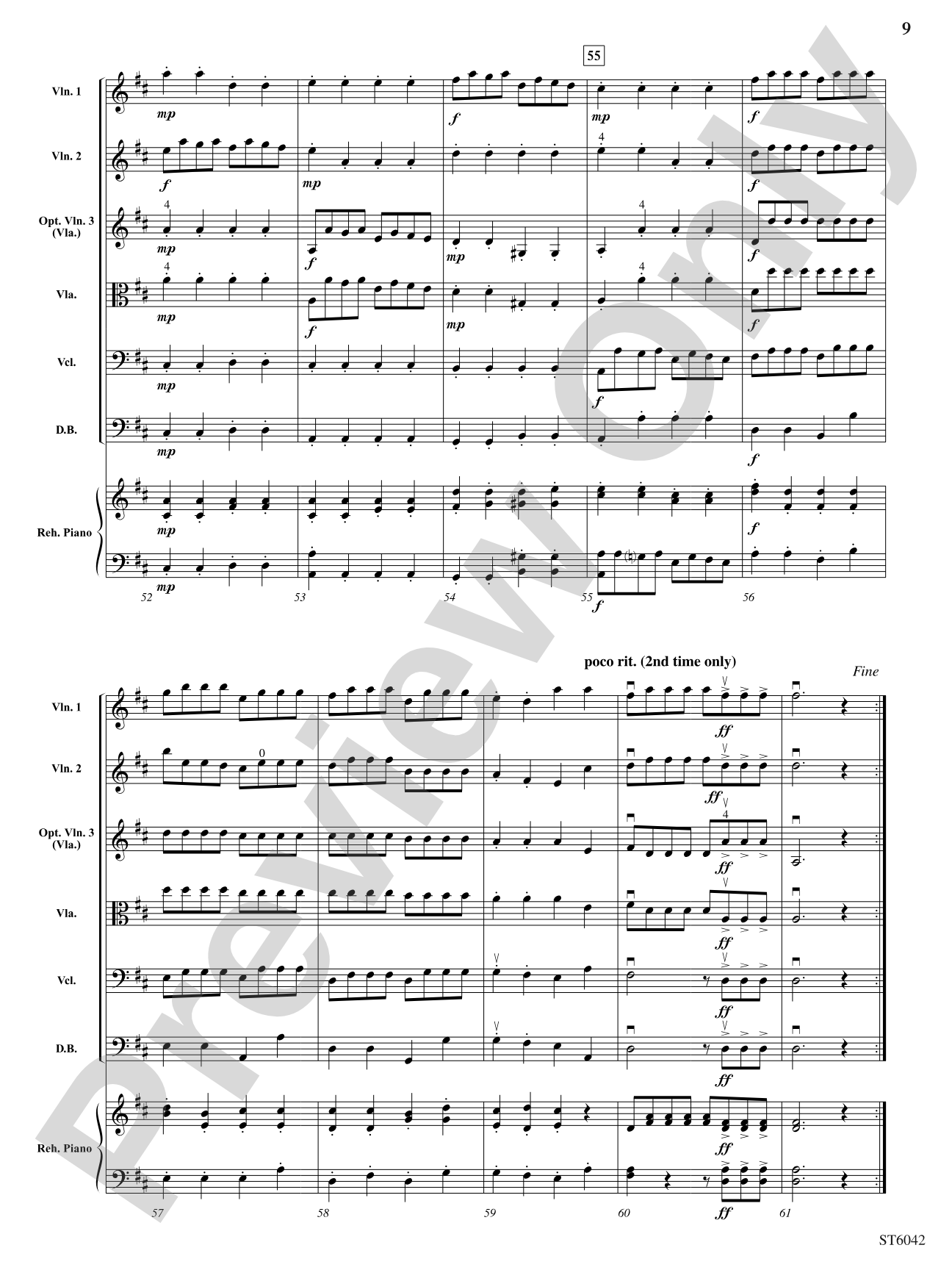

Concerto in D Major (First Movement): Score
First Movement
By Georg Philipp Telemann / arr. Robert D. McCashin
Grade: 2
Item: 98-DST6042S
$5.00
Pickup currently not available
Description
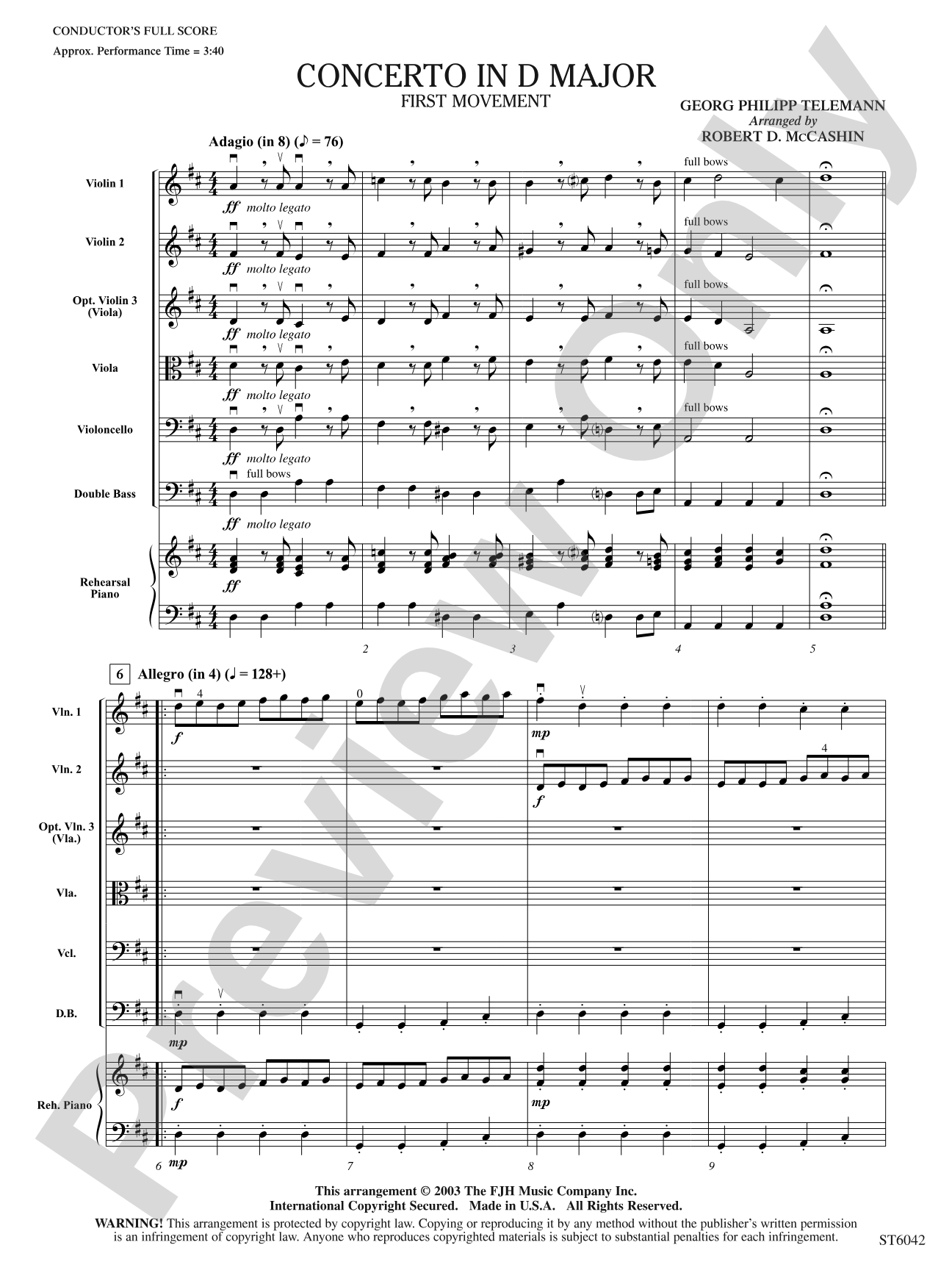
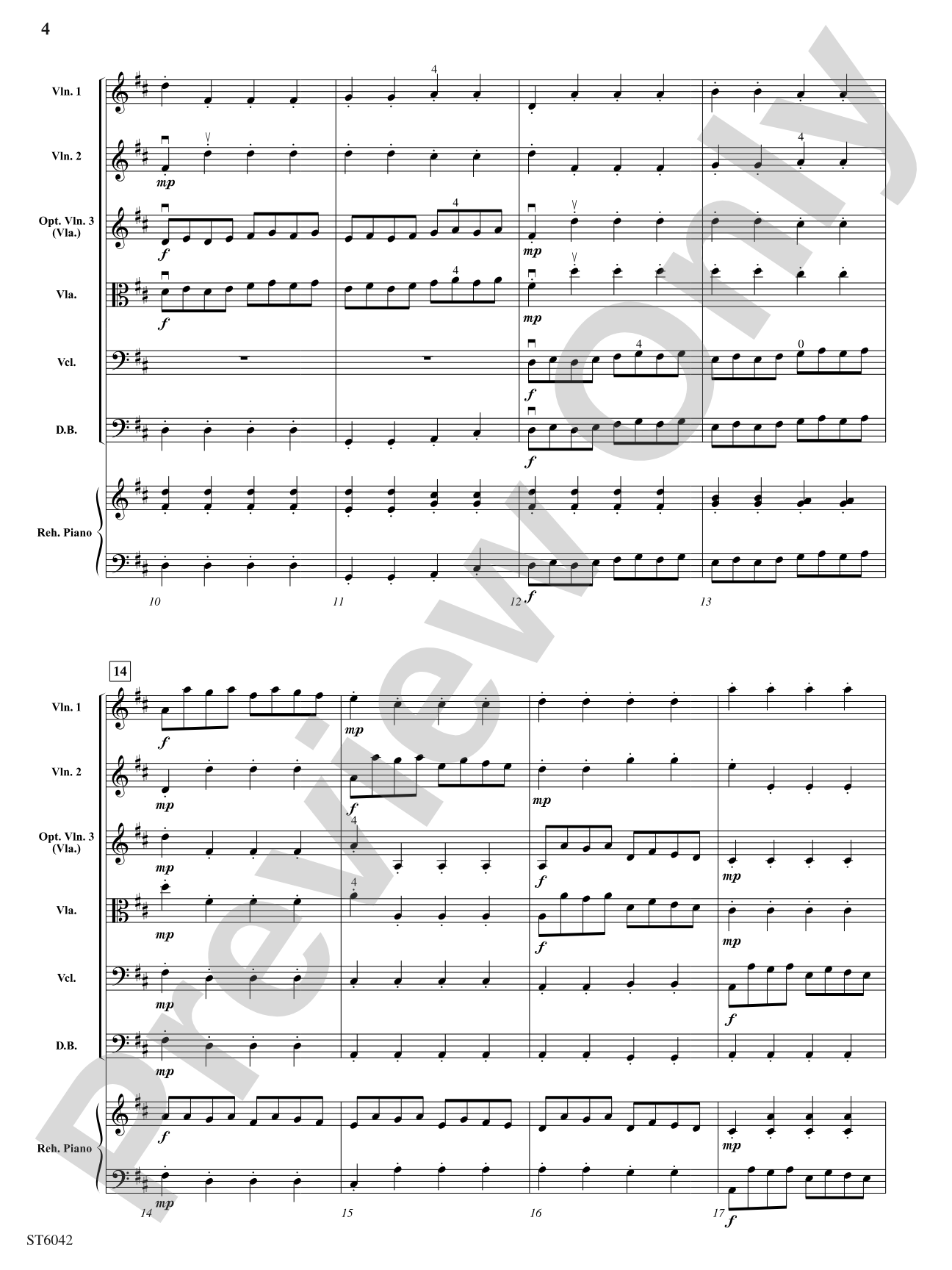
Originally written for two violins, this adaptation works very well for string orchestra. A slow introduction provides excellent opportunities to work on bow control, intonation, and tone production. The Allegro section teaches canonic imitation through exciting conversational exchanges between the different sections of the orchestra. Another fine arrangement from Robert D. McCashin.


Concerto in D Major (First Movement): Score isn't in MakeMusic Cloud just yet...but it could be. Let us know you'd like to see it, and you'll help shape what comes next. In the meantime, start a free trial and dive into thousands of interactive titles your students can play along with today.
Request This Title
Tell us you want it.
Start Your Free Trial
Explore everything that's ready to play right now.
Sample Audio
1
Audio File
--:--
0:00
0:00
Sample Video
No sample videos found.
Additional Details
Series:
FJH Developing Strings
Publisher:
The FJH Music Company, Inc.
SKU:
98-DST6042S
More about this title
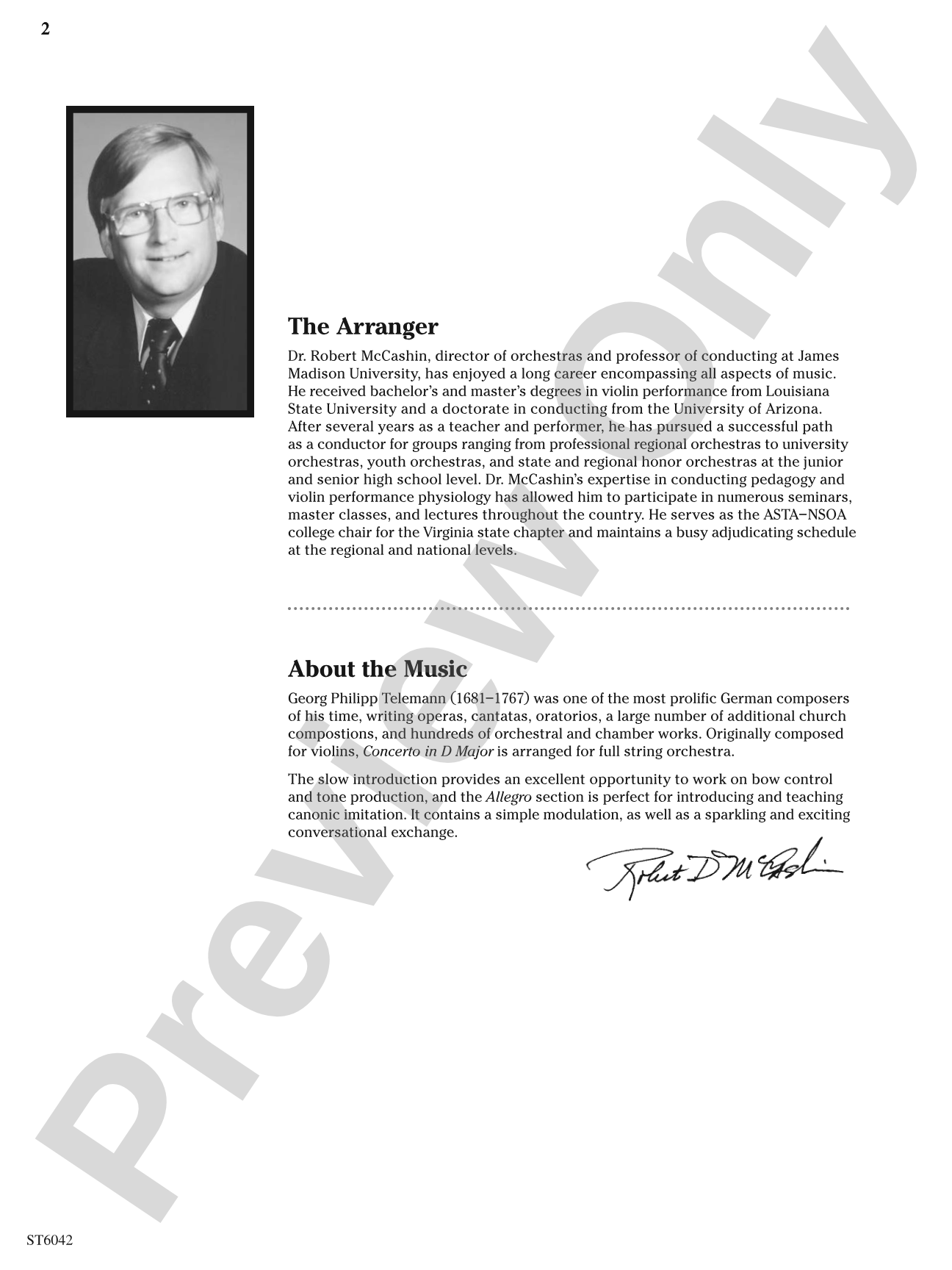
About the Composer: Georg Philipp Telemann
Georg Philipp Telemann (1681-1767) was one of the most prolific composers of the Baroque era, creating over 3,000 works across nearly every musical genre. His gift for elegant melody and clear orchestration made his music accessible to both professional musicians and amateurs, a quality that explains its continued popularity in education today.
Telemann held major posts in Frankfurt, Paris, and Hamburg, where he became Kapellmeister at the five principal churches. His compositions for strings are prized for their transparency and pedagogical value; they balance technical demands with musical sophistication, making them ideal for developing ensembles seeking to build musicality without overwhelming complexity.
Why we love this
McCashin's arrangement opens this Telemann concerto to the full string section while preserving the charm and clarity of the original. The slow introduction delivers real substance for intonation and tone work—not a throwaway warm-up—while the Allegro's imitative passages create genuine musical conversation that keeps every stand engaged and listening.
What to expect
The slow introduction carries the grace and poise of the Baroque salon, with intimate exchanges between violin voices that feel like a private conversation. The Allegro bursts with energy and good humor, as different sections toss musical ideas back and forth in a kind of friendly debate that builds momentum and excitement.
Who it's for
String orchestras at the high elementary through early middle school level will find this arrangement accessible and musically rewarding. Directors seeking Baroque repertoire that teaches real conducting and musical concepts—not just notes—will appreciate how much pedagogical ground it covers without excessive technical difficulty.
How to get the most out of it
- In the slow introduction, encourage long, sustained bow strokes that prioritize consistent tone production over vibrato. Students should hear the difference between a graceful, well-supported line and a thin or wavering one.
- Mark the entrance points for canonic imitation clearly during rehearsals. Have the first section play alone, then add the answering section to reinforce how the conversation unfolds before bringing everyone together.
- Balance the upper and lower string sections throughout the Allegro so that neither overwhelms the dialogue. Adjust seating or stand assignments if needed to ensure both parts project equally.
- Use the slow movement to address intonation habits that may have developed during fast playing. The exposed lines demand accuracy and will reveal problems that busier sections might mask.
How to use it
This works beautifully as a complete concert piece or as the opening movement of a Baroque-themed program. It also serves as an excellent teaching recital selection for a middle school orchestra, since it demonstrates both technical control and ensemble maturity without overreaching.
Skills your students will build
- Sustained bow control and tone production in slow, exposed passages
- Intonation refinement through long, lyrical lines
- Recognition and execution of canonic imitation across instrumental sections
- Listening and balance skills in conversational musical exchanges
- Baroque style and articulation appropriate to the period