

Concerto in D: String Orchestra Conductor Score & Parts
By Antonio Vivaldi / arr. Bob Phillips
Grade: 2
Item: 00-PK-0000944

$50.00
Pickup currently not available
Buy Extra Parts (Digital PDF Download)
| Product | Price | Quantity |
|---|---|---|
| Concerto in D: Score | $8.00 | |
| Concerto in D: 1st Violin | $5.99 | |
| Concerto in D: 2nd Violin | $5.99 | |
| Concerto in D: Viola | $5.99 | |
| Concerto in D: 3rd Violin (Viola [TC]) | $5.99 | |
| Concerto in D: Cello | $5.99 | |
| Concerto in D: String Bass | $5.99 | |
| Concerto in D: Piano Accompaniment | $5.99 |
Parts Added to Cart!
Description
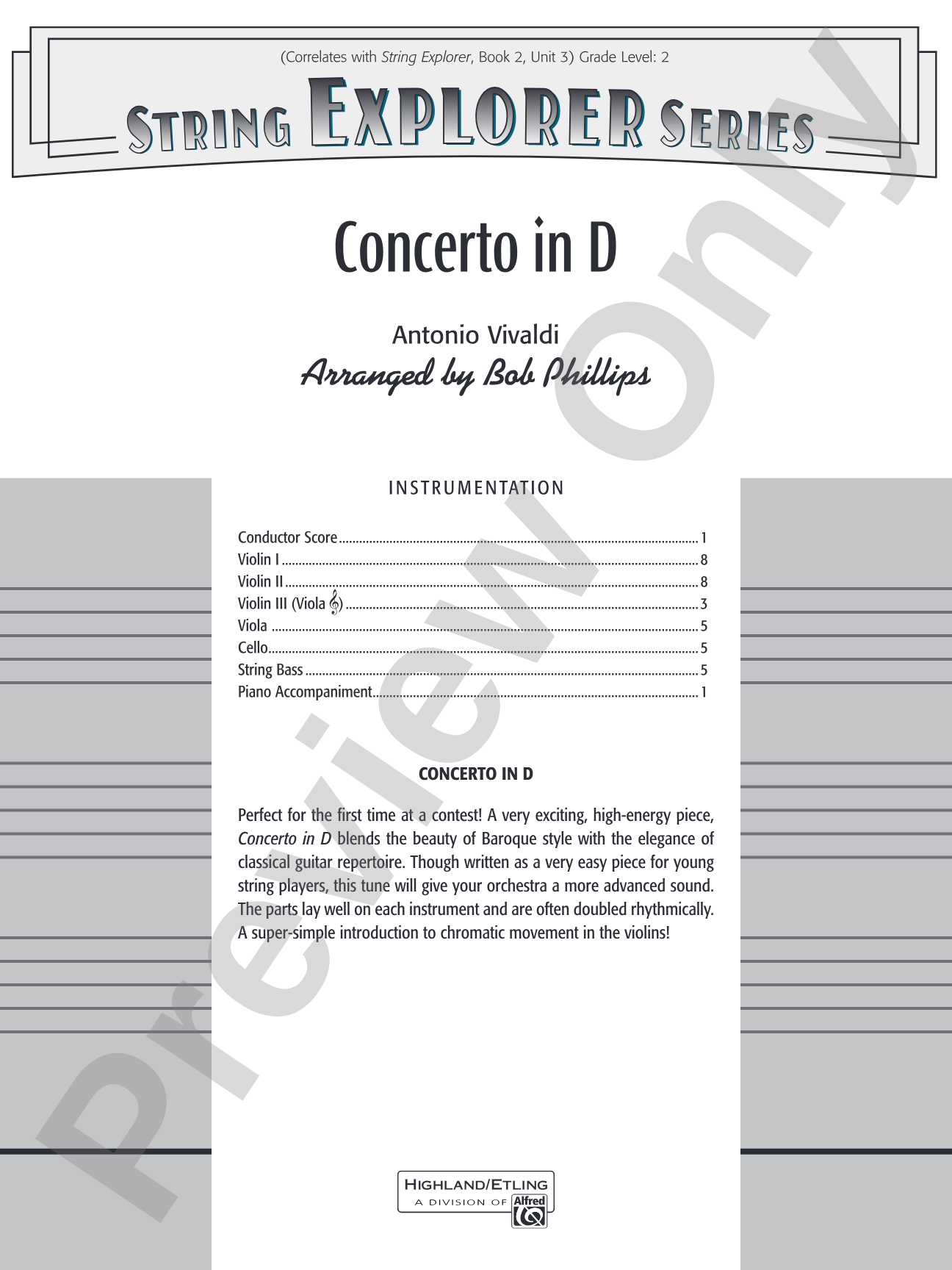
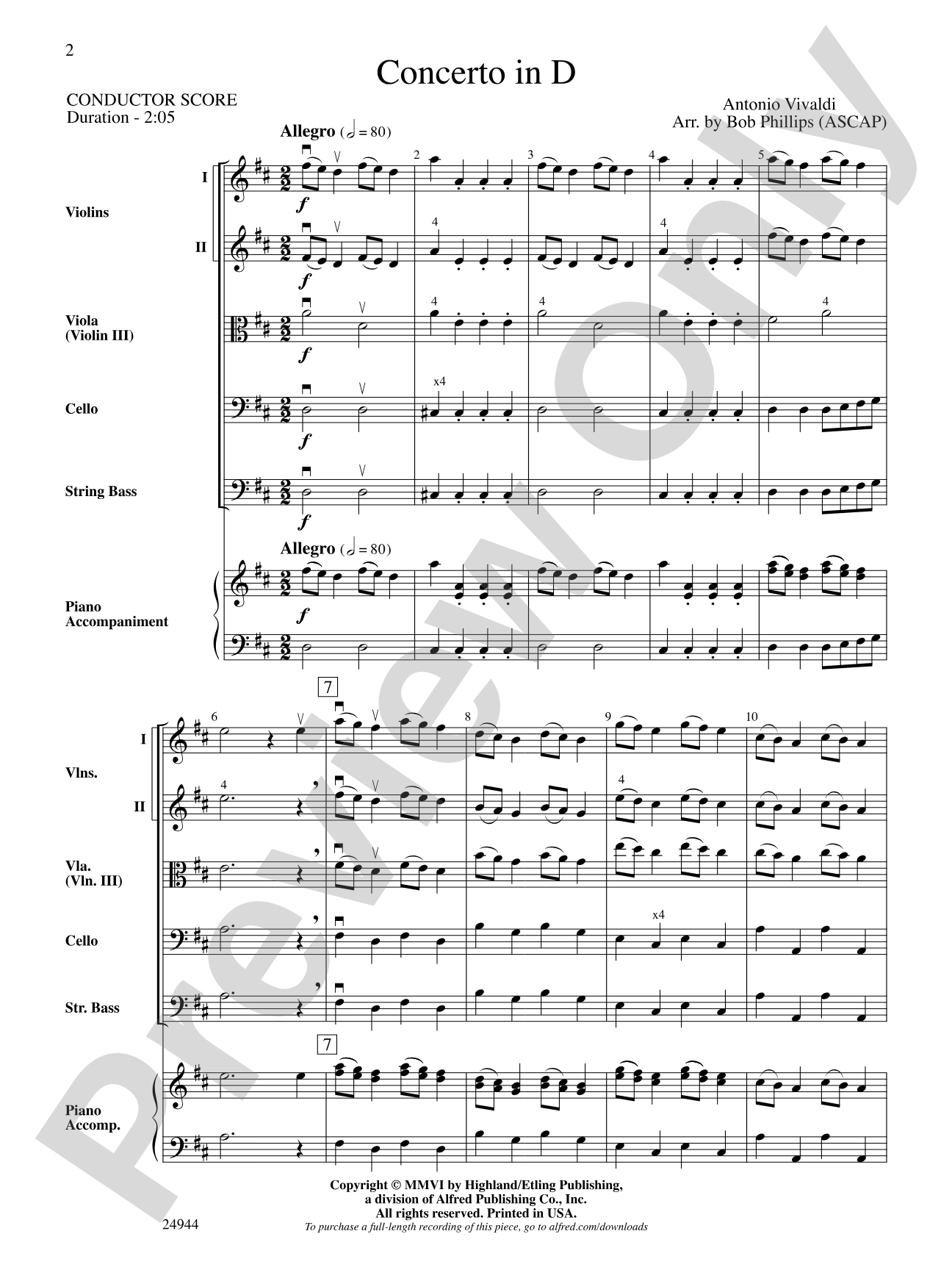
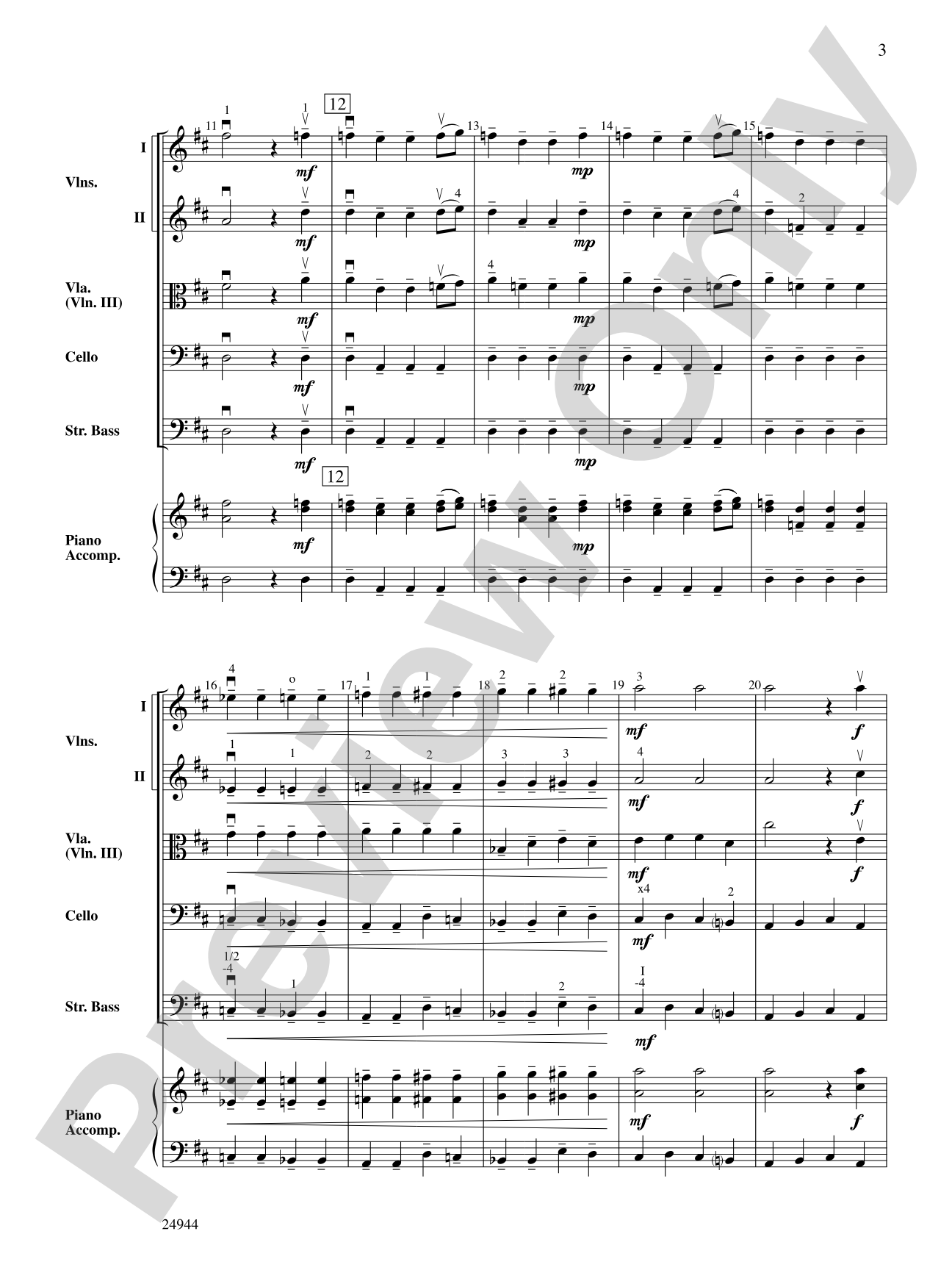
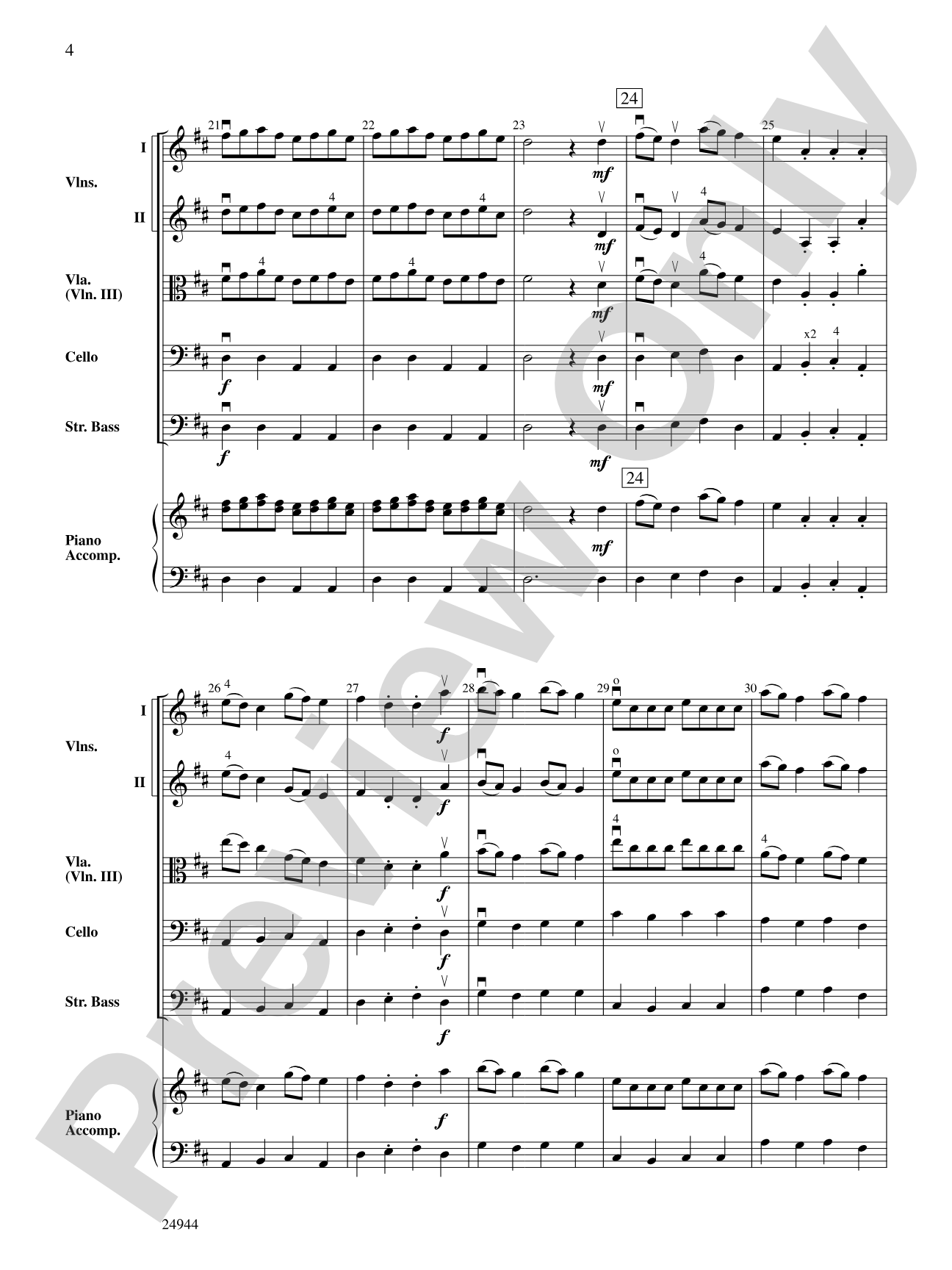
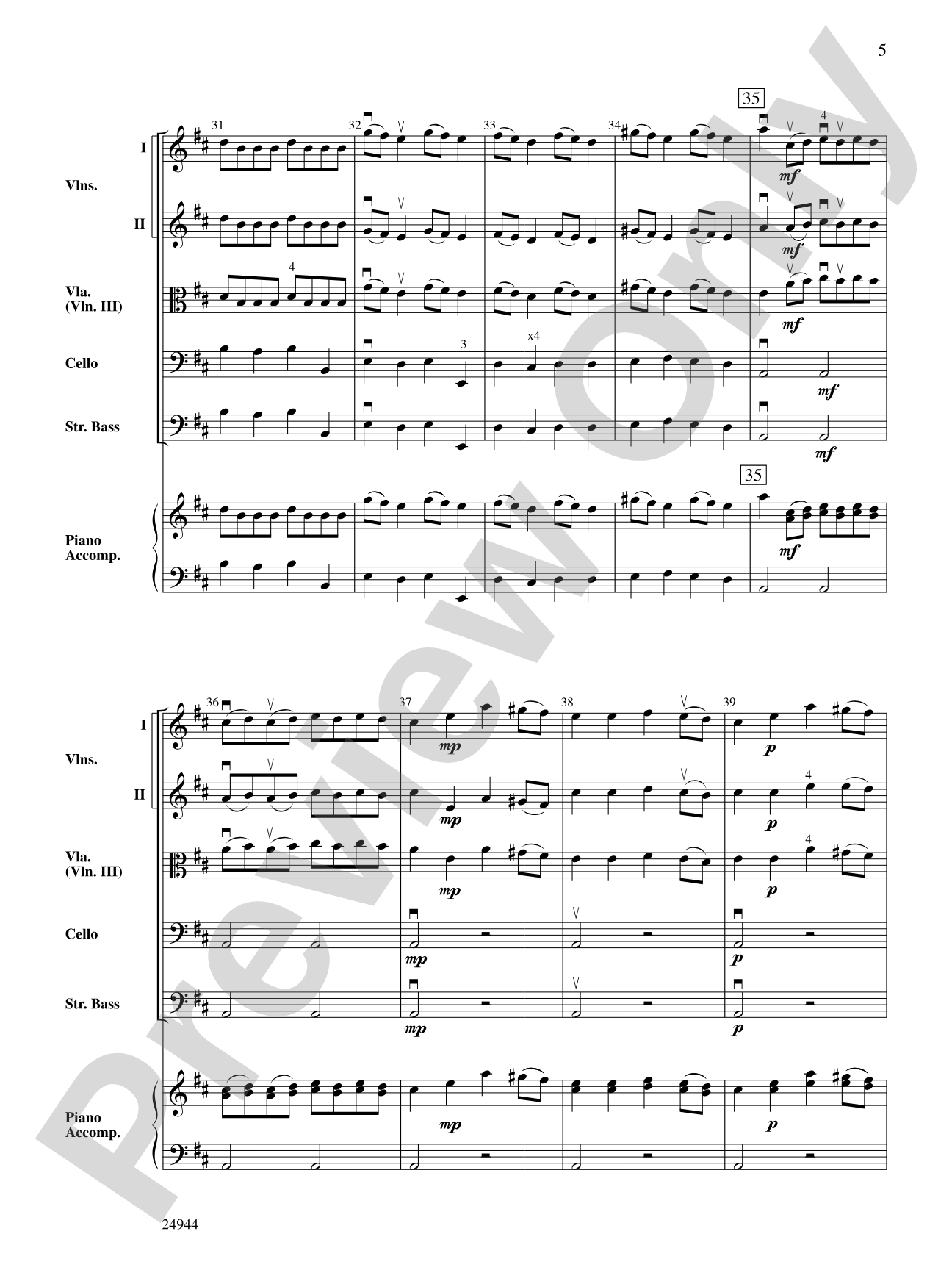
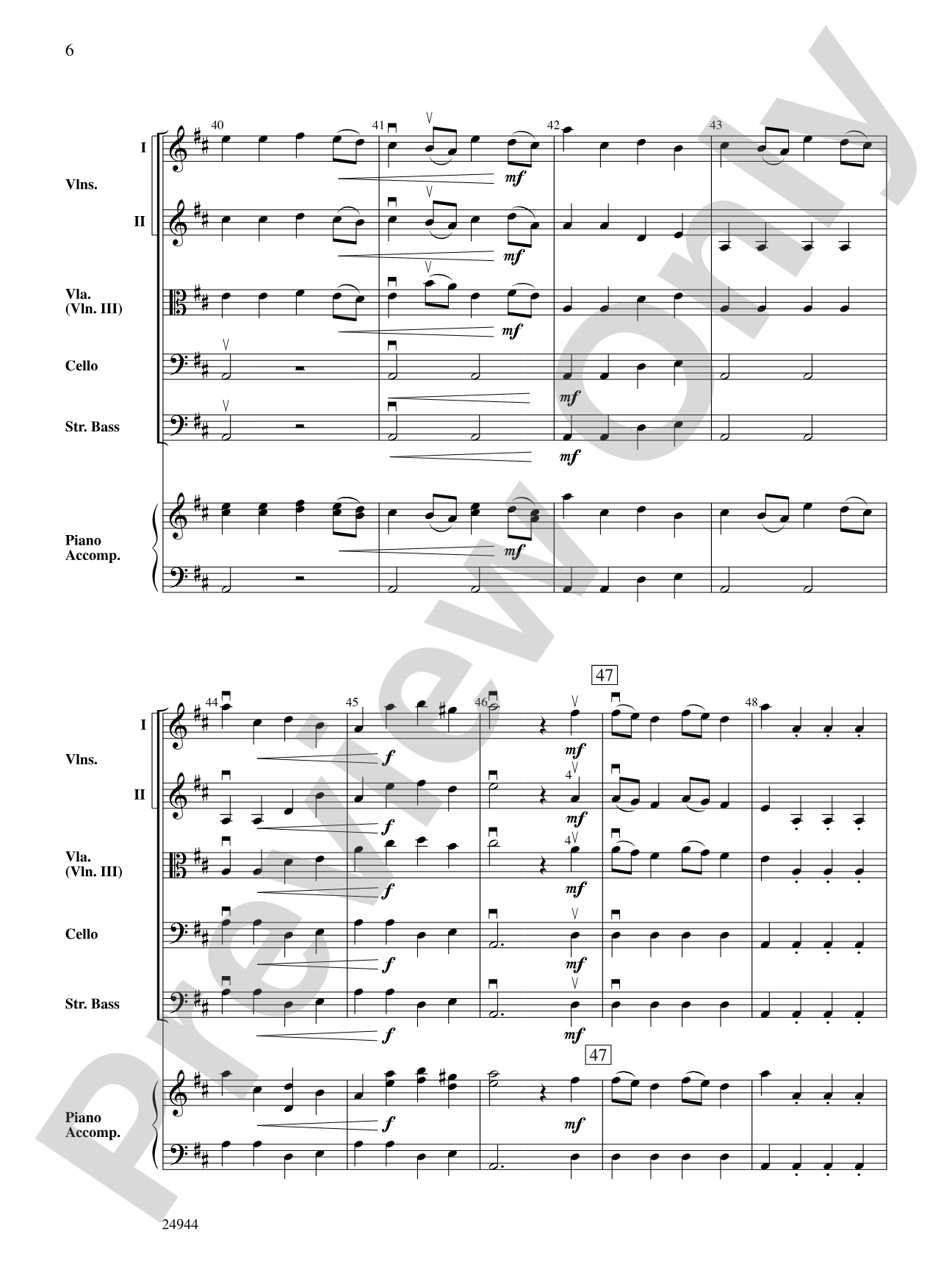
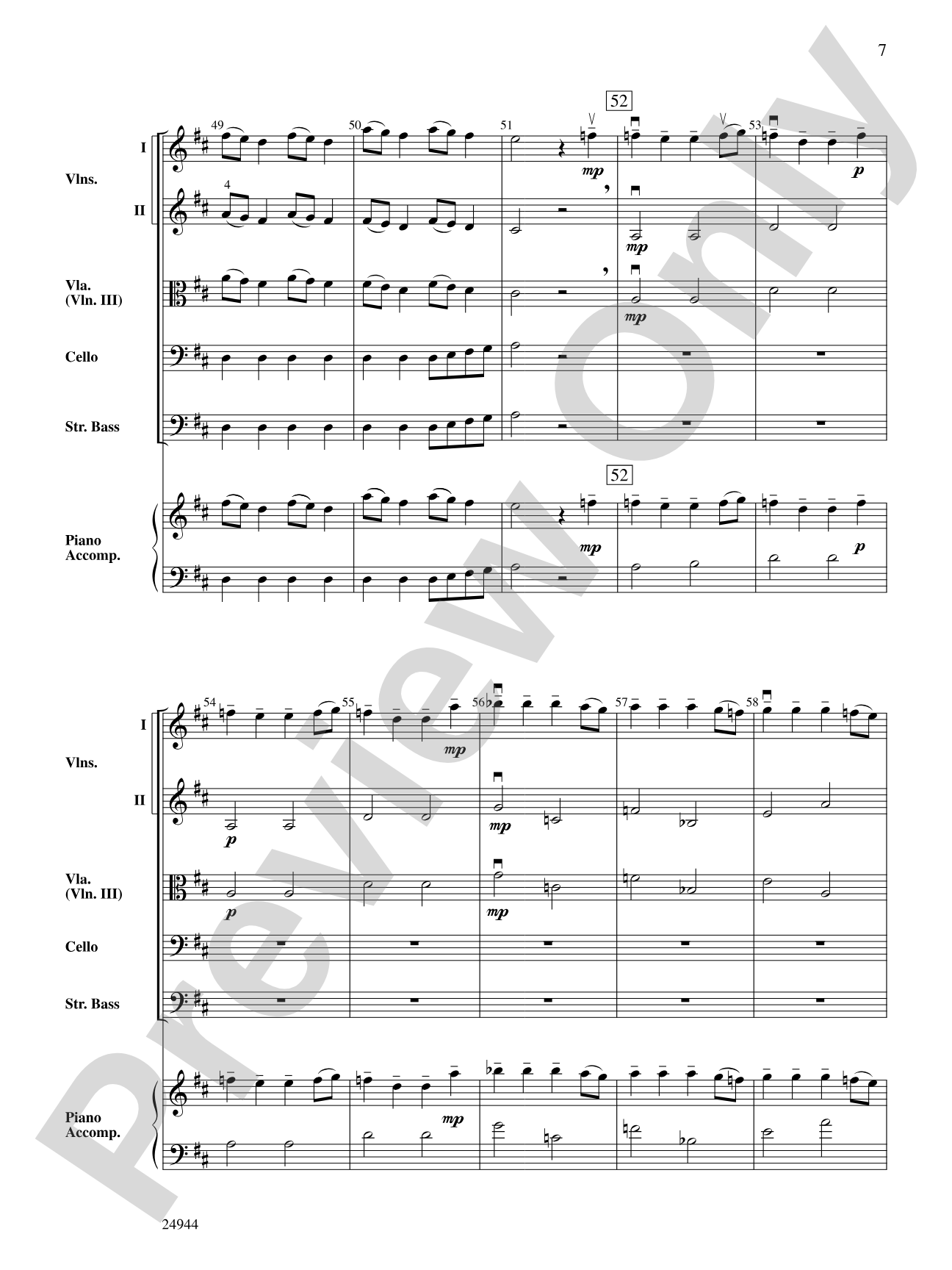
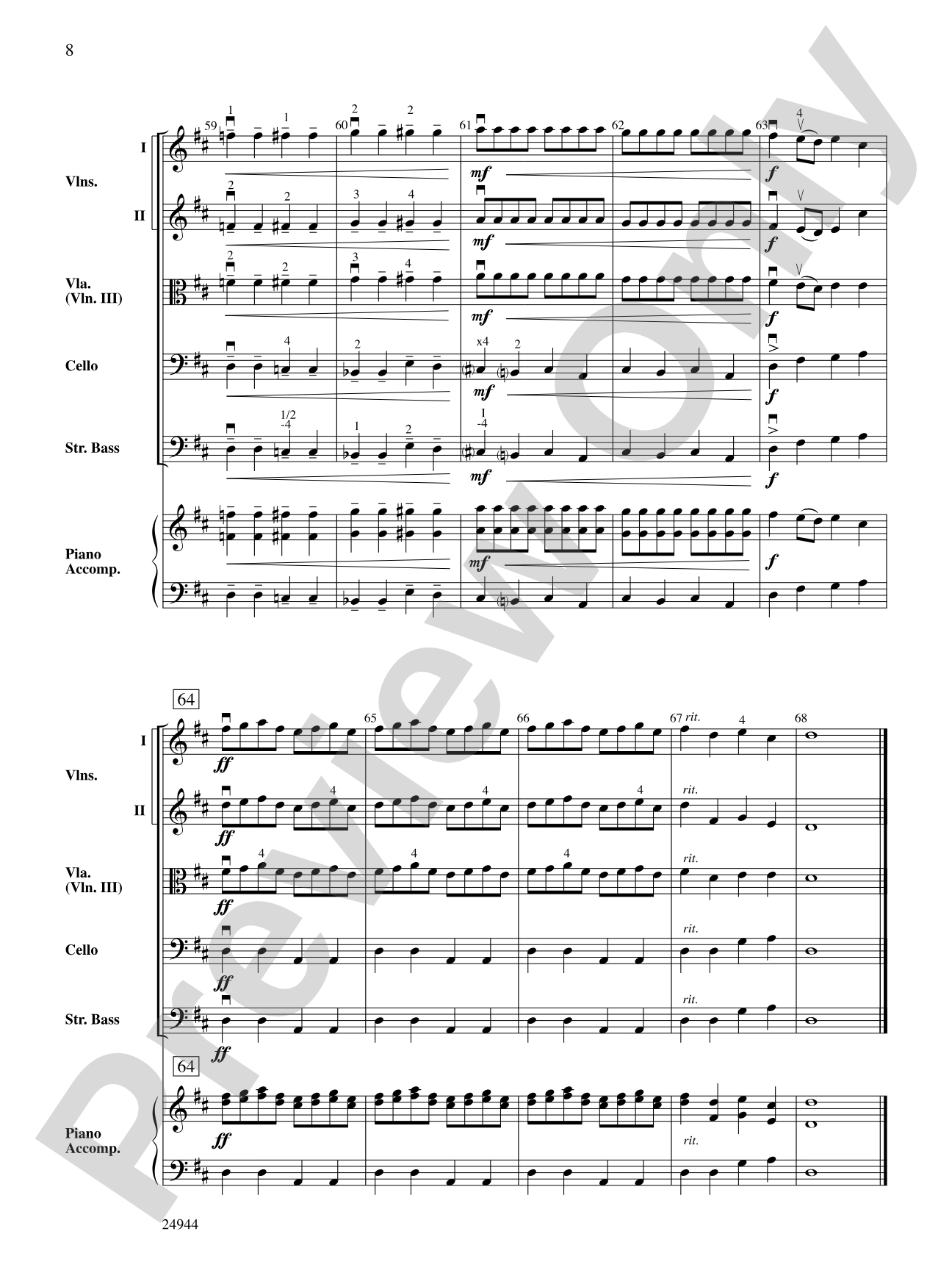
Perfect for first time at contest! A very exciting, high-energy piece, "Concerto in D" blends the beauty of the Baroque style with the elegance of the classical guitar repertoire. Though written as a very easy piece for young strings, this tune will provide your orchestra a more advanced sound. The parts lay well on each instrument and are often rhythmically doubled. A super simple introduction to chromatic movement in the violins! This title is available in MakeMusic Cloud.


Don't just read it, hear it, play along with it, and watch your students grow with it. In MakeMusic Cloud, Concerto in D: String Orchestra Conductor Score & Parts comes alive with professional accompaniment, adjustable tempo, and built-in practice tools that turn solo practice into real progress.
Open in the Player
Jump straight in and assign it today.
Start Your Free Trial
Open this title and explore the full library in minutes.
Sample Audio
1
Audio File
--:--
0:00
0:00
Sample Video
No sample videos found.
Additional Details
Series:
Highland/Etling String Explorer
Publisher:
Alfred Music
Page Count:
72
SKU:
00-PK-0000944
More about this title
About the Composer: Antonio Vivaldi
Antonio Vivaldi (1678, 1741) stands as one of the most prolific composers of the Baroque era, and his influence on string writing remains unmatched in music education. A virtuoso violinist and priest in Venice, Vivaldi composed hundreds of concertos that became foundational texts for teaching instrumental technique, harmonic clarity, and rhythmic vitality. His music shaped how we teach strings because it demands both precision and joy from young musicians.
Vivaldi's concertos appear constantly in school orchestras because they work: the melodies sing, the rhythms drive forward naturally, and the harmonic language is transparent enough for students to hear their own progress. Teachers return to his catalog again and again because students want to play these pieces, and the act of playing them builds real skills without feeling like work.
Why we love this
This arrangement captures the propulsive energy and crystalline counterpoint that make Vivaldi irresistible to young musicians while keeping the technical demands reasonable. Phillips' doubling choices mean your less experienced players never feel exposed, and the introduction to chromatic writing happens so naturally that students absorb it rather than struggle with it. It's the kind of piece that sounds more advanced than it plays, giving your group the confidence that comes from pulling off something genuinely impressive.
What to expect
Bright, direct, and propulsive. The Baroque energy comes through immediately, creating that satisfying momentum that makes an orchestra feel like it's actually playing, not just reading notes. There's an elegance underneath the high energy, a sense that beauty and drive can coexist without one compromising the other.
Who it's for
String orchestras at the Grade 2 level who are ready to take on repertoire with real musical substance. This works for groups preparing for their first contest or seeking a centerpiece that demonstrates how far they've come since the beginning of the year. Directors looking for a piece that sounds mature without requiring advanced technique will find exactly what they need here.
How to get the most out of it
- Balance the chromatic passages in the violin line so they articulate clearly without sounding tentative; these moments teach intonation as much as technique
- Let the rhythm section lock in first during rehearsals, then have the melody instruments sit on top of that foundation rather than rushing ahead
- Shape each phrase with a small dynamic swell to match the Baroque phrasing gesture, which keeps the piece moving and prevents it from feeling static
- Bring out the doubling in the inner voices; it reinforces harmonic movement and gives players who aren't carrying the melody something to own
How to use it
This belongs on a concert where you want to show growth and musicianship without overselling the difficulty. Open a program with it, or place it strategically as the closer to a first half; either position highlights that your students can handle serious repertoire. It also pairs well alongside a slower, more introspective piece, using its energy to bracket and contrast something more subdued.
Skills your students will build
- Chromatic intonation in scalar passages
- Rhythmic precision in Baroque-style articulation
- Phrase shaping and dynamic control
- Listening to doubling parts and harmonic function
- Ensemble balance when carrying vs. supporting melodic lines