
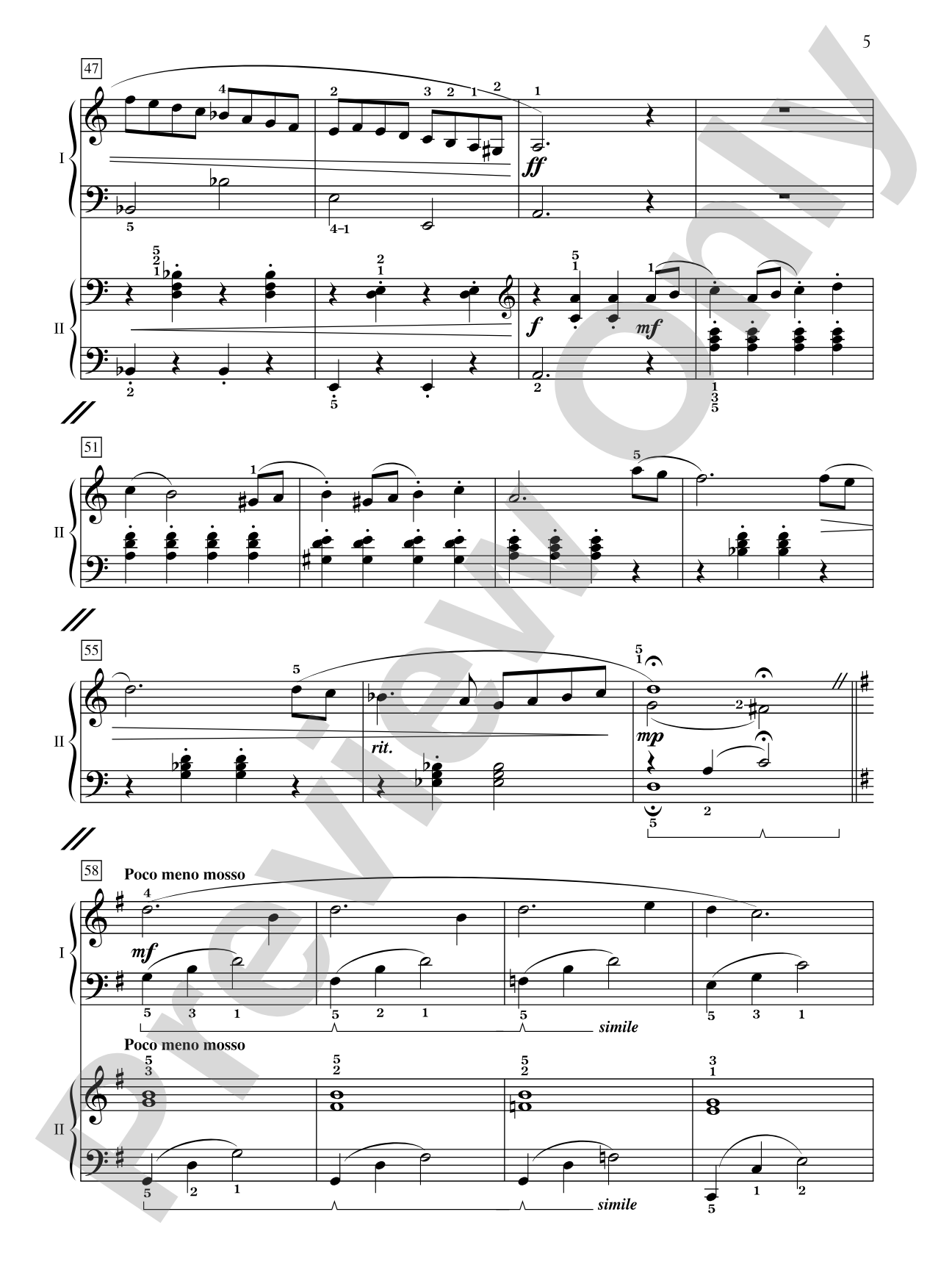

Concerto in Classical Style: In Three Movements for Solo Piano with Piano Accompaniment - Piano Duo (2 Pianos, 4 Hands): Piano Duets & Four Hands
In Three Movements for Solo Piano with Piano Accompaniment
By Martha Mier
Level: Intermediate
Item: 00-PS-0016207
$6.99
Pickup currently not available
Related Items
Concerto in Classical Style: Piano Duo (2 Pianos, 4 Hands) Sheet (2 copies required) |
$6.99
|
View |
Description
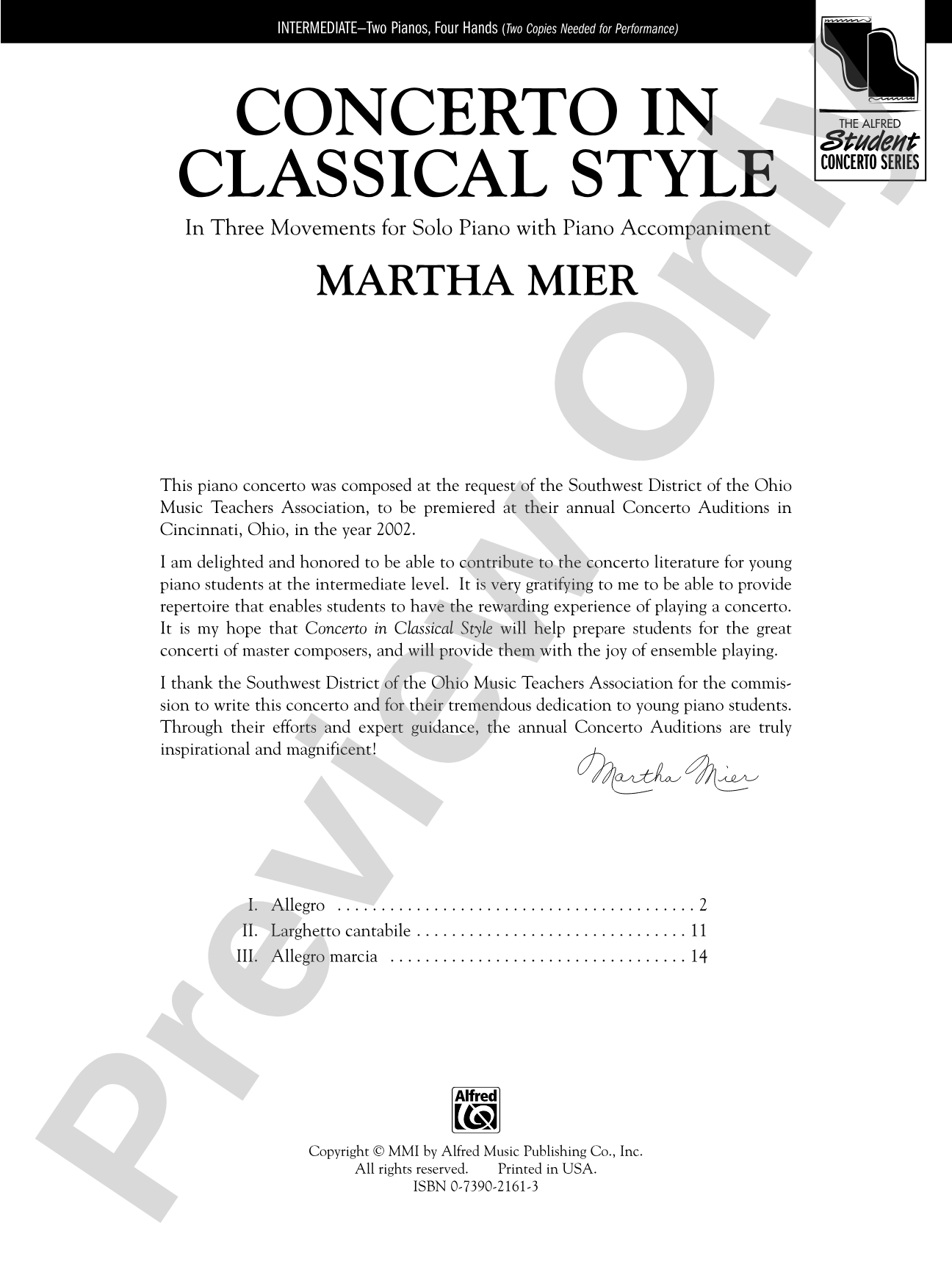
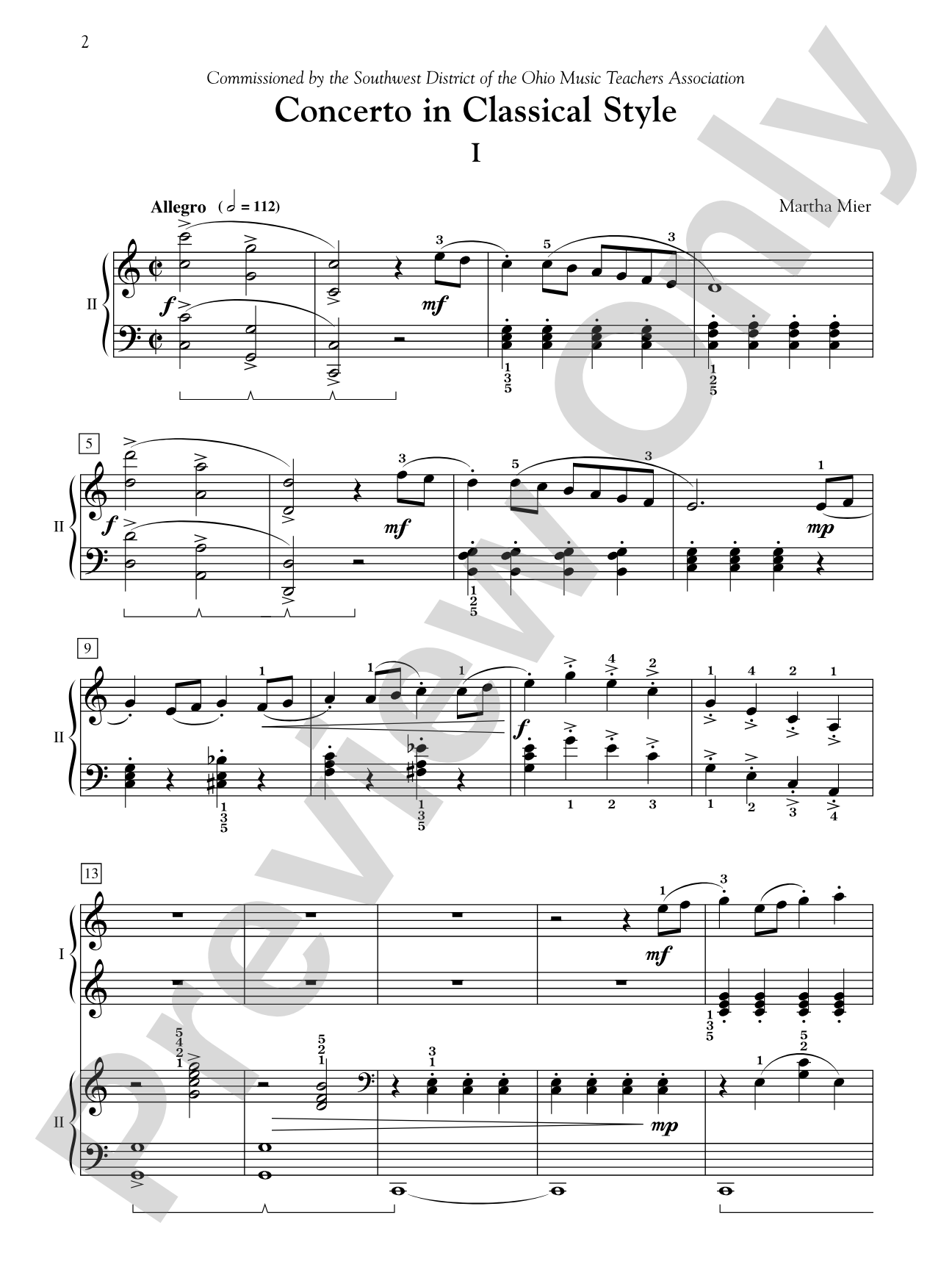
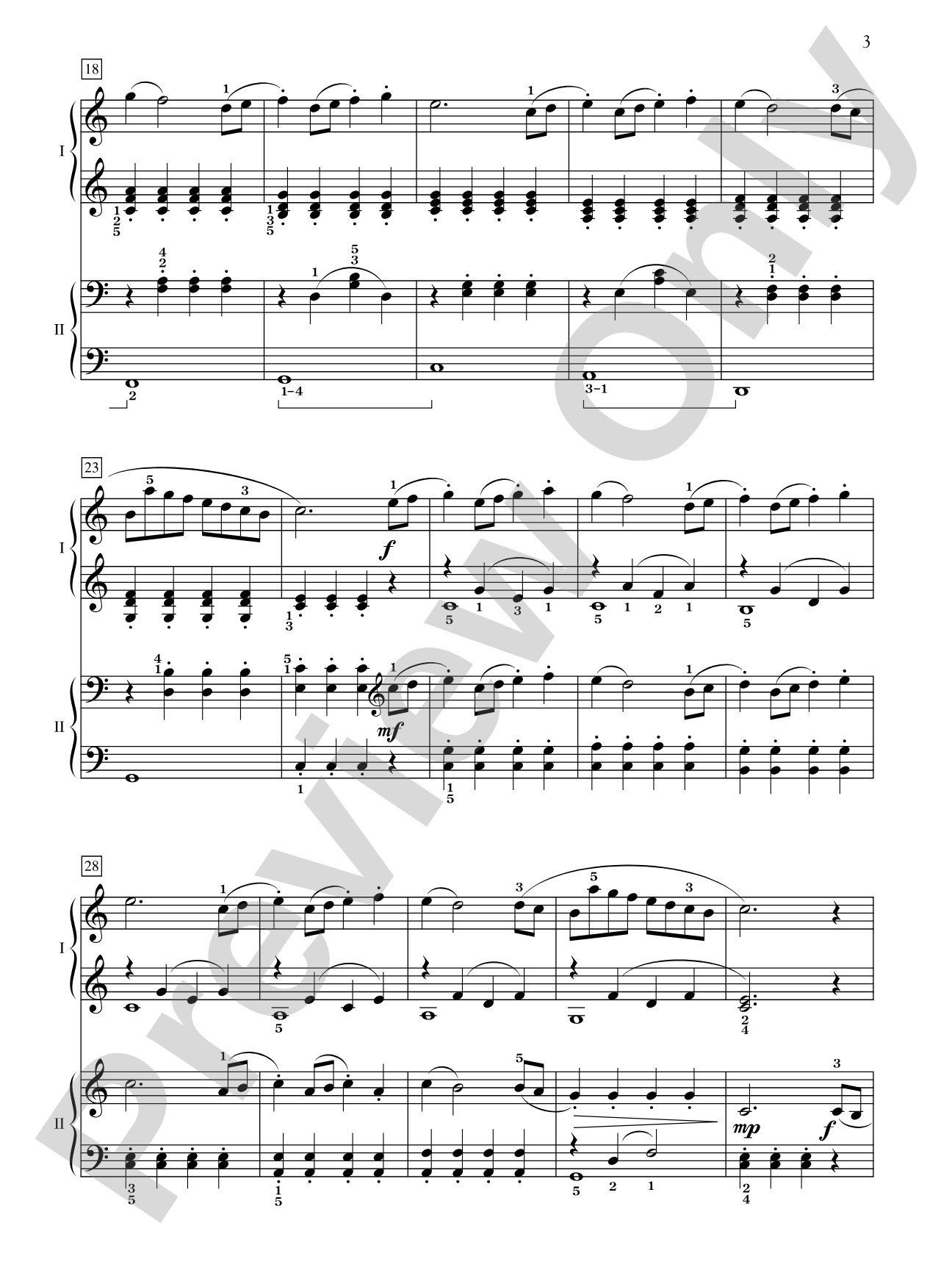
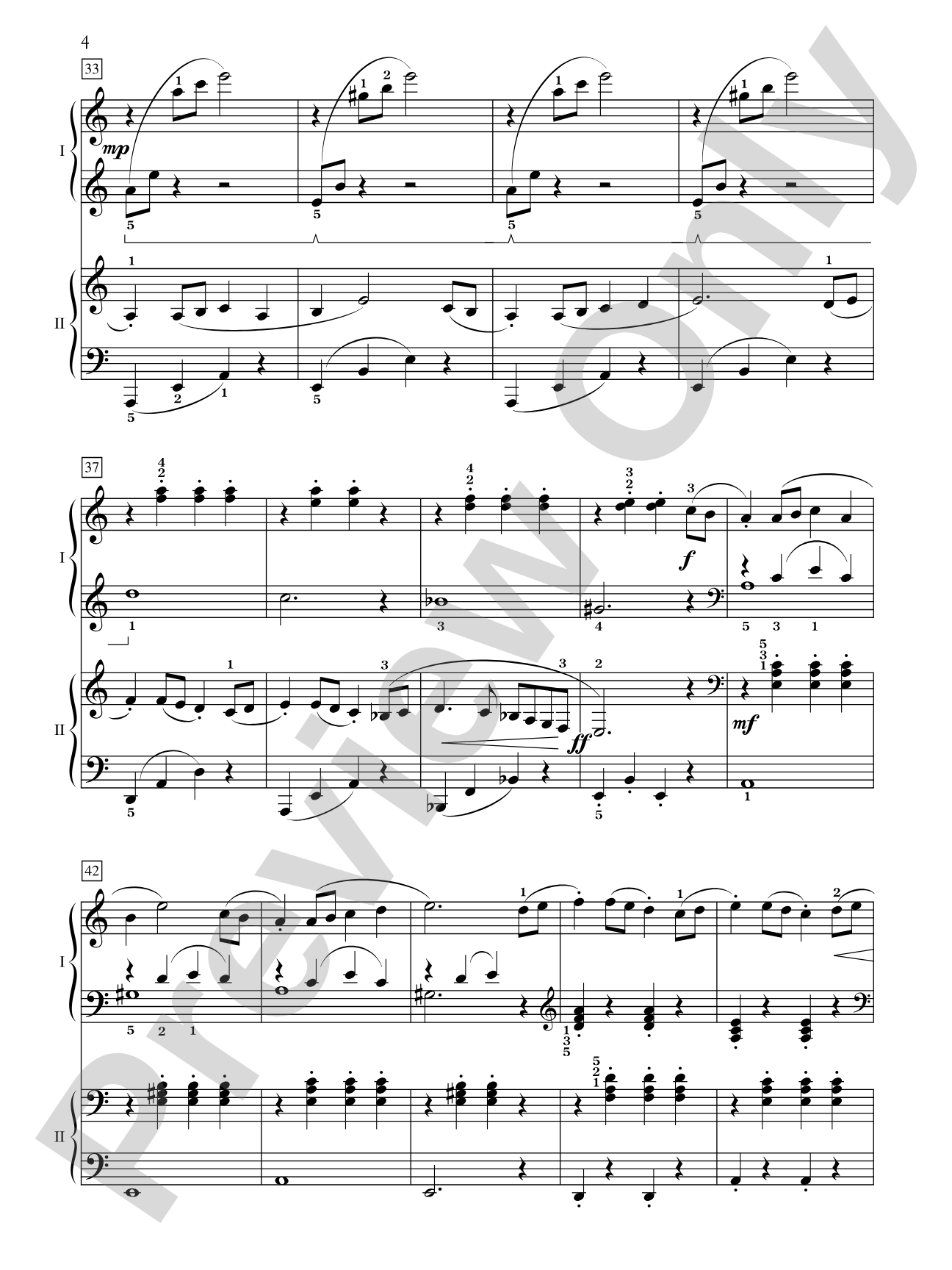
This intermediate level concerto in three movements for solo piano with piano accompaniment is beautifully composed in the classical style. The opening theme is strong and memorable and all technical passages are well within reach of intermediate pupils. Younger pianists will gain the rewarding experience of playing a concerto and they will be prepared to learn the great concerti of master composers. Note: two copies are needed for performance. A Federation Festivals 2024-2028 selection.


Concerto in Classical Style: In Three Movements for Solo Piano with Piano Accompaniment - Piano Duo (2 Pianos, 4 Hands): Piano Duets & Four Hands isn't in MakeMusic Cloud just yet...but it could be. Let us know you'd like to see it, and you'll help shape what comes next. In the meantime, start a free trial and dive into thousands of interactive titles your students can play along with today.
Request This Title
Tell us you want it.
Start Your Free Trial
Explore everything that's ready to play right now.
Sample Audio
No sample audio found.
Sample Video
No sample videos found.
Additional Details
Series:
The Alfred Student Concerto Series
Publisher:
Alfred Music
Page Count:
24
SKU:
00-PS-0016207
More about this title
About the Composer: Martha Mier
Martha Mier has shaped music education for decades through her prolific output of accessible, engaging piano repertoire. Since joining Alfred Music Publishing in 1989, she has established herself as one of today's most performed educational composers, with over 200 publications spanning jazz, blues, romantic impressions, and classical styles. Her work reflects deep classroom experience; she maintained a private piano studio in Lake City, Florida for many years while remaining active as a church musician and professional accompanist.
Mier's credentials run deep within the profession. She holds state and national certification as a piano teacher and maintains active membership in the Music Teachers National Association, the Florida State Music Teachers Association, and the National Guild of Piano Teachers. She serves regularly as a clinician and adjudicator, conducting workshops internationally and across the United States at major conferences including the World Piano Pedagogy Conference and the MTNA Convention. Her pieces consistently earn selection for the National Federation of Music Clubs Junior Festival Bulletin, and she co-authored Alfred's Premier Piano Course alongside her solo and collection work.
Why we love this
Mier captures the grandeur of concerto writing while keeping the technical demands genuinely intermediate. The solo part sings with a classical elegance that feels like "real" music rather than a stepping stone, which matters enormously for student motivation and pride. Assigning this gives young pianists the full experience of the concerto genre without requiring them to master virtuosic passage work first.
What to expect
This concerto carries the grace and proportion of classical form without sacrificing memorable, singable themes. The opening movement announces itself boldly; subsequent movements reveal lyrical passages that let pianists explore expressive control. There is genuine virtuosity woven throughout, but the passages land within reach rather than requiring advanced technique.
Who it's for
Intermediate pianists ready to tackle a three-movement concerto that builds confidence without overwhelming technical demand. The piece works equally well for competitive festival play or studio recitals, offering students a genuine concerto experience with an ensemble component that lifelong performers cherish.
How to get the most out of it
- Balance the solo line forward in the opening movement; the accompaniment should provide harmonic and rhythmic support without obscuring the principal melodic voice.
- Coordinate the two pianos by establishing a steady pulse together during rehearsal before adding interpretive nuance; this builds confidence in younger duet partners.
- Shape the memorable opening theme with clear phrasing and appropriate rubato to give it character; younger performers often rush these moments from nervousness.
How to use it
Showcase this in a student recital or competition setting where intermediate pianists can perform solo concerto literature. The Federation Festivals 2024-2028 selection status makes it ideal for festival competition seasons, and its three-movement arc gives it the weight and substance appropriate for a featured performance or final recital piece.
Skills your students will build
- Three-movement concerto form and structure
- Ensemble coordination and balance between solo and accompaniment
- Thematic development across a large-scale classical work
- Pedaling choices in passages requiring resonance versus clarity
- Interpretive independence within a standardized concerto framework