
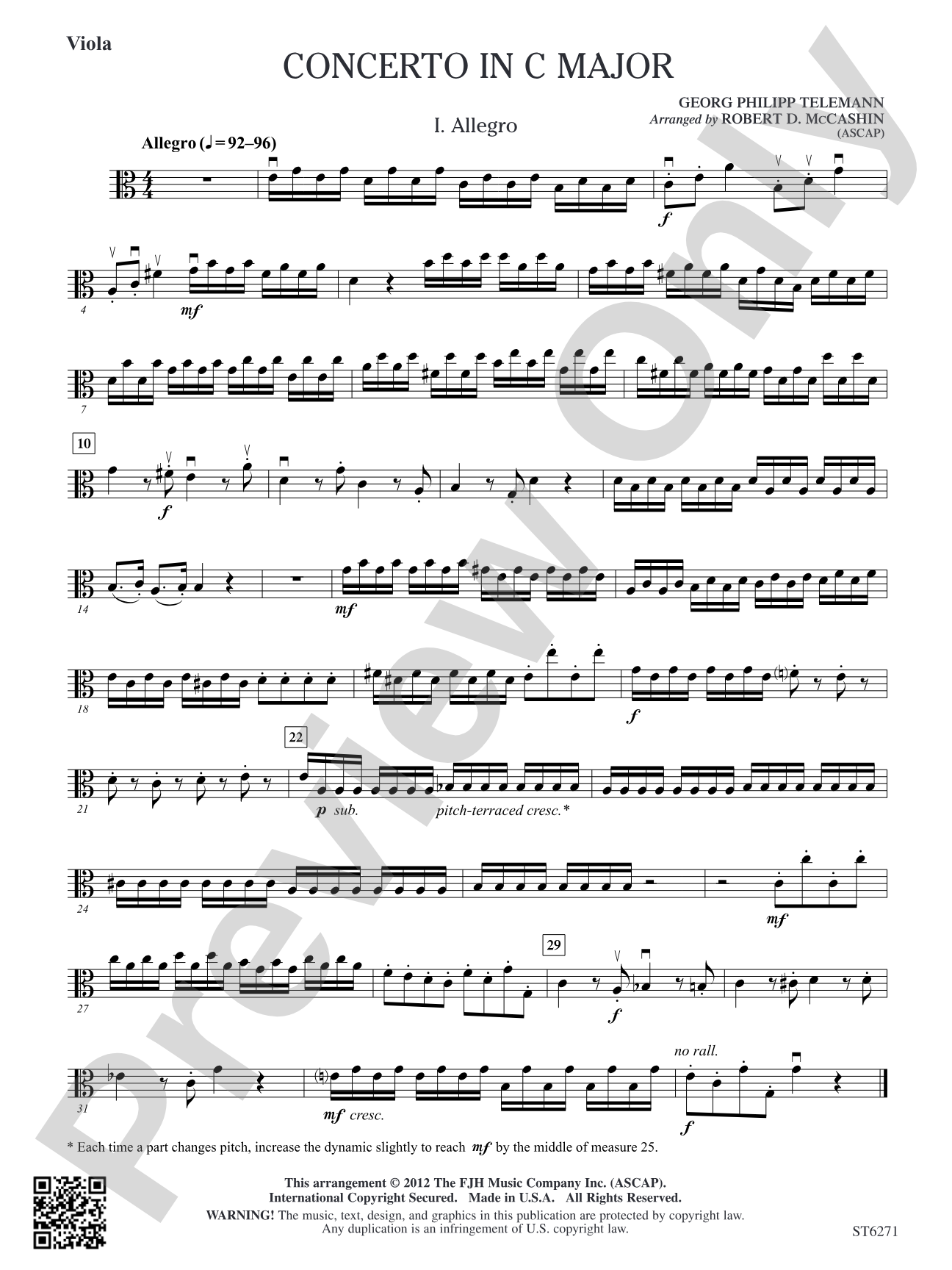

Concerto in C Major: Viola
Arranged by Robert D. McCashin
Grade: 3.5
Item: 98-PC-DST6271_VA1
$7.00
Pickup currently not available
Description
Originally written as a concerto for four violins, this superb arrangement highlights various themes from the original concerto. Presented in three movements (Allegro, Largo and Allegro molto), the work showcases the musical genius of Telemann in an authentic and accessible arrangement for string orchestra. A wonderful classical addition to your concert program!


Concerto in C Major: Viola isn't in MakeMusic Cloud just yet...but it could be. Let us know you'd like to see it, and you'll help shape what comes next. In the meantime, start a free trial and dive into thousands of interactive titles your students can play along with today.
Request This Title
Tell us you want it.
Start Your Free Trial
Explore everything that's ready to play right now.
Sample Audio
1
Audio File
--:--
0:00
0:00
Sample Video
No sample videos found.
Additional Details
Series:
FJH String Orchestra
Publisher:
The FJH Music Company, Inc.
SKU:
98-PC-DST6271_VA1
More about this title
About the Arranger: Robert D. McCashin
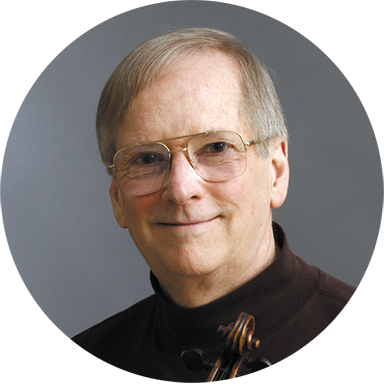
Robert D. McCashin holds a Doctor of Musical Arts in conducting from the University of Arizona and spent 43 years in higher education as a string teacher and conductor. As Professor Emeritus at James Madison University, where he directed orchestras and conducted the symphony, chamber, and opera orchestras from 1992 through 2016, he earned the college's Distinguished Teacher Award in 2015. His work bridging the university and public school spheres has shaped how string students learn fundamental repertoire.
McCashin's credentials as a violinist and arranger run deep. He has published nearly 80 educational works spanning Grades 1 through 5, many of which have become standard repertoire selections and Editors' Choice winners. Before his tenure at James Madison, he taught at the University of Texas at Arlington and Texas Wesleyan University, where he conducted youth orchestras, performed with regional symphonies, and maintained an active private studio. He is co-author of New Directions for Strings and A Scale in Time, widely used string class methods.
Why we love this
McCashin's arrangement captures the grace of Telemann's original concerto while respecting what a Grade 3.5 orchestra can realistically achieve. The three-movement structure preserves the classical form students need to recognize, and the section featuring variety across the string section keeps rehearsals musically engaging and prevents any stand from feeling sidelined. This is the kind of arrangement that sounds more sophisticated than its difficulty level suggests.
What to expect
Telemann's elegant melodic gift shines through McCashin's orchestration, creating a transparent classical soundscape that feels refined without being precious. The three-movement arc unfolds with grace: the opening Allegro dances with transparency, the Largo invites introspection through its unhurried pacing, and the final Allegro molto wraps up with infectious energy.
Who it's for
String orchestras working at the Grade 3.5 level who want a masterwork that teaches classical structure without overwhelming rehearsal schedules. This arrangement suits ensembles seeking substantive concert repertoire that challenges musicianship while remaining achievable in a typical school year.
How to get the most out of it
- Balance the opening theme between firsts and seconds so the dialogue Telemann wrote stays audible; resist the urge to let either section dominate.
- Shape the Largo with long-line thinking rather than note-by-note execution; younger players often rush ornamental passages, so encourage singing through the phrase.
- Anchor the fast passagework in the final Allegro molto with a clear harmonic foundation from violas and cellos, which gives the violins freedom to articulate cleanly.
- Mark carefully where section features occur and give those students advance notice; performance confidence grows when players know they will be heard.
How to use it
Program this as the cornerstone of a classical-era concert, pairing it with earlier baroque works or later classical symphony excerpts to build a thematic evening. Its three-movement completeness makes it substantial enough to anchor a half-concert or stand on its own as the feature work, and its accessibility means rehearsal time stays focused on interpretation rather than technique.
Skills your students will build
- Reading three-movement classical form (Allegro, Largo, Allegro molto structure)
- Balancing melodic lines across first and second violin sections
- Sustaining long-line playing through ornamental passages without rushing
- Playing section features with confidence and intonation independence
- Maintaining harmonic support as violas and cellos in fast-moving passages